Odia Wedding Traditions: The Complete Guide to an Oriya Hindu Wedding
- Odisha weddings, rooted in Jagannath devotion
- Nirbandha: the formal engagement and vow before the gods
- Inviting Lord Jagannath first: Jayee Anukolo and Deba Debi Nimantrana
- Mangana and Haldi Ubatana: the turmeric ceremonies
- Jairagodo Anukolo and Diahudi Purana: preparing the sacred ground
- Barajatri: the groom’s grand procession
- Baibaha and Baadua Pani Gadhua: the wedding rites begin
- Kanyadaan without the father: the brother’s sacred role
- Hatha Ganthi, Saptapadi and Sindoor Daan: the binding vows
- The Odia bride: Sambalpuri silk, and the Sapkhandi departure
- Grihaprabesa, Ashta Mangala and the modern Odia wedding
- What an Odia wedding costs
- Related post-wedding rituals
- Related wedding rituals
- Frequently Asked Questions
- Sources and further reading
Odia wedding traditions blend Jagannath devotion with tender family ritual. From Nirbandha and Jayee Anukolo to Barajatri, Hatha Ganthi, Saptapadi and the eighth day Ashta Mangala, this guide explains every ceremony, the Sambalpuri silk bridal look, the feast, and why the bride’s father stays away from the rites.
Odisha weddings, rooted in Jagannath devotion
An Odia wedding, sometimes written as an Oriya wedding, is the Hindu marriage tradition of Odisha, the eastern coastal state whose spiritual heart is the temple town of Puri and its presiding deity, Lord Jagannath. What sets these weddings apart from other Indian ceremonies is how deeply Jagannath, a form of Vishnu revered as the master of the household and the wider community, is woven into every stage. Before any human guest is called, the god is invited. Before any vow is spoken, the deities are asked to witness. This devotional frame gives an Odia wedding a gentle, almost temple-like calm even amid the music and feasting.
Like most Indian weddings, the Odia ceremony follows the broad grammar of Hindu wedding rituals, yet it keeps a distinctive regional vocabulary. Many of the ritual names come from Odia rather than Sanskrit, the sequence has its own logic, and a few customs, most famously the absence of the bride’s father from the marriage rites, surprise visitors from other parts of India. Traditionally weddings were held over several days in the family home or a nearby temple courtyard. Today most take place in Bhubaneswar and Cuttack banquet halls, but the ritual spine has held remarkably firm.
Vendor rates here are negotiated rather than published, which is where a wedding planning company in Bhubaneswar earns the fee back.
This guide walks through the ceremonies in order, from the formal engagement to the eighth day return, and explains what each one means. Whether you are marrying into an Odia family, planning a wedding, or simply curious about one of India’s most temple-centred traditions, you will find the meanings, not just the names, laid out clearly here.
Nirbandha: the formal engagement and vow before the gods
The first firm step is Nirbandha, the formal betrothal. The word carries the sense of a binding, and that is exactly what happens. In the presence of the family priest and elders from both sides, the fathers of the bride and groom exchange a solemn spoken commitment before the deities that the marriage will take place. This is far more than a modern ring exchange. Because the vow is made in front of the gods, it is considered sacred and effectively irreversible once given.
Traditionally the groom’s family brings gifts, sweets and the ceremonial betel, and the two families fix the wedding through consultation of the almanac. The horoscopes of the couple are matched and an auspicious date is chosen. Nirbandha establishes the relationship publicly and sets everything that follows in motion. From this point the two households are formally bound as future in-laws, and preparations, invitations and shopping begin in earnest.
Inviting Lord Jagannath first: Jayee Anukolo and Deba Debi Nimantrana
Here is where the Odia devotional spirit becomes unmistakable. Before a single human relative receives a card, the family performs Jayee Anukolo, the ceremonial first invitation, which is offered to Lord Jagannath. A representative traditionally carries the very first wedding invitation to the deity, acknowledging that the god is the foremost guest and the true head of the family. Only after Jagannath has been invited are other invitations distributed.
Closely linked is Deba Debi Nimantrana, the invitation extended to all the gods and goddesses of the household and the village. The family visits or worships the local and family deities, formally requesting their presence and blessing for the wedding. Together these rituals express a belief that runs through the whole Odia tradition: a marriage succeeds only when the divine witnesses and consents. The couple is not merely joining two families but placing their new life under the protection of the deities, with Jagannath at the centre.
Mangana and Haldi Ubatana: the turmeric ceremonies
A day or two before the wedding, both households hold the turmeric rites. Mangana is the ceremonial anointing in which married women apply a paste to the bride and, separately, to the groom in his own home. Haldi Ubatana refers to the turmeric and oil paste, ubatana, rubbed onto the skin to cleanse, soften and brighten it, and to bless the couple with the auspicious golden colour of turmeric. This mirrors the wider North and East Indian haldi ceremony, though the Odia version keeps its own songs and its own name.
Water used in the ritual bath is often drawn and consecrated with care. In many families the same turmeric paste is symbolically carried between the two homes so that both bride and groom are touched by a shared blessing. The mood is warm and playful, full of teasing, folk songs and the laughter of aunts and cousins, yet the underlying meaning is purification: the couple is being readied, body and spirit, for the sacred day ahead.
Jairagodo Anukolo and Diahudi Purana: preparing the sacred ground
On the wedding day itself, a set of preparatory rituals sanctify the space and the household. Jairagodo Anukolo involves worship connected to the wedding canopy and the ritual foundation, invoking blessings on the mandap and the earth where the ceremony will unfold. Diahudi Purana is the ceremonial lighting and consecration of the sacred lamp, the diha or deep, whose flame represents the presence of Agni, the fire god who is the eternal witness to every Hindu marriage.
These rites may seem small beside the grand processions to come, but they carry real weight. In Odia belief the ground must be blessed and the lamp must burn before the couple can be safely joined. The lit lamp, tended through the ceremony, becomes the still centre around which the rest of the day revolves, a quiet reminder that the gods are watching every step.
Barajatri: the groom’s grand procession
Barajatri is the arrival of the groom and his party at the wedding venue, the Odia counterpart to the north Indian baraat. The groom sets out from his home or a nearby staging point accompanied by relatives and friends, the bara jatri or wedding travellers, amid music, drums and celebration. In earlier times the journey itself, sometimes by decorated car or even on foot for the final stretch, was part of the spectacle.
When the procession reaches the bride’s venue, the groom is received with great warmth. The bride’s family greets the party at the entrance, performs aarti, and welcomes the groom as an honoured guest, often as a form of Vishnu himself. Sweets and rosewater flow, and the groom is escorted to the mandap. Barajatri marks the moment the two families physically come together, and it sets a jubilant tone before the more solemn rites begin inside.
Baibaha and Baadua Pani Gadhua: the wedding rites begin
The core marriage ceremony is called Baibaha or Bibaha, the Odia word for the wedding itself. It is performed at the mandap before the sacred fire and the family priest, and it gathers together the vows, the fire offerings and the binding rituals that make the marriage complete. Before the couple is seated for the main rites, a ceremonial bath called Baadua Pani Gadhua is performed. Baadua refers to the groom and bride as the wedding pair, pani is water and gadhua is the bath, so this is the auspicious ritual bathing of the couple with consecrated water to purify them one final time before they are joined.
Often the garland exchange, the Odia form of jaimala, takes place as the couple first face each other, each placing a garland around the other’s neck to signal mutual acceptance. From here the ceremony moves into its most sacred and most distinctive passages.
Kanyadaan without the father: the brother’s sacred role
This is the ritual that most surprises those from other regions. In the widely followed Odia tradition, the bride’s father does not attend or perform the central marriage rites at all. He is present in the household and in the celebrations, but he customarily stays away from the mandap during the actual wedding, and in many families he even fasts and remains apart while the rites are performed. Because of this, the Kanyadaan, the giving away of the daughter, is not carried out by the father as it is in most Hindu weddings. Instead it is traditionally performed by the bride’s brother or, in some families, her maternal uncle.
The reasons offered are tender rather than doctrinal. One widely held explanation is emotional: the moment of parting with a daughter is thought too painful for a father to bear at the very altar, and custom spares him from personally handing her away. Another rests on humility and blessing, the sense that the father, having raised his child, steps back so that the marriage is witnessed and given by the wider family rather than claimed by him. Whatever the origin, the effect is striking. The brother, standing in for the family, performs the sacred gift of Kanyadaan, and the bond between brother and sister is honoured at the very heart of the ceremony. It is one of the most humane and memorable features of Odia wedding traditions.
Planning the wedding these ceremonies belong to? We plan weddings across India and can take the schedule, the logistics and the coordination off your family entirely.
Hatha Ganthi, Saptapadi and Sindoor Daan: the binding vows
With Kanyadaan complete, the couple is joined through the binding rites. Hatha Ganthi Phita, also called Hasta Gantha, is the tying of hands, in which the right hands of the bride and groom are ceremonially knotted together, often with the ends of their garments tied in a sacred knot. This physical binding symbolises the union of two lives into one, a knot that is meant never to loosen.
The couple then performs the fire rituals and the Saptapadi, the seven steps or seven vows taken around the sacred fire, echoing the circumambulation of the fire found across Hindu weddings. With each step the couple pledges a shared value: nourishment, strength, prosperity, happiness, progeny, health and lifelong friendship. Only when the seventh step is taken is the marriage considered fully solemnised in the eyes of dharma. Finally comes Sindoor Daan, the moment the groom applies vermilion to the parting of the bride’s hair, publicly marking her as a married woman. The sindoor, along with the sacred thread or mangalsutra where it is worn, becomes the visible sign of her new status.
The Odia bride: Sambalpuri silk, and the Sapkhandi departure
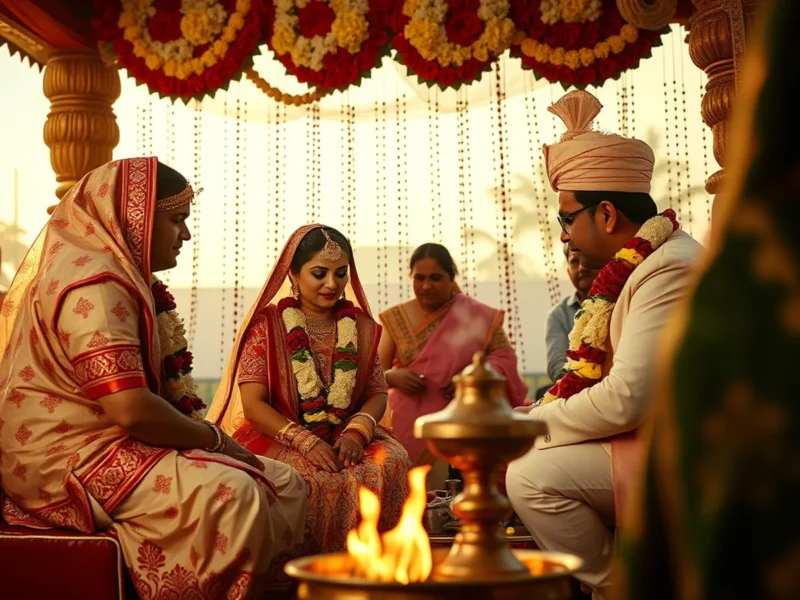
The traditional Odia bride is a study in understated grandeur. Her saree is classic Odisha handloom, most often a Sambalpuri or Boula silk in deep red, maroon or a rich contrasting shade, prized for its ikat weaving and temple motifs. These handwoven silks, produced in the weaving belts of western Odisha, carry generations of craft and are considered especially auspicious. Gold jewellery, floral adornment and traditional bridal make up complete the look, while the groom typically wears a dhoti and kurta with a turban or headpiece.
After the rites, the departure of the bride to her new home is deeply emotional. The Sapkhandi, sometimes described with the Bahaghara Jholka customs, marks the leave taking, the Odia expression of the vidaai. The bride bids farewell to her parents and childhood home, throwing back handfuls of rice or performing symbolic gestures of gratitude, and leaves with her husband’s family amid tears and blessings. It is the counterpoint to Barajatri: where the groom arrived in joy, the bride now departs in a mix of hope and heartache.
Grihaprabesa, Ashta Mangala and the modern Odia wedding
The bride’s arrival at her marital home is welcomed with Grihaprabesa, the ceremonial entry, in which she is received as the new Lakshmi of the household and often steps in with auspicious rituals at the threshold. But the wedding is not truly finished until the eighth day. Ashta Mangala, literally the eight auspicious things, is the ritual return of the newlyweds to the bride’s parental home on the eighth day after the wedding. The couple visits together, is feasted and blessed, and this reunion gently reassures the bride’s family and reaffirms the ties between the two households. It is a beautifully humane close to a tradition that began with the giving away.
No Odia wedding is complete without its food. The feast leans on classic Odia cuisine served on banana leaves or in traditional style. Beloved dishes include Dahibara Aludam, the soft lentil dumplings in spiced potato gravy that Cuttack is famous for, alongside pakhala, dalma, and an array of vegetarian curries, with non vegetarian fare such as fish and mutton featuring in many family menus. The sweets are the crown: Chhena Poda, the caramelised baked cottage cheese dessert often called Odisha’s cheesecake, and Manda Pitha, the steamed rice flour dumplings filled with coconut and jaggery, are near obligatory.
In modern Bhubaneswar and Cuttack, couples pair these deep rooted rites with contemporary touches: banquet venues, professional decor, sangeet evenings and photography, and the flexibility to compress a multi day sequence into a tighter schedule. Yet the essentials endure. Jagannath is still invited first, the brother still performs Kanyadaan, the father still keeps his tender distance, and the couple still returns on the eighth day. If you enjoy comparing regional customs, the Odia tradition sits fascinatingly between the Bengali wedding traditions of its neighbour and the wider practices of eastern and southern India, sharing the devotional intensity of a temple culture while keeping a ceremonial voice entirely its own.
Planning a wedding rooted in your traditions?
Tell us your community, dates and vision. Team Velvet Knot will honour every ritual and put together a tailored plan and an honest budget.
What an Odia wedding costs
Related post-wedding rituals
Related wedding rituals
More community traditions: read our full guide to Nepali wedding traditions.
Also on Velvet Knot: Santali wedding traditions.
Frequently Asked Questions
Why does the bride’s father not attend an Odia wedding ceremony?
In many traditional Odia families the bride’s father customarily stays away from the actual marriage rites at the mandap, and may fast and remain apart while they are performed. The most common explanation is emotional, that the pain of giving away a daughter is considered too great for a father to bear at the altar. Because he does not participate in the rites, the Kanyadaan is performed by the bride’s brother or maternal uncle instead.
Who performs the Kanyadaan in an Odia wedding?
Since the bride’s father traditionally does not take part in the marriage rites, the Kanyadaan, the giving away of the daughter, is performed by the bride’s brother, or in some families by her maternal uncle. This makes the brother and sister bond a central feature of the ceremony and is one of the most distinctive elements of Odia wedding traditions.
Why is Lord Jagannath invited before human guests?
Odisha’s spiritual life centres on Lord Jagannath of Puri, revered as the head of every household and community. In the ritual called Jayee Anukolo, the family sends the very first wedding invitation to Jagannath before any human relative is invited, acknowledging the deity as the foremost guest. The related Deba Debi Nimantrana invites all the family and village gods to witness and bless the marriage.
What does an Odia bride traditionally wear?
The traditional Odia bride wears a handwoven Odisha silk saree, most often a Sambalpuri or Boula silk in deep red or maroon, prized for its ikat weaving and temple motifs. It is paired with gold jewellery, floral adornment and classic bridal make up. The groom usually wears a dhoti and kurta with a turban.
What is Ashta Mangala in an Odia wedding?
Ashta Mangala, meaning the eight auspicious things, is the ritual return of the newlyweds to the bride’s parental home on the eighth day after the wedding. The couple is feasted and blessed, and the visit reaffirms the bond between the two families. It is the ceremonial close of the wedding, following the couple’s earlier entry into the groom’s home, or Grihaprabesa.
What food is served at an Odia wedding?
Odia wedding feasts feature classic regional cuisine including Dahibara Aludam, dalma, pakhala and a range of vegetarian curries, with fish and mutton in many family menus. The sweets are the highlight, especially Chhena Poda, the caramelised baked cottage cheese dessert, and Manda Pitha, steamed rice flour dumplings filled with coconut and jaggery.
Sources and further reading
Begin Your Engagement
Want a real number for your wedding?
Tell us your city, guest count and dates. Team Velvet Knot will come back within 24 hours with an itemised budget.