Hindu Wedding Rituals: Complete Guide to Every Ceremony [2026]
- Pre-Wedding Ceremonies
- Wedding Day Ceremonies
- Post-Wedding Ceremonies
- North Indian vs South Indian Hindu Weddings: Key Differences
- Typical Hindu Wedding Timeline
- Hindu Wedding Costs in India (2026 Estimates)
- Modern Adaptations of Hindu Wedding Rituals
- Related traditions
- Wedding planning ideas
- Explore regional wedding traditions
- What the pandit costs
- Setting the date
- For guests and for the day
- What the functions cost
- Related wedding rituals
- Frequently Asked Questions
- Plan Your Perfect Hindu Wedding with Velvet Knot
- Sources and further reading
A Hindu wedding is a Vedic union that typically spans two to five days, moving through pre-wedding ceremonies like roka, mehendi, sangeet, and haldi, then the wedding-day rituals of baraat, jaimala, the mandap pheras, sindoor, and vidaai. Hindu weddings account for roughly 80 percent of India’s 10 million annual weddings, according to CAIT.
Planning a Hindu wedding? Free download: the ritual-by-ritual planning timeline
Every ritual on this page in order, with when it happens, what the family arranges and when to book it, on one printable page. Share a few details about your wedding in the form at the end of this page and the download link appears as soon as you send it.
A Hindu wedding is a sacred union rooted in Vedic traditions that typically spans two to five days, encompassing pre-wedding ceremonies like roka, mehendi, sangeet, and haldi, followed by the wedding day rituals of baraat, jaimala, mandap ceremonies, saptapadi (seven pheras), sindoor, mangalsutra, and vidaai, and concluding with post-wedding events like the reception and griha pravesh. India hosts roughly 10 million weddings every year, and Hindu weddings account for an estimated 80% of these celebrations, according to the Confederation of All India Traders (CAIT). Whether you are planning a grand North Indian affair or an elegant South Indian ceremony, this guide walks you through every ritual, its significance, a realistic timeline, and what it costs in 2026.
Pre-Wedding Ceremonies
Roka and Tilak
The roka ceremony marks the formal agreement between the two families to proceed with the marriage. The bride’s family visits the groom’s home bearing sweets, dry fruits, and gifts. In many North Indian communities, a tilak ceremony follows within a few weeks, where the bride’s father applies a tilak (vermillion mark) on the groom’s forehead, accompanied by gifts of cash, clothing, and jewellery. This ritual is called nischayam or nischitartham in South Indian traditions. It typically costs between INR 50,000 and INR 3,00,000 depending on the scale of gifts exchanged.
Engagement (Sagai or Ring Ceremony)
The engagement ceremony, known as sagai in Hindi-speaking regions or nishchayam in parts of South India, involves the exchange of rings between the bride and groom in the presence of close family. According to WeddingWire India’s 2025 survey, 78% of Indian couples now hold a formal engagement event, with average spending between INR 1,00,000 and INR 5,00,000. Many families combine the engagement with the roka or host it as a standalone celebration with a cocktail party.
Mehendi Ceremony
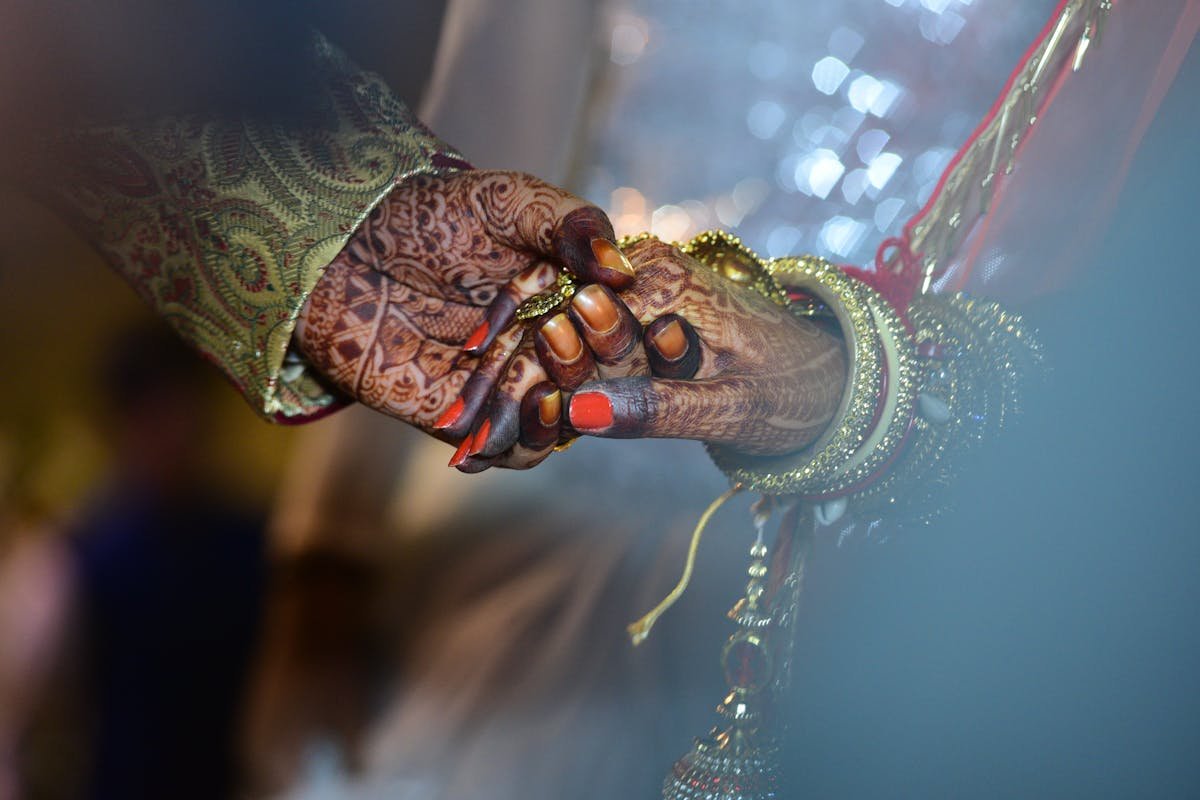
The mehendi ceremony is typically held one to two days before the wedding. Professional mehendi artists apply intricate henna designs on the bride’s hands and feet, often hiding the groom’s name within the patterns. Close female relatives and friends also get mehendi applied. A bridal mehendi session with a top artist in metro cities costs INR 15,000 to INR 1,50,000 in 2026, depending on the complexity of the design and the artist’s reputation. The ceremony is accompanied by music, dancing, and light refreshments. In Rajasthani and Marwari traditions, the mehendi function is an elaborate affair with professional folk musicians and dancers.
Sangeet Night
The sangeet is one of the most anticipated pre-wedding events, featuring choreographed dance performances by family members and friends from both sides. Originating from Punjabi wedding traditions, the sangeet has now become a pan-Indian celebration. Modern sangeet nights often feature professional choreographers (INR 30,000 to INR 3,00,000), live bands, DJs, themed decor, and elaborate stage setups. Some families combine the sangeet with the mehendi ceremony to manage costs and logistics. According to a 2024 report by WedMeGood, the average sangeet budget in tier-1 Indian cities is approximately INR 3,00,000 to INR 10,00,000.
Haldi Ceremony
The haldi ceremony, also called pithi or ubtan, takes place on the morning of the wedding day or the day before. A paste made from turmeric, sandalwood, and rose water is applied to the bride and groom (at their respective homes) by close family members. The turmeric is believed to purify the body, enhance the skin’s glow, and ward off evil spirits. This is usually an intimate family gathering, and many families now hire decor vendors to create Instagram-worthy yellow-themed setups costing INR 25,000 to INR 2,00,000.
Wedding Day Ceremonies
Baraat (Groom’s Procession)
The baraat is the groom’s grand procession to the wedding venue, accompanied by family, friends, a brass band or DJ, and often a decorated mare or vintage car. The groom wears a sehra (floral veil) tied by his mother before departure. In North Indian weddings, the baraat is an energetic, dancing affair that can last one to two hours. The bride’s family receives the baraat at the venue entrance with garlands, tilak, and welcome drinks. Baraat band and transport costs range from INR 20,000 to INR 2,00,000 in most Indian cities.
Milni Ceremony
The milni, meaning “meeting,” is a formal greeting ritual where corresponding male members of both families (father meets father, uncle meets uncle, brother meets brother) exchange garlands and embrace. This ceremony symbolises the acceptance and bonding of the two families. It takes place at the venue entrance immediately after the baraat arrives and typically lasts 15 to 20 minutes.
Jaimala (Varmala)
The jaimala, or exchange of garlands, is the moment the bride and groom garland each other in front of the assembled guests. This signifies their willing acceptance of one another as life partners. In many weddings, this turns into a playful event where the groom is lifted by his friends to make it harder for the bride to reach his neck. Elaborate jaimala stages with floral backdrops, fog effects, and fireworks can cost INR 50,000 to INR 5,00,000 in 2026.
Mandap Rituals
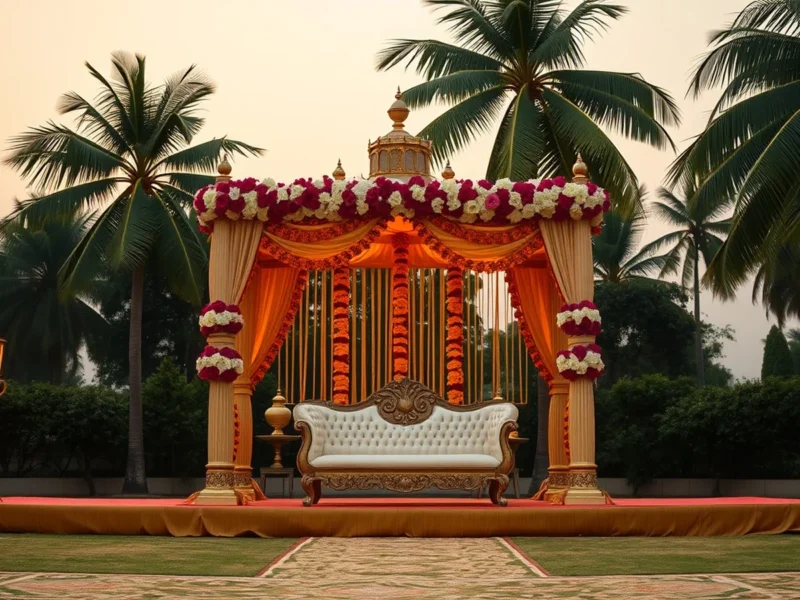
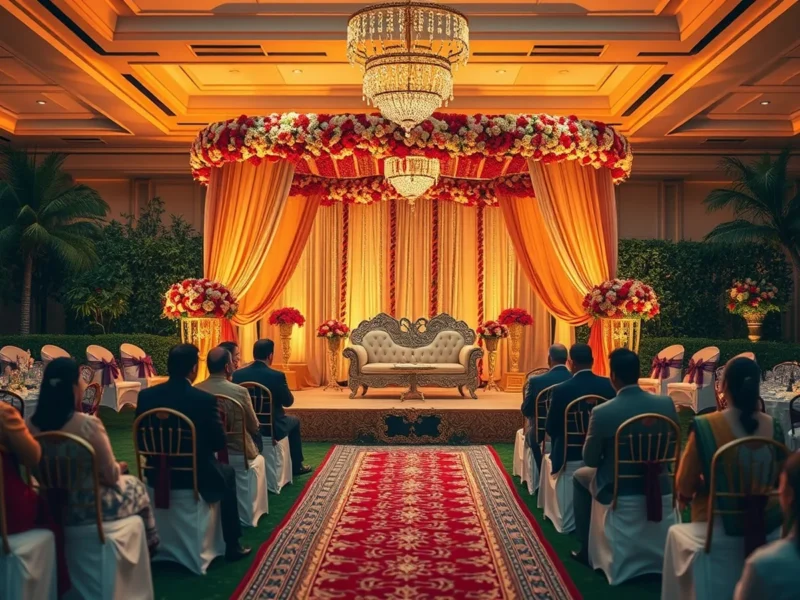
The mandap is the sacred canopy under which the core wedding rituals are performed, presided over by a pandit (Hindu priest). The rituals conducted under the mandap follow Vedic traditions and include:
- Ganesh Puja: An invocation to Lord Ganesh, the remover of obstacles, seeking blessings for a smooth ceremony.
- Kanyadaan: The bride’s father formally gives his daughter’s hand to the groom, one of the most emotionally significant moments of the wedding. The father places the bride’s right hand in the groom’s right hand, often with water poured over their joined hands.
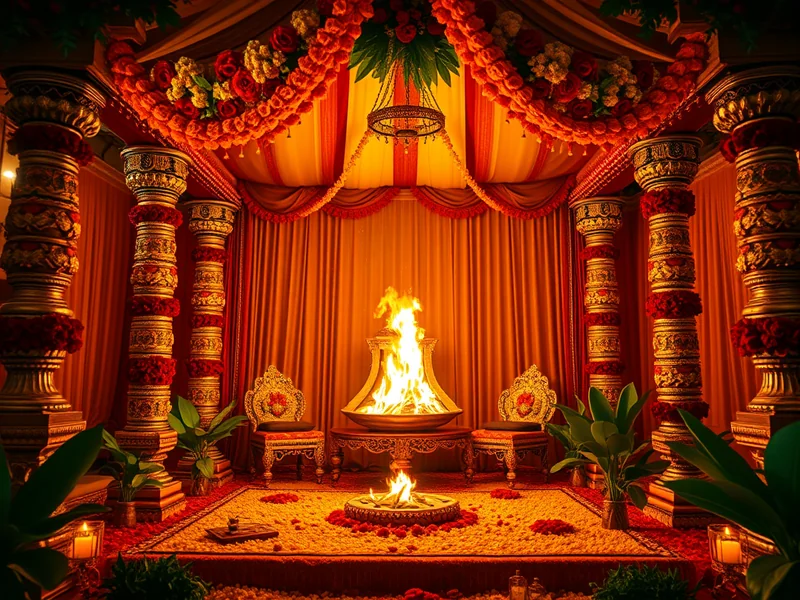
- Vivah Homa: A sacred fire (agni) is lit in the centre of the mandap. The fire god Agni serves as the divine witness to the marriage.
- Hastamelap and Gathbandhan: The bride’s and groom’s hands are joined and their garments tied together (the bride’s dupatta to the groom’s shawl), symbolising their union.
Saptapadi (Seven Pheras)
The saptapadi, or seven pheras (circumambulations around the sacred fire), is the most important ritual of a Hindu wedding. Each phera represents a vow the couple takes together. The seven vows traditionally cover nourishment, strength, prosperity, happiness, progeny, health, and lifelong friendship and devotion. In North Indian weddings, the couple walks around the fire, while in South Indian ceremonies, the equivalent involves seven steps (saptapadi) taken together. The marriage is considered legally and spiritually complete only after the seventh phera. According to the Hindu Marriage Act of 1955, the saptapadi is a key requirement for the legal validity of a Hindu marriage.
Sindoor and Mangalsutra
After the pheras, the groom applies sindoor (vermillion) in the parting of the bride’s hair and ties the mangalsutra (sacred necklace) around her neck. These are the two most significant symbols of a married Hindu woman. The mangalsutra design varies by region: North Indian mangalsutras feature black beads with a gold pendant, while South Indian thalis are distinct gold pendants on a yellow thread. Mangalsutra prices range from INR 30,000 to INR 5,00,000 or more depending on gold weight and design complexity.
Vidaai (Farewell)
The vidaai is the emotional farewell where the bride leaves her parental home to begin her new life with the groom’s family. The bride throws handfuls of rice over her shoulders, symbolising prosperity for the family she is leaving behind. This is often the most tear-filled moment of a Hindu wedding. In modern times, many families choose to have the vidaai at the venue itself rather than at the bride’s home.
Post-Wedding Ceremonies
Reception
The wedding reception is a grand celebration held either on the wedding night or the following day. It serves as a formal introduction of the couple to the extended social circle. Receptions in Indian metros typically cost INR 5,00,000 to INR 50,00,000 and feature a sit-down or buffet dinner, a multi-tiered cake, live music or a DJ, and a photo booth. According to a 2025 Matrimony.com survey, 65% of Indian families host the reception on a separate day from the wedding to manage guest flow and fatigue.
Griha Pravesh
The griha pravesh, or the bride’s formal entry into the groom’s home, is the final post-wedding ritual. The bride kicks over a pot of rice with her right foot upon entering (symbolising abundance), steps into a plate of alta (red dye) to leave auspicious footprints, and is welcomed by the mother-in-law with an aarti. Games like finding a ring in a bowl of milk are played to break the ice between the newlyweds.
North Indian vs South Indian Hindu Weddings: Key Differences
While the spiritual essence remains the same, the execution of Hindu wedding rituals varies significantly between North and South India. Understanding these differences is essential for planning.
| Aspect | North Indian Hindu Wedding | South Indian Hindu Wedding |
|---|---|---|
| Duration | 2-3 days typically | 1-2 days, ceremony often morning-only |
| Baraat | Elaborate with band, dancing, horse | Minimal or absent; groom arrives quietly |
| Mandap Rituals | Pheras around the fire | Thali tying is the key moment |
| Timing | Often late night or early morning | Early morning (muhurtham time) |
| Bridal Attire | Red lehenga or saree | Silk saree (Kanjeevaram or Pattu) |
| Food | Rich Mughlai and Punjabi cuisine | Traditional banana leaf meal |
| Music | DJ, Bollywood, dhol | Nadaswaram and thavil (traditional) |
| Key Symbol | Sindoor and mangalsutra | Thali (mangalsutra) and metti (toe rings) |
Typical Hindu Wedding Timeline
Below is a realistic day-by-day timeline for a standard North Indian Hindu wedding. South Indian weddings are often compressed into one or two days.
| Day | Event | Time | Duration |
|---|---|---|---|
| Day 1 | Mehendi Ceremony | 4:00 PM, 9:00 PM | 5 hours |
| Day 2 | Haldi Ceremony | 10:00 AM, 1:00 PM | 3 hours |
| Day 2 | Sangeet Night | 7:00 PM, 12:00 AM | 5 hours |
| Day 3 | Baraat Departure | 7:00 PM | n/a |
| Day 3 | Baraat Arrival & Milni | 8:00 PM, 9:00 PM | 1 hour |
| Day 3 | Jaimala | 9:00 PM, 9:30 PM | 30 minutes |
| Day 3 | Dinner | 9:30 PM, 11:00 PM | 1.5 hours |
| Day 3 | Mandap Rituals & Pheras | 12:00 AM, 3:00 AM | 3 hours |
| Day 3 | Vidaai | 3:00 AM, 4:00 AM | 1 hour |
| Day 4 | Reception | 7:00 PM, 11:00 PM | 4 hours |
Hindu Wedding Costs in India (2026 Estimates)
According to a 2025 report by Matrimony.com and CAIT, the Indian wedding industry is valued at approximately INR 10 lakh crore (USD 130 billion). Individual wedding costs vary enormously based on location, guest count, and family preferences. Here is a general breakdown for a mid-to-premium Hindu wedding in a metro city:
| Category | Budget Range (INR) |
|---|---|
| Venue (per event) | 2,00,000-25,00,000 |
| Catering (per plate) | 1,500-5,000 |
| Decor (all events) | 3,00,000-30,00,000 |
| Photography & Videography | 1,50,000-10,00,000 |
| Bridal Outfit | 50,000-10,00,000 |
| Groom’s Outfit | 30,000-3,00,000 |
| Jewellery | 2,00,000-50,00,000+ |
| Invitations | 20,000-2,00,000 |
| Entertainment (DJ/Band) | 50,000-5,00,000 |
| Pandit & Ritual Items | 11,000-51,000 |
Modern Adaptations of Hindu Wedding Rituals
Hindu weddings in 2026 are evolving rapidly while preserving their spiritual core. Destination weddings in Udaipur, Goa, and Jaipur have surged, with an estimated 30% of premium weddings now held at destination venues according to WedMeGood’s 2025 trend report. Eco-friendly weddings are gaining traction, with couples opting for digital invitations, locally sourced flowers, and zero-waste catering. Bilingual or trilingual ceremonies are common in inter-regional marriages. Many couples now request shorter mandap rituals (90 minutes instead of 3 hours) and incorporate personal vow exchanges alongside the traditional saptapadi. The rise of wedding planners in India has made it easier for modern couples to customise rituals while respecting tradition.
Explore individual rituals in depth, including the difference between the pheras and saptapadi and Kashmiri Pandit wedding rituals.
Related traditions
Wedding planning ideas
Explore regional wedding traditions
- Sindhi wedding traditions
- Assamese wedding traditions
- Kannada wedding traditions
- Bihari wedding traditions
What the pandit costs
Setting the date
For guests and for the day
What the functions cost
Related wedding rituals
- the mehndi ceremony explained
- joota chupai, the shoe stealing ritual
- griha pravesh, the bride’s first entry
- muh dikhai, the face showing ceremony
- the Kashi Yatra ritual
- the Ganesh puja that opens a wedding
- gath bandhan, the tying of the knot
- laja homa and the brother’s role
- the sagai engagement ceremony
More community traditions: read our full guide to Rajput wedding traditions.
Also on Velvet Knot: gotra in Hindu marriage.
Frequently Asked Questions
How long does a Hindu wedding ceremony last?
The core mandap ceremony, including the pheras, typically lasts 1.5 to 3 hours. However, the entire wedding celebration spanning pre-wedding events (mehendi, sangeet, haldi) to the reception can last two to five days. South Indian Hindu weddings are generally shorter, with the main ceremony completed in two to three hours during the morning muhurtham window.
What is the average cost of a Hindu wedding in India in 2026?
According to industry data from CAIT and Matrimony.com, the average Hindu wedding in a metro city costs between INR 15 lakh and INR 1.5 crore in 2026. Budget weddings can be managed at INR 5-10 lakh, while luxury and destination weddings regularly exceed INR 2-5 crore. The three biggest cost drivers are venue, catering, and decor, which together account for roughly 60% of the total budget.
Can Hindu wedding rituals be customised or shortened?
Yes. Many modern pandits offer condensed versions of the ceremony that retain all essential rituals but reduce the duration to 60 to 90 minutes. Couples can also choose to add personal vows, have bilingual commentary for guests, skip rituals that do not align with their beliefs, or incorporate elements from both families’ regional traditions. A good wedding planner can help coordinate these customisations with the pandit in advance.
What should guests wear to a Hindu wedding?
Guests typically wear Indian ethnic attire: sarees or lehengas for women, and kurta-pajama or sherwanis for men. Bright colours are encouraged, though many families request guests avoid wearing red (reserved for the bride in North Indian weddings) or white (associated with mourning in Hindu culture). In South Indian weddings, silk sarees and veshti-shirt combinations are traditional.
Is a Hindu wedding legally valid without registration?
Under the Hindu Marriage Act of 1955, a Hindu marriage is valid if performed with proper ceremonies including the saptapadi. However, registering the marriage under this Act is strongly recommended and is mandatory in some Indian states. Registration provides legal proof of marriage, which is required for passport applications, visa processing, joint property ownership, and other legal purposes. Registration can be done at the sub-registrar’s office with the marriage certificate issued by the pandit, photographs, and witnesses.
What is the best season for a Hindu wedding in India?
The most popular Hindu wedding season runs from October to February, when the weather across most of India is pleasant. November and December see the highest concentration of auspicious dates (shubh muhurat). The summer months (April to June) are less popular due to heat, and the monsoon season (July to September) is traditionally considered inauspicious by many families, though some regions like Kerala have monsoon wedding traditions. Booking venues 8 to 12 months in advance is essential for peak season dates.
Plan Your Perfect Hindu Wedding with Velvet Knot
Planning a Hindu wedding? Get a free, personalised quote from Velvet Knot’s expert team. Our experienced wedding planners specialise in creating flawless celebrations that honour every ritual while reflecting your personal style. From intimate home ceremonies to grand destination weddings, we handle every detail so you can focus on the joy. Get your free quote today.
Sources and further reading
Velvet Knot believes in showing our work. The references below are the authoritative sources we consult when planning weddings in this category.
- Hindu Marriage Act, 1955 (full text on India Code): Government of India
- Hindu wedding overview, Encyclopaedia Britannica: Britannica
- Saptapadi: the seven-step rite, Encyclopaedia Britannica: Britannica
Begin Your Engagement
Want a real number for your wedding?
Tell us your city, guest count and dates. Team Velvet Knot will come back within 24 hours with an itemised budget.