Gujarati Wedding Traditions: Rituals, Customs & Complete Planning Guide
- What defines a Gujarati wedding
- Pre-wedding rituals
- Wedding day rituals in sequence
- Post-wedding rituals
- Attire and cuisine
- What a wedding planner coordinates
- Related wedding traditions
- Related community traditions
- Related wedding rituals
- The Gujarati wedding timeline, day by day
- Why Gujarati couples take four pheras and not seven
- Community variation across Gujarat
- Planning the Garba, which is usually the biggest night of the wedding
- What to ask the caterer
- Frequently Asked Questions
- Sources and further reading
A Gujarati wedding is a warm, vibrant celebration built around rituals like Mandap Mahurat, Jaan, Antarpat, Hasta Melap and four Mangal Pheras instead of the usual seven. Pre-wedding ceremonies, garba nights, sweet welcomes and a vegetarian feast make it joyful, family-led and rich in symbolism.
What defines a Gujarati wedding
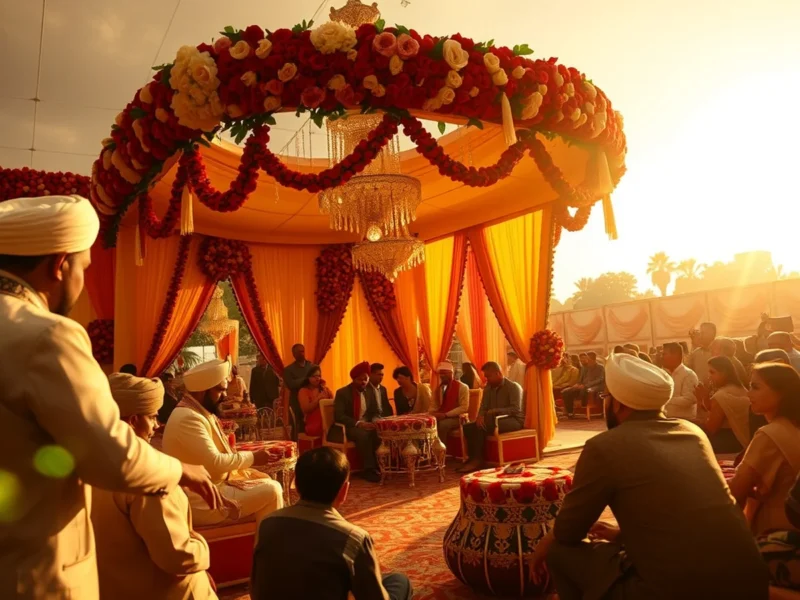
Gujarati weddings are known for their warmth, their playful humour and a strong sense of family participation. They are largely vegetarian, music-filled and spread across several days. The rituals are rooted in Hindu Vedic tradition, but they carry distinct Gujarati touches: the welcome of the groom with aarti and sweets, the bride’s brothers playing a central role, and a ceremony that wraps up faster than most because Gujarati couples take four pheras rather than seven.
If you are researching the customs because a wedding is coming up in the family, this guide walks through the sequence in the order it actually happens, so you know what each ritual means and what needs planning.
Pre-wedding rituals
Chandlo Matli and engagement
The Chandlo Matli marks the formal agreement between families. The bride’s father and male relatives visit the groom’s home, apply a chandlo (a red dot) on his forehead and present a matli, a steel pot of sweets and gifts. This is followed by the engagement, or Gol Dhana, where rings are exchanged and the families fix the date.
Mandap Mahurat and Griha Shanti
A day or two before the wedding, the Mandap Mahurat (also called Mangal Mahurat) is performed at both homes. The couple seeks the blessings of Mother Earth before the mandap is built, and a Manek Stambh, a decorated wooden post, is placed to mark the sacred space. The Griha Shanti puja follows, a prayer to the nine planets for a peaceful married life.
Mehndi and Garba
Mehndi is applied to the bride’s hands and feet, and the Garba and Sangeet nights bring both families together for dancing. The Garba is the heart of Gujarati pre-wedding celebration, and many couples treat it as the largest function of the entire wedding.
Pithi
The Pithi is the Gujarati turmeric ceremony. A paste of turmeric, sandalwood and rose water is applied to the bride and groom by relatives, believed to brighten the skin and ward off ill luck before the wedding day.
Wedding day rituals in sequence
| Ritual | What happens |
|---|---|
| Jaan / Baraat | The groom arrives with his procession; the bride’s mother welcomes him with aarti and a playful nose-pull. |
| Ponkhana | The bride’s mother performs rituals to welcome the groom as her son. |
| Madhuparka | The groom is offered honey, yoghurt and milk and gifted clothing as he enters the mandap. |
| Antarpat | A cloth is held between the couple so they cannot see each other until the right moment. |
| Jaimala | The antarpat is dropped and the couple exchange flower garlands. |
| Kanyadaan | The bride’s father gives her hand in marriage to the groom. |
| Hasta Melap | The bride’s saree and the groom’s shawl are tied; their hands are joined with a sacred thread. |
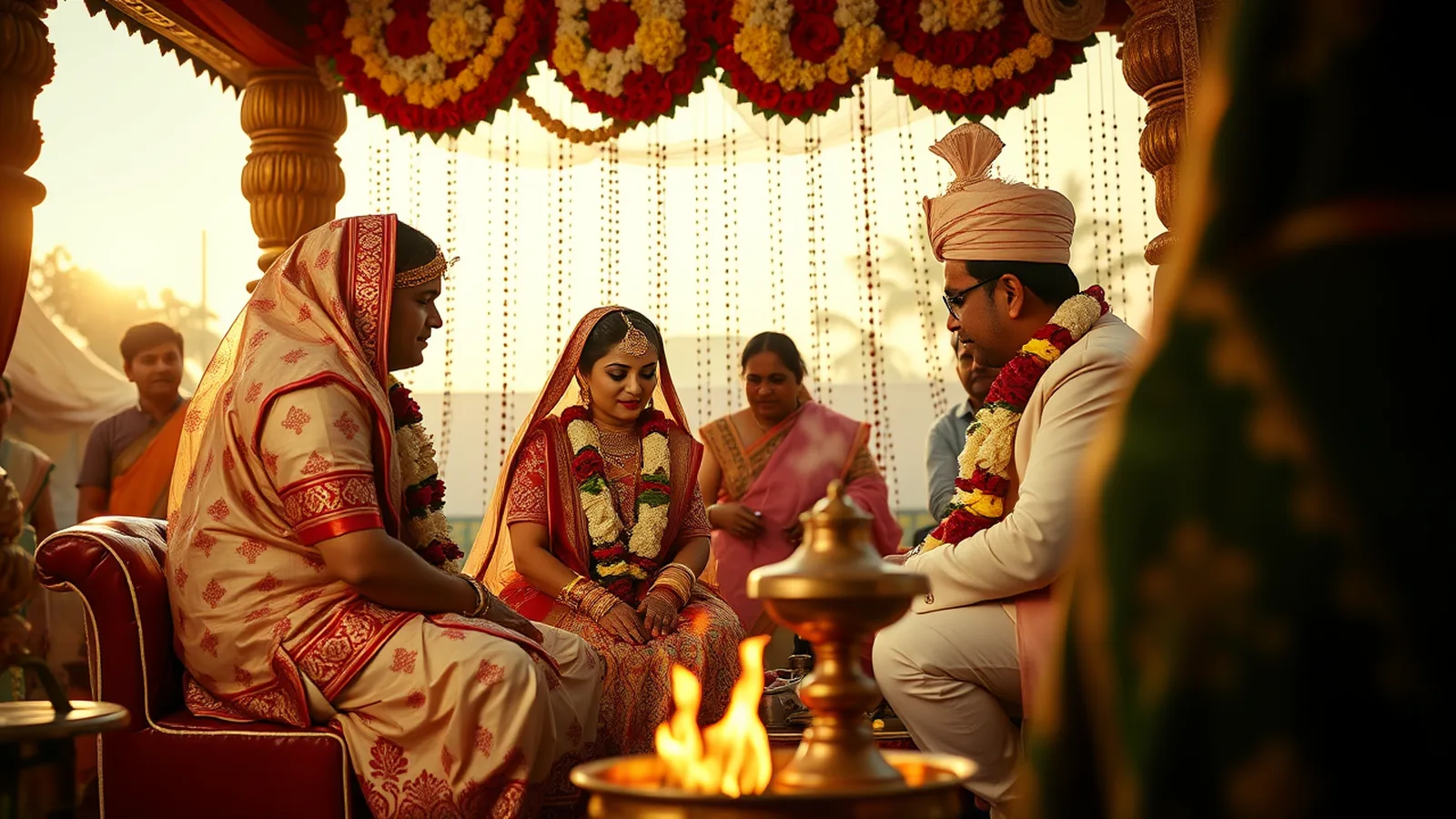
| Mangal Pheras | The couple circles the sacred fire four times, for Dharma, Artha, Kama and Moksha. |
| Saptapadi | Seven steps together, each carrying a vow for the marriage. |
| Saubhagyavati Bhava | Married women bless the bride; the groom applies sindoor and ties the mangalsutra. |
The use of only four pheras is the most distinctive Gujarati element. Each phera is led by a different parent or sibling, and the playful race between bride and groom to sit down first at the end always draws laughter.
Post-wedding rituals
The Vidaai is the bride’s emotional farewell from her parents’ home. At the groom’s house, the Ghar Nu Laxmi welcome treats the bride as the family’s incoming prosperity, and she gently topples a vessel of rice at the threshold before stepping in. The Aeki Beki, a lighthearted game of finding a ring in a tray of coloured water, helps the couple relax into married life.
Attire and cuisine
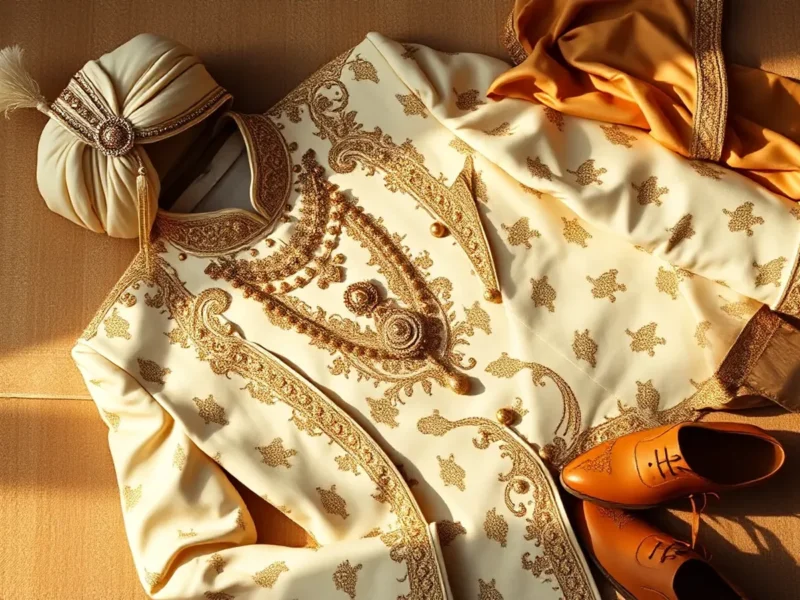
Gujarati brides typically wear a Panetar, a white and red saree with a red border, often paired with a Gharchola, a red odhani with gold checks gifted by the groom’s family. Grooms wear a kediyu or sherwani. The food is proudly vegetarian: Undhiyu, dhokla, fafda, jalebi, and sweets like mohanthal and basundi feature heavily, often served on traditional thalis.
What a wedding planner coordinates
A Gujarati wedding has many small ceremonies, each with its own guest list, muhurat timing and material requirements. A planner manages the mandap setup and Manek Stambh, the priest and puja samagri, the Garba production, catering across multiple vegetarian menus, and the tight muhurat windows that decide when the pheras must happen. Velvet Knot is a pan-India premium wedding planner and plans every major tradition, including full Gujarati ceremonies. You can read our broader Hindu wedding rituals guide or see the full scope in our services, and request a quote when you are ready.
Related wedding traditions
Related community traditions
Related wedding rituals
- the mehndi ceremony explained
- joota chupai, the shoe stealing ritual
- griha pravesh, the bride’s first entry
- the Ganesh puja that opens a wedding
- gath bandhan, the tying of the knot
- the sagai engagement ceremony
The Gujarati wedding timeline, day by day
The wedding-day order is set out above. What families actually have to plan is the week
around it, because a Gujarati wedding is a series of separate functions with their own
guest lists, hosts and venues. The table lays out the usual shape. Families compress or
extend it, and the Garba in particular is often the largest event of the entire wedding.
| Stage | Function | Hosted by | Usual setting |
|---|---|---|---|
| Months before | Chandlo Matli and Gol Dhana | The bride’s family, at the groom’s home | Home, close family only |
| Two to three days before | Mandap Mahurat and Griha Shanti | Each family at its own home | Home, with the Manek Stambh placed |
| Two days before | Mehndi | The bride’s family | Home or a daytime venue, women-led |
| The night before | Garba and Sangeet | Usually joint | The largest venue of the wedding, often several hundred guests |
| Wedding morning | Pithi | Each family separately | Home, informal, stain-friendly clothes |
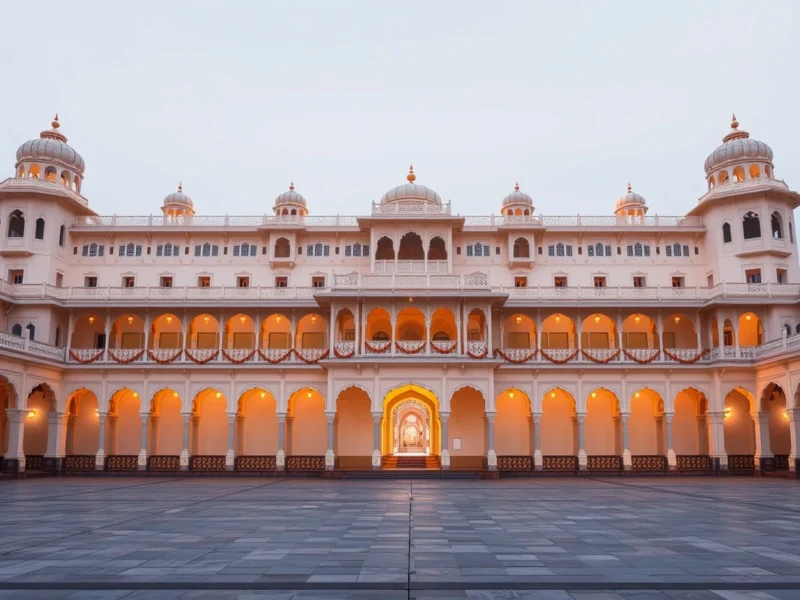
| Wedding day | Jaan, Ponkhana and the mandap rites | The bride’s family hosts | The main venue, timed to the muhurat |
| Wedding day, after the rites | Vidaai | The bride’s family | The venue exit, the emotional close of the day |
| On arrival | Ghar Nu Laxmi and Aeki Beki | The groom’s family | The groom’s home, informal |
Why Gujarati couples take four pheras and not seven
This is the most asked question about a Gujarati wedding and the answer is genuinely
interesting. The four Mangal Pheras correspond to the four purusharthas, the aims of human
life in Hindu thought: Dharma, right conduct; Artha, the means to live; Kama, love and
desire; and Moksha, liberation. Circling the fire once for each is a statement that the
marriage is the vehicle for all four, not only for the domestic ones.
That is a different organising idea from the seven-step Saptapadi, where each step
carries a specific vow. Gujarati weddings usually include both, which surprises people: the
four pheras and then the Saptapadi. Each phera is led by a different parent or sibling,
which draws the whole family into the fire rites rather than leaving them as spectators.
The visible consequence is that the mandap portion of a Gujarati wedding moves faster
than the equivalent in many other communities, which is part of why the day can carry so
many functions around it. The race to sit down first at the end, which every family plays,
belongs to this section and is worth warning the photographers about.
Community variation across Gujarat
Gujarat is not one wedding tradition. The rites above are the shared core and the
variation sits around them.
- Regional. Kathiawadi and Saurashtra families, Kutchi families, and
families from central and south Gujarat differ in their folk music, their food and the
smaller customs, more than in the mandap sequence itself. - Community. Patidar, Brahmin, Vania, Bhatia, Lohana and other
communities carry their own observances, particularly around the pre-wedding pujas, the
family deity honoured and the gifting customs between the two families. - Jain families in Gujarat follow a related but distinct ceremony, and
the catering is strictly vegetarian with root vegetables excluded, which is a menu
decision rather than a preference and needs raising with the caterer at the tasting.
The one constant worth planning around is that Gujarati weddings are vegetarian and that
the food is taken seriously. Undhiyu in particular is seasonal and slow to make well, and a
caterer who is not Gujarati will usually not do it justice.
Planning the Garba, which is usually the biggest night of the wedding
In most Gujarati weddings the Garba draws more guests than the ceremony does. Families
plan it last and regret it, because it is the function with the most moving parts and the
one guests remember. A few decisions shape it more than the rest.
| Decision | Why it matters | When to settle it |
|---|---|---|
| Live orchestra or a DJ | Traditional garba and raas want live singers and dhol; a DJ suits a mixed-age crowd and a shorter night | Early, because good live groups are booked a season ahead in the wedding months |
| Floor size | Garba is danced in concentric circles, so the floor needs to be round and much larger than a reception dance floor | At the venue visit, before signing |
| Seating layout | Elders watch, which means seating around the circle rather than banquet rounds facing a stage | With the decorator, not on the night |
| Dandiya sticks and dress | Guests need sticks, and many will want a chaniya choli or kediyu, which affects what you tell them in advance | With the invitation, so guests can prepare |
| Food timing | Dancing runs late and appetite comes in waves, so live counters usually work better than a single seated service | At the menu tasting |
The one constraint to build the evening around is the statutory night-time limit on
amplified sound, which prohibits loudspeakers and public address systems between 10 pm and
6 am under the Noise Pollution (Regulation and Control) Rules, 2000, with only a narrow
state power to relax it on a limited number of days. Enforcement varies by city and by how
close the venue sits to housing. A Garba that is scheduled to start at ten will be stopped
at its peak. Starting early, and having acoustic dhol available for the last stretch, is the
difference between an evening that ends well and one that ends abruptly.
What to ask the caterer
Gujarati wedding food is vegetarian and it is judged closely by the guests. Three
questions separate a caterer who will do it justice from one who will not. Ask whether they
make Undhiyu in-house and in what season, since it is a winter dish built on fresh
surti papdi and a caterer who is vague about it will not make it well. Ask how they handle
Jain guests, because no-root cooking is a separate kitchen discipline rather than a menu
substitution. And ask what they serve at the Pithi and the Garba specifically, since those
functions want different food from the wedding lunch and are the ones most often
overlooked.
Frequently Asked Questions
How many pheras are there in a Gujarati wedding?
Four. Gujarati weddings have four Mangal Pheras around the sacred fire, one each for Dharma, Artha, Kama and Moksha, unlike the seven pheras common in many other Hindu communities.
What is the Antarpat ritual?
The Antarpat is a cloth held between the bride and groom inside the mandap so they cannot see each other. It is lowered at the auspicious moment, just before the Jaimala garland exchange.
How long does a Gujarati wedding last?
The celebrations usually run three to four days, covering the engagement, Mandap Mahurat, Mehndi, Garba, Pithi and the wedding day itself. The main ceremony on the wedding day takes roughly two to three hours.
What does a Gujarati bride wear?
The bride traditionally wears a Panetar, a white saree with a red border, and a Gharchola odhani in red with gold checks gifted by the groom’s family.
Is Gujarati wedding food always vegetarian?
Yes, Gujarati wedding feasts are almost always purely vegetarian, featuring Undhiyu, dhokla, fafda, jalebi and sweets such as mohanthal and basundi.
What is the Chandlo Matli ceremony?
Chandlo Matli is the formal commitment ritual where the bride’s family visits the groom’s home, applies a chandlo on his forehead and presents a matli, a pot of sweets and gifts, sealing the alliance between the families.
Sources and further reading
Velvet Knot believes in showing our work. The references below are the authoritative sources we consult when planning weddings in this category.
- Hindu Marriage Act, 1955: Government of India
- Gujarat cultural overview, Britannica: Britannica
Begin Your Engagement
Want a real number for your wedding?
Tell us your city, guest count and dates. Team Velvet Knot will come back within 24 hours with an itemised budget.