Nikah Ceremony: Meaning, Rituals and Steps
- What the Nikah means
- The pillars: Ijab and Qubul
- The Wali and the two witnesses
- The Mahr, the bride’s own gift
- Seeking the bride’s consent: the Ijn
- The Qazi, the Khutbah and Quranic recitation
- The Nikahnama: the marriage contract
- Where the Nikah sits in an Indian Muslim wedding
- Sunni and Shia differences
- Legal standing and civil registration in India
- Attire, setting and what a planner arranges
- Related pre-wedding rituals
- Frequently Asked Questions
- Sources and further reading
The Nikah is the Islamic marriage ceremony, understood as a solemn contract, or aqd, between a Muslim bride and groom. It is made valid by a proposal and acceptance, two witnesses, the bride’s consent and a Mahr, the mandatory gift the groom gives the bride.
What the Nikah means
The Nikah is the Islamic marriage ceremony and, at its heart, a contract. In Arabic it is often described as an aqd, a solemn and binding agreement entered into freely by a Muslim man and woman who wish to marry. Unlike a sacrament that cannot be undone, the Nikah is a civil and religious contract with clearly defined rights and duties for both spouses. This framing matters. It means the bride is a consenting party to her own marriage, not an object handed from one family to another, and it means the terms of the union can be written down and honoured.
Marriage carries deep religious weight in Islam. It is regarded as a Sunnah, a practice encouraged by the Prophet Muhammad, and as the lawful foundation for family life, companionship and raising children. Yet the ceremony itself is refreshingly simple. There is no elaborate liturgy that a couple must perform. What is required are a few essential elements, done sincerely and witnessed properly. In India, where Muslim weddings blend Quranic requirement with rich regional custom, the Nikah remains the single moment that actually creates the marriage. Everything else around it, however beautiful, is celebration rather than requirement. You can read how the wider celebration unfolds in our overview of Muslim wedding traditions in India.
The pillars: Ijab and Qubul
The core of every Nikah is the Ijab and Qubul, the proposal and the acceptance. Ijab is the offer of marriage and Qubul is its acceptance. In practice one party proposes and the other accepts, usually in the presence of the Qazi and the witnesses, and often through the words of the Wali and the couple. The offer and acceptance must refer to the same marriage, be made in one sitting, and be spoken clearly and without coercion. Traditionally the acceptance is said aloud three times so there can be no doubt that it was freely given.
This exchange is the legal engine of the ceremony. The moment a valid proposal is met with a valid acceptance, before competent witnesses, the marriage exists. Everything the couple does before that point, the engagement, the feasting, the guests arriving, is preparation. Everything after it, the blessings, the meal, the send off, is celebration. Because the words carry such weight, the Qazi will usually confirm that both the bride and groom understand exactly what is being asked and agreed before he lets the exchange stand.
The Wali and the two witnesses
Two further elements make the contract sound. The first is the Wali, the bride’s guardian, most often her father, and in his absence a grandfather, brother or another close male relative. In Sunni practice the Wali represents the bride’s interests and formally gives her in marriage, though her own consent remains essential and cannot be overridden. The Wali is a protector of the bride’s rights, not a substitute for her will.
The second element is the Shahid, the witnesses. A valid Sunni Nikah requires two adult Muslim witnesses, typically two men, or one man and two women, who observe the offer and acceptance. Their presence makes the marriage public rather than secret, which Islam requires so that the union is known, recognised and protected in the community. Witnesses also anchor the marriage in fact. Should any question ever arise about whether the Nikah took place or on what terms, the witnesses and the signed document are the record. In India these roles sit alongside civil safeguards, which is why couples are encouraged to complete Muslim marriage registration in India as well.
The Mahr, the bride’s own gift
The Mahr, also called Meher, is a mandatory gift or dower that the groom gives to the bride. It is her exclusive property, hers to keep, spend or invest as she wishes, and it is never a payment to her family. The Mahr is not a formality bolted onto the contract; it is one of the requirements of a valid Nikah, and the amount is agreed and recorded before the marriage is concluded. It stands as a mark of the groom’s commitment and as a measure of financial security for the bride.
Mahr comes in two forms by timing. The prompt Mahr, mahr muajjal, is due at once, at or soon after the Nikah. The deferred Mahr, mahr muwajjal, is payable later, commonly upon a date agreed by the couple or in the event of divorce or the husband’s death, when it functions as a real protection for the wife. Many couples fix part of the Mahr as prompt and part as deferred. The sum can be money, gold, property or anything of value, and Islamic tradition favours a reasonable amount that the groom can genuinely honour rather than an inflated figure meant only for show.
Seeking the bride’s consent: the Ijn
Consent is not assumed in a Nikah; it is sought and confirmed. Before the contract is sealed, the Qazi or the Wali privately asks the bride whether she accepts the marriage and its agreed Mahr. This seeking of consent is often referred to as obtaining her Ijn, her permission. In many Indian ceremonies a small delegation, the Qazi with two witnesses, goes to the bride, who is usually seated separately, and asks her three times, clearly, whether she agrees to marry the named groom for the agreed Mahr.
Her word is decisive. A Nikah performed without the free consent of the bride is not valid, and no guardian can force a marriage upon her. This private asking is a deliberate safeguard: it gives the bride a calm, unpressured moment to say yes or no away from the crowd. Only once her acceptance is confirmed and carried back to the gathering does the Qazi proceed to conclude the contract with the groom. It is one of the quiet but most important steps of the whole ceremony.
The Qazi, the Khutbah and Quranic recitation
A Nikah is usually conducted by a Qazi, a Muslim official learned in Islamic law, or by a Maulvi or imam. Strictly speaking a knowledgeable Muslim can officiate, but families almost always invite a Qazi to ensure the contract is correct and to record it properly. The Qazi guides the proceedings, seeks the bride’s consent, confirms the Mahr, presides over the offer and acceptance, and registers the marriage in the community records.
The ceremony commonly opens with the Khutbah-e-Nikah, a sermon of marriage. The officiant praises God, sends blessings upon the Prophet, and recites verses from the Quran that speak of marriage, mercy and the bond between spouses, along with words attributed to the Prophet about the merits of marrying. This recitation sets the tone, reminding everyone present that the union being formed is a trust with duties as well as joys. After the Khutbah the Qazi moves to the consent, the Mahr and the Ijab and Qubul, and then leads the gathering in a Dua, a prayer for the couple’s happiness, harmony and blessings.
The Nikahnama: the marriage contract
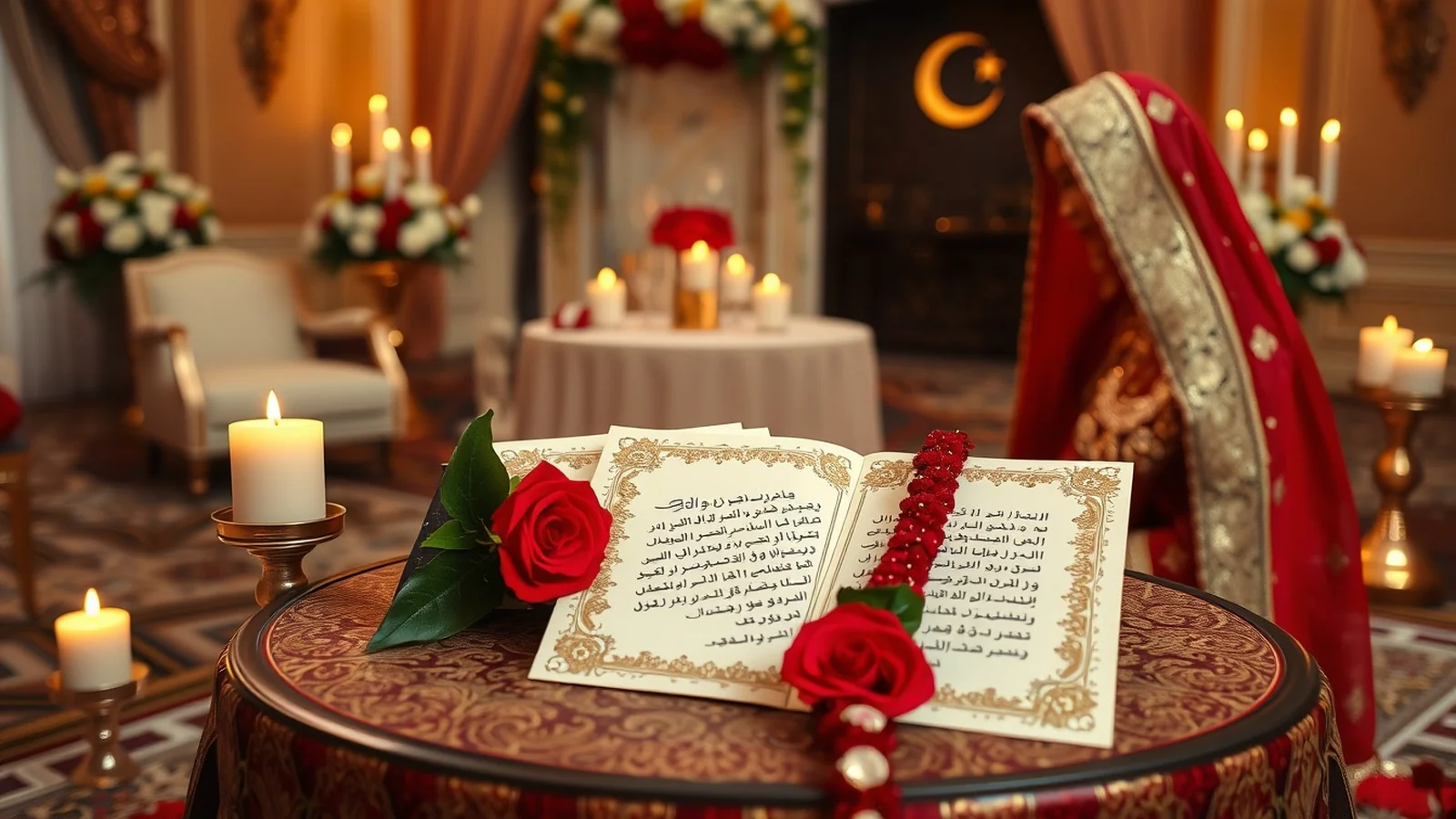
The Nikahnama is the written marriage contract, the document that records the Nikah and its terms. It sets out the names of the bride and groom, the names of the Wali and the witnesses, the date, and crucially the agreed Mahr and how it is divided between prompt and deferred. It is signed by the bride, the groom, the Wali, the witnesses and the Qazi, and it is the couple’s primary proof that the marriage took place and on what conditions.
The Nikahnama can also carry conditions that the couple agree to include. These may address matters such as the wife’s right to seek divorce under agreed circumstances, arrangements for maintenance, or other terms both parties accept, provided they do not contradict Islamic law. Because it is a genuine contract, reading it carefully before signing is important. A well drafted Nikahnama protects both spouses and removes ambiguity later. Couples should keep the original safe, as it is often required alongside civil documents when they register the marriage or apply for official records.
Where the Nikah sits in an Indian Muslim wedding
In an Indian Muslim wedding the Nikah is the centrepiece of a longer sequence of gatherings. The days before may include the Mangni or engagement, the Manjha and Mehndi with their turmeric and henna, and the Sanchaq gifts, all of which vary by region and community. On the wedding day the groom customarily travels to the venue with his family and friends in a festive procession, a tradition shared across many Indian weddings and explained in our guide to the Baraat, the Indian wedding procession.
After the Baraat arrives, the Nikah is performed. Once the contract is sealed and the Dua said, the couple are married. This is followed by the Rukhsati, the emotional farewell in which the bride formally leaves her parents’ home to begin life with her husband, a moment close in spirit to the Hindu Vidaai ceremony. The celebrations then culminate in the Walima, the reception hosted by the groom’s family, which is itself a Sunnah and a public announcement of the marriage through shared food and hospitality. Planning this full arc is what our Muslim wedding planner service is built around.
Sunni and Shia differences
The essentials of the Nikah are shared across Muslim communities, but a few differences distinguish Sunni and Shia practice. The most discussed concerns witnesses. Sunni jurisprudence treats two adult Muslim witnesses as a requirement for a valid Nikah. In Twelver Shia practice, witnesses are strongly recommended and customary but are not held to be a strict condition for validity in the same way, though the offer and acceptance and the Mahr remain essential in both.
There are also modest differences in the wording of the contract and the formulae recited, and in the emphasis placed on the Wali for an adult woman, with some Shia scholars giving a mature woman greater independence to contract her own marriage. These are matters of jurisprudence best confirmed with a qualified scholar or Qazi from the family’s own tradition. For the couple and their guests, the visible ceremony looks broadly similar: a Khutbah, the seeking of consent, the agreement of Mahr, the offer and acceptance, and the signing of the Nikahnama.
Legal standing and civil registration in India
In India, Muslim marriages are governed by Muslim Personal Law, which recognises a properly performed Nikah as a valid marriage. The Nikahnama, signed and witnessed, is the primary religious and contractual record. For everyday legal life, however, a civil record is invaluable. A registered marriage certificate is what banks, passport offices, visa authorities and courts routinely ask for, and it makes proving the marriage straightforward anywhere.
Couples married by Nikah can register under their state’s marriage registration rules, and many states have specific provisions for recording Muslim marriages. Registration does not replace the Nikah or alter its terms; it simply gives the marriage documentary standing in the wider legal system. Some couples additionally choose the Special Marriage Act 1954, a civil route that is useful in interfaith cases, though it carries its own procedure and notice period. Our practical walkthroughs of Muslim marriage registration in India and the general marriage registration process in India set out the documents and steps involved.
Attire, setting and what a planner arranges
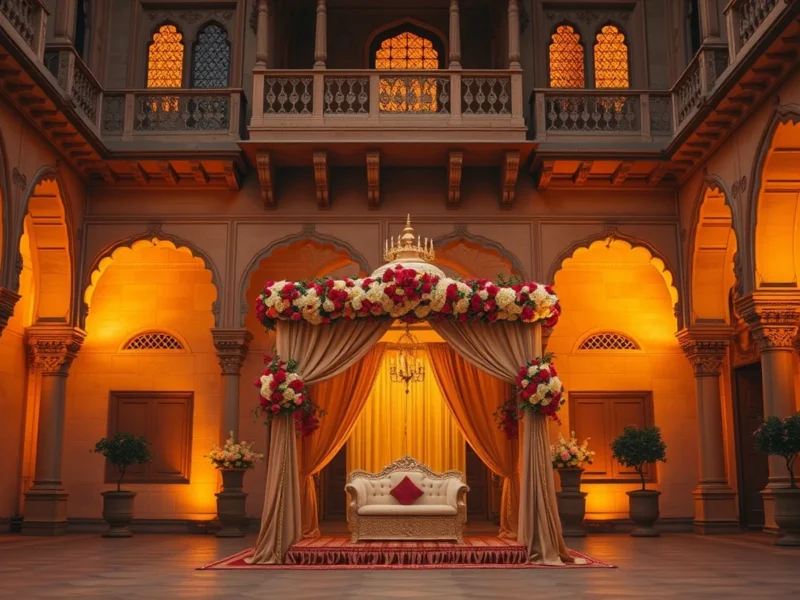
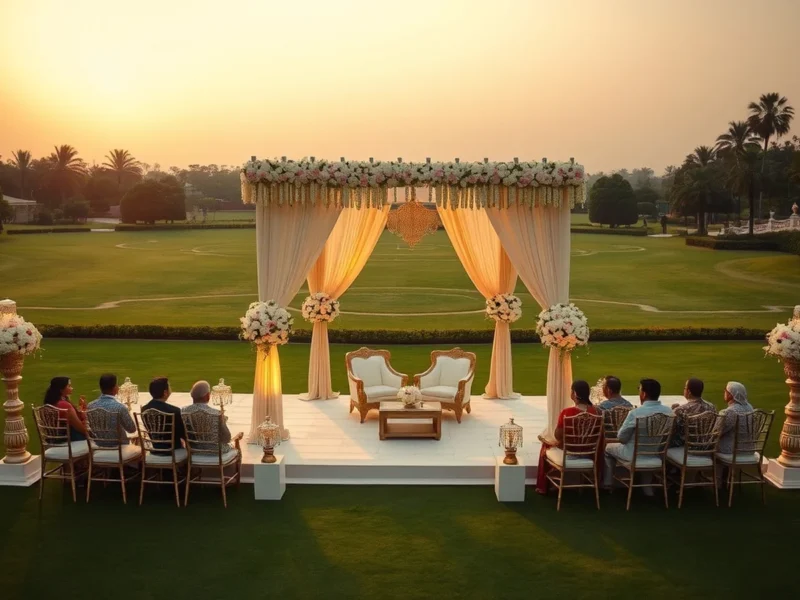
Nikah ceremonies in India range from intimate to grand, but the setting is usually dignified and calm: a mosque, a family home, a banquet hall or a garden, with seating that allows the Qazi, the witnesses and the families to gather comfortably. Brides often wear a richly worked sharara, gharara or lehenga in deep jewel tones with fine jewellery, while grooms favour a sherwani, often with a turban or a cap. Modesty and elegance define the look rather than any single fixed style, and regional traditions add their own colour.
A good planner takes the ceremony’s simple requirements and wraps them in flawless logistics. That means coordinating the Qazi and confirming the witnesses, preparing and checking the Nikahnama, arranging separate and comfortable seating for the bride during the consent, and managing the flow from Baraat to Nikah to Walima without a stumble. It also means the aesthetics: the stage or dais, floral design, lighting, sound so the Khutbah is heard, guest hospitality and the meal. Handled well, the family is free to be present in the moment while every religious and practical detail is quietly taken care of.
Planning a wedding rooted in your traditions?
Tell us your community, dates and vision. Team Velvet Knot will honour every ritual and put together a tailored plan and an honest budget.
Related pre-wedding rituals
Also on Velvet Knot: the walima guide, the guide to mehr.
Also on Velvet Knot: Mappila wedding traditions.
Frequently Asked Questions
Is the Nikah a religious ceremony or a contract?
It is both. The Nikah is a religious act, encouraged as a Sunnah, and at the same time a legal contract, or aqd, between the bride and groom. It creates defined rights and duties, is recorded in the Nikahnama, and requires the free consent of both parties.
What is the Mahr and who receives it?
The Mahr, or Meher, is a mandatory gift the groom gives to the bride. It belongs to her alone, not to her family. It can be paid promptly, called mahr muajjal, or deferred to a later date, called mahr muwajjal, and it can be money, gold or other valuables agreed before the Nikah.
Do you need witnesses for a Nikah to be valid?
In Sunni practice a valid Nikah requires two adult Muslim witnesses to the offer and acceptance, which makes the marriage public. In Twelver Shia practice witnesses are strongly recommended and customary but are not treated as a strict condition of validity in the same way.
Is the bride’s consent really required?
Yes, absolutely. The bride’s free consent is essential and is sought directly, often privately, before the contract is concluded, sometimes asked three times. No guardian can force a marriage on her, and a Nikah performed without her genuine agreement is not valid.
Does a Nikah need to be registered with the government in India?
A properly performed Nikah is valid under Muslim Personal Law, and the signed Nikahnama is its record. Civil registration is not what creates the marriage, but a registered certificate is strongly advised because banks, passport and visa offices and courts routinely require it.
Who performs the Nikah?
A Qazi, a Muslim official learned in Islamic law, usually performs the Nikah, though a Maulvi or imam can also officiate. The Qazi seeks the bride’s consent, confirms the Mahr, presides over the offer and acceptance, leads the Khutbah and Dua, and records the marriage.
Sources and further reading
Begin Your Engagement
Want a real number for your wedding?
Tell us your city, guest count and dates. Team Velvet Knot will come back within 24 hours with an itemised budget.