Muslim Wedding Traditions in India: Nikah, Mehr & Walima Guide
- Pre-Wedding Ceremonies in a Muslim Wedding
- The Nikah Ceremony: Heart of the Muslim Wedding
- Post-Nikah Celebrations
- Sunni vs Shia Wedding Traditions in India
- Venue Options for Muslim Weddings in India
- Muslim Wedding Costs in India (2026 Estimates)
- Modern Adaptations in Indian Muslim Weddings
- The Nikah in detail
- Related pre-wedding rituals
- Frequently Asked Questions
- Plan Your Dream Muslim Wedding with Velvet Knot
- Related guides
- Sources and further reading
A Muslim wedding in India centres on the Nikah, a sacred Islamic contract that includes the Ijab-e-Qubool (proposal and acceptance), the Mehr gift from groom to bride, and the signing of the Nikahnama, followed by the Walima feast. Indian Muslim weddings blend Quranic tradition with regional South Asian customs and typically span two to four days.
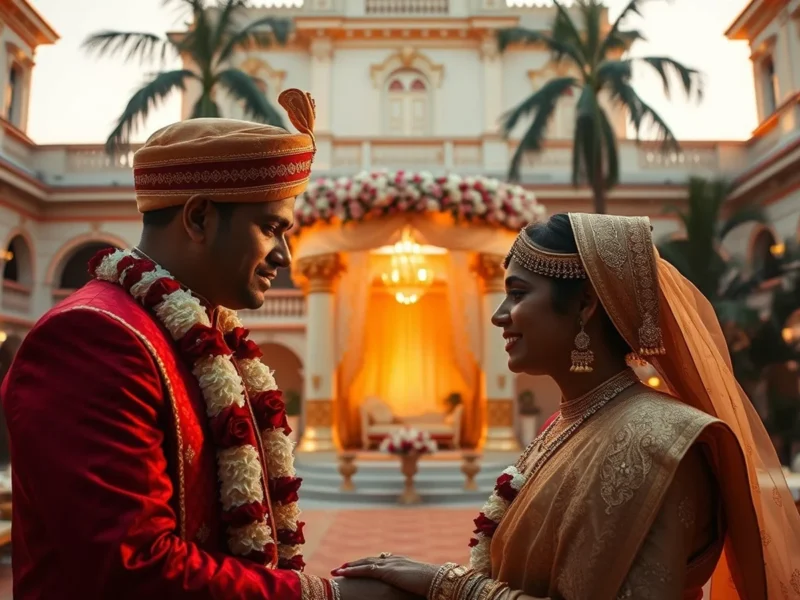
A Muslim wedding in India centres on the Nikah ceremony, a sacred Islamic contract between bride and groom that includes the Ijab-e-Qubool (proposal and acceptance), the setting of Mehr (a mandatory gift from groom to bride), and the signing of the Nikahnama (marriage contract), followed by the Walima feast. Indian Muslim weddings blend Quranic traditions with rich regional customs, resulting in celebrations that typically span two to four days. India’s Muslim population of approximately 200 million (Census 2011 projection for 2026: roughly 215 million) makes it one of the largest Muslim communities in the world, and Muslim weddings here carry distinct South Asian influences in food, fashion, and festivity that set them apart from weddings in the Middle East or Southeast Asia.
Pre-Wedding Ceremonies in a Muslim Wedding
Istikhara
Before the wedding is finalised, many families perform Istikhara, a prayer for divine guidance. The elders of both families pray Salat-ul-Istikhara (a two-rakat prayer) seeking Allah’s guidance on whether the proposed match is good for both parties. This is a private, spiritual step and does not involve any ceremony or gathering. It reflects the Islamic emphasis on seeking God’s will before making major life decisions.

Imam Zamin
The Imam Zamin ceremony is a distinctly South Asian Muslim tradition. When the groom’s family visits the bride’s home for the first time after the match is agreed upon, the groom’s mother ties a piece of cloth containing coins or money to the bride’s arm as a gesture of blessing and acceptance. This tradition is more prevalent in North Indian and Hyderabadi Muslim families. It symbolises the groom’s family formally welcoming the bride.
Manjha (Ubtan) Ceremony
Similar to the haldi in Hindu weddings, the Manjha ceremony involves applying a turmeric-based paste (ubtan) to the bride and groom at their respective homes. In many Indian Muslim families, this ceremony is held one or two days before the Nikah and is an intimate family affair accompanied by folk songs (often in Urdu or the regional language). In Hyderabadi Muslim weddings, this is a particularly elaborate event with traditional music and food. The ubtan is believed to enhance the skin’s glow and is a symbol of purification before the sacred union.
Mehendi Ceremony
The mehendi ceremony is a joyous pre-wedding celebration where henna is applied to the bride’s hands and feet. In Indian Muslim weddings, the mehendi is often the most festive pre-wedding event, featuring music, dancing, and elaborate food. Bridal mehendi designs in Muslim weddings often feature geometric and floral Arabic-style patterns alongside traditional Indian motifs. Professional Arabic mehendi artists in metro cities charge between INR 10,000 and INR 80,000 in 2026. In many communities, the groom’s family sends the mehendi along with gifts, sweets, and outfits for the bride in a custom called mehendi ki thaal.
Sangeet or Dholki Night
While not a religious requirement, many Indian Muslim families hold a sangeet or dholki night before the wedding. This involves singing traditional wedding songs, often accompanied by a dholak (hand drum). In progressive families, this event mirrors the Bollywood-style sangeet with choreographed performances, DJs, and themed decor. Some conservative families may opt for a women-only dholki gathering. The dholki tradition is particularly strong in Lucknowi, Delhi, and Hyderabadi Muslim wedding cultures.
The Nikah Ceremony: Heart of the Muslim Wedding
The Nikah is the Islamic marriage ceremony and the most important part of a Muslim wedding. It is a solemn, legal, and spiritual contract. Here is what happens during a Nikah in India:
Khutbah (Sermon)
The Nikah begins with a Khutbah, a short sermon delivered by the Qazi (Islamic judge) or Maulvi (priest). The Khutbah typically includes recitations from the Quran and Hadith about the sanctity of marriage, the rights and responsibilities of husband and wife, and prayers for the couple’s happiness. This sets the spiritual tone for the ceremony and usually lasts 10 to 20 minutes.
Ijab-e-Qubool (Proposal and Acceptance)
This is the defining moment of the Nikah. The Qazi asks the bride if she accepts the groom as her husband, and she responds “Qubool hai” (I accept) three times. The same question is then posed to the groom, who also responds three times. Two adult Muslim witnesses must be present to validate the Nikah. In many Indian Muslim weddings, the bride and groom are in separate rooms during this process, with a wali (guardian, typically the bride’s father) representing her. However, many modern couples now sit together during the Nikah, which is perfectly permissible in Islam.
Mehr (Mahr): The Bride’s Right
Mehr is a mandatory gift from the groom to the bride, stipulated in the Nikahnama. It is the bride’s exclusive legal right under Islamic law and can be in the form of money, property, gold, or any other valuable asset agreed upon by both parties. The Mehr amount varies widely across Indian Muslim communities. According to various reports, Mehr amounts in India range from a symbolic INR 5,000 to several lakhs of rupees, with affluent families setting Mehr at INR 5,00,000 or more. The Mehr can be paid immediately (Mehr-e-Muajjal) or deferred (Mehr-e-Muwajjal). Note that that Mehr is distinct from dowry; it is a right given to the bride, not demanded from her family.
Nikahnama (Marriage Contract)
The Nikahnama is the formal marriage contract signed by the bride, groom, their respective witnesses, and the Qazi. It records the terms of the marriage including the Mehr amount, any conditions agreed upon (such as the bride’s right to divorce or pursue education and career), and other relevant details. The signed Nikahnama serves as legal proof of the marriage. Under Indian law, Muslim marriages can be registered under the relevant state rules, and the Nikahnama is a key document for this registration.
Dua and Blessing
After the Nikahnama is signed, the Qazi offers a dua (prayer) for the couple’s happiness, prosperity, and a blessed married life. Guests also offer their blessings and congratulations. Dates and sweets (often sheer khurma or dry fruit) are distributed to attendees. The entire Nikah ceremony, from Khutbah to dua, typically takes 30 to 60 minutes.
Post-Nikah Celebrations
Walima (Wedding Feast)
The Walima is the wedding feast hosted by the groom’s family, typically held the day after the Nikah. It is considered Sunnah (a practice of Prophet Muhammad, peace be upon him) and is one of the most important social events in a Muslim wedding. The Walima is open to all family members, friends, neighbours, and community members. In India, Walima feasts are known for their elaborate spreads of biryani, kebabs, nihari, korma, and a variety of desserts. According to caterers in Delhi and Hyderabad, the average per-plate cost for a mid-range Walima dinner in 2026 is INR 1,200 to INR 3,500. Grand Walima events at five-star hotels can cost INR 5,000 to INR 10,000 per plate.
Rukhsati (Farewell)
The Rukhsati is the emotional farewell of the bride from her parental home. The bride’s father or a senior family member places her hand in the groom’s hand and recites a prayer for her happiness and protection. The bride is accompanied to the groom’s home or the couple’s new home by close family members. This moment is often accompanied by tears and heartfelt duas. In Indian Muslim weddings, the Rukhsati is a deeply emotional event, similar in sentiment to the Hindu vidaai.
Chauthi (Fourth Day Visit)
In many Indian Muslim communities, the bride visits her parental home on the fourth day after the wedding, a tradition known as Chauthi or Chauthi Ka Joda. The groom accompanies her, and the bride’s family hosts a small gathering with food and gifts. This tradition helps ease the bride’s transition and maintains the bond between the two families.
Sunni vs Shia Wedding Traditions in India
While the core Nikah structure is the same, there are notable differences between Sunni and Shia Muslim wedding traditions in India:
| Aspect | Sunni Weddings | Shia Weddings |
|---|---|---|
| Nikah Officiant | Qazi or Maulvi | Shia scholar or Maulana |
| Witnesses | Two male Muslim witnesses required | Witnesses required; some scholars accept one male and two female |
| Mehr | Set at agreed amount, often moderate | Often set at higher amounts; 1400 silver dirham tradition common |
| Mutah (Temporary Marriage) | Not permitted | Recognised in some Shia traditions |
| Sermon Style | General Quranic recitation | Includes references to Ahl al-Bayt (Prophet’s family) |
| Post-Wedding | Walima hosted by groom’s family | Walima traditions similar; additional gatherings may include Majlis |
| Festive Elements | Varies by region; generally celebratory | Tends to be more solemn; music restrictions in conservative families |
Venue Options for Muslim Weddings in India
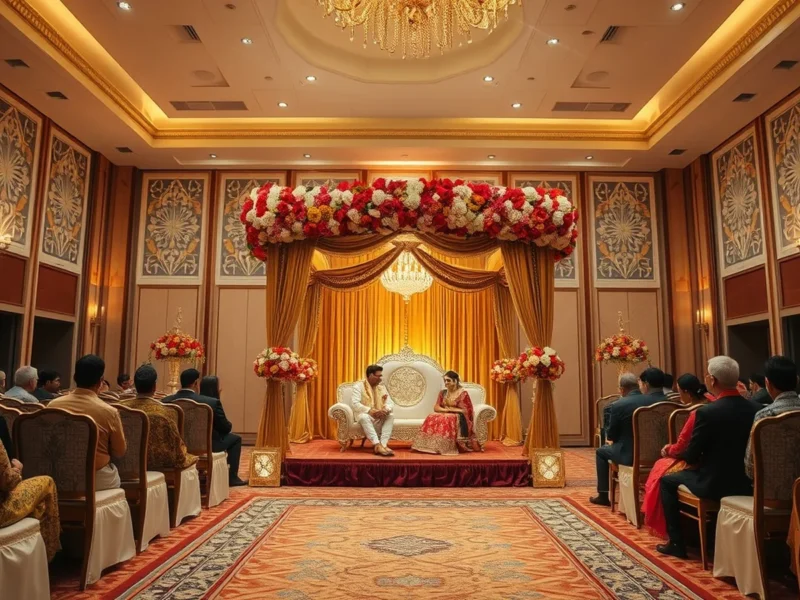
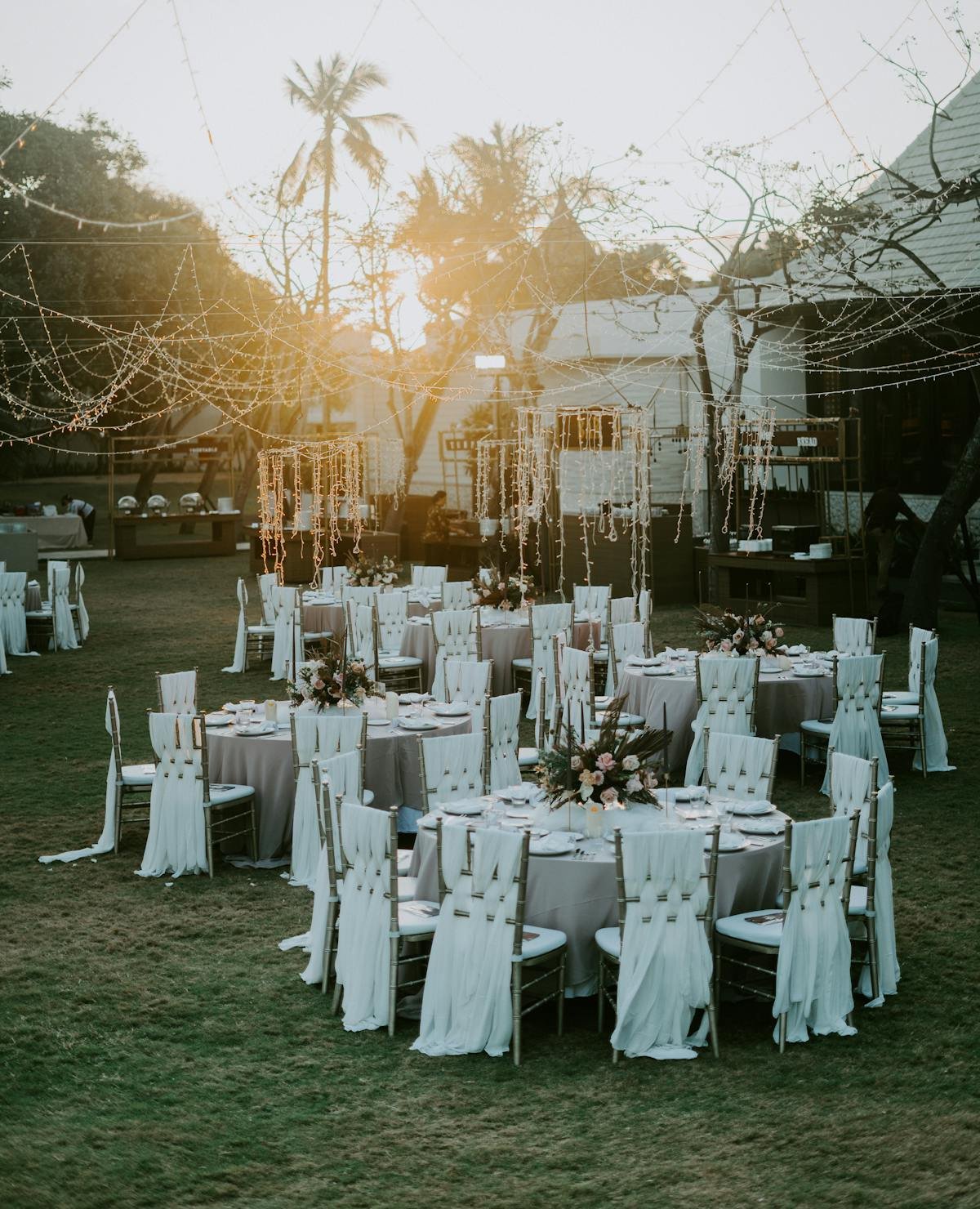
Muslim weddings in India offer great flexibility when it comes to venues. Unlike some traditions that require a specific religious setting, a Nikah can be performed anywhere as long as the Islamic requirements (Qazi, witnesses, Mehr, Ijab-e-Qubool) are met. Common venue choices include:
- Home: Many families prefer to hold the Nikah at the bride’s family home, maintaining a traditional and intimate atmosphere. This is especially common in smaller cities and towns.
- Mosque or Eidgah: Holding the Nikah at a mosque is considered highly auspicious. It is typically the most economical option, with minimal venue costs. However, post-Nikah celebrations and Walima are usually held at a separate venue.
- Banquet Halls and Hotels: The most popular choice for urban Indian Muslim weddings. Banquet halls in cities like Hyderabad, Delhi, Lucknow, and Mumbai cater specifically to Muslim weddings with Halal cuisine, prayer facilities, and appropriate decor. Costs range from INR 2,00,000 to INR 25,00,000 depending on the city and venue quality.
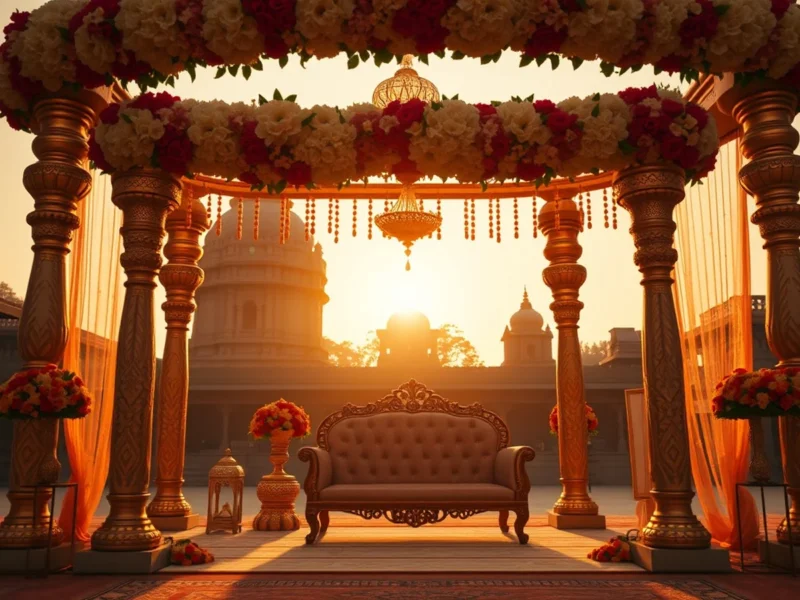
- Destination Venues: Affluent Muslim families are increasingly opting for destination Nikahs at heritage properties in Rajasthan, Kerala, or even international locations. Destination Muslim weddings typically cost INR 30,00,000 to INR 2 crore or more.
Muslim Wedding Costs in India (2026 Estimates)
| Category | Budget Range (INR) |
|---|---|
| Nikah Venue | 0 (mosque/home), 10,00,000 |
| Walima Venue & Catering | 2,00,000-25,00,000 |
| Bridal Outfit (Sharara/Lehenga) | 50,000-5,00,000 |
| Groom’s Outfit (Sherwani) | 25,000-2,00,000 |
| Mehr | 5,000-10,00,000+ |
| Decor (all events) | 1,00,000-15,00,000 |
| Photography & Videography | 1,00,000-8,00,000 |
| Mehendi Artist | 10,000-80,000 |
| Invitations | 15,000-1,50,000 |
| Entertainment | 50,000-5,00,000 |
Modern Adaptations in Indian Muslim Weddings
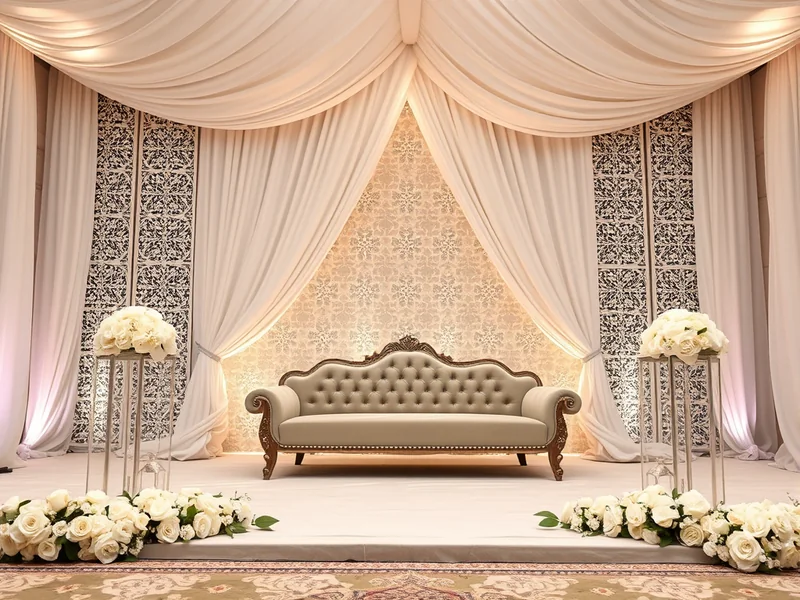
Indian Muslim weddings are evolving while remaining firmly rooted in Islamic principles. Several modern trends are shaping Muslim weddings in 2026. Bride participation in the Nikah is becoming more common, with many brides choosing to sit alongside the groom during the ceremony rather than in a separate room. Personalised Nikahnamas with custom calligraphy and artistic design are trending, with couples framing them as decor. Fusion decor that blends Mughal aesthetics with contemporary minimalism is popular. Couples are also investing more in pre-wedding photography, including modest and elegant shoots at heritage locations. According to WeddingWire India, spending on Muslim wedding photography in India has grown 40% since 2022. Many progressive Muslim families are also incorporating elements like personalised wedding hashtags, live-streamed Nikahs for overseas relatives, and digital RSVPs alongside traditional paper invitations.
The Nikah in detail
Related pre-wedding rituals
Also on Velvet Knot: the walima guide, the ubtan and manjha guide.
Also on Velvet Knot: Kashmiri Muslim wedding traditions, Mappila wedding traditions.
Also on Velvet Knot: Tamil Muslim wedding traditions.
Frequently Asked Questions
How long does a Muslim wedding last in India?
The Nikah ceremony itself typically takes 30 to 60 minutes. However, the entire Muslim wedding celebration, including pre-wedding events (Manjha, Mehendi, Sangeet), the Nikah, Walima, and post-wedding gatherings, usually spans two to four days. Simpler weddings can be completed in a single day with a morning Nikah and evening Walima.
What is the difference between Mehr and dowry?
Mehr and dowry are fundamentally different. Mehr is a mandatory gift from the groom to the bride, stipulated in the Nikahnama. It is the bride’s legal right under Islamic law and she has full ownership of it. Dowry, on the other hand, is an illegal practice (under the Dowry Prohibition Act, 1961) where the bride’s family gives money or assets to the groom’s family. Islam explicitly prohibits dowry and instead mandates Mehr as a safeguard for the bride’s financial security.
Can a Muslim wedding take place at home?
Yes. A Nikah can be performed at any clean, respectful location. Many traditional Indian Muslim families prefer holding the Nikah at the bride’s home, which is considered both traditional and intimate. The key requirements are the presence of a Qazi or authorised officiant, two witnesses, the bride’s consent, the groom’s acceptance, and the agreed-upon Mehr. A mosque is preferred but not mandatory.
What should non-Muslim guests know about attending a Nikah?
Non-Muslim guests are welcome at most Indian Muslim weddings. It is respectful to dress modestly, covering shoulders and knees. Women may be offered a dupatta or scarf if the Nikah is at a mosque. Shoes are removed before entering the prayer area. During the Nikah, guests sit quietly and respectfully. There is no requirement for non-Muslim guests to participate in prayers. The food served will be Halal, which is suitable for all guests. Gifts of cash in odd amounts (INR 1,100, 5,100, 11,000) are a common tradition.
Are interfaith marriages possible in a Muslim wedding?
Islamic law permits a Muslim man to marry a Christian or Jewish woman (People of the Book) without requiring conversion. However, for a Muslim woman to marry a non-Muslim man, most Islamic scholars require the groom to convert to Islam before the Nikah. In India, interfaith couples who do not wish to convert often choose to register under the Special Marriage Act, 1954. Many modern Indian Muslim families are open to interfaith unions, and experienced Qazis can guide couples through the process respectfully.
Is a Muslim marriage legally valid without registration in India?
A Nikah performed with all Islamic requirements (consent, witnesses, Mehr, Ijab-e-Qubool) is considered a valid marriage under Muslim Personal Law in India. However, legal registration is strongly recommended and has been made compulsory in several Indian states. Registration under the respective state’s Muslim marriage registration rules provides legal documentation that is essential for passport applications, visa processing, property matters, and other legal purposes.
Plan Your Dream Muslim Wedding with Velvet Knot
Planning a Muslim wedding? Get a free, personalised quote from Velvet Knot’s expert team. Our planners understand the nuances of Nikah traditions, Halal catering requirements, and elegant Islamic-themed decor. Whether you want an intimate home Nikah or a grand Walima at a luxury hotel, we ensure every detail reflects your faith and style. Get your free quote today.
Related guides
Sources and further reading
Velvet Knot believes in showing our work. The references below are the authoritative sources we consult when planning weddings in this category.
- Muslim Personal Law (Shariat) Application Act, 1937: Government of India
- Nikah (Islamic marriage), Encyclopaedia Britannica: Britannica
- Walima (the wedding banquet) in Islamic tradition, Britannica: Britannica
Wedding paperwork: Muslim marriage registration.
Begin Your Engagement
Want a real number for your wedding?
Tell us your city, guest count and dates. Team Velvet Knot will come back within 24 hours with an itemised budget.