Haldi Ceremony Guide: Meaning, Rituals, Decor & How to Plan It
- What the Haldi ceremony means
- The rituals involved
- When the Haldi happens
- Haldi decor ideas
- How to plan a Haldi ceremony
- What a wedding planner coordinates
- Related decor guides
- Haldi styling ideas
- Guests and the bridal party
- What the function costs
- Related pre-wedding rituals
- Turmeric rites across India, at a glance
- The groom’s haldi
- Turmeric safety
- Modern haldi formats
- Frequently Asked Questions
- Regional variations of the Haldi ceremony
- Practical Haldi planning details a planner handles
- Sources and further reading
The Haldi ceremony is a joyful pre-wedding ritual where family apply a turmeric paste, or ubtan, to the bride and groom to bless, purify and brighten them before the wedding. Held a day before or on the wedding morning, it pairs deep symbolism with music, yellow decor and easy, festive energy.
What the Haldi ceremony means
The Haldi is one of the warmest rituals in an Indian wedding. Married women and close family gather around the bride and groom and smear a golden turmeric paste on the face, neck, hands, knees and feet. It is held separately at each home, or together for couples who prefer one combined function.
The meaning runs deeper than the colour. Turmeric is believed to purify, to protect against the evil eye (buri nazar), and to bless the couple with prosperity. Yellow stands for joy, new beginnings and auspiciousness. Turmeric also has genuine antibacterial and skin-brightening properties, which is why the ritual doubles as a calming, glow-giving treatment before the wedding day.
The ceremony goes by different names across India: Pithi in Gujarat, Gaye Holud in Bengal, Mandha in some northern communities, and Haldi or Haldi ki Rasam more widely.
The rituals involved
Preparing the ubtan
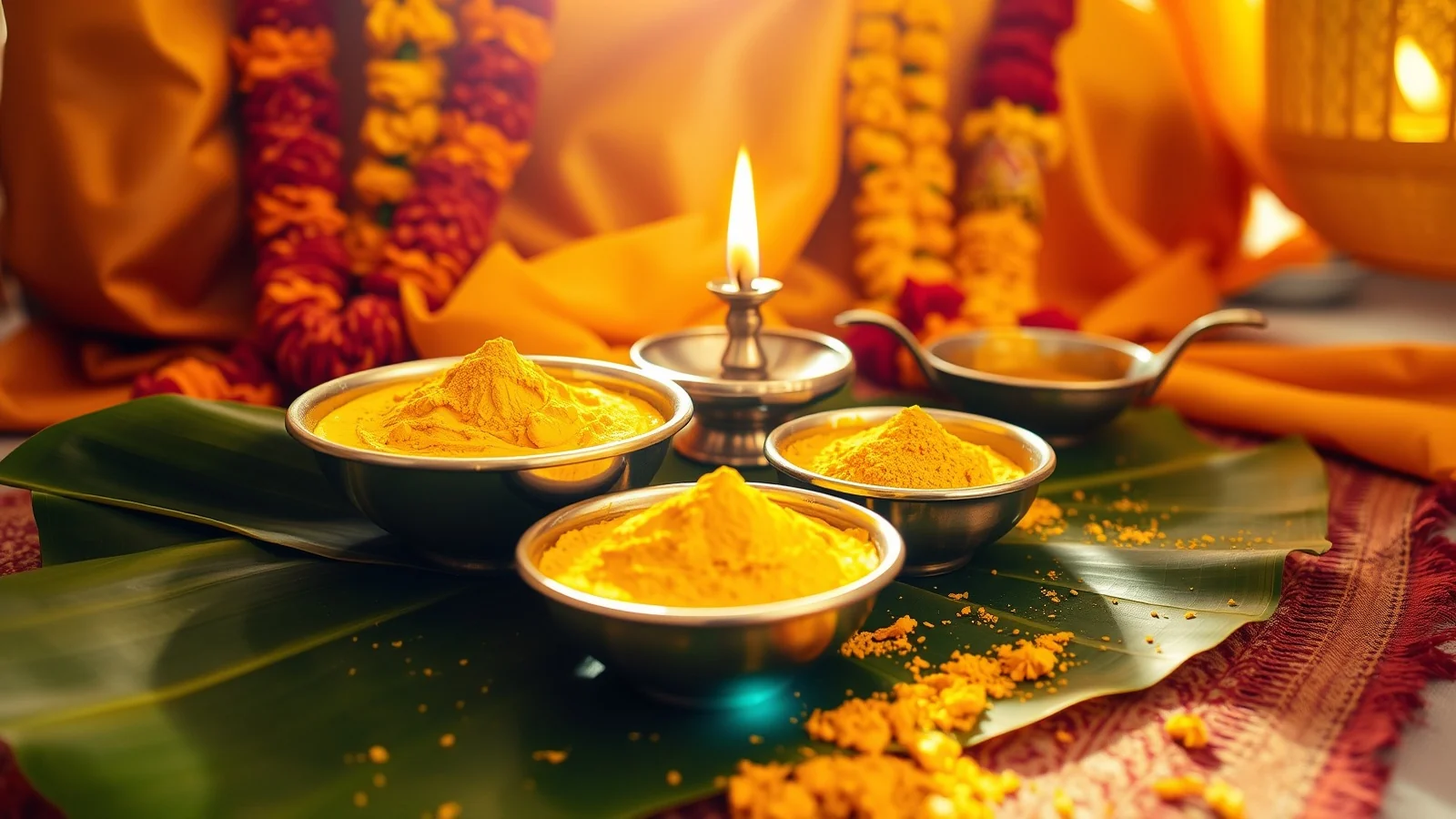
The paste, or ubtan, is mixed from turmeric powder, sandalwood, gram flour (besan) and rose water or raw milk. Families often add curd, saffron or a little mustard oil. The mixture is prepared fresh on the morning of the ceremony.
Applying the haldi
The bride or groom sits on a decorated low wooden stool called a peedi. Married women apply the paste first, followed by other relatives and friends. The order usually moves from elders to younger members, and the application is playful, with everyone teasing and laughing.
Music and blessings
Dhol, folk songs and Bollywood numbers turn the ritual into a small celebration. Elders bless the couple, and many families end with the couple being splashed with water or flowers to wash off the paste.
Planning the wedding these rituals belong to?
Velvet Knot plans luxury Indian weddings end to end, from every ceremony and its decor to the venue, vendors and guest hospitality. Share your dates for a tailored plan.
When the Haldi happens
| Timing option | Why families choose it |
|---|---|
| Morning of the wedding | Traditional choice; the glow is fresh for the ceremony. |
| One to two days before | Gives the couple time to rest and removes the rush on the wedding day. |
| Combined with Mehndi | Common for compact, multi-function single-day events. |
The Haldi usually follows the Mehndi function and precedes the wedding. It is held in daylight, often outdoors, to make the most of the bright yellow setting.
Haldi decor ideas
Yellow leads everything. Popular touches include:
- Marigold and genda phool strings as backdrops and hangings
- A decorated peedi or low seating for the couple
- Bright fabrics, drapes and floor cushions in yellow and orange
- Earthy props such as matkis, brass pots and woven baskets
- Floral jewellery for the bride and a fresh-flower theme throughout
- A photo corner with a “haldi” sign for guest pictures
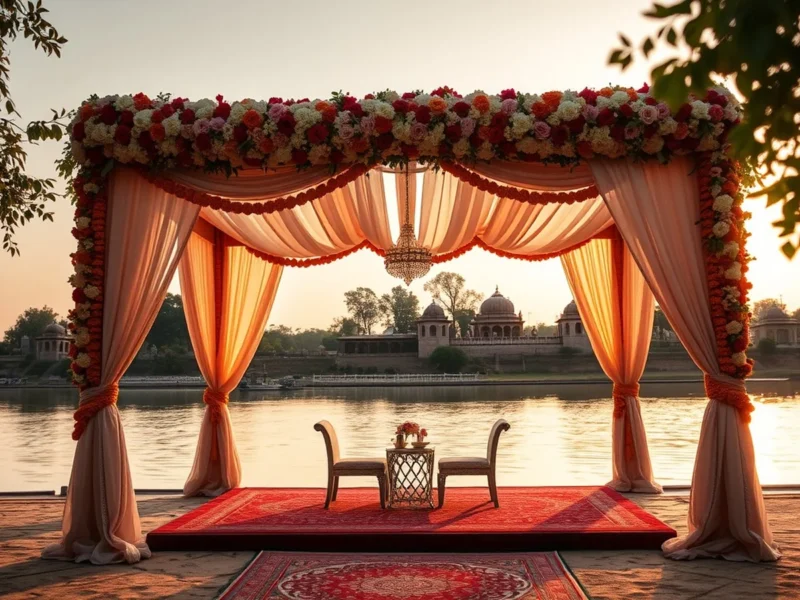
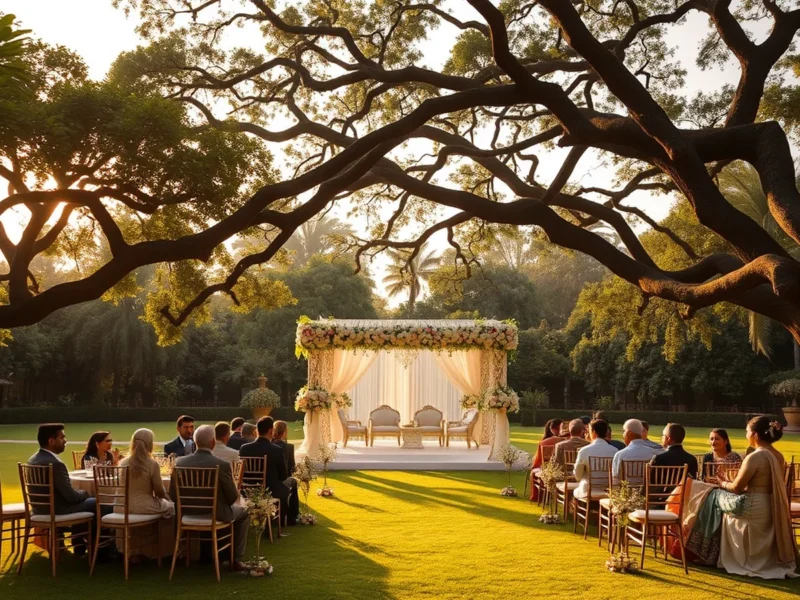
Decor can be as simple as a home setup or as elaborate as a resort lawn, depending on budget and the number of guests.
How to plan a Haldi ceremony
A few decisions make planning straightforward. Choose the venue first: an intimate home Haldi or a larger venue function. Fix the guest count, since the Haldi is usually a close-family affair. Brief the decorator on the yellow theme, arrange the ubtan ingredients, plan a light daytime menu, and dress guests and the couple in old or yellow clothes that can be stained. Photography matters here, the candid, colour-soaked images from a Haldi are among the most loved of the whole wedding.
A budget guide: a simple home Haldi runs around Rs 10,000 to Rs 40,000, a mid-range venue Haldi with professional decor and a photographer around Rs 50,000 to Rs 2 lakh, and a grand resort Haldi with themed decor, a DJ and full catering Rs 2 lakh and upward.
What a wedding planner coordinates
For the Haldi, a planner handles the decor and floral setup, the peedi seating, a light daytime menu, photography that captures the candid moments, music and a dhol, and the logistics of stain-friendly clothing and clean-up. Slotting the Haldi correctly against the Mehndi and wedding muhurat is part of the job too. Velvet Knot is a pan-India premium wedding planner and plans every major tradition, the Haldi included. See how the Haldi fits the wider ceremony in our Hindu wedding rituals guide, explore our services, or request a quote.
Related decor guides
Haldi styling ideas
Guests and the bridal party
What the function costs
Related pre-wedding rituals
- the mehndi ceremony explained
- mangala snanam, the dawn ritual bath
- the chooda and kalire ceremony
- the Ganesh puja that opens a wedding
The rite before this one: read our full guide to the mayian and vatna ceremony.
Also on Velvet Knot: wedding captions for Instagram.
Also on Velvet Knot: the gaye holud guide.
Also on Velvet Knot: the ubtan and manjha guide.
Turmeric rites across India, at a glance
Almost every Indian community anoints the bride and groom before the wedding, and each has its own name, paste and customs. This table brings them together, with our dedicated guide to each.
| Community | Name | What is distinctive | Guide |
|---|---|---|---|
| Punjabi | Mayian and vatna | A red phulkari held overhead; the bride stays indoors afterwards | Mayian guide |
| Gujarati | Pithi | Held at each home, often on the same day as the mameru | Pithi guide |
| Bengali | Gaye holud | The groom first; his turmeric is sent to the bride with the tattva | Gaye holud guide |
| Telugu | Pellikuthuru and pellikoduku | Marks the change to bride and groom; green bangles and the dishti chukka | Pellikuthuru guide |
| Tamil and Kerala | Mangala snanam | The ritual bath, often on the wedding morning | Mangala snanam guide |
| Muslim, Hyderabad and North India | Ubtan, manjha or mayun | The bride in yellow, often followed by days at home | Ubtan and manjha guide |
| Haryanvi | Ban baithna | Turmeric over several days, with the women’s oldest songs | Haryanvi wedding guide |
In a wedding between two communities, each family usually holds its own rite for its own child, and the guests from the other side are welcome at both.
The groom’s haldi
The groom’s haldi is often an afterthought in the planning, but in most communities it is a full ceremony at his family’s home or his side of the venue, led by the women of his family. It is usually louder and messier than the bride’s, because his friends treat it as their event. Give it its own time slot, its own space and its own photographer, and if the bride’s and groom’s haldis are at the same venue, separate them by a few hours so that relatives close to both families can attend both.
Turmeric safety
A haldi looks harmless and causes more small injuries than any other wedding event. Three precautions cover most of them. Keep paste away from eyes, and have clean water and a towel at hand; turmeric and oil sting. Lay non-slip mats or sheets on marble and tiled floors, because oil and wet paste make them dangerously slippery, especially for elders. And keep the playful part away from the elderly, from anyone with a skin condition, and from expensive clothes and jewellery that were not meant to be stained.
Modern haldi formats
The haldi has become one of the most creative events of a modern Indian wedding. Popular formats include a poolside haldi, where the bride and groom end in the water; a flower shower, with marigold petals instead of or after the paste; a joint haldi for the couple, with both families together; and a games-led haldi with music and a DJ for the younger guests. The traditional core, the elders applying the paste first with their blessings, works inside any of these, and families who keep it at the start rarely regret it.
Also on Velvet Knot: Koli wedding traditions.
Frequently Asked Questions
What is the meaning of the Haldi ceremony?
The Haldi ceremony applies a turmeric paste to the bride and groom to purify them, protect against the evil eye, and bless them with prosperity before the wedding. Yellow symbolises joy and new beginnings.
When is the Haldi ceremony held?
It is held either on the morning of the wedding or one to two days before, usually after the Mehndi function. Some families combine it with the Mehndi for a single-day event.
What is ubtan made of?
Ubtan is a paste of turmeric powder, sandalwood, gram flour and rose water or raw milk. Families often add curd, saffron or a little mustard oil.
What should guests wear to a Haldi?
Guests usually wear yellow, and clothes they do not mind staining, since the turmeric paste marks fabric. Light, comfortable daytime outfits work best.
How much does a Haldi ceremony cost in India?
A simple home Haldi costs roughly Rs 10,000 to Rs 40,000, a mid-range venue function Rs 50,000 to Rs 2 lakh, and a grand resort Haldi with themed decor and catering Rs 2 lakh and upward.
Is the Haldi ceremony only a Hindu tradition?
It is most associated with Hindu weddings, but similar turmeric or anointing rituals exist across communities, such as Gaye Holud in Bengal and the Roce in Goan and Mangalorean Christian weddings.
Regional variations of the Haldi ceremony
The Haldi has different names, structures, and ritual ingredients depending on community. Treating them as interchangeable is one of the most common briefing mistakes outside planners make. The variations that matter:
North Indian Haldi (Punjabi, Marwari, Rajasthani)
Held the morning of the wedding day or the day before. The paste is applied by the bride’s brother, sisters, mother, aunts, and unmarried cousins, in a loose order with no strict sequence. Often accompanied by dhol players and a Sangeet-style atmosphere. The paste is typically turmeric, sandalwood, milk, and rose water. Outfit colours skew yellow, marigold-orange, and occasionally green for the bride.
Bengali Gaye Holud
Runs as two separate ceremonies, one at the bride’s home and one at the groom’s, on the same day or back-to-back days. Turmeric paste mixed with mustard oil is sent from one side to the other in elaborately decorated baskets, along with the bride’s wedding sari, jewellery, and sweets. The application order is structured: married women apply first, then unmarried cousins, then close friends. The Aiburo Bhaat (last unmarried meal) is served immediately after.
Maharashtrian Halad Chadavane
Held at both the bride’s and groom’s homes. The paste is prepared from turmeric (halad) and ground in a stone mortar by Sumangali women. Applied with a leaf, not the hand, in many traditional families. The ceremony is shorter (45-90 minutes) than North Indian Haldi and the music is typically traditional Marathi rather than Bollywood.
South Indian variants (Telugu Pellikuthuru/Pellikoduku, Tamil Nalangu)
Telugu families call this Pellikuthuru for the bride and Pellikoduku for the groom, held separately at each home. The paste is turmeric, sandalwood, and rose water, and the ritual also includes the Aarti and Sumangali blessings. Tamil families call the equivalent ceremony Nalangu, often performed the evening of the wedding day itself after the main Kalyanam, with the bride and groom applying paste to each other.
Gujarati Pithi
The Pithi paste is turmeric and chickpea flour (besan) and is applied at both the bride’s and groom’s homes. The Pithi ceremony has a stronger musical-celebratory character than other regional variants, with Garba dancing common alongside.
Sindhi Saanth and Mehndi
Sindhi Haldi (Saanth) is typically combined with the Mehndi ceremony into a single longer event. Paste is sandalwood and turmeric. The Saanth includes the Bhatai song tradition where elderly women sing wedding songs that have been passed down generations.
Practical Haldi planning details a planner handles
- Paste staining. Turmeric stains nearly everything. The bride’s haldi outfit, the groom’s clothes, and the seating area cloths all need to be wash-fast pre-stained yellow rather than cream or white. Many families assume turmeric washes out fully: it does not.
- Skin sensitivity test. A patch test 48 hours before the ceremony is non-optional for the bride and groom. Turmeric applied to skin that reacts (rare but real) causes redness or allergic response that shows up in photographs.
- Paste preparation logistics. Fresh paste is the standard. The catering team prepares it the morning of the ceremony with the correct grind and consistency. We brief the caterer 48 hours in advance with the community-specific recipe and quantity (typically 1.5-3 kg paste for the full ceremony).
- Photography brief. The Haldi is the most colour-saturated photograph of the entire wedding. Lighting setups for yellow-tone photography differ from white-balance setups for the wedding ceremony. We brief the photographer 24 hours ahead and arrange the haldi seating to optimise for the photo angle.
- Music and atmosphere. Dhol players for North Indian Haldi, Shehnai for Maharashtrian, classical Indian for South Indian Pellikuthuru. The atmosphere is set by the music; mismatch breaks the family experience.
Sources and further reading
Velvet Knot believes in showing our work. The references below are the authoritative sources we consult when planning weddings in this category.
- Hindu Marriage Act, 1955: Government of India
- Turmeric (Curcuma longa) in Indian ritual, Britannica: Britannica
Begin Your Engagement
Want a real number for your wedding?
Tell us your city, guest count and dates. Team Velvet Knot will come back within 24 hours with an itemised budget.