Haldi Outfit Ideas for the Bride, Groom and Guests
- Why yellow and florals rule the haldi
- Bridal haldi outfit ideas
- Groom haldi looks
- Guest haldi outfits
- Colours beyond yellow: marigold, mint, ivory and pastels
- Turmeric-proof fabrics and floral jewellery
- Hair, makeup and footwear
- Budget versus designer, and matching your decor
- What a haldi costs
- Frequently Asked Questions
- Sources and further reading
Haldi is the sunniest ceremony of an Indian wedding, and your outfit should read joyful, turmeric-proof and photogenic. This guide covers bridal, groom and guest looks, colours beyond yellow, real-flower jewellery, hairstyles, footwear and how to dress to match your decor.
Why yellow and florals rule the haldi
The haldi is the morning ceremony where turmeric paste is smeared on the bride and groom to bless them with glowing skin, protection and prosperity before the wedding. Turmeric itself is the star, so the colour palette follows its lead. Yellow signals the sun, new beginnings, fertility and auspiciousness in Hindu tradition, which is exactly the energy families want to invite before a marriage.
Florals belong to the haldi for the same reason. The ceremony is usually held outdoors or in a bright courtyard, draped in marigolds and jasmine, so a bloom-heavy outfit or floral jewellery feels native to the setting rather than costumey. If you are still planning the ritual itself, our haldi ceremony guide walks through the customs region by region, and the haldi and mehndi decoration ideas show how the backdrop shapes what you wear.
The practical takeaway: pick something you genuinely do not mind staining, in a colour that photographs beautifully against a marigold wall. That single rule solves most haldi outfit dilemmas.
Bridal haldi outfit ideas
The bride has the most freedom to play here, because the haldi is relaxed rather than formal. The most-loved silhouettes are:
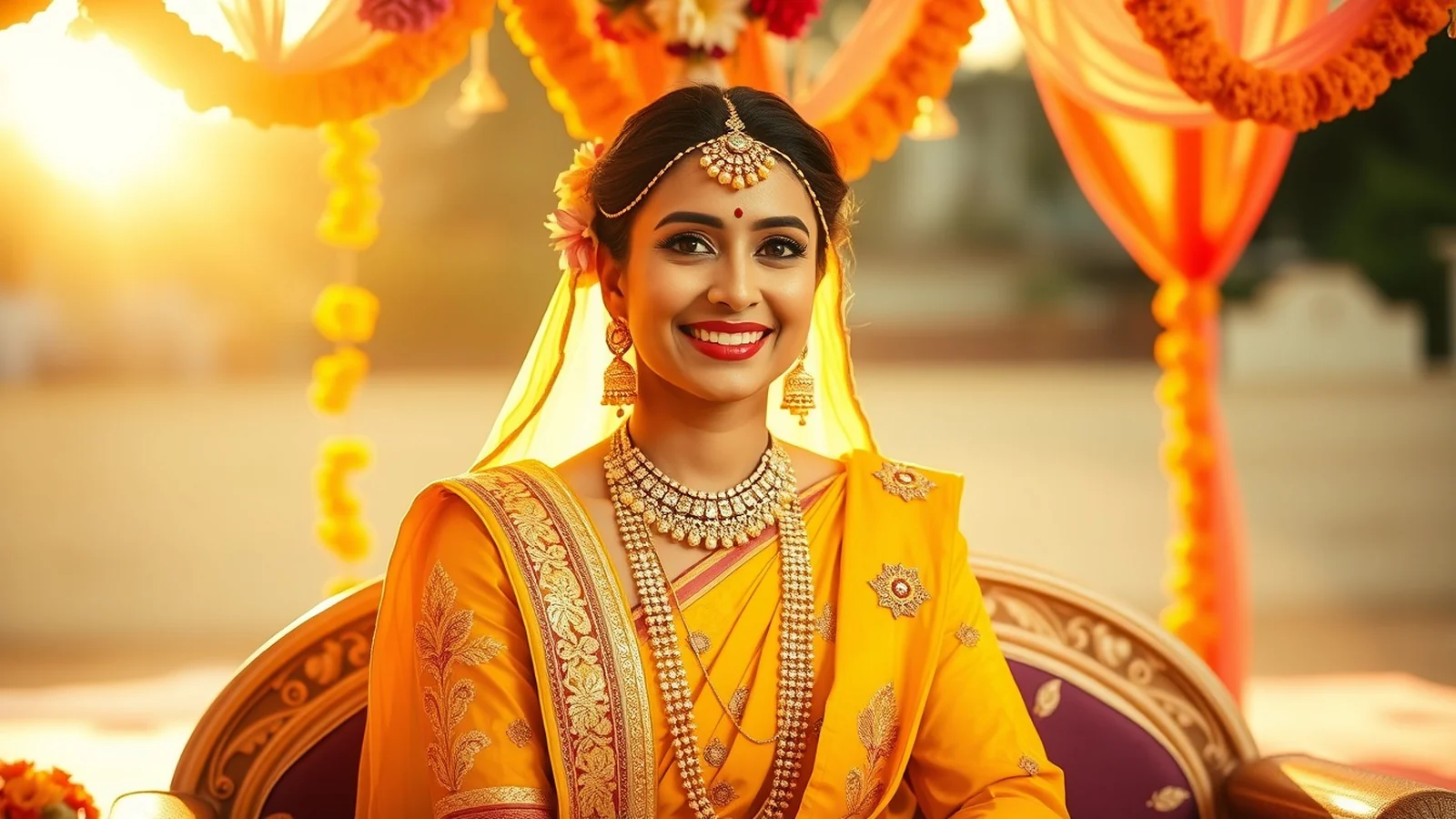
- Yellow lehenga: a light cotton, chanderi or organza lehenga in mustard, sunflower or lemon. Skip heavy zardozi. You will be sitting on the floor and getting doused in paste, so a mid-weight skirt with a simple blouse is smarter than a bridal-grade lehenga. For a sense of where the money goes on the wedding-day version, see our bridal lehenga cost breakdown.
- Saree: a yellow georgette, cotton or organza saree with a contrast blouse is effortless and very South Indian. A Kerala-style off-white and gold kasavu saree with a yellow blouse is a quietly elegant alternative.
- Sharara or gharara: flared and fun, these move beautifully in photos and let you dance. Pair with a short kurti and gota-patti dupatta.
- Organza sets: sheer, floaty and modern, organza suits the golden-hour light and layers well with floral jewellery.
- Gota patti and mirror work: Rajasthani gota patti, tiny mirrors and light thread embroidery give texture without the weight of stones.
Finish with fresh floral jewellery instead of gold, which we cover in detail below. The look you are after is radiant and unfussy, not bridal-heavy. That comes on the wedding day.
Groom haldi looks
Grooms often default to a plain kurta, but the haldi is a genuine chance to look intentional in photos where you are standing right beside the bride. Strong options:
- Yellow or white cotton kurta: the reliable classic. A yellow kurta with white pyjama, or a white kurta with a yellow bandi jacket or angavastram, reads clean and traditional.
- Dhoti-kurta: especially for South Indian grooms, a cotton or silk dhoti with a mundu-style border and a short kurta or angavastram looks rooted and photographs well against temple-style decor.
- Kurta with a printed or floral bandi: a small floral or bandhani jacket over a plain kurta coordinates the groom with the bride without matching outfit-for-outfit.
- Pathani or short kurta sets: comfortable and easy to move in for grooms who expect a lively, high-energy haldi.
Keep fabrics natural and mid-toned so turmeric blends in rather than screaming off a stark white. A yellow or off-white kurta hides stains far better than pure white. Grooms can add a fresh-flower mala or a haldi-yellow safa if the family wants coordinated headgear.
Guest haldi outfits
Guests should lean bright, breathable and low-maintenance. This is a daytime, hands-on ceremony, so anything precious or dry-clean-only is a mistake. Good guest choices:
- Women: yellow, orange or mint suits, cotton sarees, sharara sets, or a floral anarkali. A printed cotton or a light Lucknowi chikankari kurta set is comfortable and camera-ready.
- Men: a bright kurta-pyjama in yellow, sage, coral or white, with optional Nehru jacket. Linen and cotton beat synthetics in the heat.
- Coordination: guests should avoid out-dressing the couple. Save heavy lehengas and sherwanis for the reception.
If your guests are unsure how formal to go across the full wedding, point them to our guide on what guests wear to an Indian wedding, and the mehndi outfit ideas for the companion function, since many guests dress for both in one visit.
Colours beyond yellow: marigold, mint, ivory and pastels
Yellow is traditional, not compulsory. Many modern couples set a broader haldi palette so the photos feel curated rather than uniform. Popular directions:
- Marigold and orange: deeper, richer and gorgeous against green foliage decor. Marigold reads festive and warm on camera.
- Mint and sage green: a fresh, contemporary pairing with yellow decor and one of the most requested haldi palettes right now.
- Ivory, white and gold: understated and elegant, letting the turmeric provide the only pop of colour. Very flattering in outdoor light.
- Pastels: peach, blush, lilac and powder blue for a soft, romantic mood, often used when the couple wants a dreamy rather than vibrant haldi.
- Coordinated but not matching: the couple in ivory or mint while guests wear yellows and oranges creates natural visual hierarchy in every frame.
Whatever palette you choose, tie it to the decor so the two work as one scene. Our wedding theme ideas can help you set a colour story that runs from haldi through to the reception.
Turmeric-proof fabrics and floral jewellery
Turmeric stains are the defining risk of the day, so fabric choice matters more than embroidery. The reality is that no fabric is fully stain-proof, but smart picks limit the damage:
- Best bets: mid-toned cottons, georgette, chiffon and organza in yellow, mustard or orange, where turmeric is least visible. Synthetics release stains more easily than natural fibres in a first wash, though colour helps most.
- Avoid: pure white silk, heavy zardozi and delicate net you would cry over. Save real bridal pieces for the wedding.
- Tip: deliberately choosing a yellow or orange outfit means any turmeric splash simply disappears into the base colour.
For jewellery, fresh flowers are the signature haldi look. Marigold, jasmine, rose and orchid are strung into maang tikkas, haathphool, earrings, chokers, kaleere and bajubandh. Real-flower sets are inexpensive, biodegradable and photograph beautifully, and they coordinate instantly with a floral backdrop. If gold is a family must, keep it to light jhumkas and a thin bangle stack rather than a full bridal set. The same florists who dress your mandap can string your jewellery, as covered in our flower decoration ideas.
Hair, makeup and footwear
Hair: keep it off your neck and low-maintenance, because turmeric will fly. Loose beachy waves, a messy braid wrapped in fresh flowers, a floral bun or a half-up look with a gajra all suit the mood. A jasmine or marigold gajra is the single most South Indian finishing touch you can add.
Makeup: go minimal and dewy. Heavy foundation will streak the moment paste hits your face, so most brides opt for a fresh base, waterproof mascara, a tint of blush and a nude or coral lip. This is a no-glam-needed function, which also means you are not spending on it. For where the real spend lands, see our bridal makeup cost guide, then save the full glam for the wedding day.
Footwear: comfort wins. Juttis, kolhapuris, embellished flats or block heels let you sit cross-legged, stand and dance without strain. Skip stilettos on grass or uneven courtyard flooring. Many brides go barefoot or in simple slip-ons since feet are often part of the turmeric ritual anyway.
Budget versus designer, and matching your decor
A haldi outfit does not need a designer price tag to shine, because the setting does most of the work. Here is how to think about spend:
- Budget (under a few thousand rupees): a cotton or georgette yellow saree, a ready-made sharara set, or a local-boutique kurta, finished with fresh-flower jewellery. This is genuinely the smart choice, since the outfit will be stained.
- Mid-range: an organza or chanderi lehenga set with gota-patti detailing, rentable or reusable for another daytime function later.
- Designer: worth it only if you will re-wear the piece, or if the haldi is a large, heavily photographed event. Even then, many designers now make lightweight haldi-specific pieces at gentler prices.
Finally, match your outfit to the decor deliberately. If the backdrop is deep marigold, an ivory or mint outfit makes you stand out, while a yellow outfit blends into a soft, tonal frame. Decide which effect you want before you shop. When the outfit, florals and backdrop are chosen together, the haldi photographs like a single considered scene rather than three separate decisions. If you want that level of coordination handled end to end, you can get a quote from our team.
Planning a luxury wedding?
Tell us your dates and vision. Team Velvet Knot will put together a tailored plan and an honest budget.
What a haldi costs
Frequently Asked Questions
What colour should the bride wear for haldi?
Yellow is the traditional choice because it mirrors the turmeric and signals auspicious new beginnings, but marigold, mint, ivory and pastels are all popular modern alternatives. Pick a shade that photographs well against your decor and that you do not mind staining.
What fabric is best for a haldi outfit?
Mid-weight cottons, georgette, chiffon and organza are ideal because they are breathable, easy to move in and forgiving. Choosing a yellow or orange base helps most, since any turmeric splash blends into the colour. Avoid pure white silk and heavy embroidery you would not want stained.
Can the bride wear something other than yellow?
Yes. Many brides now choose ivory, mint, peach or marigold, or let the couple wear a neutral while guests wear yellows. The only real rule is comfort and stain-tolerance, so wear a colour and fabric you are happy to see covered in turmeric.
What should male guests wear to a haldi?
A bright cotton or linen kurta-pyjama in yellow, sage, coral or white, with an optional Nehru jacket. Keep fabrics breathable for a daytime outdoor function and save the sherwani for the wedding or reception.
Is real-flower jewellery better than gold for haldi?
For most brides, yes. Fresh marigold, jasmine and rose jewellery is inexpensive, biodegradable, coordinates instantly with floral decor and photographs beautifully, and you avoid staining precious pieces. If you want gold, keep it to light jhumkas and a few bangles.
How much should I spend on a haldi outfit?
Less than you might think. Because the outfit will be stained, a cotton or georgette piece under a few thousand rupees is the sensible choice for most brides. Reserve designer spend for outfits you will genuinely re-wear or for large, heavily photographed haldis.
Sources and further reading
Begin Your Engagement
Want a real number for your wedding?
Tell us your city, guest count and dates. Team Velvet Knot will come back within 24 hours with an itemised budget.