Toe Rings After Marriage: Metti, Mettelu and Bichiya Explained
- What toe rings mean
- Names across India
- Which toe, and how many
- Why toe rings are silver
- When toe rings go on in the wedding
- Other signs of marriage in different communities
- Designs and styles
- If you are marrying across communities
- Do toe rings have health benefits?
- Buying and sizing
- Wearing them today
- Frequently Asked Questions
- Sources and further reading
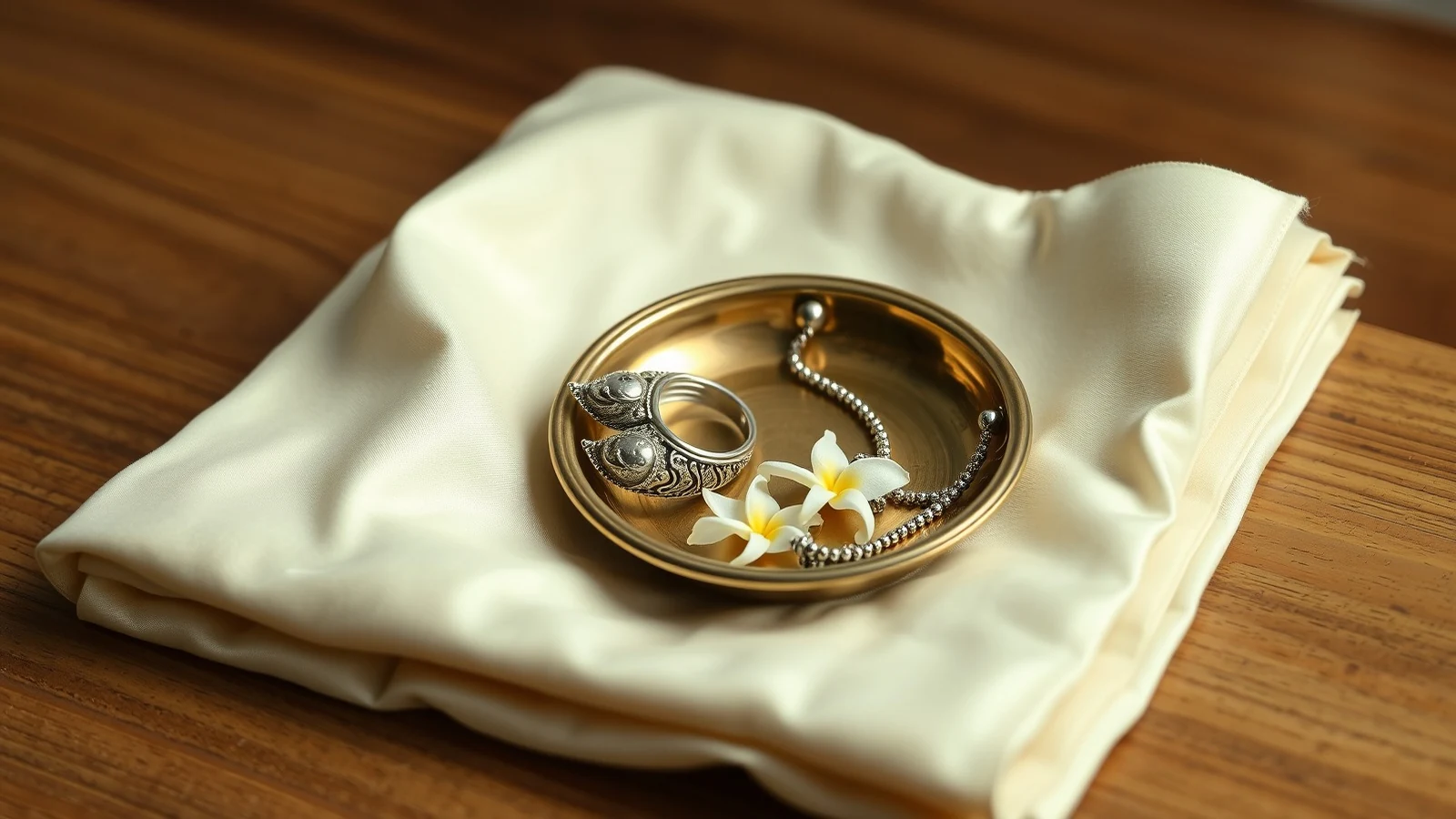
In many Hindu communities, a married woman wears a pair of toe rings on the second toe of each foot, placed there by her husband during the wedding. They are called bichiya in Hindi, metti in Tamil, mettelu in Telugu, jodavi in Marathi and kaalungura in Kannada. They are traditionally silver, because gold is not worn below the waist, and the health benefits often claimed for them have not been scientifically tested.
What toe rings mean
A pair of toe rings is one of the signs of a married Hindu woman, alongside the mangalsutra, sindoor and bangles in many communities. The husband places them on her toes during the wedding, and many women wear them for the rest of their married lives.
The custom is old. In the Ramayana, Sita drops her toe ring as she is carried away, so that Rama can follow her trail. Today, toe rings are worn across India, but they are especially strongly tied to marriage in the South and in Maharashtra.
Names across India
| Language | Name |
|---|---|
| Hindi | Bichiya |
| Tamil | Metti |
| Telugu | Mettelu |
| Marathi | Jodavi |
| Kannada | Kaalungura |
| Malayalam | Minji or kaalmothiram |
| Bengali | Angot |
In English, they are simply toe rings.
Which toe, and how many
Toe rings are worn in pairs, one on the second toe of each foot, the toe next to the big toe. Some sets include rings for three or four toes, but never the little toe. Traditionally, some unmarried girls wore a ring on a different toe, the third, so the second toe was kept for marriage.
A typical bridal pair has a broad, decorated ring for the second toe, often with a small motif such as a fish, a flower or a peacock. Simpler, thinner rings are common for daily wear.
Why toe rings are silver
Most toe rings are silver. Many Hindu families avoid wearing gold below the waist, because gold is associated with the goddess Lakshmi and treated with respect. Anklets are silver for the same reason.
The rule is not universal. Gold, and even diamond, toe rings are worn now, and some families have no objection at all. If your family has a view, the bride’s mother or grandmother will usually know it.
When toe rings go on in the wedding
The groom puts the toe rings on the bride’s feet during the ceremony. The exact moment varies:
- Tamil weddings: the metti are placed as part of the saptapadi or the ammi midhithal, when the groom places the bride’s foot on a grinding stone, a promise that she will stand firm like a rock in the marriage. Our guide to Tamil Brahmin weddings walks through it.
- Telugu weddings: the groom places the mettelu on the bride’s toes during the wedding rites, in many families as part of the saptapadi. Our guide to Telugu wedding rituals covers the full sequence.
- North Indian weddings: the bichiya are often part of the bride’s wedding jewellery or are given by the groom’s family, and the custom of the groom putting them on is less fixed.
- Maharashtrian weddings: jodavi are a standard part of the married woman’s jewellery. Our Maharashtrian wedding traditions guide has more.
For the saptapadi itself, our saptapadi guide explains the seven steps.
Other signs of marriage in different communities
Toe rings are one of several marks of marriage, and not every community uses them.
- The mangalsutra or thali, tied by the groom, is the most widespread. Our mangalsutra guide explains the regional forms.
- Sindoor in the parting of the hair, especially in North and East India. See our guide to sindoor daan.
- Bangles: in Bengal, married women traditionally wear the shakha and pola, white and red bangles, and an iron bangle, rather than relying on toe rings.
- The chooda: Punjabi brides wear red and ivory bangles, the chooda, for weeks or months after the wedding. See our chooda ceremony guide.
Designs and styles
Toe ring designs have changed less than most jewellery, but there is still plenty of choice.
| Style | What it looks like | Best for |
|---|---|---|
| Plain band | A thin, smooth silver band, sometimes with a single ridge | Everyday wear, work, closed shoes |
| Fish motif | A small fish on the top of the ring, an old symbol of fertility and plenty | Traditional bridal pairs, especially in Tamil and Telugu families |
| Flower or peacock | A raised flower, leaf or peacock with fine filigree | Weddings and functions |
| Coiled or spiral | A ring that wraps the toe two or three times | A statement look with anklets |
| Stone set | Silver with small red, green or white stones | Matching a kemp or ruby bridal set |
| Oxidised | Darkened silver with a tribal or antique finish | Cotton sarees and casual wear |
Bridal pairs are often bought to match the anklets and the theme of the rest of the jewellery. If your bridal set is temple jewellery with kemp stones, a silver toe ring with a small red stone ties it together. Our guide to South Indian bridal jewellery names covers the rest of the set from head to toe.
If you are marrying across communities
Couples from two different traditions often find that one family expects toe rings and the other has never thought about them. A few ways families handle it:
- Include the moment in the ceremony if one side expects it. It takes a minute and is easy for the priest to add, and the photographs are lovely.
- Let the bride decide what she wears afterwards. Putting the rings on at the wedding does not commit anyone to daily wear.
- Explain it to the other family beforehand, so nobody is surprised when the groom kneels at the bride’s feet. In many families this gesture is itself a point of pride.
Our guide to interfaith weddings has more on combining two families’ customs.
Do toe rings have health benefits?
You will read that toe rings regulate the menstrual cycle, help with fertility, or press on a nerve connected to the uterus. These ideas come from traditional belief and Ayurveda. There have been no scientific studies that confirm them. It is fine to wear toe rings for their meaning and their beauty; it is not a good idea to rely on them for health.
What is true is practical:
- A ring that is too tight can cut off circulation or rub. It should sit snugly without pinching.
- Feet swell in hot weather, after long standing, and in pregnancy. Adjustable rings, or taking them off when they feel tight, avoids trouble.
- Silver tarnishes. A soft cloth and a little toothpaste or silver polish brings it back.
- Toe rings catch on socks and closed shoes. Many women keep a thin, smooth pair for work and a decorated pair for functions.
Buying and sizing
- Buy them with the rest of the bridal jewellery, but try them on separately, barefoot.
- Choose adjustable rings for the wedding. Most bridal toe rings are open at the back so they can be squeezed to fit.
- Check the inside edge. A smooth, rounded inner edge is more comfortable for long wear.
- Match the anklets. Toe rings and anklets are usually bought as a set, in the same silver and style.
- Keep the pair the groom uses separate on the day, with the person responsible for the ritual items, so they are not lost in the jewellery box.
Prices are modest compared with the rest of the jewellery: Velvet Knot estimates a pair of plain silver toe rings at a few hundred rupees and a decorated bridal pair in silver at Rs 1,000 to Rs 5,000, with gold pairs costing much more. Our bridal jewellery cost guide covers the full set.
Wearing them today
Customs have relaxed. Many married women wear toe rings every day; many wear them only to functions, temples and family events; some do not wear them at all after the wedding. It is a personal and family choice. If you want to keep the custom but find the rings uncomfortable, a slim, smooth pair on the second toe is the gentlest version.
Toe rings are also popular outside India as fashion jewellery, worn singly and with no particular meaning. If you see one on a beach, it does not mean the wearer is married.
Frequently Asked Questions
Why do married women wear toe rings?
In many Hindu communities, toe rings are a sign that a woman is married. The husband places them on the second toe of each foot during the wedding.
Which toe is the toe ring worn on?
The second toe, the one next to the big toe, on both feet.
Why are toe rings made of silver?
Many Hindu families do not wear gold below the waist, out of respect for gold’s association with the goddess Lakshmi. This is a custom, not a rule, and gold toe rings are also worn.
What are toe rings called in Telugu and Tamil?
Mettelu in Telugu and metti in Tamil. In Hindi they are bichiya.
Who puts the toe rings on the bride?
The groom, during the wedding ceremony, usually around the saptapadi.
Do toe rings have health benefits?
Traditional belief says so, but there have been no scientific studies confirming the claims.
Can I take off my toe rings after marriage?
Yes. Customs vary widely, and many women wear them only for functions. It is your choice and your family’s.
Sources and further reading
Planning a South Indian wedding and want every ritual item ready at the right moment? Tell us about your wedding.
Next step
Get a real number for your wedding
A realistic budget range in two minutes, then an itemised quote from our team within 24 hours.
Begin Your Engagement
Want a real number for your wedding?
Tell us your city, guest count and dates. Team Velvet Knot will come back within 24 hours with an itemised budget.