Telugu Wedding Rituals and Traditions: The Complete Guide (2026)
- Pre-wedding rituals
- Wedding day rituals
- Post-wedding rituals
- Food and the bhojanam
- The bride and groom’s look
- A typical Telugu wedding day
- Telugu wedding decor and music
- Modern Telugu weddings and regional variations
- How Velvet Knot coordinates this wedding
- Related traditions
- Related South Indian traditions
- How the muhurtham is fixed
- What a Telugu wedding costs
- Related South Indian rituals
- The Telugu wedding sequence at a glance
- How the muhurtham decides the whole day
- Andhra, Telangana and community variation
- Frequently Asked Questions
- Sources and further reading
A Telugu wedding runs across roughly 2 to 3 days, with a core sequence of Nischitartham, Snathakam, Kashi Yatra, Mangala Snanam, Ganesh and Gauri Puja, Kanyadaanam, the all-important Jeelakarra Bellam, Madhuparkam, Mangalsutra Dharana, Talambralu, and Saptapadi. The Jeelakarra Bellam, where the couple place a cumin-and-jaggery paste on each other’s heads, is the auspicious moment the marriage is sealed.
Planning a Telugu wedding? Free download: the ritual-by-ritual planning timeline
Every ritual on this page in order, with when it happens, what the family arranges and when to book it, on one printable page. Share a few details about your wedding in the form at the end of this page and the download link appears as soon as you send it.
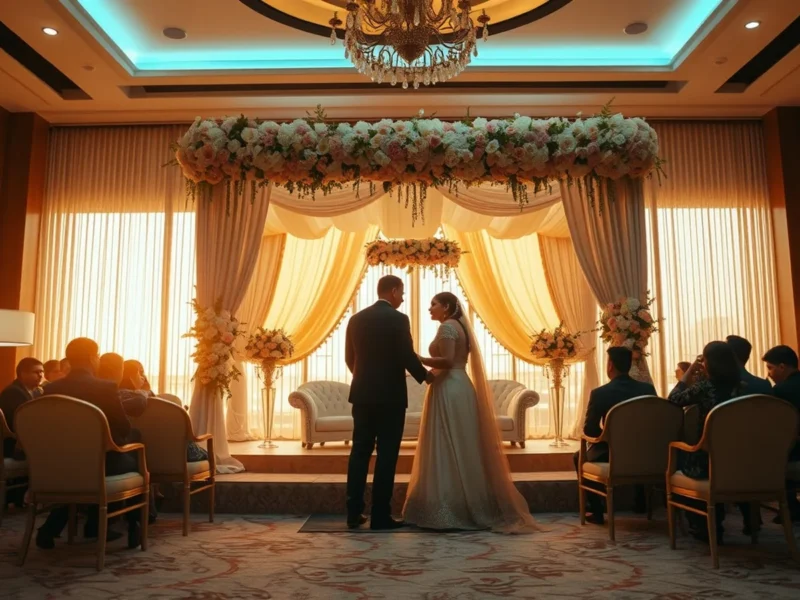
A Telugu wedding, common to families from Andhra Pradesh and Telangana, is a warm, ritual-rich celebration full of symbolism and a few uniquely joyful moments. Like other South Indian traditions it is largely a daytime affair built around a precise muhurtham, with the participation of elders and married women, and a strong emphasis on the sacred fire and Vedic rites.
This guide walks the full Telugu wedding sequence in order, with planning notes for each stage. We coordinate Telugu weddings across Hyderabad, Vijayawada, and for families settled worldwide.
Pre-wedding rituals
Nischitartham
The formal engagement, where the families exchange gifts, the priest fixes the wedding muhurtham based on the horoscopes, and the lagna patrika is written. The couple often exchange rings, and the bride is gifted a saree and jewellery.
Snathakam and Kashi Yatra
The Snathakam is performed for the groom on the wedding morning, a thread ceremony marking his readiness to enter married life, where he wears a silver-thread necklace. It is followed by the Kashi Yatra, the playful mock-pilgrimage where the groom sets off to renounce the world and the bride’s brother or father persuades him to choose marriage instead.
Mangala Snanam and pujas
On the wedding morning, the bride and groom take the Mangala Snanam, an auspicious ceremonial bath with turmeric and oil, before the ceremonies begin with the Ganesh puja and the bride’s Gauri puja. Planner note: these run early and in parallel at the couple’s respective spaces, so the morning needs careful scheduling.
Wedding day rituals
Pradhanam and Kanyadaanam
The couple are brought together and the Pradhanam, the formal giving, takes place, followed by the Kanyadaanam, where the bride’s parents give her hand in marriage. The bride is often carried in a bamboo basket by her maternal uncles to the mandapam in a charming touch.
Jeelakarra Bellam
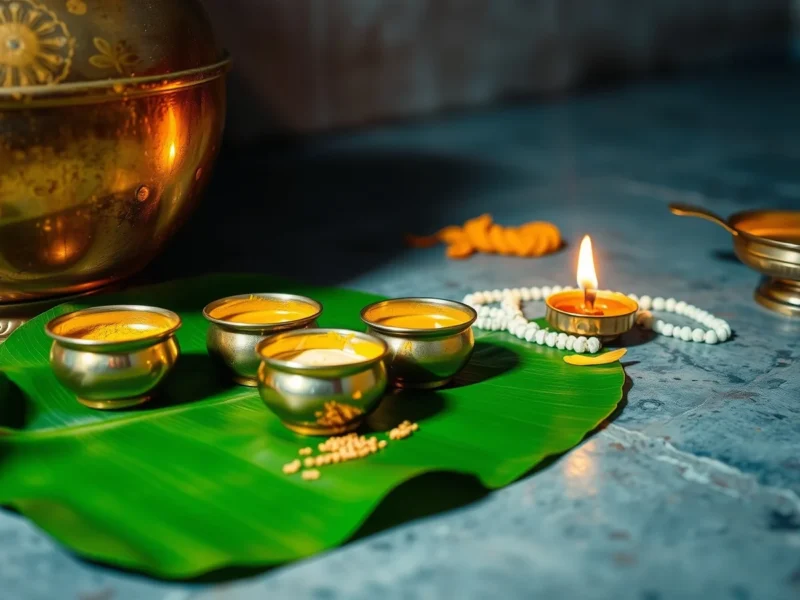
The defining Telugu moment: at the exact muhurtham, the couple place a paste of cumin (jeelakarra) and jaggery (bellam) on each other’s heads while a curtain separates them. The bitter-and-sweet combination symbolises a bond that endures through all of life’s flavours, and the marriage is considered sealed at this instant. The curtain is then lowered. Planner note: this is the single most important moment and the muhurtham is fixed to the minute, so the photographers and the priest must be perfectly synchronised.
Madhuparkam and Mangalsutra Dharana
The couple change into the traditional Madhuparkam attire, a white cotton saree and dhoti with red borders, symbolising purity. The groom then ties the mangalsutra, here two gold discs (the pustelu) strung on a turmeric-smeared thread, with three knots, as the elders bless the union.
Talambralu and Saptapadi
One of the most joyful rituals: the couple shower each other with talambralu, a mix of rice, turmeric, saffron, and pearls, with increasing enthusiasm as the families cheer them on. The Saptapadi follows, the seven steps around the sacred fire, and the groom helps the bride touch the grinding stone and shows her the Arundhati star. The toe rings (mettelu) are placed on the bride.
Planning a Telugu wedding?
Velvet Knot plans luxury Telugu weddings end to end, from the sacred rituals and mandap to the venue, catering and guest hospitality. Share your dates and city for a tailored plan.
Post-wedding rituals
Sthalipakam and Grihapravesham
In the Sthalipakam the groom places the silver toe rings on the bride, and games like finding a ring in a pot of water lighten the mood. The bride is then welcomed into her new home with the Grihapravesham, followed by a reception.
Food and the bhojanam
The Telugu wedding feast is a vegetarian banana-leaf bhojanam known for its bold, spicy, and tangy flavours. Expect pulihora (tamarind rice), pappu (dal), multiple curries and pachadis, gongura, the famous Andhra avakaya pickle, appadam, and sweets like bobbatlu (puran poli) and the rich pootharekulu. Planner note: authentic Telugu catering with the right spice profile and banana-leaf service is best sourced from a regional specialist. See our catering cost guide.
The bride and groom’s look
The Telugu bride wears a vibrant Kanjeevaram or Gadwal silk saree, often in red or green, with temple jewellery, the vaddanam waist belt, and jasmine in her hair, and changes into the white-and-red Madhuparkam saree for that ritual. The groom wears a silk dhoti (pancha) and kanduva, with the pustelu thread visible after the mangalsutra rite.
A typical Telugu wedding day
The wedding is a daytime event timed to the muhurtham, often early morning. The flow runs from the Snathakam and Kashi Yatra and Mangala Snanam, into the Kanyadaanam and the crucial Jeelakarra Bellam at the exact muhurtham, then the Madhuparkam change and Mangalsutra Dharana, the joyful Talambralu, the Saptapadi, and a grand banana-leaf lunch. The morning is tightly scheduled around the fixed muhurtham.
Telugu wedding decor and music
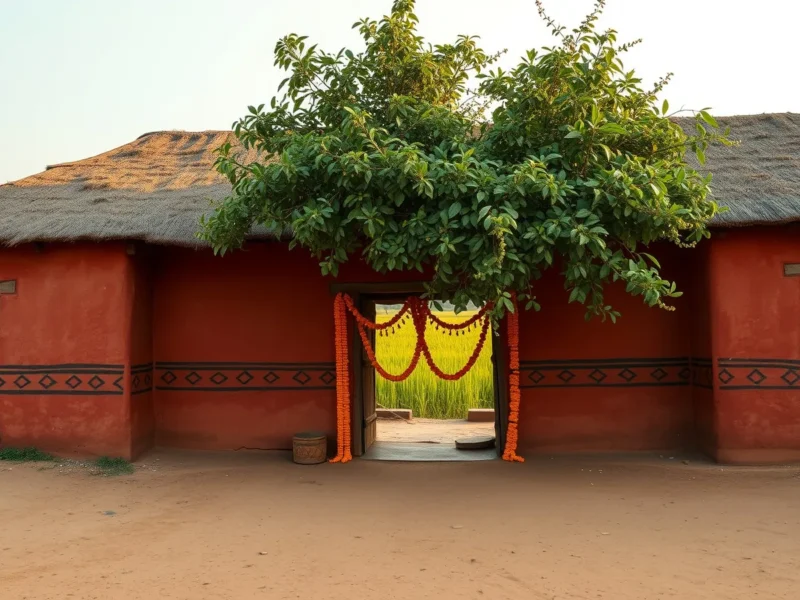
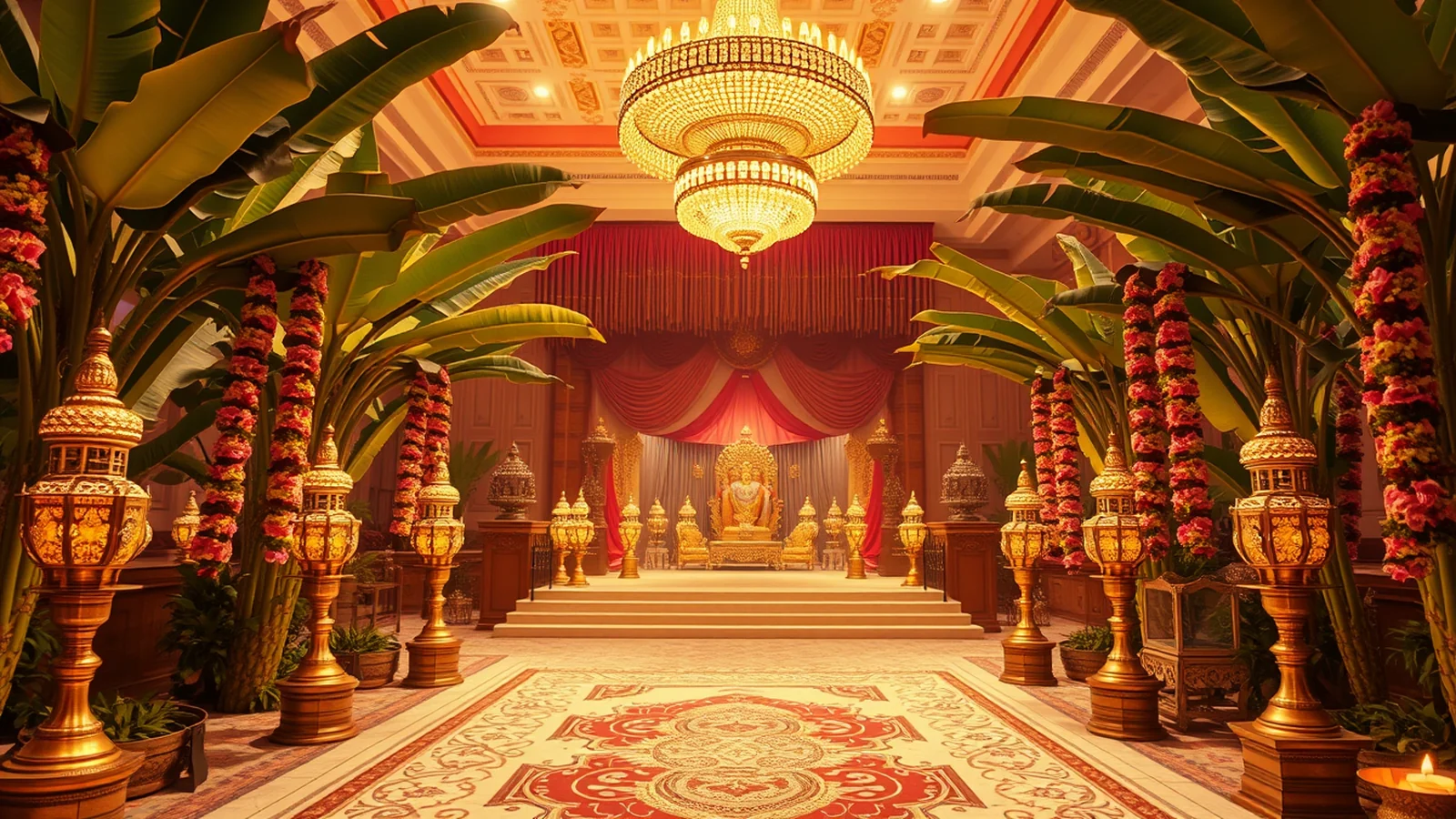
Telugu wedding decor draws on temple aesthetics: banana trees and mango-leaf torans flanking the mandapam, marigold and jasmine in abundance, brass lamps, and elaborate kolam (muggu) patterns drawn in rice flour at the entrance. The soundtrack is the nadaswaram and the mangala vayudyam, the auspicious pipe-and-drum ensemble that plays through the rites and swells at the Jeelakarra Bellam and mangalsutra moments. Modern receptions layer a DJ and a sangeet around this traditional core, and a live nadaswaram artist for the muhurtham is a detail worth booking early.
Modern Telugu weddings and regional variations
Telugu weddings vary between Andhra and Telangana families and across communities, with small differences in the order of rites and the deities honoured, and Reddy, Kamma, Brahmin, and other communities each carry their own customs. Contemporary couples increasingly add a haldi shoot, a sangeet, and a destination format, and some shift the reception to a grand evening event, while keeping the Jeelakarra Bellam and Talambralu, the heart of the wedding, exactly as tradition dictates.
How Velvet Knot coordinates this wedding
South Indian weddings are ritual-dense and run to a precise muhurtham, so the real planning challenge is sequencing the rites, the priests, and the vendors against an astrologically fixed time, often early in the morning. We build a tight run-of-show, brief the photographers on the key moments, source specialist priests and authentic catering, and hold the multi-event flow together. Tell us your dates and guest count and we will send a scoped proposal: request a quote. You can also browse everything a full-service planner coordinates, and our South Indian wedding planner page.
Related traditions
Related South Indian traditions
How the muhurtham is fixed
What a Telugu wedding costs
Related South Indian rituals
- mangala snanam, the dawn ritual bath
- the Kashi Yatra ritual
- the oonjal swing ceremony
- the jeelakarra bellam ritual
- talambralu, the rice shower
- nischitartham, the South Indian engagement
What follows the seven steps: read our full guide to the Arundhati nakshatra darshan.
The Telugu wedding sequence at a glance
Telugu families run a long list of named rites across two to three days, and the order
matters more than in most traditions because everything is positioned relative to a single
fixed instant, the muhurtham. The table sets out the sequence in the order it is performed,
with who leads each rite and what it marks. Durations are typical and vary with how
elaborately a family observes each stage.
| Rite | When | Who leads it | What it marks |
|---|---|---|---|
| Nischitartham | Weeks or months before | Priest and both families | The alliance is formalised and the muhurtham is fixed from the horoscopes |
| Mangala Snanam | Wedding morning, early | Married women of each family | The ceremonial turmeric-and-oil bath that readies bride and groom |
| Snathakam | Wedding morning | Priest, with the groom | The groom takes the silver thread and is declared ready for married life |
| Kashi Yatra | Follows the Snathakam | Groom and the bride’s father or brother | The mock renunciation, resolved when the bride’s family offers her hand |
| Ganesh and Gauri puja | In parallel, before the muhurtham | Priest, separately for each | Obstacles removed for the groom’s side, blessings sought for the bride |
| Pradhanam and Kanyadaanam | Approaching the muhurtham | The bride’s parents | The formal giving of the bride, often after she is carried in on a bamboo basket |
| Jeelakarra Bellam | At the exact muhurtham | The couple, behind a curtain | The cumin-and-jaggery paste. The marriage is sealed at this instant |
| Madhuparkam | Immediately after | The couple | The change into white-and-red cotton, marking purity before the tying |
| Mangalsutra Dharana | After the Madhuparkam | The groom, then his sister | The two pustelu discs tied on a turmeric thread with three knots |
| Talambralu | After the tying | The couple, cheered by both families | The rice, turmeric and saffron shower, the most joyful moment of the day |
| Saptapadi | Before the sacred fire | Priest, with the couple | The seven steps, the grinding stone and the Arundhati star |
| Sthalipakam | Same day, after the fire rites | The groom | The silver toe rings, the mettelu, are placed on the bride |
| Grihapravesham | After the wedding | The groom’s mother and elders | The bride’s first entry into her new home |
How the muhurtham decides the whole day
A Telugu wedding is not scheduled forward from a start time. It is scheduled backward
from the Jeelakarra Bellam, which the priest fixes to the minute from the couple’s
horoscopes and which often falls very early, sometimes before dawn. Everything that must
happen before it is then reverse-planned into the hours available, and everything after it
runs on ordinary time.
That single constraint drives most of the practical decisions a family faces. If the
muhurtham falls at four in the morning, the Mangala Snanam is happening at two, the bride’s
jewellery and drape have to be finished before that, and elderly guests need a room at the
venue rather than a drive across the city. A muhurtham in a mid-morning window makes the
same wedding far easier to host and is worth asking the priest about while dates are still
open, since most families are given a choice of more than one auspicious slot.
The other consequence is that the rites either side of the muhurtham cannot absorb
delay. The Kashi Yatra is genuinely funny and families let it run; the curtain has to come
down on schedule regardless. A written run-of-show with the priest, the nadaswaram troupe
and the photographers all working from the same minute-by-minute sheet is the difference
between a calm morning and a scramble.
Andhra, Telangana and community variation
The sequence above is the common Telugu core, and it holds across most families. The
variation sits in emphasis and in the smaller observances rather than in the major rites,
and it runs along two lines at once.
- Regional. Coastal Andhra and Rayalaseema families are generally the
more elaborate in the Vedic portion of the ceremony, with a longer homam. Telangana
families often keep the fire rites tighter and put more weight on the hospitality and the
feast around them. - Community. Brahmin, Reddy, Kamma, Kapu, Velama and other communities
each carry their own customs, and the differences show up in the deities honoured before
the ceremony, in whether particular rites are performed at home or at the venue, and in the
family gods invoked during the puja. Brahmin weddings typically carry a fuller Vedic
liturgy than the others.
Two practical points follow from this. First, the family priest is the authority on the
order for that particular family, not a general guide, and he should be asked to walk the
sequence before it is written into a schedule. Second, in an inter-community Telugu wedding
both sets of elders should agree the order in advance rather than on the morning, which is
a conversation better had at the Nischitartham than at the mandapam.
Temple weddings on Velvet Knot: TTD Kalyana Mandapam booking.
Frequently Asked Questions
What is Jeelakarra Bellam in a Telugu wedding?
Jeelakarra Bellam is the defining Telugu ritual where the couple place a cumin-and-jaggery paste on each other’s heads at the exact muhurtham. The bitter-sweet mix symbolises an enduring bond, and the marriage is considered sealed at that moment.
What is the Talambralu ceremony?
In the Talambralu, the couple joyfully shower each other with a mix of rice, turmeric, saffron, and pearls, cheered on by both families. It is one of the most fun and playful moments of a Telugu wedding.
What is the Madhuparkam?
The Madhuparkam is the simple white cotton saree and dhoti with red borders that the bride and groom change into for part of the ceremony, symbolising purity before the mangalsutra is tied.
What does a Telugu bride wear?
A vibrant Kanjeevaram or Gadwal silk saree with temple jewellery and the vaddanam waist belt, switching to the white-and-red Madhuparkam saree for that specific ritual.
Are Telugu weddings held in the morning?
Yes, traditionally the key rituals are timed to an auspicious morning muhurtham, with the Jeelakarra Bellam performed at the exact auspicious minute.
How long does a Telugu wedding last?
The full celebration typically runs two to three days, covering the engagement, the wedding-day rituals, and the reception.
Sources and further reading
Velvet Knot believes in showing our work. The references below are the authoritative sources we consult when planning weddings in this category.
- Hindu Marriage Act, 1955: Government of India
- Telugu people, Encyclopaedia Britannica: Britannica
- Andhra Pradesh cultural overview, Britannica: Britannica
Begin Your Engagement
Want a real number for your wedding?
Tell us your city, guest count and dates. Team Velvet Knot will come back within 24 hours with an itemised budget.