What Does a Wedding Planner in India Actually Do? Full Services List

- What is actually in a planner’s scope for an Indian wedding
- Core services-what every Indian wedding planner should handle
- Premium-tier services-what justifies a Rs 15 lakh-plus fee
- What is NOT in scope-services planners do not provide
- How to read a planner’s services list-red flags
- Service-by-service cost guides
- Other services we coordinate
- Bespoke vs Signature vs Luxury-what each tier includes
- Explore more
- Related planning guides
- Vendor costs explained
- Timing your planning
- The logistics we run
- Vendors we coordinate
- Frequently asked questions
- Where to go next
- Sources and further reading
An Indian wedding planner’s services list splits into three tiers: standard work every planner should offer (budgeting, vendor sourcing, timeline, day-of coordination), premium-tier work that justifies a Rs 15 lakh-plus fee, and tasks out of scope entirely. An Indian wedding spans 3 to 7 days across 2 or 3 venues, so scope matters.
Search “wedding planner services list” and the first page is a wall of generic listicles (“10 things a planner does!”) and platform marketing pages designed to capture lead forms. None of them are scoped to Indian weddings, where a planner’s job is meaningfully different from a Western one. None of them attach a real Rs value to what they describe.
This piece does both. It is the full services list of an Indian wedding planner, broken into what is standard (every planner should offer it), what is premium-tier (the work that justifies a Rs 15 lakh-plus fee), and what is not in scope at all. Written from inside the industry, for couples deciding whether to hire one.
What is actually in a planner’s scope for an Indian wedding
An Indian wedding is not one event. It is a 3 to 7 day operation across 2 or 3 venues, with 4 to 12 functions, several vendor categories that have to dovetail, and a guest list that ranges from elderly relatives to NRI cousins to a baraat that may need a separate route plan. The planner’s job is to make that whole operation run without the family doing the operational work themselves.
Mechanically, that means the planner sources vendors, holds the budget, designs the cultural flow, manages family dynamics, runs the timeline, and only at the very end actually executes the events. Execution is the last 5% of the work. The first 95% is planning, sourcing, contracting, designing, and coordinating, mostly over 8 to 14 months.
What you are buying when you hire a planner is risk transfer and time. The wedding still happens whether you hire one or not. The question is who absorbs the 2000-plus decisions that get made between booking and confetti, and who is on call when a vendor flakes 72 hours out.
A useful related read before you continue: what is a wedding planner covers the basics if you are very early in this decision.
Core services-what every Indian wedding planner should handle
These eight services are the baseline. If a planner cannot offer them, you are talking to an event manager or a vendor aggregator, not a planner. See our breakdown of wedding planner vs event planner for that distinction.
1. Venue scouting and selection
Shortlisting 3 to 6 venues that match your guest count, budget, function flow, and date. Site visits, negotiation on rental and F&B minimums, contract review. A planner saves 1 to 3 lakh on venue negotiation alone for mid-scale weddings.
2. Vendor sourcing and management
Catering, decor, photography, video, makeup, mehendi, choreography, DJ, fireworks, transport. A full planner runs 12 to 25 vendor relationships. Sourcing means shortlisting 2 to 3 options per category, getting comparable quotes, and presenting a recommendation, not a single name.
3. Contract negotiation and budget management
Every vendor contract reviewed for scope, exclusions, cancellation, force majeure, and payment milestones. The planner holds the master budget across all line items and flags overages weekly. A flat-fee planner has no incentive to push you up; a commission planner does.
4. Timeline and production schedule
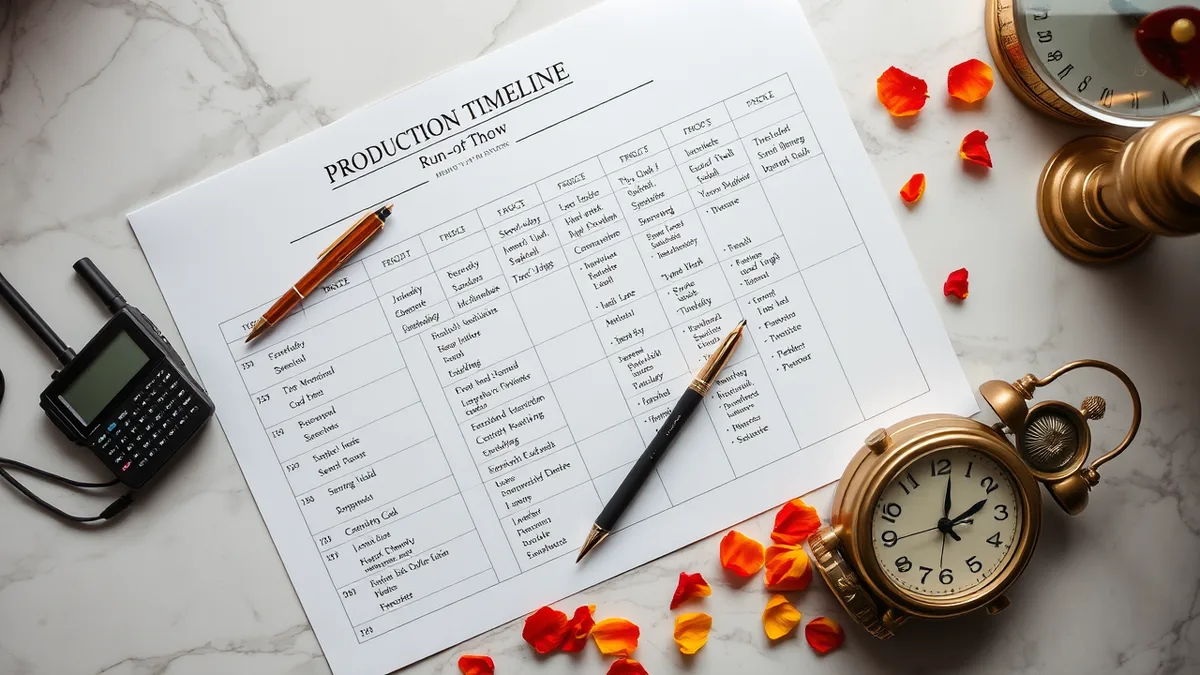
A minute-by-minute production document for every function, with each vendor’s call time, setup window, and deliverable. Updated three times: 60 days out, 14 days out, 48 hours out. This single document is what makes the day run, and it is the thing most DIY weddings do not have.
5. Ritual sequencing and cultural flow
Coordinating with the pandit or qazi, sequencing rituals so they land in their auspicious time window (muhurat), choreographing entries and exits, managing the order of welcome rituals for the baraat. This is the most uniquely Indian part of the planner’s job and the one Western templates ignore entirely.
6. Guest logistics
RSVP management, hotel block bookings, transport from airports and stations, room allocation by family group, welcome kits, in-room invitations, guest-side hospitality. For a 500-guest wedding this alone is 200 to 300 hours of work spread over 4 months.
7. On-day coordination
The planner’s team on the ground from setup through strike. Typical staffing: a lead planner, 2 to 4 coordinators per function, a vendor liaison, and a family-side liaison. They run the timeline, manage cues, catch problems before the family sees them.
8. Crisis handling
The 2am vendor call. The baraat truck that breaks down. The makeup artist who tested positive. The fireworks license that did not clear. Every wedding has 4 to 8 of these. A good planner resolves most of them without the family ever knowing they happened. This is what you are really paying for.
Premium-tier services-what justifies a Rs 15 lakh-plus fee
These are the differentiators between a mid-market planner and a premium one. None of them are necessary. All of them change the wedding’s texture significantly.
Design and styling direction
End-to-end creative direction across decor, signage, stationery, hospitality desks, and digital touchpoints. This is not “we’ll brief the decorator.” It is a full design team building a coherent visual identity for the wedding, applied consistently from the save-the-date through the welcome kit through the mandap.
Custom stationery and invitations
Designed and produced invitations, save-the-dates, RSVP cards, in-room cards, menu cards, ceremony booklets, thank-you notes. Premium stationery costs Rs 3 to 12 lakh for 200 to 500 invites and is fully managed inside the planning fee at top-tier firms.
Hospitality desk and welcome experience
A staffed desk for incoming guests at hotels and venues, in some cases in-house concierge, in-room amenity sets curated by family group, transport coordination for elderly relatives, NRI hospitality protocols (jet lag kits, time-zone-friendly call sheets, separate dietary management).
NRI logistics
Multi-time-zone coordination, visa support letters, customs guidance for shipped attire and gifts, currency planning for vendor advances paid from abroad, separate vendor briefings for accommodating non-resident family rituals. Particularly relevant for Dubai-based Indian weddings or US-India multi-leg events.
Multi-event programming
Designing and running 6 to 12 functions across a 4 to 7 day arc, with thematic continuity, energy pacing (not every function should be high-energy), and dedicated programming teams. At the top end this includes celebrity performances, drone shows, choreographed entries, and live brand activations.
Brand reels and content programming
A content team separate from the documentary photo and video crew, producing same-day edits, social-ready reels per function, family-tagged albums delivered within 24 hours. Standard at luxury weddings now; almost unheard of at mid-tier.
For couples weighing scale this large, see luxury weddings for the full brief.
What is NOT in scope-services planners do not provide
Most disappointments at the end of an engagement come from a couple expecting something the planner never agreed to deliver. The list below is what is genuinely outside a planner’s scope, even premium ones.
Officiant or pandit booking varies. Some planners book the pandit. Many leave it to the family because the family already has a preferred priest. Confirm in the contract.
Legal marriage registration is yours. The court appointment, the witnesses, the documentation-the planner can introduce you to a lawyer who handles it, but the registration itself is not part of wedding planning. Budget Rs 15,000 to Rs 50,000 separately.
Post-wedding gift returns and settlement is yours. Returning rented jewellery to relatives, handling cash gifts (shagun) and their accounting, settling family financial questions-outside scope.
Vendor follow-ups after the event are not free. Photo album delivery delays, video edit revisions, decor rental disputes-most planners include 2 to 4 weeks of post-event coordination, then it becomes a separate engagement.
Marriage counselling, family therapy, or relationship advice. Should be obvious. It is not always, particularly when family tensions surface during planning. A good planner will hold space and steer around it, but they are not therapists.
Saving a wedding from a broken engagement. A planner can cancel vendors with minimum loss, but they cannot un-spend non-refundable deposits. Plan for this in the contract terms upfront.
How to read a planner’s services list-red flags
When you compare two planner proposals side by side, look for these signals.
Vague scope items. “Decor coordination” is a non-statement. “Decor: sourcing 3 quotes, design direction, contract negotiation, on-day quality check, breakage reconciliation” is a real scope line. The second one tells you what they are doing for their fee.
“Additional charges apply” without specifics. Travel, accommodation for the planning team during destination weddings, overtime for late events-these are reasonable add-ons but they should have a number attached in the proposal, not be open-ended.
Single-vendor recommendations. If the planner is presenting one decorator, one photographer, one caterer, ask why. Healthy sourcing presents 2 to 3 options per category. One option suggests vendor lock-in, often commission-driven.
No mention of commission policy. Mid-market planners often stay quiet on this. Ask directly: “Do you take commission from any vendor in my final shortlist?” The answer changes the all-in cost by 8 to 15%.
Year-old testimonials only. Wedding industry quality shifts fast. Recent references (last 12 months) are signal. Five-year-old features are decoration.
For the deeper economics, our wedding planner cost guide and the wedding planner cost India guide cover the full pricing picture. Our hiring guide walks through the interview process.

Service-by-service cost guides
Each major wedding service has its own pricing logic, package tiers, and hidden costs. We have written a dedicated 2026 cost guide for every service Velvet Knot coordinates, so you can scope each line of your budget before you speak to a single vendor.
- Wedding decoration cost: themes, mandap, stage and floral budgets from Rs 2 lakh to Rs 50 lakh or more.
- Bridal makeup cost: HD vs airbrush, trials, and full family packages from Rs 8,000 to Rs 3.5 lakh.
- Mehndi artist cost: bridal, family and guest mehndi pricing by tier and city.
- Wedding catering cost: per-plate grids by cuisine and city, live counters, and the 4-event package model.
- Wedding invitation cost: printed cards vs digital e-invites, and what moves the price.
- Wedding photographer cost: the five deliverables that move the price and how to read a package.
- Wedding choreographer cost: sangeet choreography pricing by tier and city.
Other services we coordinate
Beyond the headline categories above, a full Indian wedding pulls in a dozen smaller vendors that still need sourcing, contracting, and on-day management.
DJ, music and entertainment
Sangeet DJs, dhol players, live bands, sufi and folk acts, and emcees. A wedding DJ in India costs Rs 25,000 to Rs 1.5 lakh per event depending on profile and setup; a celebrity or headline act runs Rs 5 lakh and up. We shortlist by event energy, brief them on the cultural cues (entry tracks, varmala build-up, last-song timing), and lock sound levels with the venue.
Lighting and sound engineering
Architectural lighting, stage and dance-floor rigs, and clean audio across open lawns are where most DIY weddings fall short. Lighting and sound packages run Rs 1.5 lakh to Rs 15 lakh by scale. We treat this as a design line, not an afterthought, because it is what the photographs and reels actually capture.
Tent, staging and structures
Marquees, raised stages, walkways, green rooms, and weatherproofing for monsoon or winter dates. Structure and tenting costs Rs 2 lakh to Rs 25 lakh by footprint. We coordinate load-in windows with the venue and the decorator so the build sequence does not collide.
Florist and fresh flowers
Fresh-flower volumes for the mandap, stage, entrances, car, and varmala are usually billed separately from the decorator base. Floral runs Rs 1 lakh to Rs 20 lakh depending on whether you use seasonal Indian blooms or imported stems. We brief the florist against the decor concept so colours stay coherent across functions.
Hospitality and guest management
Hotel block negotiation, room allocation by family group, airport and station transfers, welcome desks, and in-room amenity kits. For a 300-guest wedding this is 150 to 250 hours of work. We run it end to end so the family can host rather than coordinate.
Transport and logistics
Baraat vehicles, vintage or luxury cars for the couple, guest shuttles, and elderly-relative assistance. Transport runs Rs 50,000 to Rs 6 lakh by fleet size and distance. We map routes, build buffers for traffic, and assign a logistics coordinator on multi-venue days.
Bespoke vs Signature vs Luxury-what each tier includes
Velvet Knot offers three planning tiers. They are designed to match three different wedding scales and intensities, not to upsell. We do not publish a rate card, because the number genuinely depends on guest count, how many functions you are running, the city, and how much of the build is custom. Tell us the scope and we will put a figure in writing.
Bespoke
For weddings up to Rs 50 lakh total budget, 150 to 300 guests, 2 to 3 functions, single city. Includes all eight core services. Excludes premium design direction, custom stationery, hospitality desk staffing. Suits couples who have clarity on their taste and want operational execution at a high standard.
Signature
For weddings Rs 50 lakh to Rs 1.5 crore, 300 to 600 guests, 4 to 6 functions, single or twin city. Includes core services plus design direction, custom stationery, basic hospitality desk, NRI logistics if applicable. The sweet spot for most Velvet Knot couples.
Luxury
For weddings Rs 1.5 crore plus, 500 to 1500 guests, 6 to 12 functions, single venue or destination. Includes everything in Signature plus full design team, custom builds, multi-event programming, brand content, on-site concierge, and a dedicated 8 to 12 person team for the wedding week.
The full breakdown lives at Services.
Explore more
Related planning guides
- Luxury wedding planner packages and costs
- Full-service vs partial wedding planning
- Questions to ask a wedding planner
- What to check in a wedding planner contract
Vendor costs explained
- wedding decorator cost
- wedding DJ cost
- wedding transport cost
- wedding pandit cost
- wedding anchor and emcee cost
- wedding flower cost
- wedding hospitality cost
- wedding bar and alcohol cost
Timing your planning
The logistics we run
Vendors we coordinate
Frequently asked questions
How early should I hire a wedding planner?
For full planning, 10 to 14 months before the wedding date. For partial planning (vendor sourcing and on-day only), 4 to 6 months. Premium planners book out their calendars 9 to 12 months ahead for peak season dates, so the earlier the better if you are getting married between November and February.
Do wedding planners charge a flat fee or a percentage of the budget?
Both models exist in India. Flat-fee planners (like Velvet Knot) charge a defined amount. Percentage planners charge 8 to 15% of the total wedding budget and may also take commissions. The flat-fee model is more transparent. The percentage model can be cheaper for very small weddings and more expensive for very large ones.
Can a planner work with vendors I have already booked?
Yes, most planners will work with vendors you have pre-selected. Some charge a small coordination fee (Rs 25,000 to Rs 1 lakh) for managing vendors they did not source, because the relationship and accountability are weaker. Ask upfront if any of your pre-booked vendors are on the planner’s “do not work with” list, and why.
What’s the difference between a wedding planner and a wedding coordinator?
A planner runs the full engagement from venue scouting through post-event closeout, 8 to 14 months of work. A coordinator (sometimes called “month-of” or “day-of”) joins in the last 4 to 6 weeks, takes over the plan you have built, and runs execution. Coordinators typically cost Rs 1 to 3 lakh; planners Rs 5 lakh plus.
Do planners help with the wedding website and digital invites?
Premium-tier planners do, often as part of custom stationery scope. Mid-tier planners usually recommend a designer and manage the brief. Pure execution-focused planners leave it to the family. Confirm in the proposal which tier you are buying.
Is hiring a wedding planner worth it for a small intimate wedding?
For very small weddings (under 50 guests, single function), a planner is often not needed. The complexity does not justify the fee. For intimate weddings that are premium-styled (50 to 100 guests, 2 to 3 functions, design-led), a planner adds real value because the styling and choreography matter more than at scale. Our intimate wedding planning brief covers this format.
What happens if I am unhappy with a vendor my planner sourced?
A good planner has a defined remediation path: replacement vendor within X days, partial refund of vendor advance if recoverable, and the planner absorbing the coordination overhead. Confirm this in the contract before signing. If the proposal does not address it, ask. The answer reveals how the planner thinks about their accountability.
Where to go next
If you are deciding whether to hire a planner at all, start with what is a wedding planner and our breakdown of planner vs event planner. If you have decided yes and are scoping the budget, read the cost guide. When you are ready to talk to us, request a quote with your guest count, budget range, and rough dates. We will respond with a tier recommendation and a scoped proposal, not a generic catalogue.
Sources and further reading
- Wedding Sutra: Indian wedding industry coverage
- Vogue India: Weddings
- Ministry of Tourism, Government of India
Wedding paperwork: marriage registration in India, documents for marriage registration.
Begin Your Engagement
Want a real number for your wedding?
Tell us your city, guest count and dates. Team Velvet Knot will come back within 24 hours with an itemised budget.