Monsoon Wedding Planning in India: Contingency Engineering, Not Aesthetics
- When monsoon weddings make sense and when they do not
- Region-specific monsoon timing
- Contingency engineering-the actual playbook
- Catering risks specific to monsoon
- Decor that survives versus decor that doesn’t
- Wardrobe risks
- Guest experience
- Photography in monsoon
- Common monsoon wedding mistakes
- Other seasons compared
- Frequently asked questions
- Planning your monsoon wedding with Velvet Knot
- Sources and further reading
A monsoon wedding in India is a contingency engineering problem, not a decor aesthetic. The real planning work is rain shielding, humidity control, generator redundancy, drainage, food safety in 90 percent humidity, and guest movement on wet paths. Monsoon dates (broadly June through September) carry lower vendor and venue rates, but only the contingency stack decides whether the wedding holds.
A monsoon wedding in India is a contingency engineering problem, not a decor aesthetic. The actual planning challenge is rain shielding, humidity control, generator redundancy, drainage, food safety in 90 percent humidity, fabric and makeup durability, and guest movement when paths are wet. Get those right and the wedding works. Get them wrong and the aesthetic stops mattering at the first downpour.
Most of what shows up online for monsoon weddings is Pinterest-led inspiration content: green palettes, rain-themed photography, mood boards. That content is useful at the decor brief stage and useless at the planning stage. This article inverts the usual coverage and walks the contingency stack a planner actually builds for monsoon dates.
If your wedding is scheduled for June through September anywhere in India, the brief below covers what needs to be solved. If you are still deciding whether to pick a monsoon date, the cost-benefit section at the top is where to start.
When monsoon weddings make sense and when they do not
Monsoon dates in India (broadly June through September) carry a real discount, often 20 to 35 percent across the vendor chain. Venues are 30 to 40 percent cheaper than peak season equivalents. Photographers, decorators, and caterers all have lower booking pressure. The guest scheduling conflict is also lower, with fewer overlapping weddings in the same network.
Monsoon dates make sense when:
- The wedding has 100 to 250 guests (small enough to fit in indoor backup spaces if needed)
- The venue is fundamentally indoor with optional outdoor overflow (five-star hotel with a banquet hall + lawn combination, not a pure outdoor banquet ground)
- The couple is genuinely flexible about a contingency flip 24 hours before the event
- The cost saving is being deployed elsewhere in the budget (better catering, better photography, longer honeymoon)
- The wedding is in a region where the monsoon is reliable rather than violent (Kerala, parts of South India versus Mumbai or Goa)
Monsoon dates do not make sense when:
- The wedding has 500+ guests and the venue’s indoor capacity is a stretch even on a dry day
- The venue is pure outdoor (palace ground, vineyard, beach without indoor backup)
- The wedding has elderly guests with mobility challenges (wet floors and steps are real injury risks)
- The family is emotionally attached to an outdoor aesthetic and will be unhappy if forced indoors
- The peak monsoon week falls on the date (Mumbai July 7 to August 25 is brutal even in a normal year)
Our destination weddings and destination weddings India cost guide cover the broader off-peak booking economics. The monsoon discount is the steepest of the off-peak windows.
Region-specific monsoon timing
“Monsoon” is not one event across India. Six different timing windows apply depending on location:
| Region | Peak Monsoon | Lower-Risk Pockets |
|---|---|---|
| Mumbai, Goa, Konkan | Jun 7 to Sep 25 | Sep 25 onwards (post-monsoon) |
| Kerala | Jun 1 to Aug 30 | Mid-September can be drier between spells |
| Northeast (Assam, Meghalaya) | Mar 15 to May 30 (second monsoon Sep) | Avoid entirely Jun to Sep |
| Bangalore | Jun 1 to Sep 30 (mild, intermittent) | Most of monsoon is workable here |
| Hyderabad | Jul 1 to Sep 15 | Lighter than coastal monsoon, manageable |
| Chennai | Oct 15 to Dec 30 (Northeast monsoon) | Jun to Sep is hot but mostly dry |
| Delhi, Jaipur, Udaipur | Jul 1 to Sep 10 (short, intense) | Sep 10 onwards usually clears |
| Northeast hill states | Apr to Sep heavy | Avoid for outdoor anything |
The key insight: Chennai is not in monsoon when North India is, and Northeast India has a separate monsoon window in March-May. If your wedding is in Chennai in August, you are largely outside monsoon risk. If your wedding is in Mumbai in August, you are inside the worst week of the year.
Our city-specific guides cover the local timing nuances: wedding planner in Goa, wedding planner in Kerala, and wedding planner in Mumbai all have monsoon-specific sections.
Contingency engineering-the actual playbook
This is the section the Pinterest content skips. A monsoon wedding’s success depends on six contingency systems being built right.
Indoor backup capacity
Every monsoon outdoor wedding needs a confirmed indoor space at the same venue with capacity for the full guest list plus the ceremony stage. “Same venue” matters because guest transport in rain to an alternative venue is logistically painful.
The indoor backup must be:
- Booked in writing, not held verbally
- Walked through with the decorator at least 30 days before the wedding for backup layout planning
- Tested for AC capacity (Mumbai August indoor for 300 guests requires 30 to 50 tons of AC, which not every banquet hall has)
- Confirmed for stage and mandap re-setup within 4 to 6 hours notice
The decision rule for indoor versus outdoor: by 48 hours before the wedding, check IMD forecast. If rain probability is above 60 percent in any 4-hour block during the ceremony window, flip to indoor. Above 40 percent, stage a hybrid (cocktails indoor, ceremony in covered outdoor area).
Tarp tents and waterproof covering
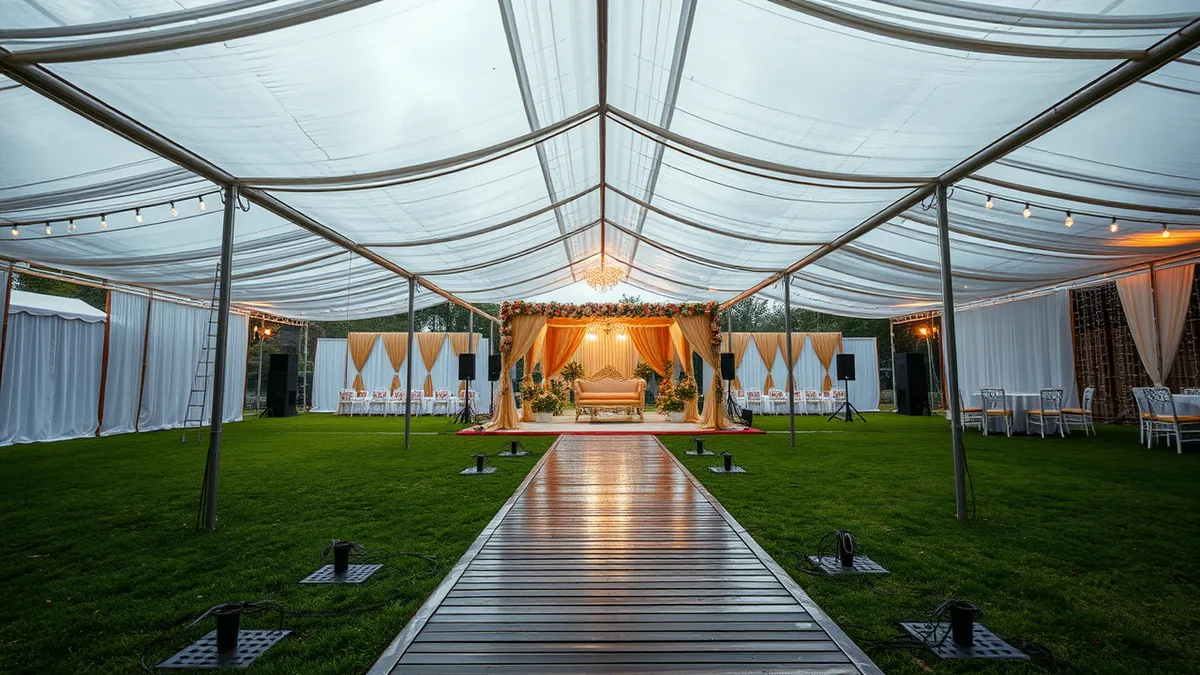
For weddings that commit to outdoor with the right protection, tarp engineering is the central job.
| Tarp Type | Cost (per sq ft) | Setup Time | Use Case |
|---|---|---|---|
| Basic blue tarp | Rs 15 to Rs 40 | 4 to 8 hours | Emergency backup, ugly under photography |
| Transparent PVC canopy | Rs 150 to Rs 400 | 12 to 24 hours | Premium outdoor protection, photographs well |
| Pagoda or Bedouin-style waterproof tent | Rs 250 to Rs 600 | 24 to 48 hours | Full structural shelter, the best aesthetic |
| Glass-walled marquee | Rs 500 to Rs 1,200 | 48 to 72 hours | Premium tier, climate-controlled, full weather seal |
For a 300-guest outdoor wedding with full ceremony coverage, expect Rs 4 to Rs 15 lakh on the tarp or marquee line item alone. Setup time matters-a Bedouin-style waterproof tent cannot be erected on the morning of the wedding. It needs to go up 1 to 2 days prior.
The marquee must have:
- Side walls (not just a roof) to handle wind-driven rain
- Drainage gutters around the perimeter (otherwise water pools at the base)
- A waterproof flooring layer underneath (carpet over tarpaulin, not carpet directly on grass)
- Backup lighting independent of the venue’s electricity (LED setup with battery backup)
Generator and power redundancy
Monsoon power cuts are routine in most Indian cities. A wedding venue’s primary power supply is municipal. Backup is essential, not optional.
| Wedding Size | Generator Capacity Needed | Cost |
|---|---|---|
| 100 to 200 guests | 100 to 150 KVA | Rs 15,000 to Rs 40,000 per day |
| 200 to 500 guests | 250 to 400 KVA | Rs 40,000 to Rs 1 lakh per day |
| 500 to 1000 guests | 500 to 800 KVA | Rs 1 to Rs 2.5 lakh per day |
| 1000+ guests | Two 500+ KVA in parallel | Rs 2.5 to Rs 5 lakh per day |
The generator must be sized to run the full wedding (lighting, DJ system, AC, kitchen) for 4 to 6 hours, not just emergency lighting. Many venues quote generator backup as included but limit usage to lighting only, which is useless in a humid August evening when AC fails. Confirm in writing what the included backup actually powers.
Generators must be positioned where exhaust does not blow into the venue (downwind 30+ metres) and where noise is acoustically separated from the ceremony stage. This is a layout issue most decorators get wrong on first pass.
Drainage on lawns and outdoor surfaces
Lawns and outdoor grounds in monsoon become waterlogged within 30 to 60 minutes of moderate rain. Even after rain stops, footing is soft for 6 to 12 hours.
Drainage solutions:
- Raised wooden flooring (deck panels). Rs 80 to Rs 200 per sq ft. Standard for monsoon outdoor weddings. Must be installed at least 6 inches above grass level to allow water flow underneath.
- Coir matting or coconut fibre carpet. Rs 20 to Rs 60 per sq ft. Cheaper, absorbs rather than channels water, gets soggy in heavy rain.
- Site drainage trenches. Site-engineering work, sometimes possible at private estates and unworkable at most hotel lawns.
For a 200-guest outdoor wedding on a lawn, expect Rs 2 to Rs 6 lakh on flooring alone. The flooring must extend from the venue entrance through the guest area to the stage, not just at the stage.
Mandap waterproofing
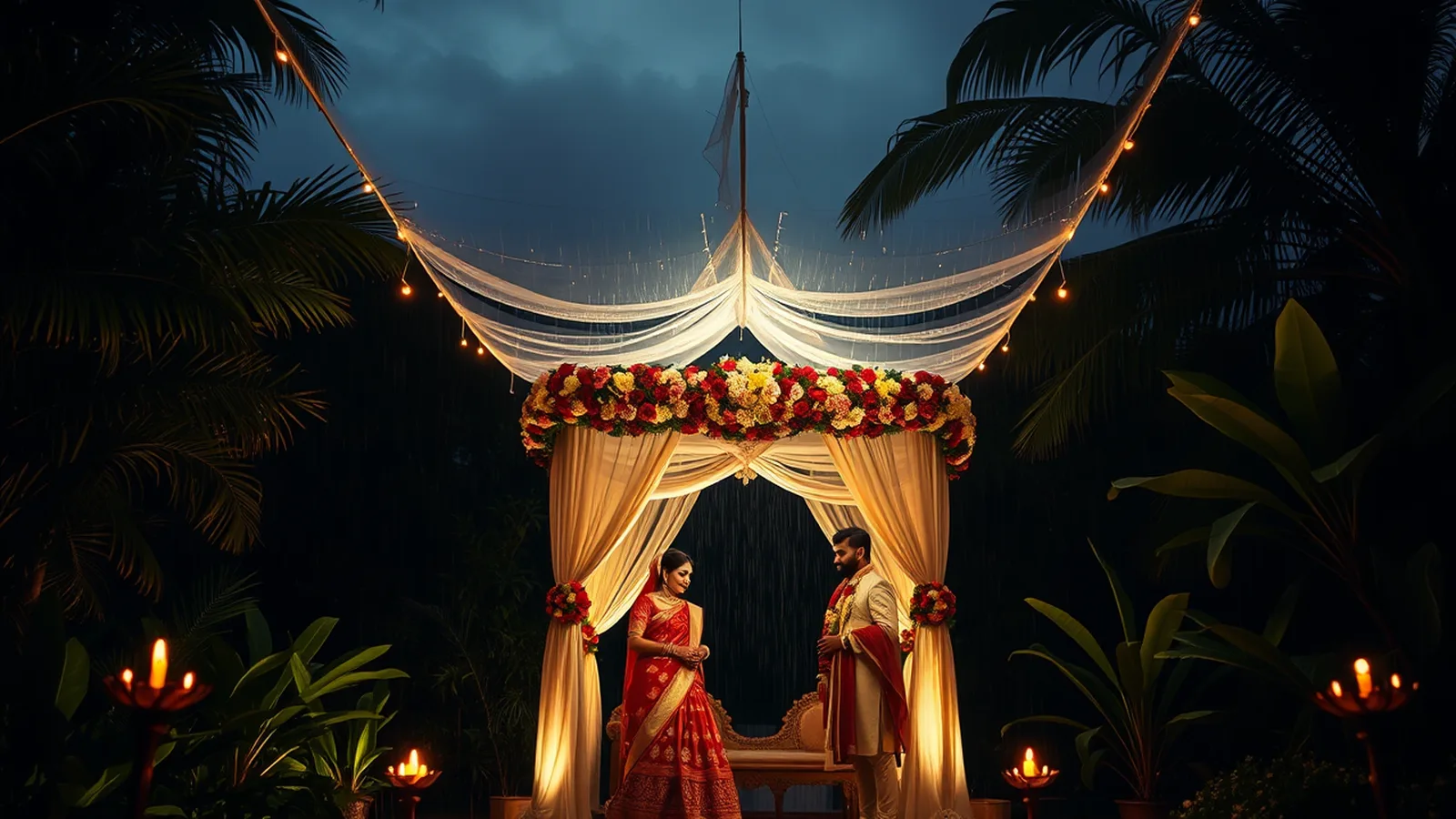
The mandap structure (the floral canopy over the ceremony) is the most-photographed element of a Hindu wedding. In monsoon, it cannot be a decorative-only structure with no waterproofing.
The mandap setup needs:
- A solid waterproof top layer (transparent acrylic, glass, or hidden tarpaulin under the floral)
- Structural support for the additional weight of waterlogged florals (saturated marigold weighs 3 to 4 times dry)
- Wind bracing if it is outdoor (15 km/h wind on a tall floral structure is enough to topple it)
- Independent lighting that does not short in humidity
For mandap construction in monsoon, the budget premium is 30 to 50 percent over a dry-season equivalent. Rs 3 to Rs 20 lakh range depending on tier.
Lighting that survives humidity
LED and CFL lighting is fine in humidity. Old-style halogen and incandescent setups are not-moisture on the bulb shell causes shorts and bulb fractures. Confirm with the decorator that the full lighting plan is LED.
String lights for ambient outdoor lighting need IP65-rated outdoor cables (waterproof). Standard indoor extension cables in outdoor monsoon will short within hours.
For DJ and sound equipment, weatherproof setups are essential. The DJ booth must be fully covered, speakers should be on raised platforms (water on the venue floor is a guarantee), and a backup audio source should be ready in case of failure.
Catering risks specific to monsoon
Food safety in 80 to 95 percent humidity is significantly harder than in normal conditions. The risks:
Food rot in humid storage. Mithai (sweets) made with milk solids spoil within 4 to 6 hours at 30 degrees and 90 percent humidity. Burfi, kalakand, peda, and rasmalai are all high-risk. Stock smaller quantities and replenish frequently rather than displaying a full spread for the duration.
Ice melt rates. Cocktail and drink stations need 50 to 100 percent more ice than usual. Outdoor ice in monsoon humidity melts at 3 to 4 times the indoor rate.
Fried food going soggy. Hot starters (samosa, kachori, tikkis) lose texture within 15 to 25 minutes in humid air. Plan for shorter holding times at the buffet-chef stations preparing fresh in front of guests work better than buffet trays.
Salad and raw food. Bacterial growth on lettuce, sprouts, and raw vegetable salads accelerates in humidity. Stick to cooked starters and avoid raw vegetable platters.
Buffet temperature maintenance. Hot food must be held above 60°C, cold food below 5°C. Chafing dishes with strong sterno burners are non-negotiable. Ask the caterer for their hot/cold temperature monitoring plan in writing.
For a 300-guest monsoon wedding, factor in 10 to 15 percent additional catering budget for the smaller-batch, shorter-holding-time service model, plus dedicated waste handling for spoiled batches that must be discarded.
Decor that survives versus decor that doesn’t
Pinterest-aesthetic monsoon decor (chiffon drapes, paper lanterns, candle-lit pathways) does not survive 5 minutes of actual rain. The decor that actually works in monsoon:
Survives:
- Heavy floral structures (mandap, stage backdrops) with waterproof internal frames
- LED-based lighting installations
- Metal and wood structural decor
- Sturdy floral mandaps with sealed tops
- Glass and ceramic centerpieces
Doesn’t survive:
- Chiffon, silk, or other thin-fabric drapes (waterlogged and torn within an hour of rain exposure)
- Paper lanterns, paper flowers, paper backdrops
- Open candle setups (extinguished by humidity and wind)
- Powder-based rangoli (washes out)
- Loose petal pathways (clumps into a mess on wet ground)
The decorator brief for a monsoon wedding should explicitly state “weather-resistant only” for any outdoor element. Decorators who have not done monsoon weddings before will quote you a fabric-heavy aesthetic that looks great in their portfolio and falls apart on the day.
Wardrobe risks
Silk damage. Heavy silk (Banarasi, Kanjeevaram) is particularly prone to water spotting. Even partial rain exposure leaves visible stains that do not fully recover. The bride’s lehenga should travel in a waterproof carrier from the getting-ready room to the mandap.
Lehenga waterlog. A full-skirt lehenga that drags 6 to 8 inches of fabric on wet ground absorbs water rapidly. The skirt becomes 5 to 10 kg heavier within an hour and stains where it touches grass or mud. Hemming higher or using lighter ground-skim lehengas is a planning conversation with the designer 60 to 90 days before the wedding.
Makeup running. HD makeup holds reasonably well in humidity. Traditional cream-based makeup runs within 2 to 4 hours of high humidity exposure. Airbrush with a setting spray is the most monsoon-resilient option. See our bridal makeup cost in India guide for the airbrush specifics.
Footwear. Bridal jutti and heels on wet flooring are a real injury risk. Most brides change to flats for movement segments and switch back for photographs. Budget for two pairs of bridal footwear and brief the photographer accordingly.
Mehendi smudging. Fresh mehendi (applied 24 to 48 hours before the wedding) on humid skin smudges faster than usual. Mehendi day in a monsoon wedding should be scheduled with an extra 24 hour buffer.

Guest experience
For 300+ guest weddings in monsoon, three guest-experience systems matter:
Umbrella and rain cover at venue entrance. Branded umbrellas at the venue entrance, staff to escort guests from the car drop-off to the venue door. Rs 15,000 to Rs 50,000 in staff and supplies.
Footwear cleaning station. Mud and water tracking into the venue interior is a hygiene and slip-hazard issue. A dedicated cleaning station at the entrance with mats and towels. Rs 10,000 to Rs 30,000.
Backup guest transport. For destination weddings, monsoon flooding can stop guest movement entirely. Arrange backup transport (4×4 vehicles or buses with high clearance) for the worst-case scenarios. Rs 50,000 to Rs 2 lakh as a contingency line item.
Photography in monsoon
Most photographers have not specifically built monsoon kits. Confirm before booking:
- Weather-sealed camera bodies (most professional bodies are, but check)
- Rain covers for camera and lens
- Microfiber towels and silica gel packets for moisture management
- Plan B locations on-property for indoor portraits if outdoor shoots get cancelled
- Drone coverage limitations (no drone in active rain; budget for that capability being unavailable)
The monsoon photography aesthetic, when it works, is genuinely beautiful-soft diffused light, dramatic skies, lush greenery. When it does not work, you get washed-out images in heavy rain. The photographer’s portfolio should show their monsoon work specifically before you commit. Our wedding photographer cost in India breakdown covers the wider photographer-cost framing.
Common monsoon wedding mistakes
We see the same five mistakes across monsoon weddings that come to us mid-planning:
1. The indoor backup is verbally promised but never contractually committed. The venue gives the indoor hall to another booking on the day. 2. The generator is sized for emergency lighting only, not for full AC. The 8 PM dinner happens in a sticky, dripping hall. 3. The tarp tent is booked but setup time is not planned. The tent arrives on the morning of the wedding and is half-built when guests arrive. 4. The decorator’s quote is fabric-heavy and the family does not flag the monsoon implications. Rs 2 lakh of chiffon drapes are unusable on the day. 5. The drainage on the lawn is ignored. Guests in finery walk through 4 inches of mud to reach the mandap.
Our common wedding planning mistakes guide covers the broader playbook of avoidable mistakes.
Other seasons compared
- planning a summer wedding in India
- what an off-season wedding really saves
- the best time for a destination wedding
Frequently asked questions
Is it bad luck to have a monsoon wedding in India?
No. In many parts of India, monsoon weddings carry positive symbolism-rain is associated with prosperity and renewal in Hindu tradition. The Telugu month of Karthika (October to November), the Tamil month of Aadi (July to August), and certain Muharram dates are religiously avoided in some communities, but monsoon timing itself is not bad luck.
How much can we save by booking a monsoon wedding date?
Venue costs drop 30 to 40 percent. Photographer and decorator rates drop 15 to 25 percent. Caterers are more flexible on menu and per-plate pricing. Net savings on a Rs 50 lakh wedding budget are typically Rs 10 to Rs 15 lakh. The trade-off is the additional contingency spend (tarp, generator, drainage), which typically eats back Rs 3 to Rs 6 lakh of that. Net real saving: Rs 5 to Rs 10 lakh.
What if it rains during the ceremony itself?
If the indoor backup is locked, flip to indoor by 90 minutes before the ceremony. If you are committed to outdoor with full tarp coverage, the ceremony proceeds-guests stay dry under the marquee, the photographer captures rain-themed frames as a positive, and the catering continues as planned. The disaster scenarios happen when neither backup is in place and the ceremony tries to proceed in active rain.
Which Indian cities are best for monsoon weddings?
Bangalore (mild, intermittent monsoon), Hyderabad (lighter, manageable), Chennai (outside the southwest monsoon entirely in Jun-Sep), and Jaipur or Udaipur after September 10. Avoid Mumbai, Goa, and Kerala during peak monsoon weeks unless the venue is robustly indoor.
How early should we book a monsoon wedding?
4 to 6 months out is sufficient because vendor availability is high. The exception is destination venues in Udaipur or Jaipur for early September dates, which see late-season booking pressure as families try to catch the tail end of monsoon for the cost discount. Our wedding planner in Goa and Kerala guides cover the timing specifics by region.
Can we do a beach wedding in monsoon?
Not safely on most Indian beaches. High tide combined with monsoon swells makes beach access dangerous in Mumbai, Goa, and the Konkan coast from June through September. Backwater wedding venues (Kerala, parts of Goa) are workable with full tarp protection. Open beach setups are not recommended in active monsoon.
What’s the single most important contingency to lock down?
The indoor backup space, in writing, with same-day flip rights and full guest capacity. Everything else is recoverable. A failed indoor backup on the morning of the wedding is not.
Planning your monsoon wedding with Velvet Knot
We work with families each year who choose monsoon dates deliberately-for the cost saving, for the aesthetic, or for the calendar fit. The pattern is consistent: the families who succeed are the ones who treat the wedding as an engineering project for 6 weeks before the date, not a Pinterest board.
If your wedding is scheduled for June through September in any Indian city, the conversation we want to have early is about the indoor backup, the tarp logistics, and the catering shortlist that has monsoon experience. The aesthetic conversation comes after the contingency stack is locked.
Reach us via our get quote page, or read through our services for the full scope of what we coordinate.
Sources and further reading
Velvet Knot believes in showing our work. The references below are the authoritative sources we consult when planning weddings in this category.
- India Meteorological Department (IMD): Government of India
- Monsoon forecasts (IMD): Government of India
Begin Your Engagement
Want a real number for your wedding?
Tell us your city, guest count and dates. Team Velvet Knot will come back within 24 hours with an itemised budget.