Common Wedding Planning Mistakes (And How to Avoid Them)

- Mistake 1: Booking Vendors Before Setting a Budget
- Mistake 2: Underestimating the Time Cost
- Mistake 3: Ignoring the Logistics of Your Specific Venue
- Mistake 4: Hiring Vendors Without Reference Calls
- Mistake 5: Not Documenting Vendor Inclusions
- Mistake 6: Letting Family Veto Decisions Without Information
- Mistake 7: Underplanning the Pre-Wedding Functions
- Mistake 8: Skimping on Wedding Day Coordination
- Mistake 9: No Documented Backup Plans
- Mistake 10: Not Planning the Day After
- The Pattern Behind All of These
- Planning resources
- If you have already made one of these, what to do now
- The two mistakes that are genuinely hard to undo
- The one habit that prevents most of this
- Frequently asked questions
- Cost factors that quietly add up
- Related guides
- Sources and further reading
The most common wedding planning mistake in India is booking vendors before setting a budget, which routinely sinks 35 percent of the total into one venue contract. Other repeat errors: underestimating the 250 to 400 hours planning consumes, decor maximalism, and guest list inflation at Rs 3,000 to Rs 8,000 per added head. Build the budget first, then book.
Most wedding planning mistakes are not unique. After planning weddings across 15+ Indian cities, the same patterns repeat with striking consistency. This guide is the diagnostic we wish every couple had access to before they made their first vendor commitment.
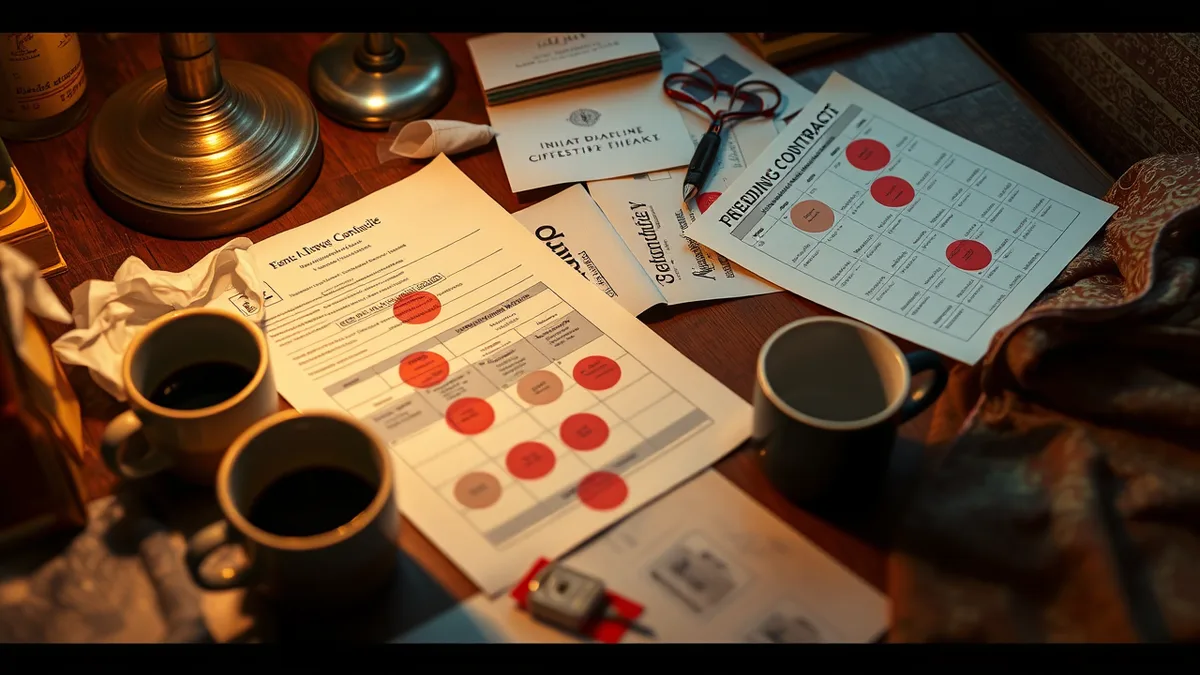
Mistake 1: Booking Vendors Before Setting a Budget
The classic order of operations: fall in love with a venue, sign a contract, and then realise you have just consumed 35% of your total budget on a single line item.
The fix: Build a top-down budget first. Decide what you will spend total, then work backward into per-category allocations. Use the rough split: venue (25-30%), catering (20-25%), decor (10-15%), photography (8-10%), outfits (8-10%), miscellaneous (15-20%). Only book vendors after this is set.
Mistake 2: Underestimating the Time Cost
Couples consistently underestimate the hours wedding planning consumes. A reasonable estimate: 250-400 hours over 6-12 months for a full-scale Indian wedding. That is the equivalent of a part-time job. Most couples have full-time jobs.
The fix: Either compress the timeline (a 4-month sprint with a planner is often less time-consuming than a 12-month DIY) or hire a planner to absorb the operational hours. Even a partial planning engagement saves 100-200 hours.
Mistake 3: Ignoring the Logistics of Your Specific Venue
“This venue is gorgeous” is not the same as “this venue can host a 350-guest dinner with a live cooking station and an aerial entry.” Heritage venues, beach properties, and unconventional locations come with infrastructure constraints that quote sheets do not surface: power capacity, water supply, kitchen access, vendor staging areas.
The fix: Conduct a full infrastructure audit before signing any venue contract. Ask: power load capacity, water supply (especially for catering), washroom availability, vendor parking and equipment access, weather contingency space.
Mistake 4: Hiring Vendors Without Reference Calls
Wedding vendor portfolios are curated. Reviews online are sparse and often gamed. The single best diagnostic is a reference call, speaking to a couple who used the vendor 3-12 months ago.
The fix: Ask every vendor for two references from weddings in the past year. Vendors who push back are showing you something. Reference calls take 15 minutes each and prevent six-figure mistakes.
Mistake 5: Not Documenting Vendor Inclusions
“It is included” is one of the most expensive phrases in Indian wedding planning. The decor quote includes 12 floral arrangements, was that a centre-piece, a chandelier, or a photo wall? The catering quote is “for 250 people”, is that 250 mains, 250 starters and mains, or 250 with multiple rounds?
The fix: Demand itemised written quotes. For decor: a specific list of every installation with photographs of references. For catering: per-item per-portion quantities. For photography: number of shooters, hours covered, deliverables and timeline.
Mistake 6: Letting Family Veto Decisions Without Information
“Aunty says we should not have it on a Tuesday.” “Mom thinks the venue is too far.” Family input is valuable; family veto without context is the leading cause of late-stage replanning we see.
The fix: Bring family into specific decisions early, with a clear framework: “Here are the three venue options. Here are the trade-offs. Here is what we are leaning toward. What concerns do you have?” Open-ended “what do you think?” invites unstructured veto. Structured decision frameworks invite useful input.
Mistake 7: Underplanning the Pre-Wedding Functions
Couples spend 80% of planning energy on the wedding day and 20% on mehendi, sangeet, haldi, and engagement. The pre-wedding functions are where most photographs are actually taken, where guests build memories, and where things go wrong because they were treated as casual.
The fix: Plan each pre-wedding function with the same operational rigor as the wedding day. Run-sheet, vendor coordination, contingency planning. The relaxed atmosphere should be the experience for guests, not the operational reality for your team.
Mistake 8: Skimping on Wedding Day Coordination
“My cousin will handle it.” “We have done so much planning, it will basically run itself.” This is the single most predictable failure mode in Indian wedding planning. Without dedicated coordination, the bride spends her wedding morning fielding logistics calls.
The fix: Even if you DIY the rest of planning, hire a day-of coordination team. Starting from Rs 2 lakh, it is the highest-ROI line item in your entire wedding budget.
Mistake 9: No Documented Backup Plans
Weather, vendor failures, infrastructure failures, family medical emergencies, something will deviate from plan on a 200-guest, multi-day event. Without documented contingencies, the response is improvised.
The fix: Document a contingency plan for: outdoor weather (covered alternative space, tarp deployment, timing shifts), vendor no-show (substitute vendors on standby with terms agreed), power failure (generator coverage), medical emergency (hospital contacts, on-call doctor for premium events). Every Velvet Knot wedding has this written and shared with the operations team in advance.
Mistake 10: Not Planning the Day After
The wedding ends. Then what? Most couples do not plan: vendor settlements, gift recording and returns, leftover catering distribution, venue restoration deposits, family transport home, photo and video delivery timelines.
The fix: A post-wedding wrap-up plan. Velvet Knot includes this in every package, a coordinator handles vendor settlement, gift logistics, and delivery follow-ups for two weeks after the wedding so the couple can leave for honeymoon without worrying about it.
The Pattern Behind All of These
Reading through this list, you may notice a pattern: most of these mistakes come from optimistic assumption rather than systematic planning. “It will probably be fine.” “The vendor seemed good.” “We will figure it out closer to the date.” Wedding planning rewards systematic thinking and punishes optimism.
If you would like a structured diagnostic of your current plans, request a free consultation, even if you do not end up working with us, you will leave with a clearer understanding of where your plan is solid and where it has gaps.
Planning resources
If you have already made one of these, what to do now
Most couples reading a list like this have already done at least two of them. That is
normal and almost all of it is recoverable, but the recovery depends heavily on how much time
is left. This is the honest version.
| What happened | Still fixable if | The move |
|---|---|---|
| Vendors booked before a budget existed | You have not paid most of the balances | Build the budget now around what is committed. Where a booking is clearly wrong, losing an advance is usually cheaper than carrying it to the wedding |
| Inclusions were never written down | Any time before the wedding week | Send each vendor a written summary of what you believe is included and ask them to confirm. Their reply becomes the record. Do it in writing, not on a call |
| No reference calls were made | More than a month remains | Ask now anyway. If a vendor is reluctant to connect you with two recent clients, that itself is the answer, and you still have time to act on it |
| The venue’s real constraints were never checked | Before the decor is fabricated | Do the site visit with your decorator and the venue’s operations lead together. Load-in, power, open flame and curfew are the four to settle |
| Family disagreements are unresolved | Always, and it only gets harder | Separate the decisions that are genuinely yours from the ones that are shared, name who decides each, and put it in writing before the vendors need answers |
| No day-of coordination was budgeted | Up to a few weeks out | The single highest-return late addition. A coordinator hired a month out still prevents most wedding-day failures |
| No backup plan for weather or a vendor | Up to the wedding week | Write one page: the covered fallback, the standby vendor, who calls whom. It costs nothing and it is what you will reach for |
The two mistakes that are genuinely hard to undo
Almost everything on this list can be repaired. Two cannot, and knowing which they are
tells you where to concentrate.
The venue, once contracted. The cancellation terms on a wedding venue
are usually steep and the good alternatives for your date are gone. If the venue is wrong,
you are generally choosing between an expensive exit and designing around the problem. This
is why the site visit and the contract review matter more than any other single decision,
and why they should happen before the deposit rather than after.
Time you did not leave yourself. You cannot buy back months. A wedding
planned in eight weeks is not a worse-organised version of a twelve-month wedding, it is a
different wedding: fewer vendor options, less negotiation, less design development and more
paid for speed. That is entirely workable if you accept it and plan accordingly. It goes
wrong when a couple with eight weeks tries to run a twelve-month process and arrives at the
wedding week with half of it unfinished.
If you are late and reading this, the most useful thing you can do is decide what the
wedding is actually for, cut the functions that do not serve that, and put the saved
attention into the ones that do. Three well-run events beat six half-run ones, and guests
notice the difference far more than they notice a shorter programme.
The one habit that prevents most of this
Almost every mistake above traces back to the same root: a decision that lived in
somebody’s head or in a phone call rather than in writing. Vendors remember conversations
differently from couples, families remember agreements differently from each other, and six
months is long enough that you will misremember your own decisions.
The habit is simply this: after every meeting and every call, send a short written summary
of what was agreed and ask the other side to confirm it. Two or three lines is enough. It
takes a couple of minutes, it costs nothing, and it converts almost all of the failures on
this page from disputes into paperwork you can point at. If a vendor will not confirm in
writing what they said on a call, you have learned something important early.
Frequently asked questions
What’s the single most common Indian wedding planning mistake?
Underbudgeting by 20 to 30 percent. Couples plan around a number that excludes pre-wedding events, tips, gifts, last-minute add-ons, and guest count creep. Build a 15 percent contingency line into the master budget from day one.
How do we avoid family politics derailing planning?
Decide upfront who has decision-making authority on each major category (venue, catering, decor, guest list), and write it down. When extended family suggests changes, you have a clear “this was already decided by X” answer instead of a fresh debate every week.
Is it a mistake to hire a wedding planner late?
Yes. The best planners are booked 9 to 12 months out for peak season. Hiring 3 months before the wedding limits you to whoever is still available, and you lose the planner’s vendor negotiation leverage because most contracts are already signed.
Cost factors that quietly add up
- Guest count creep: every 50 guests adds roughly 2 to 4 lakhs in catering, decor, and welcome kit costs.
- Vendor overtime: ceremonies running past contracted hours trigger overtime billing from photographers, caterers, and decor teams. Build in a 1 to 2 hour buffer in vendor contracts.
- Tips and staff gifts: a 30 lakh wedding typically has 50,000 to 1.5 lakh in tips. Budget it; don’t surprise yourself on the day.
- Last-minute additions: extra floral arrangements, last-minute photo booth rentals, additional welcome bags. Plan for a 5 to 8 percent buffer.
Related guides
- How to hire a wedding planner
- Wedding planner cost in India
- Indian wedding planning timeline checklist
- How to plan your wedding budget
Sources and further reading
- Wedding Sutra: Indian wedding industry coverage
- Vogue India: Weddings
- Ministry of Tourism, Government of India
Wedding paperwork: marriage registration in India.
Begin Your Engagement
Want a real number for your wedding?
Tell us your city, guest count and dates. Team Velvet Knot will come back within 24 hours with an itemised budget.