Rajput Wedding Traditions: Rituals, Attire and Customs Explained
- Who Rajput weddings belong to, and why they look different
- Clan, gotra and how matches are traditionally made
- Tilak, sagai and the first formal commitment
- Ganpati sthapana and the ritual start of the wedding period
- Pithi dastoor, mehndi and the days of turmeric
- Mahira dastoor: the maternal uncle’s day
- Palla dastoor and the bride’s wedding-day trousseau
- The baraat, the armed groom and the toran ceremony
- Jaimala, paanigrahan and the pheras
- Aeki-beki, seer guthi and the games that follow
- Rajputi poshak, borla and the language of dress
- Havelis, forts and how Rajput weddings are staged today
- Vidaai and the bride’s arrival at her new home
- Frequently Asked Questions
- Sources and further reading
A Rajput wedding runs across several days of clan-specific rites: tilak at the groom’s home, ganpati sthapana, pithi and mahira dastoor, a baraat where the groom rides armed, the toran struck at the bride’s threshold, paanigrahan and pheras, playful games like aeki-beki, then vidaai. Dress, jewellery and sequence vary noticeably between Rajasthan’s regions and sub-clans.
Who Rajput weddings belong to, and why they look different
Rajput weddings are Kshatriya weddings. The core Vedic frame is shared with most Hindu ceremonies, so if you have attended a north Indian wedding the outline in our Hindu wedding rituals guide will feel familiar. What sets a Rajput wedding apart is the martial and courtly layer sitting on top of that frame: the sword, the toran, the horse, the poshak, and a strong sense of clan honour running through every gesture.
That layer is historical. Rajput clans held forts and jagirs across what is now Rajasthan, parts of Gujarat, Madhya Pradesh and western Uttar Pradesh, and marriage was as much an alliance between houses as a union between two people. The rituals preserved that memory. Even a modest Rajput wedding in Jodhpur today keeps symbols that once carried real political weight.
It is also worth saying plainly that practice varies. Sisodia, Rathore, Kachhwaha, Chauhan, Bhati and Shekhawat families do not all perform the same rites in the same order, and Rajasthani Rajput customs differ from those of neighbouring Marwari trading communities documented in our Marwari wedding traditions piece. Any planner who claims one fixed sequence has not run enough of them.
Clan, gotra and how matches are traditionally made
Rajput matchmaking has historically been governed by clan exogamy. Marriage within the same clan is avoided, and many families extend that avoidance to the mother’s clan and sometimes the paternal grandmother’s clan as well. The number of clans excluded varies by family tradition, which is exactly why elders on both sides sit down early to check lineage before anything else is discussed.
Rank and reputation of the house once mattered enormously, and hypergamy was common, with brides marrying into houses of equal or higher standing. That hierarchy has softened a great deal. Urban Rajput families in Jaipur and Udaipur today weigh education, profession and temperament far more heavily, though the gotra and clan check almost always still happens as a formality.
Practically, this affects your planning timeline. Genealogical verification can take weeks and occasionally derails an otherwise settled match. We advise families to close the clan question before booking a fort or setting a date, because a cancelled date at a heritage property in peak season is an expensive lesson.
Tilak, sagai and the first formal commitment
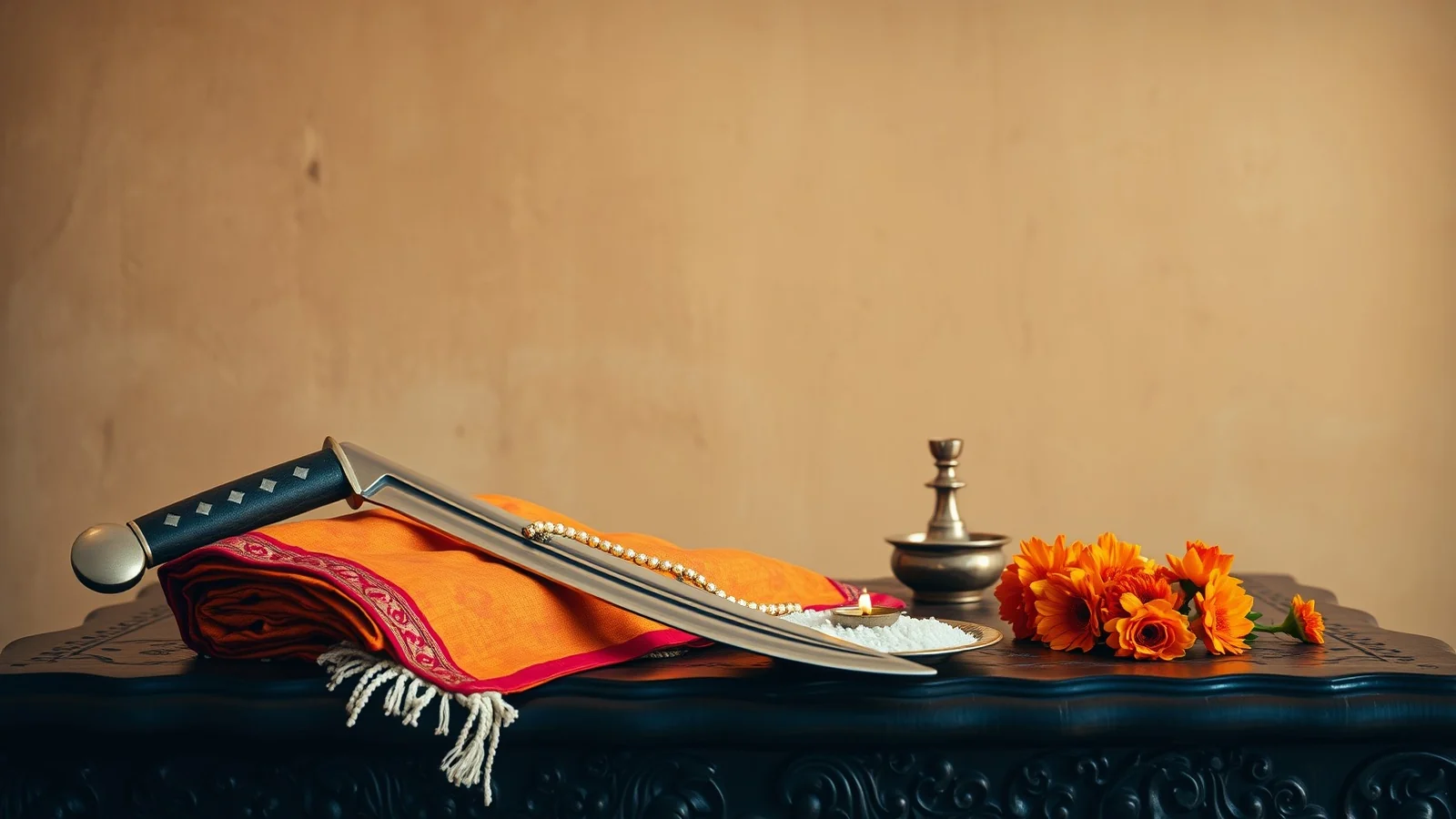
The tilak or teeka is the defining pre-wedding rite in Rajput families. The bride’s father, brothers and male relatives travel to the groom’s home, apply a tilak of roli and rice to his forehead, and present gifts: traditionally a sword, clothes, dry fruit, sweets and cash. The bride does not attend. This is a formal exchange between two houses, and it is where the engagement becomes public and binding.
The sword matters. Even families who have not owned one in generations will source a ceremonial talwar for the tilak thali, because handing a Kshatriya groom a blade is the clearest statement of what the alliance means. Our tilak ceremony guide covers the wider north Indian version, but the Rajput reading of it is distinctly martial.
Many modern families now pair the tilak with a ring exchange, borrowing the format described in our sagai ring ceremony explainer, so that the bride is present for at least part of the day. Purists dislike this. In our experience it is the single most common negotiated compromise in a Rajput engagement.
Ganpati sthapana and the ritual start of the wedding period
Both households install Ganesh before anything else begins. Ganpati sthapana usually happens a few days before the wedding, on a muhurat set by the family purohit. An idol is placed in the courtyard or puja room, invoked, and worshipped daily until the ceremonies conclude. From that moment the family is considered to be inside the wedding period, and certain restrictions apply.
Those restrictions are real and often catch out-of-town guests by surprise. In observant households the bride and groom should not leave the house alone after sthapana, non-vegetarian food may be suspended, and travel is discouraged. If you are planning a destination wedding with a pre-event shoot, schedule it before this date rather than negotiating around it later.
The invocation itself follows the standard Vedic pattern set out in our Ganesh puja wedding guide, with a kalash, a nariyal and the family deity honoured alongside. Rajput families frequently add worship of the kuldevi, the clan goddess, at this point. Which goddess and which shrine depends entirely on the clan.
Pithi dastoor, mehndi and the days of turmeric
Pithi dastoor is the Rajasthani turmeric rite. A paste of turmeric, gram flour, sandalwood and rose water is applied to the bride and groom in their own homes, usually by married women of the family, over one to three sittings. In Rajput households the bride is often seated on a wooden patla in an inner courtyard while women sing traditional geet, some of them clan specific.
The function is the same as the wider practice described in our haldi ceremony guide: purification, an auspicious glow, and a formal marking of the couple as no longer available to the ordinary world. The Rajput distinction is atmosphere. Pithi tends to be an intimate, female-led, indoor affair rather than the poolside spectacle it has become elsewhere.
Mehndi runs alongside, with Rajasthani designs favouring dense, fine, geometric and floral motifs, often incorporating a fort silhouette or a peacock. Book your artist for a minimum of five hours for a Rajput bride, since full hands and feet with traditional density is slow work. Our mehndi ceremony guide has the timing arithmetic.
Mahira dastoor: the maternal uncle’s day
Mahira dastoor, also called mayra or bhaat, honours the mama. The bride’s or groom’s maternal uncle arrives with his family bearing clothes, jewellery, sweets and money for his sister’s household. He is received at the gate with an aarti, and the gifts are displayed publicly. In many families the sister ceremonially welcomes her brother in tears, and the moment is genuinely emotional.
Understand what is actually happening: this is a married woman’s natal family publicly discharging its ongoing obligation to her. It reassures the community that she is still supported by her own blood. That is why the display is public and itemised, and why families who can afford little still arrive with something.
This is also the rite most likely to create friction. Expectations about the scale of the mahira have grown, and we have seen households quietly borrowing to meet them. If you are advising a family, the honest counsel is to set the scale early, in writing, between the two brothers and sisters involved, before anyone else weighs in.
Palla dastoor and the bride’s wedding-day trousseau
Palla dastoor is the groom’s family sending the bride her wedding outfit and jewellery. The palla typically includes the poshak she will wear for the pheras, the borla, the rakhdi, bangles and often the family’s heirloom pieces. It arrives at her home before the ceremony, sometimes on the morning of, carried by the groom’s female relatives.
Symbolically the bride enters her marriage dressed by her new household, which is the point. Practically, this creates a well known planning hazard: the palla arrives too late for alterations, or the blouse does not fit. Insist on measurements being exchanged weeks in advance and keep a tailor on site on the wedding morning. We have never regretted that call.
Some families reverse or duplicate the flow, with the bride’s family also sending clothes to the groom. Whether the palla is opened privately or shown to assembled guests differs by household. In Mewar we more often see a private handover, while Marwar and Shekhawati families tend to display it.
The baraat, the armed groom and the toran ceremony
The Rajput baraat is the most cinematic part of the wedding. The groom wears an achkan or sherwani, a safa tied in the regional style, and carries a sword at his waist. He rides a mare, not a stallion, in most Rajasthani households. Before he leaves, his sisters and the women of the house perform the sehrabandi described in our sehrabandi ceremony guide.
At the bride’s threshold comes the rite that defines a Rajput wedding: the toran. A carved wooden or metal emblem, often a parrot or a bird motif, is fixed above the doorway. The groom, still mounted or standing in his stirrups, strikes it with his sword or with a neem stick. The gesture is a stylised claim of entry, a memory of the days when a groom arrived as a warrior.
The bride’s mother then performs the aarti and the ritual attempt to grasp the groom’s nose, a teasing custom that keeps the mood light. Plan for this: the toran is a vertical shot at a doorway, usually after dark, and photographers who have not covered a Rajput wedding routinely miss it. Brief them with a site walk in daylight.
Jaimala, paanigrahan and the pheras
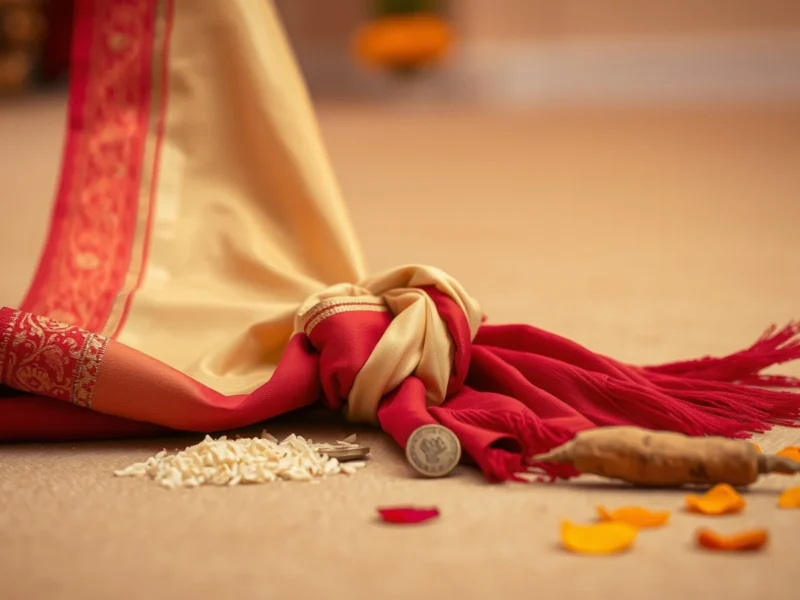
Once the groom is inside, the ceremony follows the Vedic order. The couple exchange garlands, the rite covered in our jaimala and varmala explainer, then move to the mandap. The bride’s father performs kanyadaan, giving his daughter’s hand, and the purohit ties the gathbandhan knot joining the groom’s stole to the bride’s odhni.
Paanigrahan is the moment the groom formally accepts the bride’s right hand, with mantras affirming partnership and protection. It is quiet and easy to miss, but it is the legal and spiritual hinge of the ceremony. The kanyadaan explainer sets out how the two rites relate.
Then come the pheras around the sacred fire, with laja homa offerings of puffed rice made by the bride’s brother. Rajput families in Rajasthan generally perform four pheras in the Vedic style rather than seven, with the seven steps taken separately as saptapadi. The distinction is set out in our pheras versus saptapadi comparison, and it varies by purohit.
Aeki-beki, seer guthi and the games that follow
The post-ceremony games are not filler. In aeki-beki a wide vessel is filled with water tinted with milk or vermilion, and a ring plus coins or shells are dropped in. The couple compete to find the ring, usually best of three or seven rounds. The winner is teasingly declared the one who will rule the household. It breaks the formality after hours of fire and Sanskrit.
Seer guthi follows in many families, where the groom’s sister or bhabhi combs and ties the bride’s hair, or the two are ritually joined by their hair being touched together. It is a small, physical act of the new family claiming the bride as their own. Some households instead perform a simple sindoor and mangalsutra rite here.
Alongside these sit the joota chupai negotiations covered in our joota chupai guide, and the mangalsutra tying explained in our mangalsutra tradition piece. Rajput brides in many clans traditionally wore no mangalsutra at all, relying instead on the borla, bangles and toe rings as marital markers. This has changed considerably in the last two generations.
Rajputi poshak, borla and the language of dress
The rajputi poshak is a four-part outfit: kurti, kanchli, ghagra and odhna. The kurti and kanchli form the upper garment, the ghagra is a full pleated skirt, and the odhna is a long veil worn over the head and drawn across the body. Bridal poshaks are typically in red, maroon or pink with gota patti work, zari borders and, in older families, real gold thread.
The signature jewel is the borla, a round or bell shaped maang tikka worn at the centre parting, quite unlike the flat pendant tikkas seen elsewhere in north India. It is worn with the rakhdi, aad or timaniyan at the throat, bajubandh on the arms, and stacked ivory or lac bangles called chooda. Many pieces are family heirlooms, which raises real security and insurance questions at a hotel wedding.
For the lighter functions, bandhani and leheriya are the two Rajasthani resist-dye traditions you will see: bandhani in tied dots, leheriya in diagonal waves. Yellow and red bandhani odhnas often appear at pithi, and leheriya safas are common for the baraat. Sourcing genuine hand-tied work from Jaipur or Jodhpur takes six to eight weeks, so order early.
Havelis, forts and how Rajput weddings are staged today
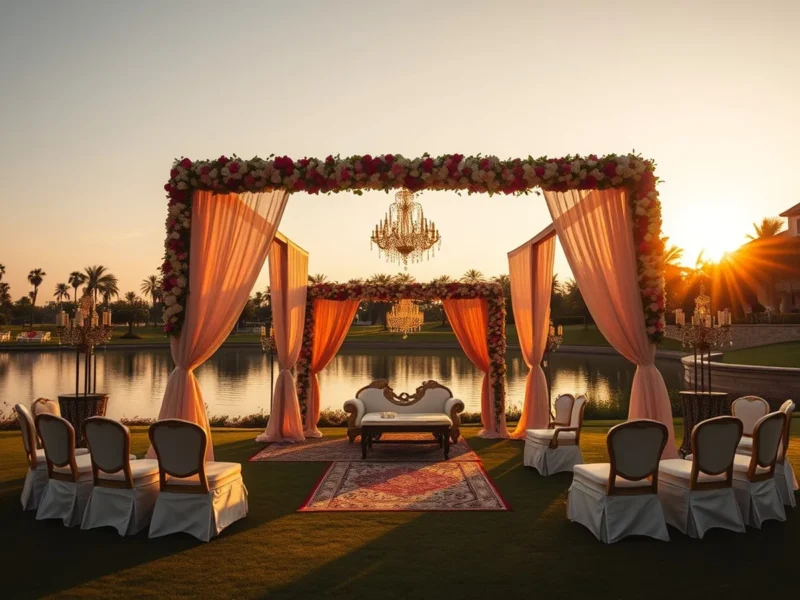
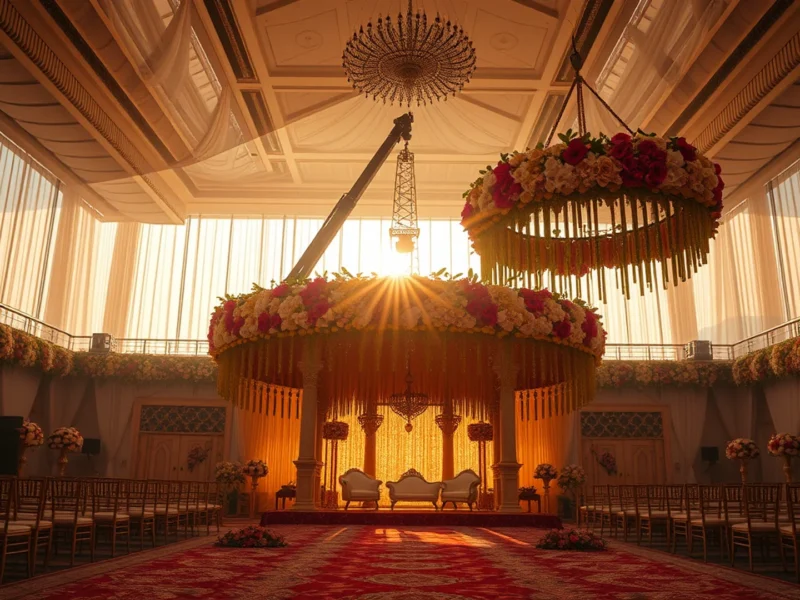
The fort wedding is real heritage, not a marketing invention. Rajput weddings were held in haveli courtyards and fort zenanas, with the women’s ceremonies indoors and the baraat and toran at the main gate. That architecture still shapes the rituals, which is why a good venue in Udaipur, Jodhpur or Jaipur reads as authentic while a banquet hall version can feel thin.
The trade-offs are practical. Heritage properties have narrow gates that a mare and a full baraat cannot easily clear, load-bearing limits on decor, strict fire rules that affect the havan, and noise cut-offs that clash with a late toran. Walk the venue with your purohit and your horse handler, not just your decorator. Budget expectations for this tier are set out in our wedding planner cost guide.
Modern Rajput families have simplified honestly and without much hand-wringing. Multi-day formats have compressed to two or three days, some pre-wedding rites are merged, and many now hold the wedding outside Rajasthan entirely, in Hyderabad, Delhi or abroad. What almost never gets dropped is the tilak, the toran and the vidaai. Those three carry the identity.
Vidaai and the bride’s arrival at her new home
Vidaai in a Rajput household is deliberately restrained in public and intense in private. The bride throws handfuls of rice backwards over her shoulder as she leaves, repaying her parents’ home, and the men of her family escort her to the car or doli. Weeping is expected from the women, while the men are traditionally expected to hold composure. Our vidaai ceremony guide covers the shared elements.
At the groom’s home the bride is received with an aarti at the threshold and asked to tip a vessel of rice with her right foot before entering, the griha pravesh rite. She is often asked to write her new name in a tray of rice or vermilion. In many clans she then bows to the kuldevi shrine before greeting anyone else in the household.
Muh dikhai follows over the next day or two, where the groom’s female relatives lift the bride’s veil and offer gifts, and the pag phera visit returns her briefly to her parents’ home. Both are documented in our muh dikhai guide. In practice, urban Rajput families now compress this whole post-wedding sequence into a single weekend.
Planning a wedding that honours these traditions?
Team Velvet Knot plans weddings across every major Indian tradition, and we brief vendors on the rituals so nothing gets rushed, mistimed or quietly dropped from the running order. Tell us your dates and your community, and we will come back with an honest plan.
Frequently Asked Questions
What makes a Rajput wedding different from other north Indian weddings?
Three things stand out: the tilak at the groom’s home where the bride’s male relatives present a sword, the toran ceremony where the groom strikes an emblem above the bride’s doorway with his blade, and the rajputi poshak with its borla headpiece. The underlying Vedic rites are shared with most Hindu weddings, but the martial framing and the courtly dress code are specific to Kshatriya clans.
Why does the groom carry a sword to the wedding?
The sword is a Kshatriya marker of readiness to protect. Historically a Rajput groom arrived at the bride’s home as a warrior claiming entry, and the toran strike re-enacts that. Today the talwar is ceremonial, often a family heirloom, and it is worn through the baraat and sometimes kept beside the groom at the mandap. Some venues and airlines restrict transport, so check rules early.
Do Rajput weddings have four pheras or seven?
It varies. Many Rajasthani Rajput families follow the four-phera Vedic pattern, with the seven steps of saptapadi taken separately afterwards. Others perform seven circuits directly. The purohit’s tradition and the family’s regional practice decide it, so ask at the first planning meeting rather than assuming. Neither version is more or less valid, and both are complete marriages under Hindu law.
What is mahira dastoor and who pays for it?
Mahira dastoor, also called mayra or bhaat, is the maternal uncle arriving with gifts of clothes, jewellery and cash for his sister’s household during the wedding. He and his family bear the cost. It is a public statement that the married sister still has her natal family’s support. Expectations about scale have inflated, so families should agree the budget between themselves well in advance.
Do Rajput brides wear a mangalsutra?
Traditionally many did not. Rajput marital markers were the borla worn at the centre parting, ivory or lac chooda bangles, toe rings and sindoor rather than a black-beaded mangalsutra. That has shifted over the last two generations under wider north Indian influence, and most brides today wear one. If the family follows the older practice, plan the jewellery brief around the borla and the aad instead.
How many days does a Rajput wedding take today?
Historically the ceremonies stretched across a week or more from ganpati sthapana to pag phera. Urban families in Jaipur, Jodhpur and Udaipur now typically run two to three event days, merging pithi and mehndi, and compressing the post-wedding rites into one weekend. The tilak often happens weeks earlier at the groom’s home, which is why it is easy to miss in a modern itinerary.
Sources and further reading
Begin Your Engagement
Want a real number for your wedding?
Tell us your city, guest count and dates. Team Velvet Knot will come back within 24 hours with an itemised budget.