Marwari Wedding Rituals List: Every Step in Order, With Costs (2026 Guide)
- Marwari wedding rituals: the complete step-by-step list
- Community variations within the Marwari umbrella
- Pre-wedding rituals
- Main day rituals
- Post-wedding rituals
- Marwari food traditions and catering logistics
- Where Marwari weddings are popular
- Working with a planner on a Marwari wedding
- Related community traditions
- Related wedding rituals
- The Marwari wedding week at a glance
- Mahira, Mayra or Bhaat: one rite, several names
- Marwari and Jain variations side by side
- Frequently asked questions
- Planning your Marwari wedding with Velvet Knot
- Sources and further reading
A Marwari wedding runs across 7 to 15 distinct rituals over 3 to 5 days, with a core sequence of Tilak, Ganpati Sthapana, Pithi Dastoor, Mahira Dastoor, Toran, Jaimala, Pheras, Saptapadi, Sindoor Daan, Kanyadaan, Vidaai, and Grihapravesh. Each ritual carries planner-side coordination needs around priest timing, vendor sequencing, and prop sourcing.
What you’ll find here
A Marwari wedding runs across 7 to 15 distinct rituals spanning 3 to 5 days, with the core sequence of Tilak, Ganpati Sthapana, Pithi Dastoor, Mahira Dastoor, Toran, Jaimala, Pheras, Saptapadi, Sindoor Daan, Kanyadaan, Vidaai, and Grihapravesh. Each ritual carries logistic implications a planner has to coordinate: priest timing, vendor sequencing, family member placements, prop sourcing, and meal timing.
Most editorial content on Marwari weddings online is photograph-heavy and ritual-light, which is fine for inspiration boards but unhelpful for couples actually planning. This guide walks the full ritual sequence in the order it actually happens, with planner-side coordination notes for each. The aim is to map every step to what needs to be vendor-coordinated, family-briefed, and pre-stocked before the day.
We have coordinated Marwari weddings across Rajasthan, Mumbai, Kolkata, and Hyderabad. The patterns hold across regions, with small community-specific variations covered below.
Marwari wedding rituals: the complete step-by-step list
Here is the full Marwari wedding ritual sequence in the order it unfolds, from the engagement through to the bride entering her new home. Tap any ritual to jump to its detailed planning notes below.
- Tilak: formal engagement; the groom is anointed by the bride’s family.
- Ganpati Sthapana: Ganesh worship that formally opens the wedding pooja.
- Pithi Dastoor: the Marwari turmeric ceremony, applied with songs in a set sequence.
- Mahira Dastoor: the maternal uncle arrives with a procession of ceremonial gifts.
- Janev: the groom’s sacred-thread ceremony, where observed.
- Toran: the groom strikes the toran as he arrives at the venue.
- Jaimala: bride and groom exchange flower garlands.
- Pheras and Saptapadi: circling the sacred fire and taking the seven vows.
- Mangal Phera: the auspicious concluding round of the pheras.
- Sindoor Daan: the groom applies sindoor to the bride.
- Kanyadaan: the bride’s parents formally give her hand in marriage.
- Vidaai: the emotional farewell as the bride leaves her family home.
- Pagphera: the bride’s first return visit to her parents.
- Grihapravesh: the bride is welcomed into her new home.
Community variations within the Marwari umbrella
“Marwari” refers to people from the Marwar region of Rajasthan, and is a regional and cultural identity rather than a single religious tradition. The rituals are largely Hindu, with a Jain variant in the Oswal community. Within the Marwari umbrella sit several jati or community groups whose weddings carry small but meaningful differences in emphasis. The three you will most often encounter in planning:
Maheshwari. Traditionally a trading community, weddings emphasize Shiva worship in the pre-wedding rituals (Ganpati Sthapana is paired with Mahadev pooja in many Maheshwari families). Pithi Dastoor is more elaborate. The bridal jewellery tradition is heaviest in Maheshwari weddings, including the rakhdi (forehead piece) and nathani (nose ring) being non-negotiable.
Agrawal. A trading and Vaishya-rooted community whose weddings carry stronger Vaishnav influence. Tulsi puja is sometimes added pre-wedding. The Mahira Dastoor (maternal uncle’s gift ceremony) is particularly elaborate in Agrawal weddings, with the maternal family arriving with a procession of gifts that includes jewellery, sweets, and ceremonial cloth.
Oswal. Predominantly Jain by religion, which changes the wedding meaningfully. Pheras still happen but with Jain mantras alongside Vedic. Food is strictly Jain (no onion, no garlic, no root vegetables), which has significant catering implications. The mandap is typically simpler with less floral excess, and the wedding rarely runs past sundown for stricter Oswal families.
Coordinating between communities matters when the bride and groom are from different community backgrounds, which is common. The planner’s job is to brief both priests on which mantras are shared, sequence the family-specific rituals so neither side feels short-changed, and align catering to the stricter of the two food traditions.
Planning a Marwari wedding?
Velvet Knot plans luxury Marwari weddings end to end, from the sacred rituals and mandap to the venue, catering and guest hospitality. Share your dates and city for a tailored plan.
Pre-wedding rituals
Tilak (engagement / formal proposal)
The groom’s forehead is anointed with a tilak by the bride’s family, usually at the groom’s home or a neutral venue. Held 1 to 6 months before the wedding. Modern Marwari Tilak ceremonies are often combined with the engagement ring exchange, though traditionally these are separate.
Planner coordination notes. Priest booking (a single panditji handles Tilak and the wedding, ideally). Tilak thali sourcing (silver thali, kumkum, chawal, sweets). Photographer for 2 to 3 hours. Catering for 30 to 100 guests, vegetarian. Tilak is often the first wedding-related public event, so brand-setting matters.
Ganpati Sthapana
The wedding pooja begins with Ganesh worship to remove obstacles. Held at the bride’s home and the groom’s home separately, typically 5 to 7 days before the wedding day. The Ganesh idol is set up and remains until the wedding completes.
Planner coordination notes. Idol sourcing (clay Ganesh, biodegradable, Rs 1,500 to Rs 15,000 depending on size). Pooja items (panchamrit, fruit, dakshina). Two priests if the bride’s and groom’s homes are far apart. The idol must be visarjit (immersed) after the wedding, which is a separate logistics task.
Pithi Dastoor (haldi equivalent)
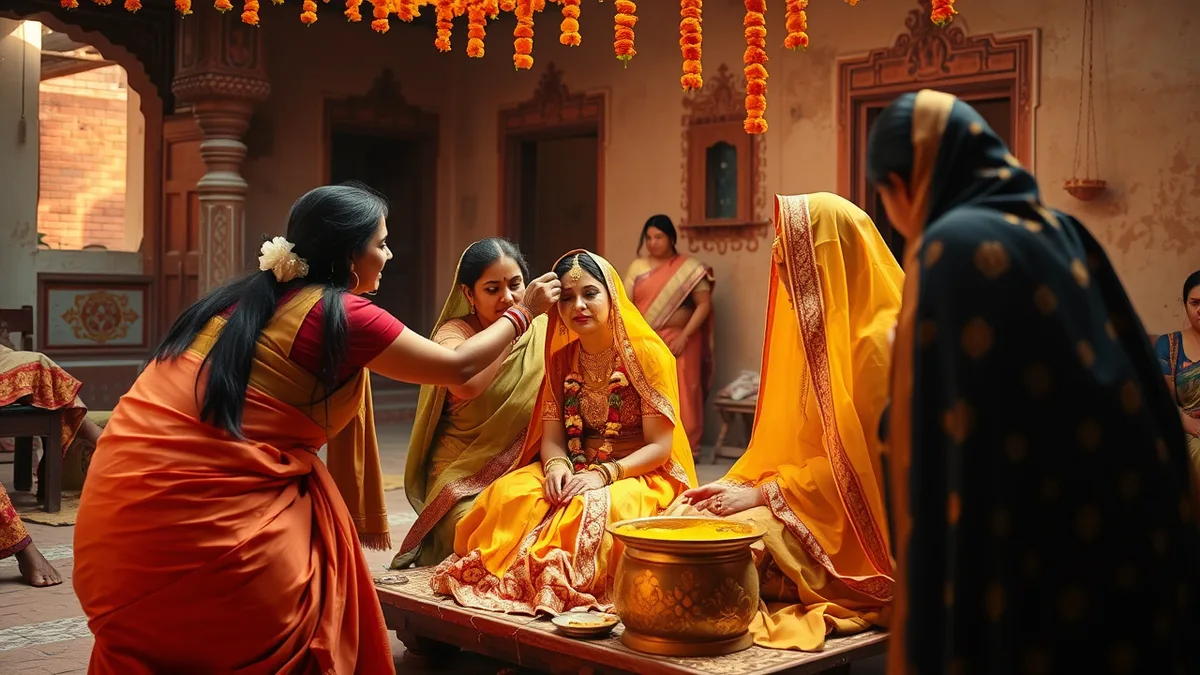
A turmeric paste mixed with sandalwood, rose water, and mustard oil is applied to the bride and groom, separately at their respective homes. Pithi is more elaborate than the generic North Indian haldi: in Marwari tradition, the paste is prepared ritually by the women of the family, and the application happens with specific songs and a specific sequence (forehead, cheeks, arms, feet).
Planner coordination notes. Pithi paste preparation (Rs 2,000 to Rs 5,000 in ingredients). Photographer who knows the sequence and will not miss the women’s procession. Outfit planning (the bride wears yellow or saffron, easy to soil). Photographer must coordinate with a separate touch-up team for post-Pithi cleanup. Catering for 50 to 150 guests at each home, traditional Rajasthani vegetarian.
Mahira Dastoor
The bride’s maternal uncle (mama) arrives with a procession of gifts: jewellery, sweets, ceremonial cloth, sometimes a sword. This is a high-emotion ritual where the maternal family’s role in the wedding is publicly honoured. In Agrawal weddings particularly, the Mahira procession can include 20 to 50 family members with musicians.
Planner coordination notes. Procession route mapping (if it’s a walking procession through a residential lane, permissions may apply). Musicians (dholis, shehnai players, Rs 15,000 to Rs 50,000). Welcome arrangement at the bride’s home (entrance decor, aarti thali). Gift display setup (a separate room or area with proper lighting for the photographer). Catering for an additional 50 to 100 guests on top of the day’s existing scope.
Janev (sacred thread ceremony for the groom)
The groom undergoes a thread ceremony if he has not had his upanayana earlier in life. Often combined with Ganpati Sthapana for Vaishya and Brahmin Marwari families. Optional for many modern weddings, but reinstated for traditional ones.
Planner coordination notes. Priest must be Vedic-trained (not every wedding panditji performs Janev). Specific clothing for the groom (saffron dhoti, sacred thread, kamandalu). Pooja items are extensive. Allow 2 to 3 hours.
Main day rituals
Toran (groom’s arrival at the venue)
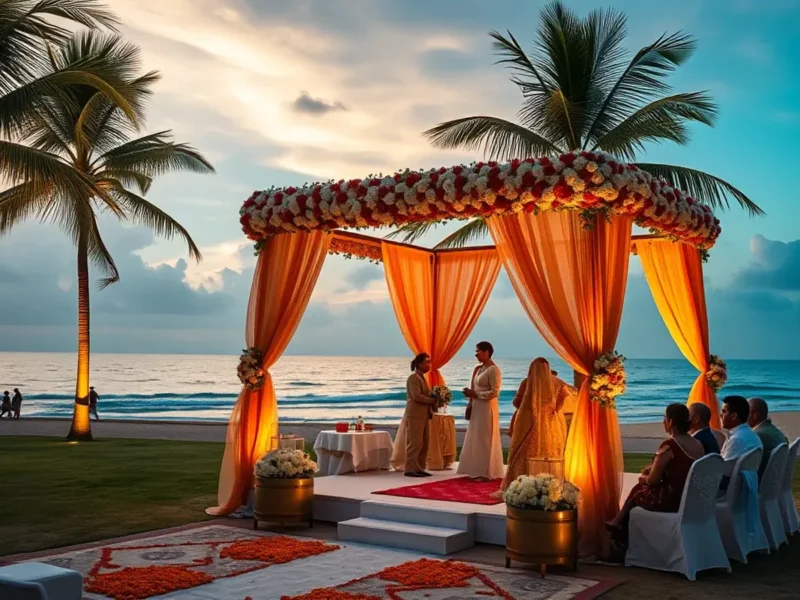
The groom arrives at the wedding venue (or the bride’s home in traditional weddings) and strikes a wooden toran (an emblem hung above the entrance) with a sword or stick before being welcomed inside. The toran is symbolic of overcoming obstacles to claim the bride.
Planner coordination notes. Toran sourcing (carved wooden piece, Rs 3,000 to Rs 25,000). Sword or ceremonial stick for the groom (Rs 1,500 to Rs 10,000). Entrance decor heavy here-this is the photographer’s first major frame. Welcome aarti by the bride’s mother with a thali (kumkum, sweets, aarti diya). The baraat arrives 30 to 60 minutes before the muhurat, which means the venue setup for the rest of the wedding must be fully complete before Toran.
Jaimala (varmala / exchange of garlands)
The bride and groom exchange floral garlands on a raised platform, usually with the families teasing both sides by lifting them up. This is the most photographed moment besides the Pheras.
Planner coordination notes. Garlands (Rs 3,000 to Rs 25,000 each, marigold and rose standard, more elaborate orchid garlands at premium tier). Stage decor (Rs 50,000 to Rs 5 lakh depending on tier). Audio for emcee and music. The Jaimala moment is often choreographed lightly-discuss with the families whether they want a “lifting” element or a clean exchange.
Pheras and Saptapadi
The core wedding ritual. The couple circles the sacred fire (agni) seven times. Each phera is associated with a specific vow (food, strength, prosperity, wisdom, children, health, friendship). Saptapadi is the seven steps the couple takes together at the end, sealing the marriage.
Planner coordination notes. Sacred fire setup-havan kund (Rs 2,000 to Rs 15,000), wood, ghee, samagri. Mandap must accommodate the fire safely (fire-resistant fabric around the mandap, ventilation if indoors, fire extinguisher within 5 metres). Priest dictates the pace, typically 30 to 60 minutes for Pheras and Saptapadi combined. Family member roles: the bride’s brother is involved in lighting offerings during specific pheras, the groom’s sister has a small role in welcoming. Brief the family the day before.
Mangal Phera
In some Marwari traditions, an additional fourth phera (the Mangal Phera) is performed alongside the standard seven. This is community-specific. Confirm with both priests beforehand whether this is being included.
Sindoor Daan
The groom applies vermilion (sindoor) to the bride’s hair parting and ties the mangalsutra around her neck. The wedding is now religiously complete.
Planner coordination notes. Sindoor box (ornamental, Rs 1,500 to Rs 15,000). Mangalsutra is the family’s responsibility, not the planner’s. Photographer must be in position-this is a 30-second moment that is unrepeatable.
Kanyadaan
The bride’s father formally gives away the bride. In Marwari tradition, the bride’s hand is placed on the groom’s hand and the father pours water and sesame seeds over their joined hands while reciting the formal donation mantra. This is a high-emotion moment.
Planner coordination notes. Water vessel and sesame seeds prepped on the priest’s side. The father may need a stool to sit comfortably for the duration (10 to 20 minutes). Photographer angle matters-capture both faces, not just the back of the bride’s head.
Post-wedding rituals
Vidaai (bride’s farewell)
The bride leaves her parental home with the groom. Tradition involves the bride throwing rice over her shoulder as she walks out, symbolising paying back to her parents for her upbringing. Vidaai is the most emotionally charged moment of the wedding.
Planner coordination notes. Vidaai car (typically decorated, Rs 15,000 to Rs 1 lakh in flower decor). Rice or grain for the throwing ritual. The bride often changes into a Vidaai-specific outfit (heavier dupatta or a fresh outfit gifted by the groom’s family). Time the Vidaai for late evening so guests have departed and only family remains-Vidaai with 200 guests watching is a different experience than Vidaai with 20.
Pagphera (bride’s return visit)
The bride returns to her parents’ home for a short visit 1 to 3 days after the wedding. The visit is brief (often just a few hours) and ritually significant-the marriage is “complete” only after this brief return.
Planner coordination notes. Often falls outside the planner’s contracted scope, but worth coordinating the transport and a brief welcome at the bride’s home. Sometimes combined with the reception if held at the bride’s family side.
Grihapravesh (welcoming the bride into her new home)
The bride enters her new home for the first time, traditionally kicking over a vessel of rice at the threshold to symbolise bringing prosperity. The mother-in-law performs an aarti at the door.
Planner coordination notes. Decor at the groom’s home entrance (Rs 10,000 to Rs 50,000). Aarti thali, kalash with rice, photographer for 30 to 60 minutes. For Mumbai or Hyderabad Marwari weddings where the bride moves into a flat rather than a traditional home, the ritual is adapted for the apartment building’s lobby or the flat’s entrance.
Marwari food traditions and catering logistics
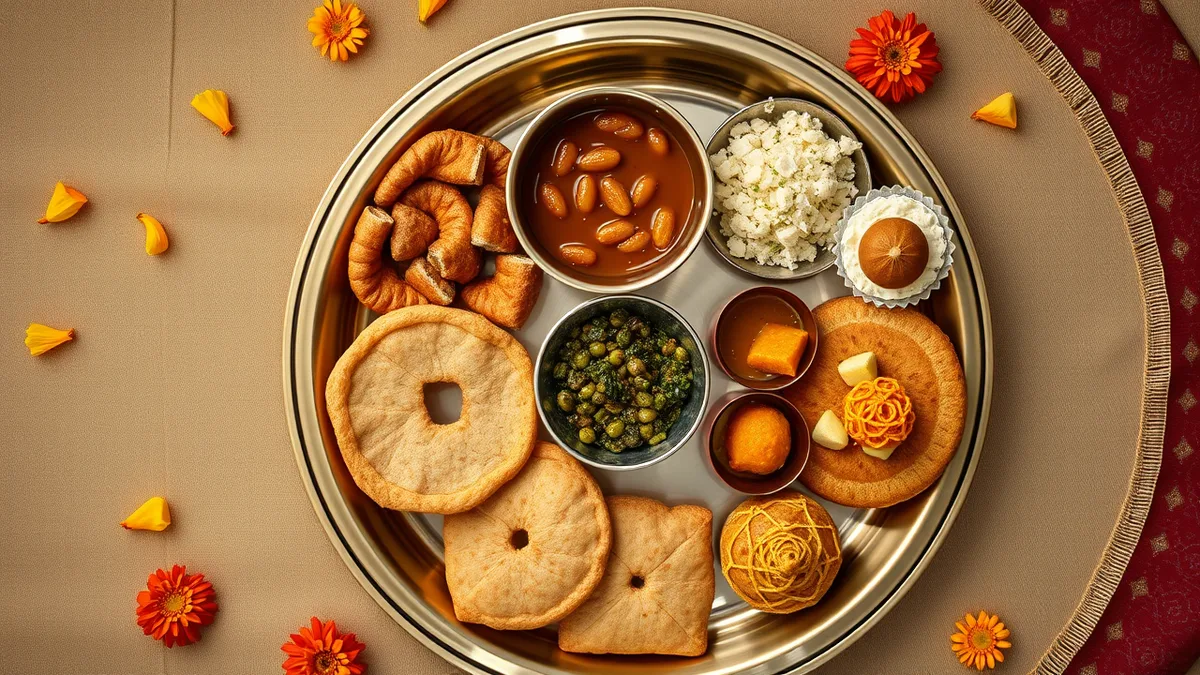
Marwari weddings are vegetarian (with rare Oswal-strict variations being Jain-vegetarian). The core menu includes:
- Dal Bati Churma. The signature Marwari main course. Wheat balls (bati) served with five-lentil dal and a sweetened wheat dish (churma). Catering for 300 guests requires 4 to 6 hours of advance preparation. Expensive labour-wise (Rs 250 to Rs 500 per plate).
- Gatte ki Sabzi. Gram flour dumplings in spiced yogurt curry. Vegetarian staple, cheaper at Rs 150 to Rs 300 per plate.
- Pyaaz Kachori. Onion-stuffed fried pastry, served as starter (Rs 40 to Rs 100 per piece).
- Ker Sangri. Desert beans and berries dish, a Rajasthani delicacy at premium tier.
- Ghevar. Honeycomb-textured sweet, signature wedding dessert in Marwari families.
- Boondi laddoo and besan barfi. Standard dessert spread.
For Oswal Jain weddings, all of the above must be prepared without onion and garlic, which is a separate skill set and a 20 to 30 percent catering premium. Confirm with the caterer in writing that they have Jain-trained kitchen staff if this applies.
Catering for Marwari weddings is more expensive per plate than generic North Indian weddings, typically Rs 1,500 to Rs 3,500 per plate at the wedding venue and Rs 2,500 to Rs 6,000 at premium tier. We cover broader catering budgeting in our wedding planner cost in India guide.
Where Marwari weddings are popular
Marwari weddings happen in concentration in five regions:
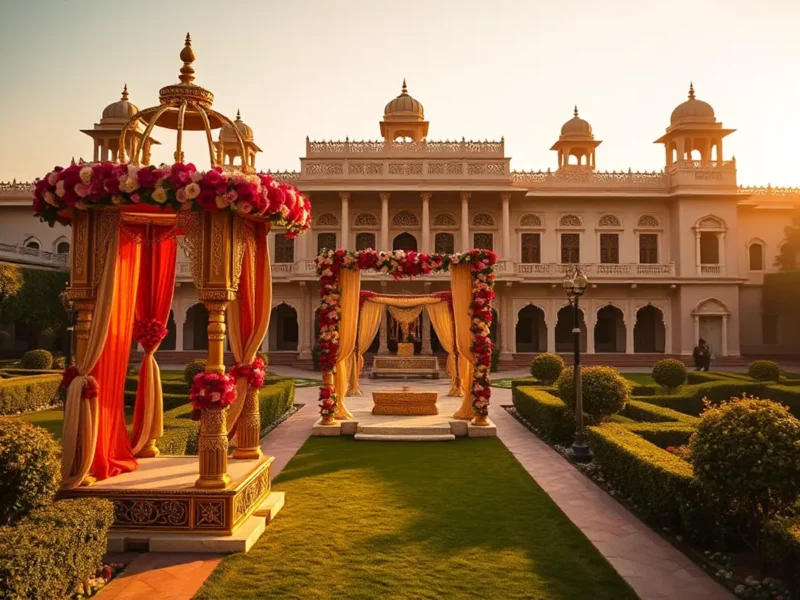
Rajasthan (Jodhpur, Jaipur, Udaipur). The cultural home. Traditional weddings here often happen in family havelis or palace hotels. Our wedding planner in Jaipur and wedding planner in Udaipur playbooks cover the venue and vendor landscape.
Mumbai. Large Marwari community in South Mumbai (Walkeshwar, Malabar Hill) and the western suburbs (Andheri, Borivali). Weddings are typically at five-star hotels or banquet venues. Our wedding planner in Mumbai guide covers the city specifically.
Kolkata. Historic Marwari business community in Burrabazar and the surrounding old city. Weddings are often at the Bengal Club, Tollygunge Club, or large banquet halls. Our wedding planner in Kolkata guide covers the local context.
Hyderabad. Smaller but established Marwari community in Begumpet and Banjara Hills. Weddings are typically at five-star hotels (ITC Kohinoor, Park Hyatt) with traditional rituals adapted to Hyderabad logistics.
Bangalore and Chennai. Smaller communities, weddings often combined with South Indian rituals when there is inter-community marriage.
Working with a planner on a Marwari wedding
The planner-side coordination on a Marwari wedding is heavier than on a generic Hindu wedding because of the ritual depth. The main things we coordinate:
Priest sourcing. Identifying a panditji who knows both the standard Vedic mantras and the Marwari-specific elements (Pithi sequence, Mahira protocols, Mangal Phera if applicable). For inter-community weddings, we often coordinate two priests.
Ritual sequencing. A 5-day Marwari wedding has 10 to 15 ritual moments. We build the run-of-show document and brief the family 7 to 10 days before, with one rehearsal-of-sequence call.
Family briefing. Brothers, sisters, mama, mami all have specific roles. We circulate a one-page brief per family member.
Vendor coordination. Caterer briefed on Marwari menu specifics (Dal Bati timing, hot Pyaaz Kachori service during cocktails). Decor briefed on mandap fire setup. Photographer briefed on the unrepeatable moments (Sindoor Daan, Vidaai, Toran).
Outfit logistics. The bride changes 4 to 6 times across the wedding (Pithi, Sangeet, Mehendi, Wedding day Jaimala, Wedding day post-rituals, Vidaai). Outfit storage, ironing, and a dedicated dresser are coordinated upfront.
For couples planning a Marwari wedding in a city where their family is not based, the coordination overhead is enough that a full-planning engagement usually pays for itself in vendor savings and family stress reduction. Our services cover the full scope, and our royal palace wedding planner guide is the parallel reference for palace-venue Marwari weddings in Rajasthan.
Related community traditions
Related wedding rituals
- the mehndi ceremony explained
- sehrabandi, the groom’s ceremony
- joota chupai, the shoe stealing ritual
- the sagai engagement ceremony
- gath bandhan, the tying of the knot
- the Ganesh puja that opens a wedding
More community traditions: read our full guide to Rajput wedding traditions.
The Marwari wedding week at a glance
The ritual list above is in order, but families plan by day and by house. This table maps each rite to where it usually happens, who leads it, and the one thing a planner has to have ready. Timings vary by family and by the muhurat, so treat the day column as a typical pattern rather than a rule.
| Rite | Usual timing | Where | Led by | Have ready |
|---|---|---|---|---|
| Tilak | One to six months before | Groom’s home or a neutral venue | Bride’s family | Tilak thali and a vegetarian meal for the guests |
| Ganpati Sthapana | Five to seven days before | Both homes separately | Family priest | Clay Ganesh idol and a plan for its immersion |
| Pithi Dastoor | The days before the wedding | Both homes separately | Women of the family | Pithi paste, clothes that can be stained, touch-up team |
| Mahira Dastoor | Before the wedding day | Bride’s home | Bride’s maternal uncle and his family | Musicians, a welcome aarti and a gift display |
| Janev | Where observed, around Ganpati Sthapana | Groom’s home | A Vedic-trained priest | Saffron dhoti and the sacred thread |
| Toran | Wedding day, on arrival | Venue entrance | Groom | Carved toran, ceremonial sword or stick, finished venue |
| Jaimala | Wedding day | Stage | Bride and groom | Garlands and a clear stage |
| Kanyadaan, pheras and Saptapadi | At the muhurat, often late at night | Mandap | Priest and both families | Havan kund, fire safety, seating for the bride’s father |
| Sindoor Daan | Wedding day, after the vows | Mandap | Groom | Sindoor box and the mangalsutra |
| Vidaai | End of the wedding night | Bride’s home or venue | Bride’s family | Decorated car and rice for the ritual |
| Grihapravesh | On arrival at the new home | Groom’s home | Groom’s mother | Kalash of rice and an aarti thali |
| Pagphera | One to three days after | Bride’s parents’ home | Bride | Transport and a short family meal |
Mahira, Mayra or Bhaat: one rite, several names
Families from different parts of Rajasthan and Haryana use different names for the maternal uncle’s ceremony. Mahira, Mayra and Bhaat all describe the same moment: the bride’s or groom’s maternal family arriving with clothes, jewellery and gifts to share the cost and honour of the wedding. When two families from different regions are marrying, confirm the name each side uses before the invitation cards are printed, because a card that names the rite wrongly is noticed by exactly the elders it is meant to honour.
The planning point is scale. In many Agrawal and Maheshwari families the Mahira procession arrives with musicians and dozens of relatives, and the bride’s home has to receive, seat and feed them on a day that is already full. Build it into the catering count and the venue plan rather than treating it as a household event.
Marwari and Jain variations side by side
| Element | Most Hindu Marwari weddings | Oswal and other Jain Marwari weddings |
|---|---|---|
| Food | Vegetarian, onion and garlic allowed | Strict Jain food with no onion, garlic or root vegetables |
| Timing | Pheras often late at night | Stricter families avoid events after sundown |
| Mantras | Vedic | Jain mantras, often alongside Vedic ones |
| Decor | Rich florals and colour | Simpler mandap with less floral excess |
| Planner check | Muhurat and fire permission at the venue | A Jain-trained kitchen confirmed in writing |
Our wedding catering cost guide sets out what a separately staffed Jain kitchen adds to the per-plate figure.
Frequently asked questions
How many days does a Marwari wedding typically run?
3 to 5 days. The core is Mehendi or Pithi on day one, Sangeet on day two, the main wedding day with Toran, Jaimala, Pheras, and Vidaai, and sometimes a reception on the day after. Traditional Marwari weddings can run 7 to 9 days at premium tier.
What is the difference between Pithi and standard haldi?
Pithi is the Marwari-specific haldi ceremony. The paste itself is richer (turmeric mixed with sandalwood, rose water, mustard oil, sometimes ground gram flour), the application sequence is ritualised (specific body parts in specific order), and the songs and the women’s procession are community-specific. Generic North Indian haldi is simpler.
Is the wedding fire mandatory or can it be electric?
For traditional Marwari weddings, the sacred fire (agni) is mandatory because Pheras are circles around the fire. Electric or LED simulations are not religiously acceptable. Venues must permit a controlled fire setup, which most five-star hotels and palace venues do with proper ventilation and a fire-resistant mandap. For Jain Oswal weddings, the fire is sometimes replaced or modified-confirm with the priest.
What time of day are Marwari pheras performed?
The muhurat is set by the family priest based on astrological alignment, typically late evening (8 PM to 2 AM is the standard window). Pheras at 1 AM are common. Plan the catering, decor, and guest management around this-Marwari weddings often have the heaviest dinner service at 9 to 11 PM, well before the pheras.
How much does a traditional Marwari wedding cost?
For 300 to 500 guests at premium tier (five-star hotel or palace venue), budget Rs 50 lakh to Rs 2 crore all-in. The catering line item is typically 25 to 35 percent of total spend because of the labour-intensive menu, decor is 20 to 30 percent, photography 5 to 10 percent. Our wedding planner cost India and destination weddings India cost guide cover the broader budget framing.
Can a non-Marwari planner coordinate a Marwari wedding well?
Yes, with the right priest and a clear ritual sequence document. The priest is the source of truth on every ritual step, and a competent planner’s job is to translate the priest’s requirements into vendor coordination. What matters more than the planner’s community background is whether they have done Marwari weddings before and have the priest network. If they have not, ask for references from prior Marwari families they have worked with.
What jewellery is essential for the Marwari bride?
The rakhdi (forehead piece), nathani (nose ring), choker and long haar set, baju band (armlet), kamarbandh (waist belt), and pajeb (anklets). Most of this is family jewellery passed down or commissioned 6 to 12 months before the wedding. The bridal MUA needs to know the jewellery setup well in advance-see our bridal makeup cost in India for the makeup-side coordination implications.
What is Mayra or Bhaat in a Marwari wedding?
It is another name for the Mahira Dastoor, the ceremony in which the maternal uncle’s family arrives with clothes, jewellery and gifts for the wedding. Different Rajasthani and Haryanvi families use Mahira, Mayra or Bhaat for the same rite.
Planning your Marwari wedding with Velvet Knot
We work with Marwari families across Rajasthan, Mumbai, Kolkata, and Hyderabad each year. The pattern is consistent: the family wants ritual depth done right, the couple wants a wedding that does not feel formulaic, and the parents want the planner to handle the run-of-show so they can be present at the rituals themselves rather than managing the venue.
If your wedding is 6 to 12 months out, the early conversation matters most for venue selection (palace venues in Rajasthan book 9 to 18 months out for peak season) and priest sourcing. Reach us via our get quote page, or read about how we work and the full services list before getting in touch.
Sources and further reading
Velvet Knot believes in showing our work. The references below are the authoritative sources we consult when planning weddings in this category.
- Hindu Marriage Act, 1955: Government of India
- Marwari community, Britannica: Britannica
Begin Your Engagement
Want a real number for your wedding?
Tell us your city, guest count and dates. Team Velvet Knot will come back within 24 hours with an itemised budget.