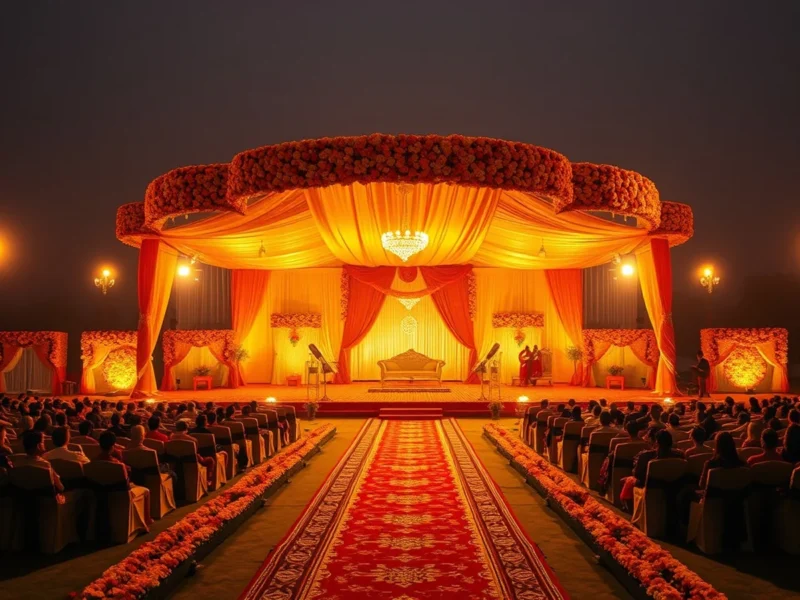
Indian Wedding Planner in London: The 2026 Guide
- The two paths: London or back to India
- The legal piece: registry office before the religious ceremony
- UK regulations couples do not realise apply
- Top London Indian wedding venues by community
- The UK Indian caterer landscape
- Family logistics: visas, hotels, dietary
- The combined religious-and-civil day
- Why an India-anchored planner makes sense
- Frequently Asked Questions
- Planning your London Indian wedding with Velvet Knot
- Sources and further reading
Velvet Knot plans Indian and South Asian weddings in London and across the UK, coordinating venues, catering, decor and multi-day logistics for NRI families. We bring India-grade design and vendor relationships to UK celebrations.
If you have searched for an Indian wedding planner in London, the SERP has probably been unhelpful in a specific way. It serves up general UK wedding planners who once handled a Hindu ceremony, plus thin listicles titled “Indian wedding ideas London” written by someone who has never staffed a four-day shaadi. None of them tell you what the council noise officer actually says at 10pm, what the fire marshal looks for under a mandap, or what the same wedding costs if you fly the family back to Jaipur instead.
This guide does. We are an India-based premium planner working with NRI families on the UK side regularly, and the honest answer for most British-Indian couples is that there are two viable paths, not one. Pick deliberately.
The two paths: London or back to India
Before any venue conversation, the budget conversation. A 300-guest Indian wedding in London, done properly across three event days at hotel-grade venues, lands between £80,000 and £200,000 (roughly Rs 85 lakh to Rs 2.1 crore at current rates). The same wedding in India, with the same guest count, at heritage venues in Udaipur, Jaipur, or even five-star resorts in Goa, runs Rs 40 to Rs 80 lakh including flying the immediate family back. The delta is real and worth doing the math on.
When London makes sense:
- Most of your extended family already lives in the UK or Europe. Flying 200 people from Birmingham, Leicester, and Slough to Jaipur is the bigger logistical lift than hosting them an hour’s drive away.
- Your work calendar cannot absorb a 2-week India trip on both ends.
- The bride or groom has UK-side family who cannot travel (elderly grandparents, medical issues, immigration status).
- The cultural anchor is in London, not India. The Sikh community around Southall, the Gujarati community in Wembley, the South Indian community in Harrow have venues, gurdwaras, temples, and caterers built specifically around them.
When returning to India makes more sense:
- 60 to 70 percent of the guest list is India-resident. Flying 30 UK guests east costs less than flying 200 India guests west.
- You want a heritage venue (palace, fort, lake-front haveli) that simply does not exist in the UK.
- The budget gap of Rs 40-80 lakh genuinely changes what the wedding looks like, not just the bottom line.
- You want a 4-day wedding with full ritual depth (haldi, mehendi, sangeet, ceremony, reception) without compromising on any day because of UK venue cutoffs.
There is a third option families increasingly pick: a smaller legal-and-religious ceremony in London for the UK-side guests (60 to 120 people) plus a larger celebration in India 2 to 4 months later. Two weddings, two budgets, but each is right-sized.
The legal piece: registry office before the religious ceremony
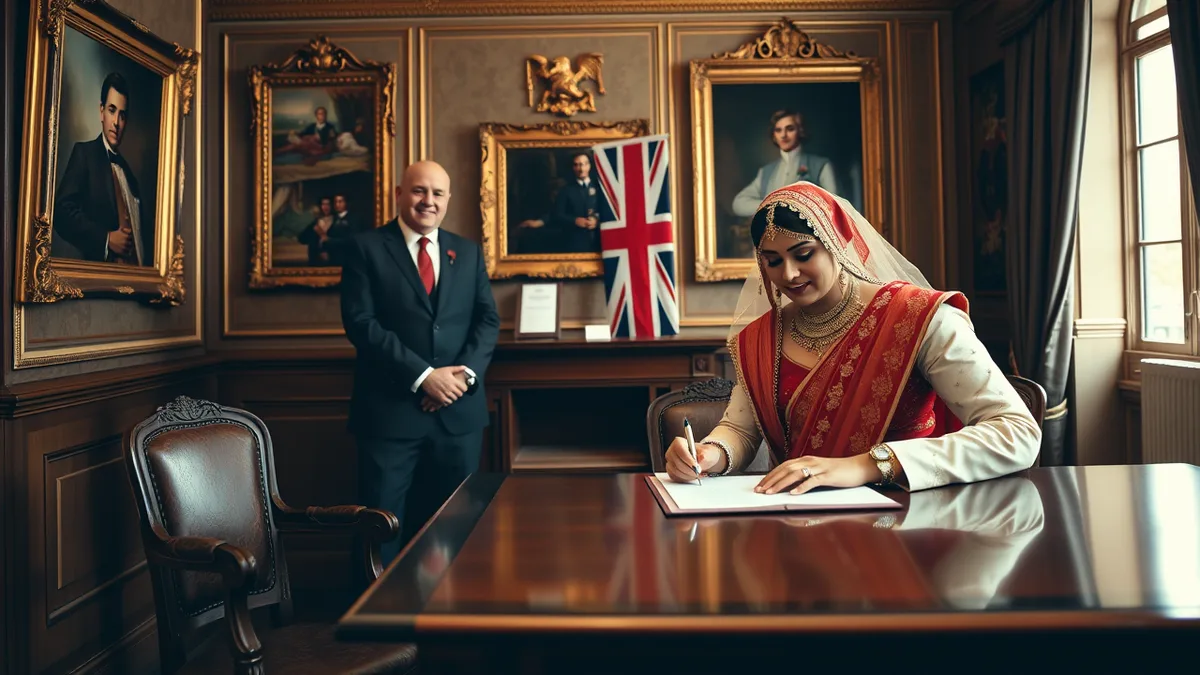
This is the part most couples miss. A Hindu, Sikh, or Muslim religious ceremony performed in England and Wales is not automatically a legally registered marriage. The mandap, the pheras, the nikah, the anand karaj are religiously binding; the state does not record them unless you separately register.
The standard path: register the marriage at a local registry office before or after the religious ceremony. The registry-office wedding itself is a 30-minute civil ceremony with two witnesses, typically £46 to £600 depending on the borough and whether you book the standard room or a “approved premises” upgrade. Both parties need to have given 28 days’ notice at the registry office at least a month before. Bring passports, proof of address, and proof of any previous marriage dissolution. Many British-Indian couples do the registry-office formality on the morning of, or two days before, the religious ceremony. The traditional families we have worked with quietly prefer it before the religious ceremony, on the grounds that the wedding the family flies in for is the wedding that matters.
A small number of larger gurdwaras and Hindu temples in the UK hold “approved premises” status, which lets a registrar conduct the civil registration alongside the religious ceremony in the same venue on the same day. Bhaktivedanta Manor (Watford), Sri Guru Singh Sabha Southall, and a handful of others fall into this category. Confirm with the specific venue, the rules shift.
UK regulations couples do not realise apply
The London Indian wedding has a separate compliance layer that does not exist in India. None of this is fatal, but missing it 4 weeks out is a problem.
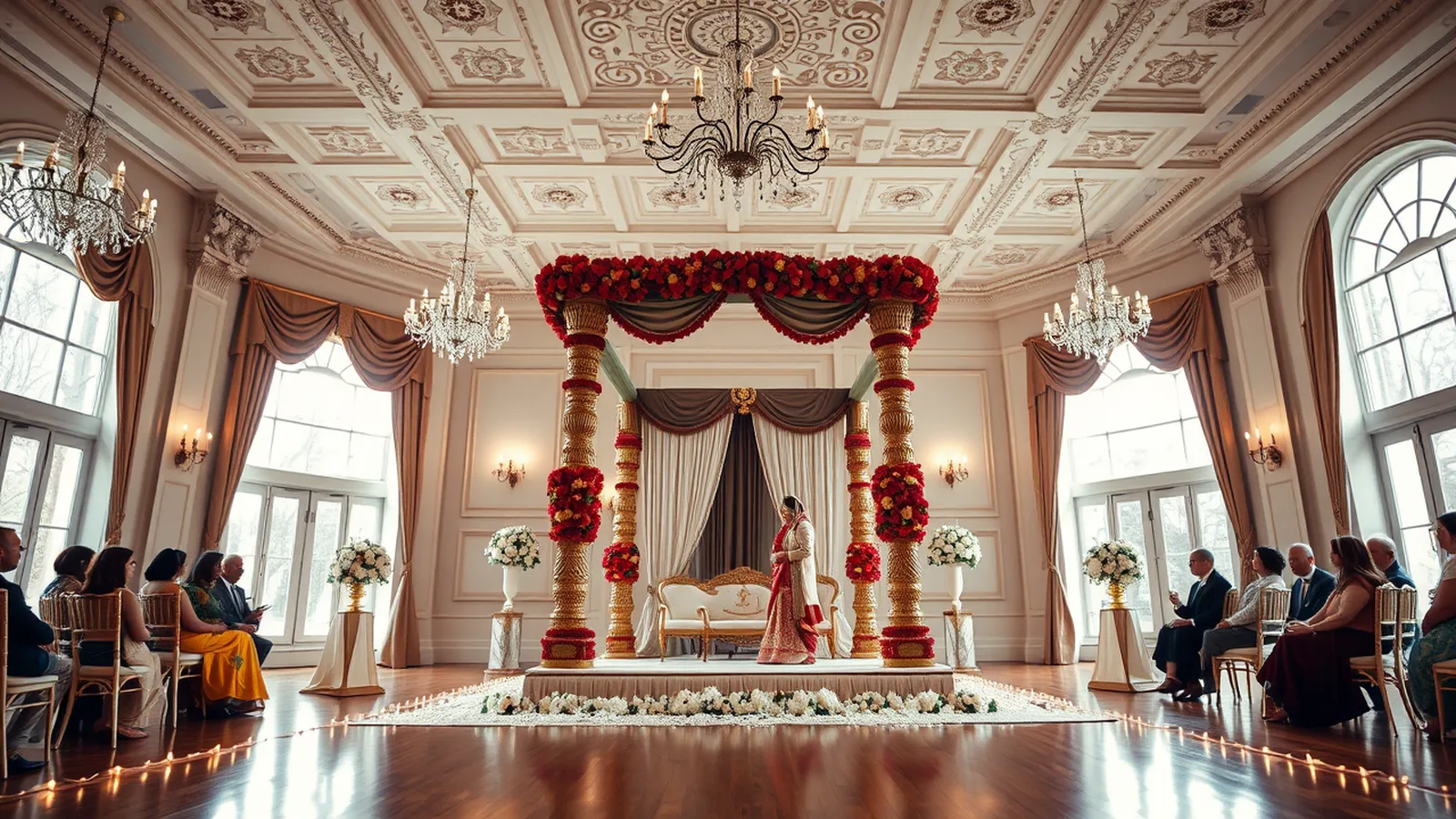
Mandap fire-safety rules. Indoor venues require the mandap structure to meet local fire-safety regs. In practice: a sand or non-combustible base under the havan kund (no carpet directly under the fire), a minimum number of fire extinguishers within reach (venue specifies, typically 2 to 4 for a ballroom mandap), and pre-clearance from the venue’s fire marshal on the day. The havan smoke also triggers smoke detectors in many UK ballrooms, so the venue’s ops team usually isolates the alarm zone for the ceremony window. Get this in writing. Surprised hotel security shutting down the pheras because nobody flagged it is a real failure mode.
Council noise cutoffs. Most London boroughs enforce an amplified-music cutoff between 10pm and 11pm on private events. Westminster and Kensington are stricter than outer boroughs. Wedding venues will know their license terms; you need to plan the sangeet and reception programming around it. If the DJ has to stop at 10pm, the choreographed performances need to be done by 9:15pm. Some venues hold extended licenses to midnight; the premium ones often do, the cheaper halls often do not. Ask for the premises license copy.
Alcohol licensing. Most hotel and event venues hold their own alcohol licenses. Town hall and community-centre venues frequently do not, which means you apply for a Temporary Event Notice (TEN) at least 10 working days before, costing around £21 per event, capped at 15 events per premises per year. For dry weddings (many traditional Muslim weddings, some Hindu families), this is moot. For Sikh and Punjabi weddings with full open bars across the sangeet and reception, the TEN paperwork matters.
Parking and access. Baraat processions on London streets need either the venue’s private driveway (most premium venues have this) or pre-cleared road permits from the council, which take 6 to 8 weeks. The horse-and-carriage baraat is doable, with the right venue. The 200-person dancing-down-the-public-street baraat is not, in most central London boroughs, without permits you have to plan for in summer.
Top London Indian wedding venues by community
The premium shortlist clusters along community lines.
Hindu weddings (full mandap setup, no halal constraint). Stoke Park (Buckinghamshire, a 45-minute drive from central London, the Indian-wedding workhorse for the last decade), Hedsor House (Berkshire, Georgian mansion, smaller scale), Northbrook Park (Surrey, walled garden, 150 to 300 capacity), Kew Gardens (the Temperate House and Nash Conservatory for ceremony, the Orangery for reception), Syon Park (London-side, Indian wedding-friendly catering arrangements), and Bhaktivedanta Manor (Watford, religious depth, on-site temple, for families who want a temple wedding within driving distance of London).
Sikh weddings (gurdwara ceremony, separate reception). The anand karaj is held at the gurdwara. The big London gurdwaras: Sri Guru Singh Sabha Southall (Havelock Road), Sri Guru Singh Sabha Hounslow, Singh Sabha Slough, and Gurdwara Sri Guru Singh Sabha (Park Avenue, Southall). Reception then moves to a separate venue: a hotel ballroom, banqueting hall (Royal Nawaab in Perivale and Ilford is the workhorse), or a country house. Note that the gurdwara has its own protocol: covered heads, no shoes, no meat or alcohol on premises, langar served to all attendees. The anand karaj itself usually runs 90 minutes and is non-negotiable on timings.
Muslim weddings (nikah plus walima). Town halls (Old Marylebone Town Hall, Mayfair Library), Wembley Stadium banqueting suites, the Royal Garden Hotel Kensington, the May Fair Hotel, and a strong cluster of halal-only banqueting halls in East London (Grand Sapphire in Croydon, Meridian Grand in Edmonton). For the nikah itself, many families use the local mosque (East London Mosque, Regent’s Park Mosque) and move the walima to a banqueting venue.
Cross-community premium. The Dorchester, Claridge’s, the Mandarin Oriental Hyde Park, Four Seasons Park Lane, and the Connaught all handle Indian weddings at the top tier, with the catering brought in via approved partners.
The UK Indian caterer landscape
You will not get authentic Hyderabadi biryani from the hotel kitchen. You source it from a specialist. The UK-Indian wedding caterer market has consolidated around a few names: Sanjay Foods (one of the older players, strong on Gujarati and North Indian), Mehfil Restaurant and Catering (Halal, strong on Hyderabadi and Mughlai), Just Halal (Halal specialist, full wedding service), Madhu’s (Punjabi, one of the most established Indian wedding caterers in the UK), and Krua Asia / Spice Village for South Indian options. Per-plate ranges run £45 to £120 for premium full-spread wedding catering, sharply higher than India’s Rs 1,500 to Rs 3,000 per plate. The math is part of why returning to India is worth comparing.
Family logistics: visas, hotels, dietary
For Indian-passport-holding relatives flying in, the UK Standard Visitor visa is the workhorse. Currently £127 for a 6-month visa, biometric appointment required, realistic timeline 6 to 8 weeks (faster with priority service at extra cost). Apply 10 to 12 weeks before the wedding for safety. Wedding invitation letters from the UK-side host, proof of accommodation, and proof of return ticket help approval rates. Refusal rates for Indian visitor visas have crept up over the last 3 years, so build buffer for an appeal.
Hotel clustering for guests: pick a venue, then book a 30 to 50-room block at a 3 or 4-star hotel within a 15-minute drive. Premier Inn, Holiday Inn, and Hilton Garden Inn carry the most flexible block-booking terms. The £140 to £220 per night range is realistic for outer-London 4-star clusters; central London runs £300 plus.
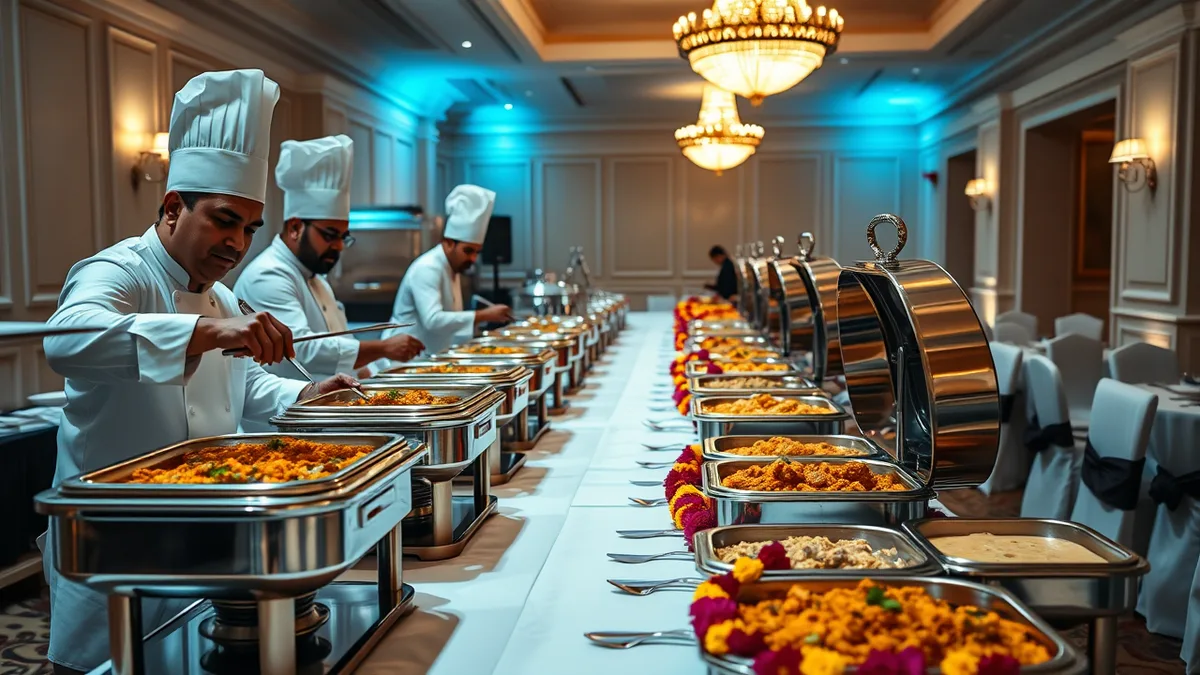
Dietary segmentation is a UK-specific headache. A typical Indian wedding guest list now splits across vegetarian, Jain-veg, non-vegetarian, halal-only, vegan, and gluten-free. The hotel kitchen will not handle this. The specialist caterer will, with sufficient notice and per-plate uplift for the segmentation.
The combined religious-and-civil day
If your wedding is at an “approved premises” venue (a registrar-licensed venue where civil marriages can be conducted on site), the combined day looks like this: civil registration in the morning, 30 minutes with the registrar and two witnesses, in a separate room or section of the same venue. Then mehendi or pre-function in the early afternoon for guests already arrived. Then religious ceremony from late afternoon. Then reception. The registrar charges £100 to £600 for the on-site civil ceremony, separate from the venue fee. Bhaktivedanta Manor, Boreham House, Hedsor House, and a growing list hold this status.
For venues that do not hold the licence, you do the civil ceremony at the local registry office on a separate day, typically the week before. Less elegant but simpler logistically.
Why an India-anchored planner makes sense
The pandit, the choreographer, the photographer, the bride’s mehendi artist, often the decorator’s design lead, and the family’s tailor are all India-based. The venue, the caterer (UK-Indian specialist), the licensing, the registrar, and the day-of crew are UK-based. The bridge between the two is what families pay for. A London-only planner manages half of it well. An India-only planner manages the other half. Velvet Knot manages both, with a permanent UK partner team for execution week.
We do this for NRI families across the UK, US, Canada, and the Gulf, and the structure is consistent with how we plan destination weddings across India. The Dubai Indian wedding playbook is the sibling for Gulf-side weddings, and many UK families end up combining the two (a Dubai mid-point celebration plus a London or India main).
If you are deciding between London and an India return, our services page walks through how we work on either path, and the get-quote form is the easiest way to start a conversation. For families leaning religious-specific, we have dedicated pages for Hindu, Sikh, and Muslim weddings.
Frequently Asked Questions
What does an Indian wedding in London actually cost?
For 200 to 300 guests across three event days at a premium venue (Stoke Park, Hedsor House, Northbrook Park, or a 5-star central London hotel), realistic all-in budgets run £80,000 to £200,000, or roughly Rs 85 lakh to Rs 2.1 crore. The same wedding hosted in Jaipur or Udaipur typically runs Rs 40 to Rs 80 lakh including flying the immediate family back. The gap is large enough that the comparison is worth doing properly before locking a venue.
Is a religious ceremony in London a legal marriage?
Not automatically. The pheras, anand karaj, or nikah are religiously valid but not legally registered unless you also complete a civil ceremony at a registry office or at an “approved premises” venue with a registrar present. Most British-Indian couples do the registry-office formality 1 to 7 days before the religious ceremony. Notice of marriage has to be given 28 days in advance.
What is the council noise cutoff for wedding venues in London?
Most boroughs enforce an amplified-music cutoff between 10pm and 11pm on premises licences for private events. Westminster and Kensington tend to be stricter. Premium hotel and country-house venues often hold extended licences to midnight, but you need to confirm the licence terms in writing. Plan the choreographed performances to finish 30 to 45 minutes before the music cutoff.
Can we do a full baraat through London streets?
Through the venue’s own driveway or grounds, easily. Through public streets, only with a road closure permit from the council, which needs 6 to 8 weeks to process and typically only applies to short routes. The workable version is a horse-and-carriage or open-car baraat on the venue’s private access, plus a smaller symbolic walk for photos.
How do we get UK visitor visas for elderly relatives in India?
The UK Standard Visitor visa runs £127 for 6 months at current rates, with biometric appointments at VFS centres across Indian cities. Realistic processing time is 6 to 8 weeks, faster with priority service. Apply 10 to 12 weeks before the wedding. Refusal rates have risen recently, so build appeal buffer. A wedding invitation letter, proof of UK-side accommodation, and proof of return travel meaningfully help approval rates.
Should we hire a London planner or an India planner for a London wedding?
The honest answer is both, or one planner with both sides handled internally. The pandit, photographer, choreographer, and family logistics sit in India. The venue, caterer, licensing, registrar, and day-of crew sit in the UK. A planner who only operates on one side will outsource the other and lose accountability in the middle. We run both halves from one team with a permanent UK execution partner.
When does it make more sense to fly back to India instead?
When 60 percent or more of the guest list is India-resident, when the budget difference (typically Rs 40 to Rs 80 lakh) genuinely changes the wedding rather than just the bottom line, or when you want a heritage palace or fort venue that has no equivalent in the UK. A growing pattern is doing both: a smaller civil and religious ceremony in London for UK-side family, then a larger celebration in India 2 to 4 months later.
Planning your London Indian wedding with Velvet Knot
We are India-based and run UK weddings through a permanent execution partner on the London side. Most of our UK clients come to us 8 to 14 months out, half because the venue paperwork moves slowly and half because they want a planner who can also model the “return to India” alternative honestly before they commit.
If your wedding is more than 6 months away and you are weighing London versus India, the get-quote conversation is the right first step. You can also reach Saru directly on WhatsApp at +91 7700027573. For couples leaning toward the destination-wedding option, the destination weddings page and the Dubai sibling guide are the right parallel reads.
The wedding works either way. The decision worth making properly is which way, with the real numbers on the table.
Sources and further reading
Velvet Knot believes in showing our work. The references below are the authoritative sources we consult when planning weddings in this category.
- Foreign Marriage Act, 1969: Government of India
- Marriage in the UK. GOV.UK: Government of the United Kingdom
Begin Your Engagement
Want a real number for your wedding?
Tell us your city, guest count and dates. Team Velvet Knot will come back within 24 hours with an itemised budget.