Engagement Ring Cost in India 2026: Solitaire & Designer Guide
- What an engagement ring purchase actually involves
- Solitaire diamond pricing by carat (2026)
- Where Indian couples buy engagement rings (2026)
- The 4 Cs that move solitaire pricing
- Solitaire setting types and cost
- What’s NOT in most engagement ring quotes (the gotchas)
- How to evaluate an engagement ring purchase
- How Velvet Knot helps with engagement ring sourcing
- What the ceremony itself costs
- The paperwork that protects the purchase
- Buyback and exchange: what you actually get back
- Natural, lab-grown and the resale question
- Frequently Asked Questions
- Related guides
- Sources and further reading
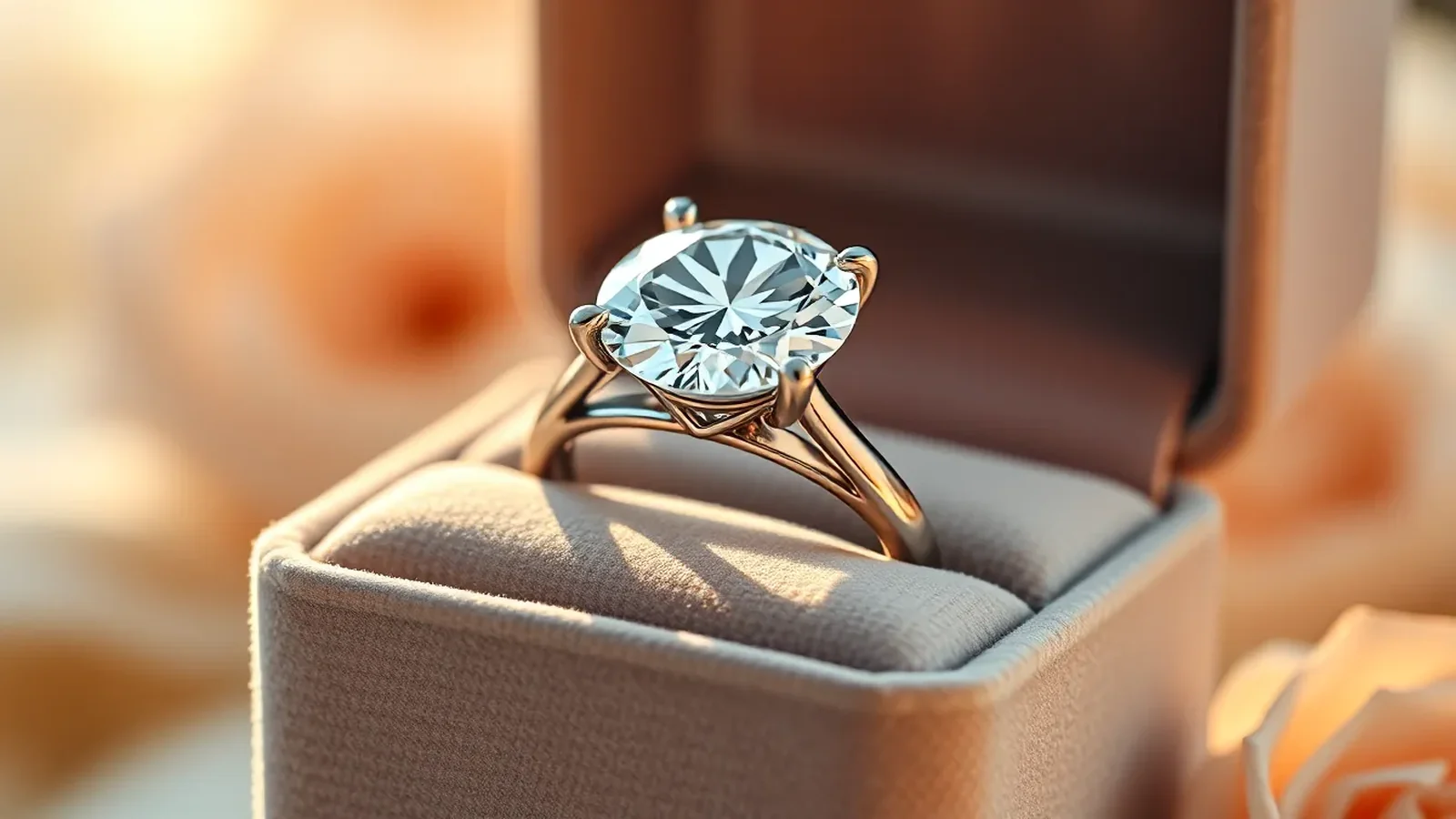
A solitaire diamond engagement ring in India in 2026 costs Rs 1.5 lakh to Rs 50 lakh+ depending primarily on the carat weight, colour grade, and clarity grade of the stone. A 1-carat F/G colour, VS clarity natural diamond solitaire in a gold or platinum setting runs Rs 4-8 lakh at certified jewellers like Tanishq, Tiffany, and De Beers. Lab-grown diamonds are 30-50% cheaper at the same specifications. The ring setting itself (gold or platinum band, with or without diamond pavé) adds Rs 50,000-3 lakh.
What an engagement ring purchase actually involves
Most Indian couples in 2026 buy an engagement ring as a paired moment: either a solitaire diamond for the bride (Western-style proposal aesthetic) or a traditional ring exchange where both partners receive certified rings. The single biggest decision is between a natural diamond and a lab-grown diamond at the same visual specification, which carries a 30-50% price differential.
This guide covers the actual 2026 pricing across the tiers Indian couples commission for engagement rings, with specific brand benchmarks at each tier.
Solitaire diamond pricing by carat (2026)
Natural diamond solitaires (F/G colour, VS clarity, IGI/SGL/GIA certified)
| Carat | Loose stone | Ring (stone + setting) |
|---|---|---|
| 0.5 ct | Rs 1.2-2 lakh | Rs 1.6-2.8 lakh |
| 0.75 ct | Rs 2.2-3.5 lakh | Rs 2.8-4.5 lakh |
| 1.0 ct | Rs 3.5-7 lakh | Rs 4-8 lakh |
| 1.5 ct | Rs 6-12 lakh | Rs 7-14 lakh |
| 2.0 ct | Rs 12-25 lakh | Rs 14-28 lakh |
| 3.0 ct | Rs 25-50 lakh | Rs 28-55 lakh |
| 4.0 ct+ | Rs 40 lakh to Rs 2 crore+ | Add Rs 2-15 lakh setting |
Prices vary by certification authority (GIA carries a small premium over IGI), cut quality (Excellent vs Very Good), and origin documentation. The “F/G colour, VS clarity” specification is the most common engagement-ring grade in India: whiter, cleaner stones move into D/E colour and IF/VVS clarity territory, adding 15-40% per grade.
Lab-grown diamond solitaires (same specs)
Lab-grown diamonds in 2026 trade at 30-50% of natural diamond prices at equivalent specifications. A 1-carat F/G VS lab-grown solitaire in a gold setting: Rs 2-4 lakh. A 2-carat: Rs 6-12 lakh. Same brilliance, same certifiability (IGI), same hardness. The choice is increasingly between resale value and budget efficiency.
Where Indian couples buy engagement rings (2026)
Certified national-chain jewellers (Rs 1.5-15 lakh)
- Tanishq: Strong solitaire selection, GIA and SGL certified, lifetime buyback on metal value, certified diamond resale through their network. Tanishq.
- Kalyan Jewellers: Wide bridal and engagement collections, BIS hallmarked, IGI-certified diamonds.
- Malabar Gold and Diamonds: Strong South India presence.
- Forevermark by De Beers (sold via partner jewellers): Branded solitaire with provenance, Rs 3-30 lakh range.
International luxury houses (Rs 4 lakh to Rs 2 crore+)
- Tiffany & Co.: Solitaires from Rs 6 lakh; their iconic six-prong setting carries a brand premium.
- Cartier: Bridal solitaires Rs 10 lakh to Rs 2 crore+. Solitaire 1895 and Trinity collections.
- Bvlgari: Bridal Dedicata a Venezia line Rs 6 lakh to Rs 1 crore.
- De Beers Jewellers: Forevermark Promise and Dewdrop collections.
- Harry Winston, Van Cleef & Arpels: Available through Mumbai and Delhi private appointments. Rs 15 lakh to Rs 5 crore+.
Designer-jeweller solitaires (Rs 3-50 lakh+)
- Hazoorilal Legacy (Delhi): Bespoke solitaire settings Rs 4-50 lakh+.
- Notandas Jewellers (Mumbai): Solitaires Rs 5-40 lakh.
- Khanna Jewellers (Mumbai): Wedding diamond specialists.
- Sunita Shekhawat (Jaipur): Polki and uncut-diamond engagement statement rings Rs 3-25 lakh.
Direct-to-consumer lab-grown specialists
- Solitario, Aukera, Limelight Diamonds: Lab-grown specialists with strong online and showroom presence. Rs 1-15 lakh ring range.
- Tanishq Tinto, CaratLane: Hybrid retail with lab-grown options.
The 4 Cs that move solitaire pricing
Carat
Weight of the diamond. Price scales exponentially: a 2-carat costs more than two 1-carats of the same grade because larger stones are rarer.
Cut
Quality of the diamond’s faceting. Excellent cut grade > Very Good > Good > Fair. The same carat in Excellent vs Very Good can differ by 15-25% in price.
Colour
Graded D (colourless) through Z (yellow tint). D-F = colourless premium tier. G-J = near-colourless, the most common engagement-ring range. K and lower introduce visible warmth.
Clarity
FL (flawless), IF (internally flawless), VVS1-VVS2 (very very slight inclusions), VS1-VS2 (very slight: the engagement-ring sweet spot), SI1-SI2 (slight, often visible under loupe), I1-I3 (included, visible to naked eye).
Solitaire setting types and cost
- Classic solitaire (prong setting, gold or platinum band): Rs 50,000-2 lakh for setting only
- Halo setting (centre stone surrounded by pavé diamonds): Rs 1.2-4 lakh
- Three-stone setting: Rs 1.5-6 lakh depending on accent stone quality
- Pavé band (small diamonds along the band): Rs 80,000-3 lakh
- Vintage / antique-style setting: Rs 1.5-8 lakh for bespoke heritage settings
What’s NOT in most engagement ring quotes (the gotchas)
- 3% GST on gold/platinum + 1.5% GST on diamond always added on top
- Resizing is usually one free resize within 30 days; subsequent resizes Rs 3,000-15,000
- Insurance separate: Rs 5,000-30,000 annual on a Rs 5-15 lakh ring
- Anti-tarnish plating and rhodium coating for white gold: Rs 3,000-8,000 every 18-24 months
- Engraving inside the band: usually free for short inscriptions, Rs 2,000-10,000 for detailed personalisation
- Certification re-verification if you resell: Rs 3,000-15,000 per stone
How to evaluate an engagement ring purchase
Always insist on: (1) IGI, SGL, or GIA certificate for the loose diamond above 0.5 carat, (2) BIS hallmark on the gold or platinum, (3) detailed itemisation of stone vs setting vs making charges, (4) written buyback or upgrade terms (most certified chains offer lifetime upgrades at 100% diamond value toward a higher-grade stone), (5) insurance terms. A reputable seller produces all five within the first appointment.
How Velvet Knot helps with engagement ring sourcing
For couples who want curated atelier appointments rather than navigating retail floors blind, we run jeweller-introduction service. Hazoorilal, Notandas, Sunita Shekhawat, plus Tanishq solitaire division and international houses through private appointments. Introductions are part of the planning fee. Request a quote.
What the ceremony itself costs
The paperwork that protects the purchase
A ring is one of the few wedding purchases you may want to insure, resell or exchange
years later, and all three depend on documents you can only get at the point of sale. Ask
for every one of these before you pay, not afterwards.
| Document | What it establishes | Issued by | Why it matters later |
|---|---|---|---|
| Diamond grading report | Carat, colour, clarity, cut and whether the stone is natural or lab-grown | An independent gemmological laboratory, not the seller | It is the only objective description of what you bought. Resale and insurance both start here |
| Hallmark on the metal | The purity of the gold or platinum | A BIS-recognised assaying centre | Hallmarking of gold jewellery is mandatory in India and carries a unique identification number you can verify |
| Itemised tax invoice | Metal weight and rate, stone value, making charges and tax, shown separately | The seller | A single blended figure makes it impossible to check what you paid for or to claim on it |
| Buyback and exchange policy | What the seller will pay or credit if you return the piece | The seller, in writing | Verbal assurances at the counter are not a policy. Get the terms and the deductions on paper |
| Valuation for insurance | Replacement value rather than purchase price | The seller or an independent valuer | Insurers need it, and it is far harder to obtain after the wedding than during the purchase |
One caution on certificates. A report from an established independent laboratory and an
in-house certificate produced by the seller are not the same document, even when they look
similar. Check who issued it, and that the report number is engraved on the stone or matches
the piece.
Buyback and exchange: what you actually get back
Most Indian jewellers advertise buyback, and couples read it as a guarantee against loss.
It is not, and understanding why changes how you buy.
- Making charges are generally not returned. You paid for craftsmanship,
and the craftsmanship is what is destroyed when a piece is melted. On an intricate setting
this is a substantial share of what you spent. - Metal usually comes back at the prevailing rate, not the rate you paid.
That cuts both ways and is the part most likely to work in your favour over time. - Stones are the weak point. Many jewellers will exchange a diamond
against a larger purchase far more readily than they will buy it back for cash, and the
value they assign is theirs to set unless you hold an independent report. - Exchange terms usually beat buyback terms, and are usually restricted
to the same seller. That is worth knowing before you choose where to buy, not after.
The practical conclusion is simple. If resale value matters to you, buy a certified stone
in a simpler setting from a seller whose written policy you have read. If the design matters
more, buy what you love and treat the making charges as spent.
Natural, lab-grown and the resale question
Lab-grown diamonds have moved from a curiosity to a mainstream option in the Indian
market, and the decision is now a genuine one rather than a compromise. The distinction that
matters is not quality, it is economics.
- They are chemically the same stone. A lab-grown diamond is a diamond.
It is not a simulant like cubic zirconia or moissanite, which are different materials
entirely. Reputable laboratories grade both natural and lab-grown stones, and the report
states which it is. - The price gap is large and it is the point. For the same specification
a lab-grown stone costs substantially less, which for most couples buys a visibly larger or
cleaner stone at the same budget. - Resale is where they differ sharply. Natural diamonds hold a
secondary market, thin and unfavourable though it is. Lab-grown stones currently have very
little resale value, and lab-grown prices have been falling as production scales. Buy one
because you want the stone, not as a store of value. - Disclosure is not optional. Any seller should tell you unprompted
which you are being shown, and the grading report should say so. If a seller is vague about
origin, that is the whole answer about the seller.
The honest framing for most couples: if the ring is jewellery you intend to wear and
keep, lab-grown gets you more stone for the money and nobody will ever know from looking. If
the ring is meant to be an heirloom or a hedge, the natural stone with an independent report
is the one that behaves like an asset.
Frequently Asked Questions
How much should I spend on an engagement ring?
The old “three months’ salary” rule is irrelevant. Most luxury-tier Indian couples in 2026 spend Rs 3-15 lakh on the engagement ring as part of a broader Rs 50 lakh to Rs 2 crore wedding budget. The decision is about what the ring should signify rather than a fixed percentage.
Should I buy natural or lab-grown diamond?
Natural retains resale value better and carries traditional emotional weight. Lab-grown is structurally identical, costs 30-50% less, and is increasingly accepted in luxury contexts. The trade-off is heritage value vs budget efficiency. Both are IGI-certifiable.
What is the difference between IGI, SGL, and GIA certification?
All three are reputable diamond grading laboratories. GIA (US-based, strictest grading): the global benchmark, small premium. IGI (Antwerp-based, very common in India): widely accepted and trusted. SGL (Indian lab): cost-effective, accepted for retail buyback. For investment-grade stones, GIA is preferred.
How do I know if I’m getting fair pricing on a diamond?
Cross-reference the certificate number against Rapaport pricing (the global diamond price index) and compare three certified retailers’ quotes for the same specifications. Any quote more than 10% above the Rapaport benchmark for that grade and carat should be questioned.
Related guides
Sources and further reading
Begin Your Engagement
Want a real number for your wedding?
Tell us your city, guest count and dates. Team Velvet Knot will come back within 24 hours with an itemised budget.