Mother of the Bride and Groom Outfits for an Indian Wedding, Function by Function
- Why the mothers dress differently
- Function by function
- The ceremony outfit
- Colours
- Coordinating the two mothers
- Comfort, because it is a long day
- Dressing for the rituals she will do
- When to shop
- A note for mothers who are widowed
- Jewellery
- Repeating and re-using outfits
- Hair and makeup
- Budget
- Frequently Asked Questions
- Sources and further reading
The mothers of the bride and groom are the most photographed women at an Indian wedding after the bride, and the busiest. Choose a rich silk saree for the ceremony in a colour that complements but does not match the bride, lighter outfits for the haldi and mehendi, and something glamorous for the sangeet and reception. Comfort matters more than for any guest: she will be on her feet, doing rituals, for hours.
Why the mothers dress differently
The mothers of the bride and groom have a different job from any guest. They host, they greet, they do rituals, and they stand next to the couple in nearly every family photograph. Their outfits need to look beautiful in those photographs, to show the family’s place in the wedding, and to survive a long day of sitting on the floor, standing at the mandap and hugging two hundred people.
This guide works through each function, then colours, comfort, jewellery and budgets. For the bride’s own outfits, see our bridal lehenga colour guide, and for guests, our guide on what to wear to an Indian wedding.
Function by function
| Function | What works | Avoid |
|---|---|---|
| Engagement or roka | A silk or georgette saree, or an elegant suit, in a jewel tone | Anything too casual for the photographs |
| Haldi or nalugu | A yellow or pastel cotton saree, or a light suit, that can take turmeric stains | Silk or anything precious |
| Mehendi | Green, pink or multicolour, in a light fabric; a lehenga or sharara if she likes | Heavy embroidery that catches on the henna cones |
| Sangeet | Something glamorous: a sequinned saree, an Indo-western gown, a lehenga | An outfit she cannot dance in |
| Wedding ceremony | A rich silk saree: Kanjivaram, Banarasi, Paithani or Patola, or a heavy lehenga | The bride’s exact colour |
| Reception | A heavy georgette or tissue saree, or an elegant lehenga, in a deep or metallic tone | Repeating the wedding outfit |
The ceremony outfit
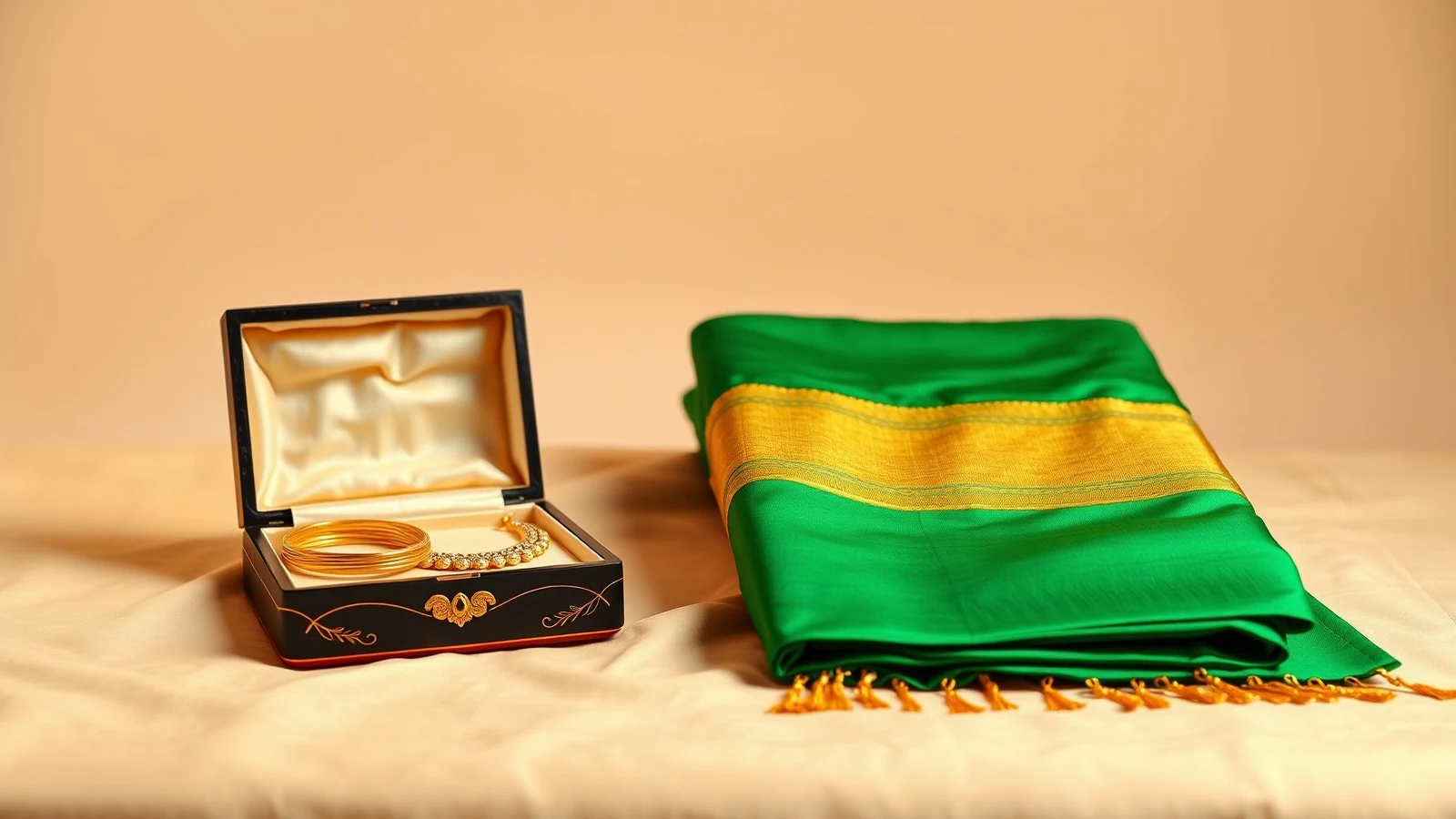
The wedding ceremony is the one that matters most, and for most mothers it is a silk saree. It is traditional, it photographs well, and it is the natural choice when she is doing rituals: the kanyadaan for the bride’s mother, receiving the baraat for the groom’s.
The weave often follows the family’s region. Our bridal saree guide explains the main weaves; most of it applies to the mothers’ sarees too.
- South Indian mothers usually wear a Kanjivaram or another heavy silk, often in a contrasting border.
- North Indian mothers often wear a Banarasi saree or a heavy lehenga.
- Maharashtrian mothers often wear a Paithani, sometimes in the nauvari drape.
- Gujarati mothers often wear a Patola or a gharchola-style saree in the seedha pallu drape.
- Bengali mothers often wear a Banarasi or a Baluchari in the Bengali drape.
Our guide to saree draping styles covers the regional drapes.
Colours
- Do not match the bride. Ask her colour early, and choose something that complements it.
- Jewel tones such as emerald, wine, royal blue, purple and deep teal photograph beautifully and suit most skin tones.
- Gold and copper tones look rich without competing with the bride’s red.
- Pastels suit a daytime ceremony or a summer wedding.
- Red is worn by many mothers at North Indian weddings, but if the bride is in red, choose a different shade such as maroon or rani pink.
- White and black are avoided at Hindu wedding ceremonies by many families, though both are common at receptions and cocktails.
Coordinating the two mothers
The two mothers stand side by side in many photographs. A short call between them, or between the bride and groom, avoids the same colour on the same day. Some families choose a shared colour family for one function, such as both in pastels for the haldi, and different colours for the rest. There is no need to match; there is every reason not to clash.
Comfort, because it is a long day
- Weight: a very heavy lehenga or saree is exhausting over twelve hours. Many mothers change from a heavy ceremony saree into a lighter one for the lunch or dinner.
- Sitting on the floor: many rituals involve sitting cross-legged at the mandap. A saree or a lehenga with enough room is easier than a fitted gown.
- Shoes: she will be standing for hours. Low block heels or embellished flats are better than stilettos.
- The blouse: a blouse that fits well, with sleeves if she prefers, and fabric that breathes. Get it stitched early and do a trial.
- A helper: a niece or a friend to fix the pallu and hold the bag.
Dressing for the rituals she will do
Each mother has particular moments in the ceremony, and the outfit should allow for them.
- The bride’s mother often does the kanyadaan, sitting at the mandap for a long stretch and sometimes washing the couple’s feet. A saree with a pallu she can pin, and a blouse that allows her to raise her arms, makes this easier. In many families she covers her head for parts of the ritual.
- The groom’s mother often welcomes the baraat, does the aarti at the milni, and later welcomes the bride at the griha pravesh. She will be standing and moving, so a lighter outfit for the baraat and a richer one for the ceremony works well.
- Both mothers will be greeting guests for hours. Pockets, or a helper with a bag, save a lot of trouble.
When to shop
- Four to six months before: decide the colours with the bride and the other mother.
- Three to four months before: buy the ceremony saree or lehenga. Fine silk and handloom can take time to source.
- Two to three months before: give the blouses to the tailor, with a trial booked.
- One month before: final trial, and plan the jewellery for each outfit.
- The week before: pack each function’s outfit, blouse, petticoat, jewellery and shoes in one labelled bag.
A note for mothers who are widowed
In some families, older customs expected widowed women to wear white or muted colours and to stay out of certain rituals. Many families have left that behind, and many mothers now wear colour and take full part in their child’s wedding. It is her choice and her family’s. If she is unsure, a word from her son or daughter that they want her in colour, and at the mandap, often settles it.
Jewellery
The mothers’ jewellery should be rich but a step quieter than the bride’s. A good guide:
- One statement necklace, or a long necklace with a choker for South Indian mothers.
- Earrings that suit the necklace.
- Bangles, and a maang tikka or hair ornament only if the family tradition includes it.
Many mothers wear the family’s heirloom pieces at the wedding. Our guide to South Indian bridal jewellery covers the traditional pieces, and our bridal jewellery cost guide covers prices.
Repeating and re-using outfits
There is no rule that a mother needs a new outfit for every function. Re-wearing a fine silk saree from her own wedding, or from a sister’s, is a lovely touch that many families notice and appreciate. A saree worn at the haldi or mehendi can be re-styled with different jewellery and a new blouse for another family wedding later. For a groom’s mother, wearing a saree that her own mother-in-law wore at her wedding can be a quiet, meaningful gesture.
Hair and makeup
Book the mothers’ hair and makeup with the bride’s artist if possible, and schedule them first or straight after the bride. A neat low bun with flowers works for most ceremonies. Our bridal makeup guide explains how family packages work.
Budget
Velvet Knot estimates for a mother’s wedding wardrobe across five functions, 2026:
| Approach | Rough cost |
|---|---|
| Mostly from her own wardrobe, with one new silk saree | Rs 20,000 to Rs 60,000 |
| A new outfit for each main function, mid-range | Rs 75,000 to Rs 2,50,000 |
| Designer outfits for every function | Rs 3,00,000 and above |
A good silk saree is also an heirloom. Many mothers buy one fine saree for the ceremony and wear pieces they already own for the rest.
Frequently Asked Questions
What should the mother of the bride wear to an Indian wedding?
A rich silk saree for the ceremony, lighter outfits for the haldi and mehendi, and something glamorous for the sangeet and reception.
Can the mother of the bride wear red?
Yes, in many families, but choose a different shade from the bride’s, such as maroon or rani pink.
Should the mother of the bride and groom match?
No, but they should not clash. A quick call to compare colours for each function is enough.
Can the mother of the bride wear a lehenga?
Yes. Many mothers wear a lehenga for the sangeet or reception, and some for the ceremony.
What colour should the mother of the groom wear?
Jewel tones such as emerald, wine, royal blue or purple, or gold, complementing the bride rather than matching her.
How many outfits does the mother of the bride need?
One per main function, usually four to six, though many re-use outfits for the smaller functions.
Sources and further reading
Want the whole family’s outfits planned so nothing clashes in the album? Tell us about your wedding.
Love these ideas?
Put a price on them
Six questions give you a realistic budget range with a line-by-line breakdown, so the ideas you love fit the number you have.
Begin Your Engagement
Want a real number for your wedding?
Tell us your city, guest count and dates. Team Velvet Knot will come back within 24 hours with an itemised budget.