Bridal Saree Guide: Kanjeevaram, Banarasi, Paithani and the Telugu Weaves Compared
- Why the saree still leads at South Indian weddings
- The major bridal weaves
- Who wears what
- Pure zari, tested zari and why it matters
- How to check silk and handloom
- Indicative price bands
- When to buy, and the blouse
- One saree or several
- Caring for a wedding silk
- Frequently Asked Questions
- Sources and further reading
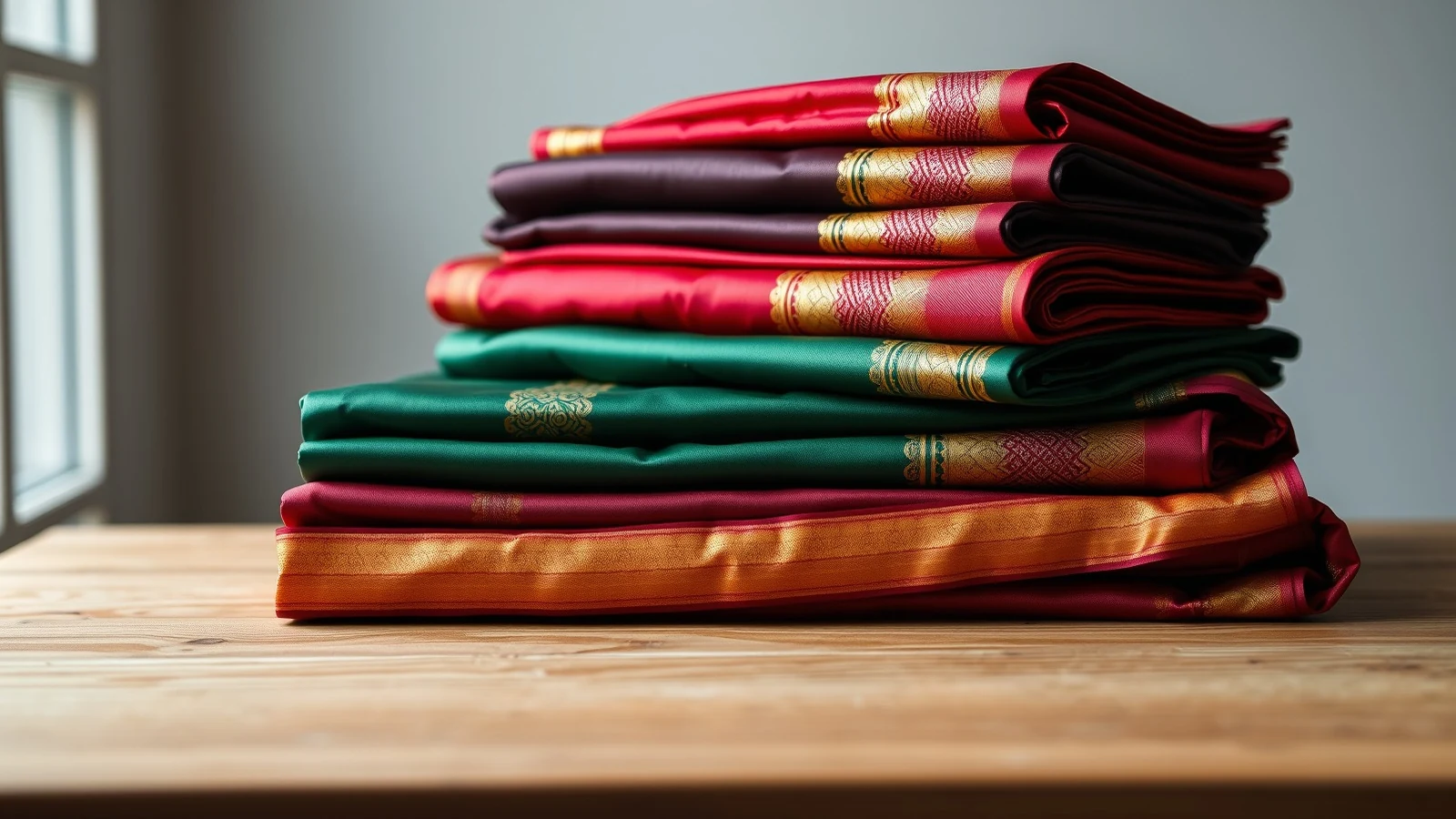
The main Indian bridal silk sarees are Kanjeevaram (Tamil Nadu), Banarasi (Varanasi), Paithani (Maharashtra), Mysore silk (Karnataka), and the Telugu weaves: Gadwal, Pochampally, Uppada, Venkatagiri and Dharmavaram. Most of these names are registered geographical indications. Check for pure zari versus tested zari, a Silk Mark label, and a handloom weave before paying a bridal price.
Why the saree still leads at South Indian weddings
In North India the bridal lehenga has largely replaced the saree for the ceremony itself. In the south, and in Maharashtra, Bengal, Odisha and Gujarat, the wedding saree remains the norm, and it is often a specific weave that the bride’s community has worn for generations. Choosing it is part tradition, part craft and part a large purchase, so it helps to know what each weave is, how it is made and how to check that you are getting what you pay for. If you are choosing between a saree and a lehenga, our bridal lehenga cost guide covers the other side.
The major bridal weaves
| Weave | Where | What marks it out | GI registered |
|---|---|---|---|
| Kanjeevaram (Kanchipuram silk) | Kanchipuram, Tamil Nadu | Heavy mulberry silk, contrast borders woven separately and interlocked, temple and checks motifs | 2004 to 2005 |
| Banarasi | Varanasi, Uttar Pradesh | Brocade with gold and silver zari, Mughal floral and paisley motifs | 2009 to 2010 |
| Paithani | Paithan and Yeola, Maharashtra | Tapestry-woven pallu with peacocks and lotuses, often a reversible border | 2010 to 2011 |
| Mysore silk | Karnataka | Light, soft crepe silk with a narrow zari border | 2004 to 2005 |
| Gadwal | Gadwal, Telangana | Cotton body with a silk border and pallu, joined by interlocking | 2010 to 2011 |
| Pochampally | Bhoodan Pochampally, Telangana | Ikat: the yarn is tie-dyed before weaving into geometric patterns | 2004 to 2005 |
| Uppada Jamdani | Uppada, Andhra Pradesh | Fine, light silk with jamdani motifs woven in | 2008 to 2009 |
| Venkatagiri | Venkatagiri, Andhra Pradesh | Fine weave, traditionally cotton, with zari borders | 2011 to 2012 |
| Dharmavaram | Sri Sathya Sai district, Andhra Pradesh | Heavy silk with broad zari borders, popular for weddings | 2013 to 2014 |
| Narayanpet | Narayanpet, Telangana | Checked body with a contrast border, lighter for functions | 2012 to 2013 |
A geographical indication protects the name: in principle a saree sold as a Kanchipuram silk or a Pochampally ikat should come from that region and be made the traditional way. In practice, the market is full of powerloom copies sold under the same names, which is why the checks further down matter.
Who wears what
- Telugu brides traditionally wear a madhuparkam for the muhurtham, a white or cream saree with a red or coloured border, and change into a heavier silk, often a Kanjeevaram, Dharmavaram or Gadwal, for later rituals and the reception. Hyderabad brides frequently choose a Telangana weave for at least one function. See our Telugu wedding rituals guide.
- Tamil brides wear a Kanjeevaram, and in Tamil Brahmin families the koorai pudavai given by the groom’s side, draped as a nine-yard madisar for the ceremony. Our Tamil Brahmin wedding rituals page covers the koorai.
- Kannada brides often wear Mysore silk or a Kanjeevaram, and in north Karnataka an Ilkal saree may appear in the rituals. See our Kannada wedding traditions.
- Malayali brides wear the off-white kasavu with a gold border, sometimes changing to a Kanjeevaram. Kerala’s Balaramapuram, Kasaragod and Kuthampully sarees all carry GI status.
- Maharashtrian brides wear a Paithani, often draped as a nine-yard nauvari, and many keep the yellow saree from the bride’s maternal uncle for the ceremony.
- Bengali brides wear a red Banarasi for the wedding; Baluchari silk, a Bengal GI weave known for narrative pallus, is a popular second saree.
- Gujarati brides traditionally wear the panetar, white with a red border, from the maternal uncle, and the red and green gharchola from the in-laws. Patan patola, Gujarat’s double ikat, is an heirloom-level piece.
Our South Indian wedding traditions guide places these in the wider ceremony.
Pure zari, tested zari and why it matters
The gold in a silk saree is zari, a metallic thread woven into the border and pallu, and it decides a large part of the price.
- Pure (real) zari: a silver thread coated with gold, wound round a silk core. It is what makes a traditional Kanjeevaram or Banarasi heavy and valuable, and old pure zari sarees have resale value for the silver.
- Tested zari: a copper core with a silver and gold coating. It looks similar new but is cheaper, tarnishes faster and has no metal value.
- Synthetic or plastic zari: a metallised polyester thread. Light and cheap, common in powerloom sarees.
Ask the shop to state the zari type on the bill. Reputable weavers’ cooperatives and established stores will. A simple test sold in markets, pulling a thread and scraping it to see whether red silk or copper shows underneath, is better done by an expert than a buyer at a counter.
How to check silk and handloom
- Silk Mark: a label scheme run by the Silk Mark Organisation of India under the Central Silk Board, which certifies that the product is pure natural silk. It does not certify zari or handloom, only the silk.
- Handloom Mark: a government mark for handwoven products. Handloom sarees show small irregularities in the weave and on the reverse; powerloom sarees are perfectly uniform.
- Interlocked borders: on a genuine Kanjeevaram the body and border are often woven separately and interlocked, so a zig-zag join is visible on the reverse.
- The reverse side: a handloom brocade has floating threads on the back; a printed or jacquard copy is often flat.
- The bill: ask for the weave, the zari type and the silk certification to be written on it.
Indicative price bands
Prices vary enormously with weight, zari, design complexity and where you buy. The bands below are Velvet Knot’s broad estimates for handloom bridal sarees bought from established stores, not quotes:
| Saree | Bridal range (estimate) |
|---|---|
| Kanjeevaram, pure zari | Rs 40,000 to Rs 2,50,000 and above |
| Banarasi, handloom silk with real zari | Rs 25,000 to Rs 2,00,000 and above |
| Paithani, handloom | Rs 20,000 to Rs 2,00,000 and above |
| Dharmavaram or Gadwal silk | Rs 15,000 to Rs 1,00,000 |
| Pochampally or Uppada silk | Rs 10,000 to Rs 80,000 |
| Mysore silk | Rs 10,000 to Rs 60,000 |
Anything far below these bands under a bridal label is very likely powerloom, tested zari or both. That can be a perfectly good choice for a second or third function, as long as it is priced and sold as what it is.
When to buy, and the blouse
Buy the main wedding saree four to six months ahead. That leaves time to have the blouse designed and stitched, which is where most last-minute stress comes from. Blouse work, especially heavy aari or maggam embroidery common in Hyderabad, can take four to six weeks on its own. Ask for the fall and pico to be done, and do a full drape at the final blouse fitting with the jewellery on. Our bridal jewellery guide covers temple jewellery and other sets that are matched to the saree, and our bridal hairstyles guide covers the braid or bun the drape has to sit with.
One saree or several
A South Indian wedding usually needs more than one: a ceremony saree, a reception look and sarees for the engagement, the mehendi and the post-wedding rituals. A common pattern is one heirloom-grade silk for the muhurtham, one lighter silk or designer saree for the reception, and handloom cottons or light silks for the rest. Our trousseau packing ideas cover how these sarees are presented and packed, and our reception outfit ideas cover the evening look.
Caring for a wedding silk
- Dry clean only for the first few years; never machine wash pure zari.
- Store wrapped in a soft cotton or muslin cloth, never plastic, which traps moisture.
- Refold along different lines every few months so the zari does not crack on the folds.
- Keep it away from naphthalene balls, which can react with zari; neem leaves or a cedar block are gentler.
- Air it in the shade a couple of times a year.
Also on Velvet Knot: bridal saree draping styles.
Frequently Asked Questions
Which saree is best for a South Indian bride?
A Kanjeevaram is the most common choice, but Telugu brides often add a madhuparkam and a Telangana or Andhra weave such as Gadwal, Dharmavaram or Pochampally.
How do I know a Kanjeevaram is genuine?
Look for a Silk Mark label, a handloom weave with small irregularities, interlocked borders visible on the reverse, and a bill that states pure zari.
What is the difference between pure zari and tested zari?
Pure zari is gold-coated silver thread; tested zari is a copper core with a silver and gold coating. Pure zari is heavier, costs more and holds value.
Is a Pochampally saree good for a wedding?
Yes, particularly a Pochampally silk ikat for the mehendi, engagement or a reception. It is lighter than a Kanjeevaram and distinctly Telangana.
How early should I buy my bridal saree?
Four to six months ahead, so the blouse can be designed, embroidered and fitted without a rush.
Does Silk Mark guarantee a handloom saree?
No. Silk Mark certifies pure natural silk only. Handloom and zari type have to be checked separately.
Which sarees from Telangana have GI status?
Gadwal, Pochampally ikat and Narayanpet sarees are all registered geographical indications from Telangana.
Sources and further reading
Planning the outfits alongside the wedding? Tell us about your wedding and we will build the shopping and fittings into the plan.
Next step
Get a real number for your wedding
A realistic budget range in two minutes, then an itemised quote from our team within 24 hours.
Begin Your Engagement
Want a real number for your wedding?
Tell us your city, guest count and dates. Team Velvet Knot will come back within 24 hours with an itemised budget.