Bridal Saree Draping Styles: Regional Drapes and Modern Looks for the Wedding
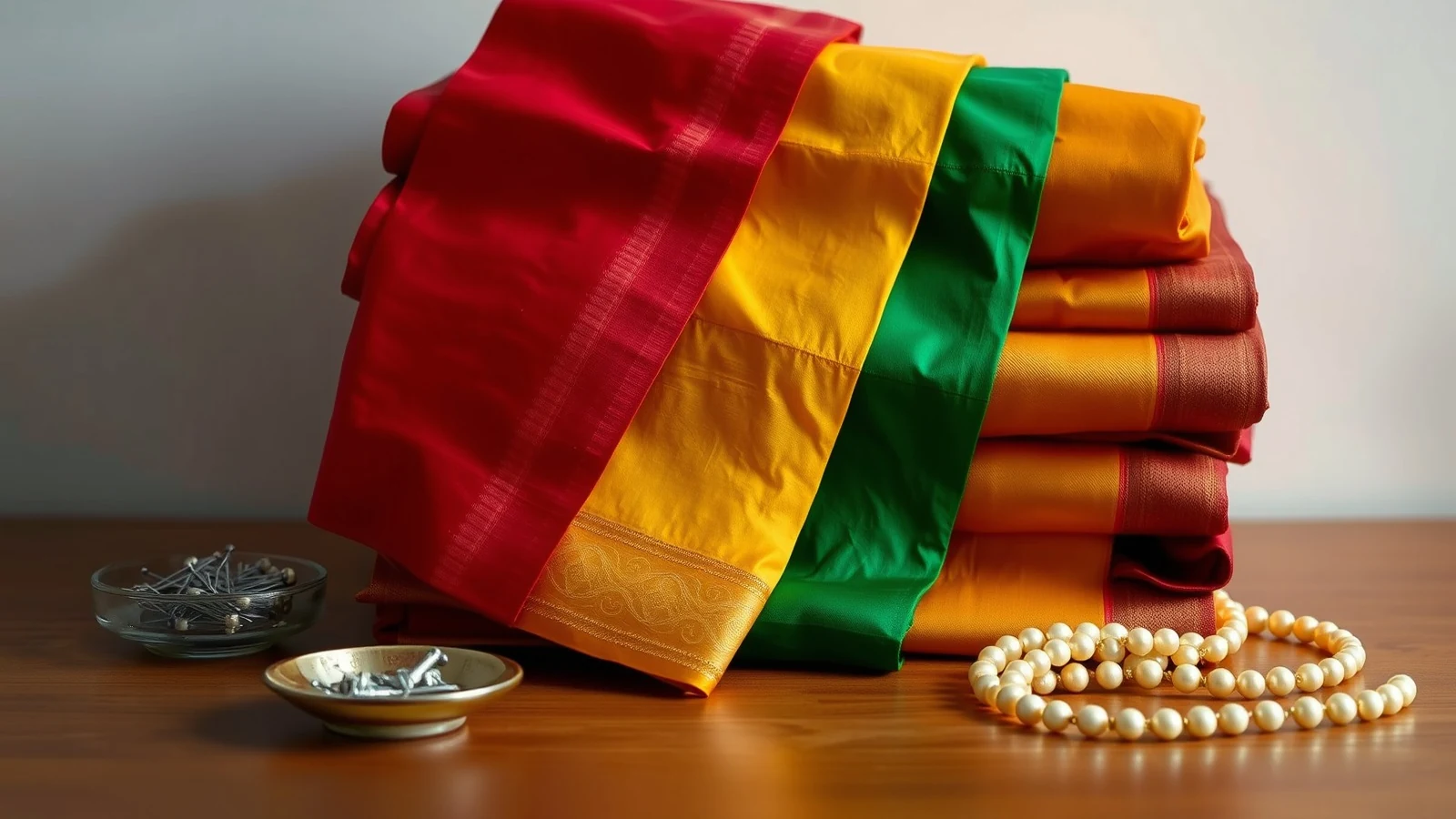
The way a bride drapes her saree says as much about her family as the saree itself. The Nivi drape, with pleats at the front and the pallu over the left shoulder, is the most common. Regional brides often wear their own: the Gujarati seedha pallu, the Bengali drape with a box pleat, the Maharashtrian nauvari, the Tamil Brahmin madisar, the Kodava drape and the Kerala mundum neriyathum. Modern brides add butterfly, mermaid and lehenga-style drapes for other functions.
Why the drape matters
A saree is one length of cloth, usually between 4.5 and 9 yards. Everything else is the drape: where the pleats go, which shoulder carries the pallu, whether it passes between the legs, whether it covers the head. For a bride, the drape often matters as much as the weave, because many communities have a drape that is worn for the wedding and nothing else.
This guide covers the main regional bridal drapes, the modern drapes many brides now wear for other functions, and how to make any drape survive a long wedding day. If you are still choosing the saree itself, our bridal saree guide covers Kanjivaram, Banarasi, Pochampally and the other major weaves.
The Nivi drape
The Nivi is the drape most people picture when they think of a saree, and it is the most common style worn today. It comes from the Deccan, and its popularity spread through the paintings of Raja Ravi Varma in the late nineteenth century.
- How it looks: the saree is wrapped around the waist, pleats are tucked in at the front, and the pallu goes over the left shoulder and falls down the back.
- For a bride: the pallu can be pleated neatly and pinned, or left open and spread across the back to show the border. Many brides bring the pallu forward over the right arm for photographs.
- Works with: almost any saree, and any jewellery, including a vaddanam at the waist.
Most Telugu, Kannada and many Tamil brides wear a version of the Nivi for at least part of the wedding.
Regional bridal drapes
Gujarati seedha pallu
The seedha pallu, or straight pallu, is worn in Gujarat, Rajasthan, Uttar Pradesh and Bihar. The pallu is taken from the back over the right shoulder and spread across the front of the body, so the most decorated part of the saree is on display. It is the drape for the Gujarati bride’s panetar and gharchola. Our guide to Gujarati wedding traditions explains both sarees.
Bengali drape
The traditional Bengali drape has no front pleats in the Nivi sense. The saree is wrapped with a single box pleat, and a long pallu is brought over the left shoulder and can be drawn over the head. Bengali brides wear it with a red Banarasi, and the pallu often covers the head during the ceremony. Our Bengali wedding traditions guide covers the full look.
Maharashtrian nauvari
The nauvari, nine-yard, or kashta saree is the Maharashtrian bride’s drape. The front pleats pass between the legs and are tucked in at the back, in a style similar to a dhoti, which allows free movement while keeping the legs covered. It is worn with the nath, the distinctive Maharashtrian nose ring, and the green glass bangles. Our Maharashtrian wedding traditions guide has more.
Tamil Brahmin madisar
The madisar is the nine-yard drape worn by Tamil Brahmin women, Iyers and Iyengars, who drape it slightly differently. A bride traditionally wears it for the most important part of the ceremony: after the kanyadaan she changes into the koorai, a nine-yard silk given by the groom’s family, often in red or maroon, and the thali is tied while she wears it in the madisar drape. It takes practice: most brides have an elder or a specialist drape it for them. Our guide to Tamil Brahmin wedding rituals explains when the change happens.
Kodava drape
The Kodava women of Coorg drape the saree with the pleats at the back rather than the front, and the pallu taken from the back over the right shoulder and pinned. It is one of the most distinctive drapes in India and is worn with a matching headscarf at weddings. Our Kodava wedding traditions guide covers the full bridal look.
Kerala mundum neriyathum
The traditional Kerala drape is in two pieces: the mundu, wrapped around the waist, and the neriyathu, draped over it and tucked in or taken over the shoulder. It is usually off-white with a gold border, the kasavu. Many Kerala Hindu brides now wear a full-length kasavu saree or a silk saree in the Nivi style instead. Our Malayali wedding traditions guide explains the choices.
Assamese mekhela chador
The Assamese bride wears the mekhela chador, a three-piece set: the mekhela wrapped around the waist like a skirt, the riha around the chest, and the chador draped over the top. It is often in muga silk, Assam’s golden silk.
Regional drapes at a glance
| Drape | Region | Pleats | Pallu |
|---|---|---|---|
| Nivi | Deccan, now nationwide | Front | Over the left shoulder |
| Seedha pallu | Gujarat, Rajasthan, UP, Bihar | Front | Over the right shoulder, spread across the front |
| Bengali | West Bengal, Odisha | A single box pleat | Over the left shoulder, often over the head |
| Nauvari | Maharashtra, Goa | Through the legs, tucked at the back | Over the left shoulder |
| Madisar | Tamil Brahmin | Nine yards, through the legs | Over the left shoulder, wrapped around the waist |
| Kodava | Coorg, Karnataka | Back | Over the right shoulder, pinned |
| Mundum neriyathum | Kerala | Two pieces | The neriyathu over the left shoulder |
| Mekhela chador | Assam | Three pieces | The chador over the shoulder |
Modern drapes for the other functions
Many brides wear the traditional drape for the ceremony and something more contemporary for the sangeet, cocktail or reception.
- Butterfly drape: a thin, pleated pallu that shows the midriff and the blouse. Light and easy to dance in.
- Mermaid drape: the saree is wrapped tightly at the hips and flares at the knees, like a fishtail gown. Glamorous for a reception, harder to sit in.
- Lehenga-style drape: extra pleats all around the waist so the saree flares like a lehenga skirt, with the pallu worn like a dupatta. A good choice for a bride who loves both.
- Dhoti-style drape: the lower half is draped like a dhoti, sometimes with a cape or jacket. Modern and comfortable.
- Belted drape: a Nivi drape with a belt at the waist, which works like a modern vaddanam. Good with heavy silks.
- Cape or jacket drape: a cape or jacket worn over the blouse, with the pallu tucked in or omitted.
- Double-pallu drape: two pallus, one over each shoulder, often using a dupatta as the second.
- Pre-stitched saree: already pleated and stitched, so it goes on in minutes. Ideal for a quick outfit change between functions.
Our guides to sangeet outfits and reception outfits have more on choosing a second look.
Making the drape survive the wedding day
- Book a draper. Most brides have a professional or an experienced relative drape the wedding saree. Book them at the same time as the makeup artist.
- Do a trial. Drape the actual saree, with the actual blouse and the petticoat, at least once before the day. Heavy silk behaves differently from a practice saree.
- Use the right petticoat. A fitted, saree shapewear petticoat gives a smooth line; a cotton one in a matching colour is the traditional choice and holds pleats well.
- Pin generously. Expect to use twenty to thirty safety pins on a bridal drape, at the shoulder, the pleats, the waist and the pallu. Use small pins, and pin through the petticoat and blouse, not just the saree.
- Sit down in it. Most rituals involve sitting on the floor for long periods. Check that the pleats survive it.
- Plan the change. If you change drapes during the wedding, as Tamil Brahmin brides do into the madisar, schedule time and a private room for it.
- Keep a helper close. One person whose job is the saree: fixing the pallu before photographs, re-pinning after the rituals.
What a draper costs
Velvet Knot estimates for a professional bridal saree draper in a major Indian city, 2026:
| Service | Rough cost |
|---|---|
| Nivi or modern drape, single saree | Rs 1,500 to Rs 5,000 |
| Nine-yard drape (madisar or nauvari) | Rs 2,500 to Rs 7,000 |
| Pre-pleating and box folding the saree in advance | Rs 500 to Rs 2,000 |
| Draper on call for the whole wedding day | Rs 6,000 to Rs 15,000 |
Many bridal makeup artists include draping in their packages. Our bridal makeup cost guide explains what is usually included.
Matching the drape to the jewellery and hair
- A vaddanam needs a drape with front pleats, and works best with the Nivi. See our guide to South Indian bridal jewellery.
- A pallu over the head, as in the Bengali and seedha pallu drapes, needs a low bun or braid. Our bridal hairstyles guide covers the options.
- A long braid with a jada billai shows best with a pallu that is pleated and pinned, not spread across the back.
- Long necklaces look best over a pallu that is pinned close to the body.
Frequently Asked Questions
Which saree draping style is best for a bride?
The one your family’s tradition uses for the ceremony, if there is one. Otherwise, the Nivi is the most versatile and works with every weave and jewellery.
What is the Nivi drape?
The most common drape in India, with pleats at the front and the pallu over the left shoulder. It comes from the Deccan.
What is a nine-yard saree?
A saree long enough for drapes that pass between the legs, such as the Maharashtrian nauvari and the Tamil Brahmin madisar.
Can I wear a modern drape for my wedding?
Yes. Many brides wear a traditional drape for the ceremony and a butterfly, mermaid or lehenga-style drape for the sangeet or reception.
How many safety pins does a bridal saree need?
Usually twenty to thirty, at the shoulder, pleats, waist and pallu.
Should I hire a professional saree draper?
For a heavy silk or a nine-yard drape, yes, or an experienced relative. Book a trial with the actual saree.
What is a pre-stitched saree?
A saree that is already pleated and stitched so it can be worn in minutes, useful for quick outfit changes.
Sources and further reading
- Wikipedia: Sari, including regional drapes
- Wikipedia: Madisar
- Wikipedia: Geographical Indications in India, including muga silk
Want a planner who schedules the draper, the makeup and the ritual changes so nothing runs late? Tell us about your wedding.
Next step
Get a real number for your wedding
A realistic budget range in two minutes, then an itemised quote from our team within 24 hours.
Begin Your Engagement
Want a real number for your wedding?
Tell us your city, guest count and dates. Team Velvet Knot will come back within 24 hours with an itemised budget.