Groom Outfit Ideas: What to Wear for the Engagement, Haldi, Mehndi, Sangeet, Wedding and Reception
- Plan the looks as a set
- The wedding outfit by region
- Coordinating with the bride
- Colours by season and time of day
- Buy, tailor or rent
- Grooming timeline
- Turbans and headwear
- The groom’s emergency kit
- Accessories that finish the look
- When to order
- Practical tips
- Frequently Asked Questions
- Sources and further reading
A groom needs five or six looks for a full Indian wedding, and they should build from light to heavy: a bandhgala or suit for the engagement, kurta pyjama for the haldi and mehndi, an Indo-western or jacket look for the sangeet, a sherwani, achkan or regional dress for the ceremony, and a tuxedo or bandhgala for the reception. Order the wedding outfit three to four months ahead, and coordinate colours with the bride, not match them.
Plan the looks as a set
Grooms tend to spend weeks on the wedding outfit and five minutes on everything else, then appear in photographs from four functions in four versions of the same cream kurta. Plan the looks as a sequence: light and relaxed for the daytime functions, building to the heaviest look at the ceremony, then sharp and lighter again for the reception.
| Function | Classic choice | Alternative | Avoid |
|---|---|---|---|
| Engagement or roka | Bandhgala or a well-cut suit | Short kurta with a Nehru jacket | Anything heavier than the bride’s outfit |
| Haldi | White or yellow cotton kurta pyjama | Linen kurta with a printed dupatta | Anything you want back unstained |
| Mehndi | Pastel or printed kurta, light fabric | Kurta with a printed bundi | Heavy embroidery in the afternoon heat |
| Sangeet | Indo-western jacket or sequinned bandhgala | Velvet jacket over a kurta | Long sherwanis you cannot dance in |
| Wedding ceremony | Sherwani, achkan or regional dress | Bandhgala with a stole for a minimal look | Stiff fabric for a long seated ceremony |
| Reception | Tuxedo or dark bandhgala | Velvet or textured suit | Repeating the wedding outfit |
The wedding outfit by region
The ceremony outfit is where tradition usually wins, and it varies more by community than any other look.
| Community | Traditional groom’s wear |
|---|---|
| Punjabi and North Indian | Sherwani with churidar, safa, and the sehra; see our sehrabandi guide |
| Rajasthani and Marwari | Achkan or bandhgala with a safa and a sword in some families |
| Gujarati | Sherwani or kurta with dhoti, and a pagdi |
| Bengali | Silk dhoti and panjabi, with the topor, the conical headdress |
| Tamil | Silk veshti and angavastram; in Tamil Brahmin weddings the panchakacham style of dhoti |
| Telugu | Silk pancha (dhoti) and kanduva, often with a bashingam tied on the forehead |
| Malayali | Mundu with a gold border, with a silk shirt or jubba |
| Muslim | Sherwani with a safa or a cap, sometimes a sehra of flowers |
| Christian | Suit or tuxedo for the church, often a bandhgala for the reception |
For the rituals each of these belongs to, see our South Indian, Punjabi, Bengali and Marwari tradition guides.
Coordinating with the bride
Coordinate, do not match. A groom in the same red as a bridal lehenga disappears into her outfit in photographs. Better approaches:
- Pick up an accent. Take one colour from her embroidery or border for the safa, stole or pocket square.
- Go a shade lighter. Ivory, gold or champagne against a red or maroon lehenga is the classic pairing.
- Match the weight. If she is in heavy zardozi, a plain sherwani looks underdressed; if she is in a light pastel, a heavily embellished sherwani overwhelms.
Our guides to bridal reception outfits, sangeet outfits and haldi outfits cover the bride’s side, so the two plans can be laid side by side.
Colours by season and time of day
| Setting | Colours that work | Fabrics |
|---|---|---|
| Winter evening | Maroon, bottle green, navy, black, gold | Velvet, raw silk, brocade |
| Winter morning ceremony | Ivory, gold, champagne, soft pink | Silk, jacquard |
| Summer or daytime | White, mint, pastel blue, peach, lemon | Linen, cotton silk, chanderi |
| Beach or destination | White, sand, sky blue, light grey | Linen, cotton |
| Monsoon | Deeper pastels and jewel tones that hide splashes | Blends that dry quickly |
Buy, tailor or rent
| Option | Best for | Watch out for |
|---|---|---|
| Designer or couture | The wedding outfit, if the budget allows | Long lead times and several fittings |
| Tailored by a local master | Bandhgalas, suits and achkans that will be worn again | Quality varies; see previous work first |
| Ready-made | Haldi, mehndi and sangeet kurtas | Fit at the shoulders cannot be fixed later |
| Rental | A heavy sherwani worn once | Availability in your size in peak season; book early |
A good rule: buy or tailor what you will wear again, such as the bandhgala and the reception suit, and consider renting the one outfit you will not.
Grooming timeline
The outfit is half of the look. A simple plan for the weeks before:
- Two months before: settle on the beard or clean-shaven look, and start any skincare routine so there are no surprises.
- Three weeks before: the final haircut style trial; the last proper cut a week before the wedding, never the day before.
- One week before: a facial if you want one, early enough for any redness to settle.
- The day: light makeup for photographs, mainly to control shine under the lights. Most bridal makeup artists will do the groom too, which keeps the look consistent in shared photographs.
Turbans and headwear
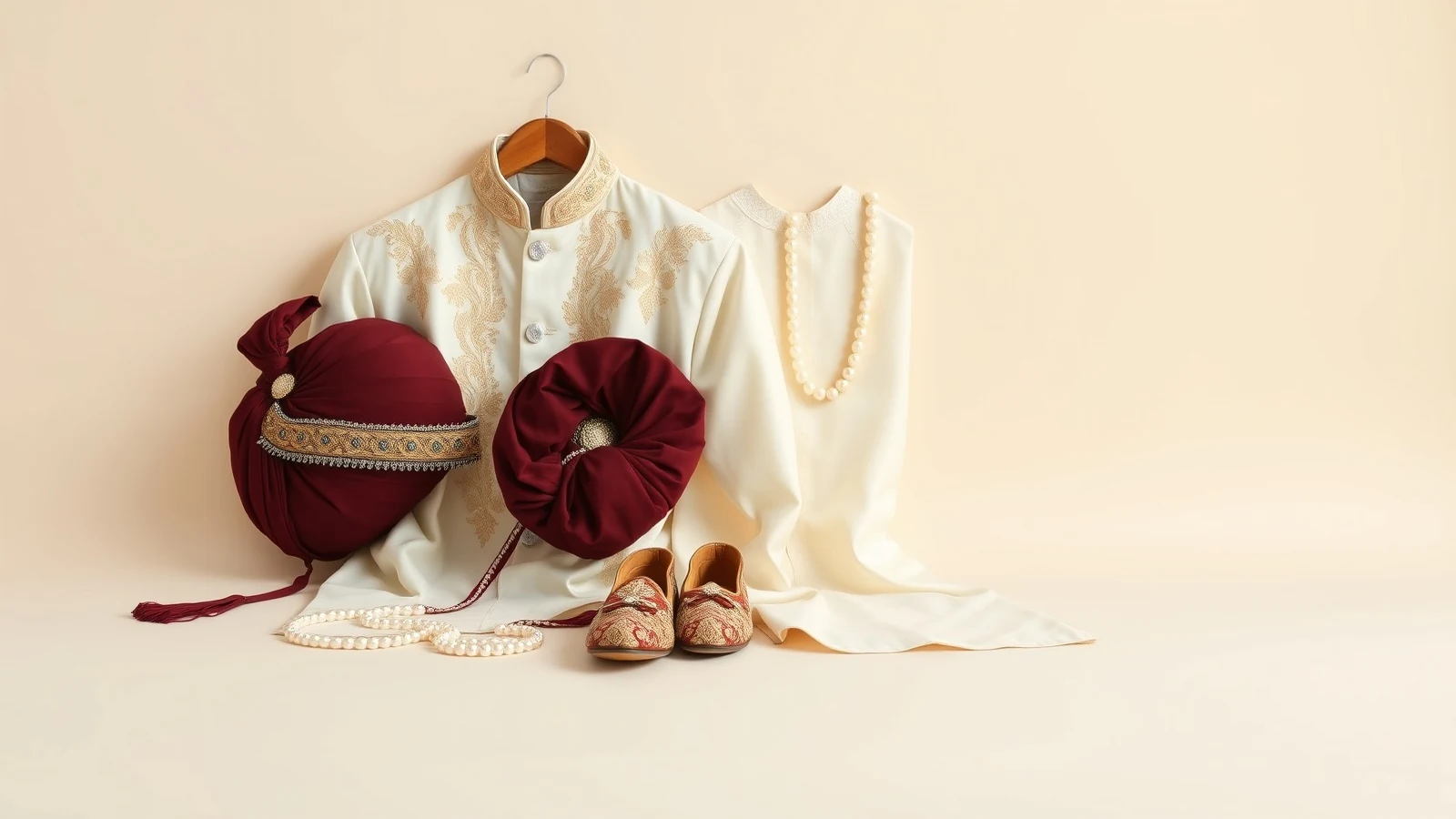
Headwear does more to define a North Indian groom’s look than the sherwani. A safa is tied fresh from a long length of fabric by a professional on the morning; a pre-stitched pagdi is easier but stiffer. Choose the colour against the sherwani, not the bride’s outfit, and ask for it to be tied to sit comfortably for six hours, because it will. In Sikh weddings the groom’s turban is part of his faith and is tied as he normally ties it, often in a colour chosen with the bride’s family. South Indian grooms usually go bareheaded or wear a simple head cloth, depending on the community.
The groom’s emergency kit
The groom needs a small kit as much as the bride does: safety pins, a spare button, a lint roller, deodorant, blotting paper, mints, a phone charger, painkillers and a handkerchief. Give it to the best friend or a brother, who stays with the groom through the baraat and the ceremony. Our groomsmen guide covers the rest of that job.
Accessories that finish the look
- Safa or pagdi: tied by a professional on the morning; book them with the wedding.
- Stole or dupatta: a draped stole adds weight to a plain sherwani.
- Mojaris or juttis: break them in for a week; new juttis are painful by the second hour.
- Brooch and buttons: a kalgi on the safa and a sherwani brooch are traditional in North Indian weddings.
- Mala: a pearl or stone necklace over the sherwani in many Rajasthani and Punjabi weddings.
- Watch and cufflinks: for the reception, where a suit or tuxedo is worn.
When to order
| Piece | Order by | Fittings |
|---|---|---|
| Wedding sherwani or achkan | Three to four months before | Two fittings, the last two weeks before |
| Reception suit or bandhgala | Two to three months before | Two fittings |
| Sangeet outfit | Two months before | One fitting, with the shoes you will dance in |
| Haldi and mehndi kurtas | One month before | Ready-made is fine |
| Safa, sehra, mojaris | One month before | Try the full look together once |
Our sherwani cost guide covers what each tier of outfit costs, from ready-made to couture.
Practical tips
- Choose breathable linings for a summer or daytime wedding; a heavy sherwani at a noon muhurat in May is an endurance test.
- Leave room in the churidar or trousers for sitting cross-legged through a long ceremony.
- Pack a spare kurta for the haldi, which will be ruined.
- Keep a steamer at the venue; sherwanis crease in the car.
- Pack each function’s outfit, shoes and accessories in one labelled bag, the way the bride does; our packing list works for grooms too.
Frequently Asked Questions
What should a groom wear for each wedding function?
Typically a bandhgala or suit for the engagement, light kurtas for the haldi and mehndi, an Indo-western look for the sangeet, a sherwani, achkan or regional dress for the ceremony, and a tuxedo or bandhgala for the reception.
What does a South Indian groom wear?
A silk veshti, pancha or mundu with an angavastram or kanduva, depending on the community. Tamil Brahmin grooms often wear the panchakacham style of dhoti.
Should the groom’s outfit match the bride’s?
Coordinate rather than match: pick an accent colour from her outfit for the safa or stole, and choose a lighter shade such as ivory or gold for the main outfit.
How early should a groom order his wedding outfit?
Three to four months before the wedding for a sherwani or achkan, with the final fitting about two weeks before.
What colour should the groom wear for the reception?
Dark colours such as navy, black, bottle green or wine in a bandhgala, tuxedo or velvet jacket photograph well under evening lights and contrast with most bridal reception outfits.
Can a groom rent his wedding sherwani?
Yes. Renting suits a heavy sherwani worn once; book early in the peak season, and have it altered for fit if the rental shop allows.
What should a groom wear for the haldi?
An old or inexpensive white or yellow cotton kurta pyjama, since turmeric stains are permanent.
Sources and further reading
Want the groom’s looks planned alongside the bride’s and the whole wedding? Tell us about your wedding. See also what guests should wear.
Begin Your Engagement
Want a real number for your wedding?
Tell us your city, guest count and dates. Team Velvet Knot will come back within 24 hours with an itemised budget.