The Groom’s Wedding Checklist for an Indian Wedding: Month by Month
- Why grooms need their own checklist
- Six months or more before
- Four to five months before
- Two to three months before
- One month before
- The week before
- The groom’s accessories, in full
- The groom’s family’s duties
- The wedding-day kit
- The wedding morning, hour by hour
- The groomsmen, and what to ask of them
- What a groom’s side spends
- Frequently Asked Questions
- Sources and further reading
An Indian groom’s checklist has five parts: his outfits and accessories (sherwani, safa, mojaris, sehra), his grooming (skin, hair and beard trials months ahead), the groom’s family’s duties (baraat, milni, guest accommodation), the paperwork (rings, marriage registration, honeymoon bookings), and a wedding-day kit held by one trusted friend. Start six months out, and book the safa tying and the barber for the morning before anything else is confirmed.
Why grooms need their own checklist
Most wedding checklists are written for the bride. Grooms end up with a long list of jobs they discover a week before the wedding: the safa needs tying by someone who knows how, the mojaris have never been worn and hurt, the baraat needs a band, a horse and a time, and somebody has to carry the rings. This checklist puts the groom’s side in order, month by month.
The couple’s shared planning is in our wedding planning timeline. This page is the groom’s part of it.
Six months or more before
- Agree the budget split between the families, and which costs fall to the groom’s side. Customs vary widely, so talk early.
- Decide the groom’s functions: the tilak or roka, the sehrabandi, the haldi, the baraat, and the reception if the groom’s family hosts one.
- Start fitness and skin care, if he wants to. Six months is enough for real change; six weeks is not. The groom’s section of our pre-wedding skin care routine covers what to do.
- Check his passport if the honeymoon is abroad.
- Shortlist sherwani makers or designers. Custom outfits take time.
Four to five months before
- Order the wedding outfit. A made-to-measure sherwani usually needs two or three fittings. Our sherwani cost guide covers prices and timelines, and our groom outfit ideas cover every function.
- Coordinate colours with the bride, function by function.
- Book the honeymoon, and the flights, in names that match each person’s ID.
- Buy or order the rings, if there is a wedding ring exchange. Our guide to which hand the wedding ring goes on helps with sizing.
- Plan the baraat: horse, car or elephant; band or dhol; the route and the timing with the venue. Our baraat guide walks through it.
Two to three months before
- Outfits for the other functions: the haldi, mehendi, sangeet and reception. Keep at least one comfortable outfit for the haldi that can be ruined.
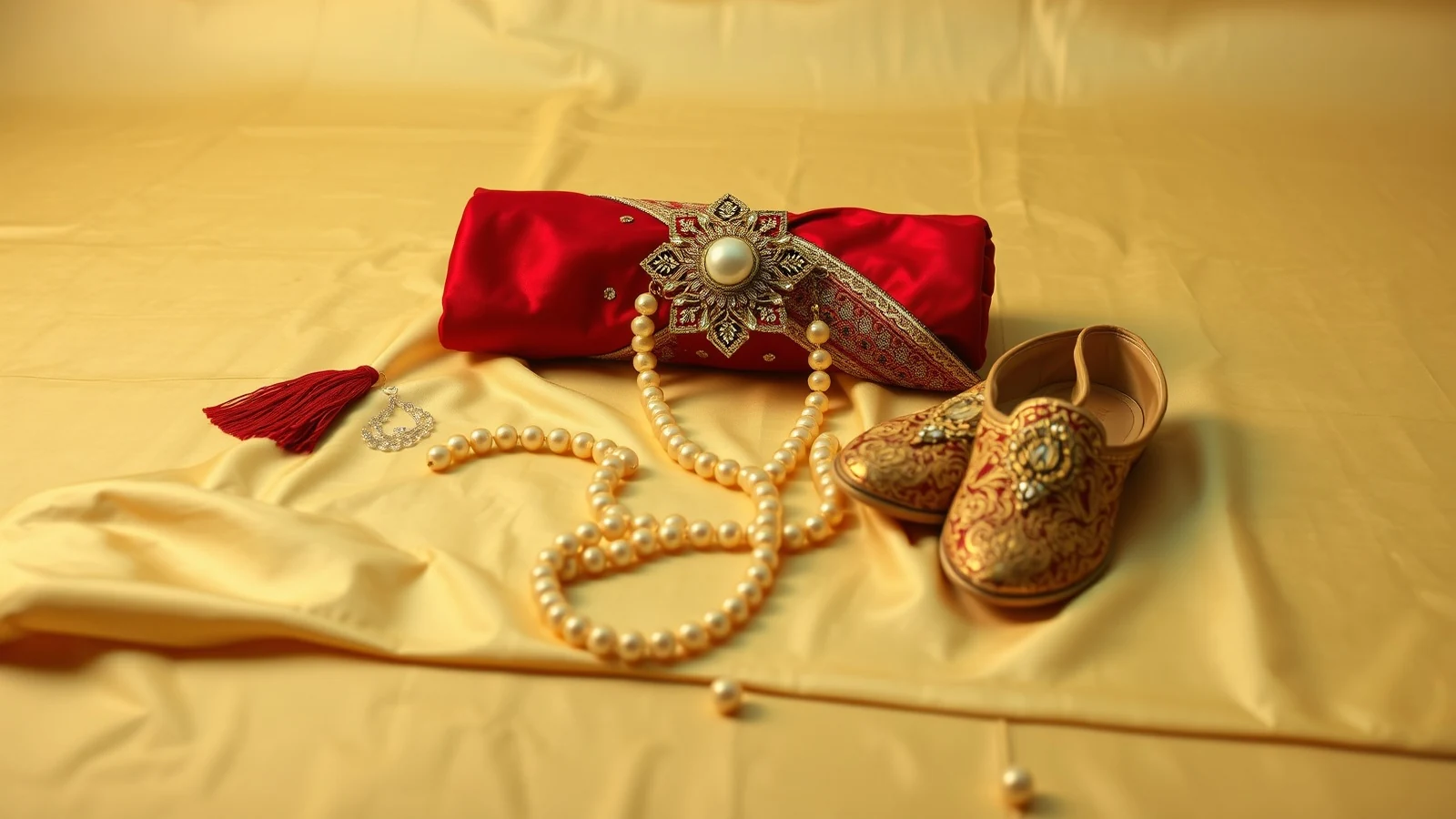
- Accessories: safa or pagdi, kalgi, sehra, mala, stole, brooch, buttons, cufflinks, pocket square, and mojaris or juttis. See the accessories list below.
- Book the safa tying for the wedding morning. A good safa tier is booked out in the wedding season.
- Hair and beard trial with the barber or stylist who will do the wedding look.
- Guest accommodation for the baraatis, if they are travelling. Rooms, transport and a contact person.
- Gifts: for the bride, for her parents, and for the groomsmen. Our wedding gifts guide has ideas.
- Milni gifts, if the groom’s family exchanges them with the bride’s at the milni.
One month before
- Final fitting for every outfit, with the shoes and accessories.
- Break in the mojaris. Wear them at home for an hour a day. New juttis are notoriously painful.
- Documents for the marriage registration: ID, address proof, photographs, and witnesses. Our guide to marriage registration documents has the full list.
- Write the speech if he is giving one at the reception or sangeet. Our wedding speech ideas help.
- Confirm the band, horse and baraat timings with the bride’s family and the venue.
- Brief the groomsmen: who holds the rings, who manages the baraat, who stays with the groom on the day.
The week before
- A haircut and beard shape three to five days before, not the day before.
- A facial or clean-up, at least four days before, never the day before.
- Pack each function’s outfit, shoes and accessories in one labelled bag.
- Collect the safa, the sehra and the kalgi from wherever they are being made.
- Sleep, water, and as little alcohol as the sangeet allows.
- Hand the rings, the bride’s gift and the envelopes to one named person.
The groom’s accessories, in full
| Item | What it is | Who handles it |
|---|---|---|
| Safa or pagdi | The turban, tied on the wedding morning | A safa tier, booked in advance |
| Kalgi | The jewelled brooch or plume on the turban | Bought with the safa |
| Sehra | The veil of flowers or pearls tied to the turban, in many North Indian families | Tied at the sehrabandi by the groom’s sister or sister-in-law |
| Mala | A pearl or bead necklace worn over the sherwani | Bought with the outfit |
| Stole or dupatta | Draped over one shoulder | Made with the sherwani |
| Mojaris or juttis | Traditional shoes | Bought a month ahead and broken in |
| Kataar or talwar | A ceremonial sword or dagger, in some communities | Borrowed or bought, carried by the groom |
| Brooch, buttons, cufflinks | The finishing details | Matched to the outfit |
South Indian grooms usually need a different set: a silk veshti or panche with an angavastram, and sometimes a turban for the Kashi Yatra, with an umbrella and a fan. Our guide to Telugu wedding rituals explains the Kashi Yatra.
The groom’s family’s duties
In most Indian weddings, the groom’s side has its own set of responsibilities, often managed by the groom’s father and brothers.
- The baraat: the procession to the venue, the band, the horse and the timing.
- The baraatis: travel, rooms and transport for the groom’s guests, if the wedding is in the bride’s city.
- The milni: the meeting of the two families’ elders, with garlands and gifts.
- Gifts for the bride: clothes and jewellery, often given at the roka, the chunni ceremony or the wedding.
- The reception, in many families, hosted by the groom’s side.
- The bride’s welcome, the griha pravesh, at the groom’s home.
The wedding-day kit
One friend or brother carries this all day:
- The rings, the mangalsutra if the groom’s family brings it, and any gift for the bride.
- Envelopes for the priest, the band, the horse and the safa tier.
- Safety pins, a small sewing kit, and spare buttons.
- A comb, a beard balm, blotting paper, a handkerchief and a mini deodorant.
- Painkillers, antacid, plasters for the mojaris, and water.
- A phone charger and power bank.
- A spare kurta, in case of spilt food or rain.
- Copies of the marriage registration documents, if the registration is on the same day.
The wedding morning, hour by hour
| Time before the baraat | What happens |
|---|---|
| Four hours | Breakfast. Eat properly; lunch may not happen. |
| Three hours | Shower, shave or beard trim, skin care. |
| Two and a half hours | Dress in the sherwani and shoes. |
| Two hours | Safa tying, then the kalgi and sehra. |
| One and a half hours | Family photographs and the sehrabandi. |
| One hour | Any puja at home, blessings from the elders. |
| Zero | The baraat leaves. |
The groomsmen, and what to ask of them
Indian weddings did not traditionally have groomsmen, but the groom’s brothers, cousins and friends have always done the job. Giving each one a clear task avoids the scene where five friends all assume someone else has the rings. A typical split:
- The ring holder, who also carries the day-of kit and stays with the groom.
- The baraat captain, who keeps the band, the horse and the dancing friends moving to time.
- The guest lead, who looks after the baraatis’ rooms and transport.
- The money person, who carries and hands out the envelopes for the band, priest and staff.
- The joota guard, who protects the groom’s shoes from the bride’s sisters at the joota chupai, or negotiates the ransom when he fails.
Our guide to bridesmaids and groomsmen in India covers the roles in more detail.
What a groom’s side spends
Velvet Knot estimates for the groom’s personal items at a mid-range North Indian wedding, 2026:
| Item | Rough cost |
|---|---|
| Wedding sherwani | Rs 30,000 to Rs 2,50,000 |
| Outfits for other functions | Rs 20,000 to Rs 1,50,000 |
| Safa, kalgi, sehra, mala and stole | Rs 5,000 to Rs 50,000 |
| Mojaris | Rs 2,000 to Rs 20,000 |
| Safa tying on the day | Rs 500 to Rs 3,000 per turban |
| Grooming in the last two months | Rs 5,000 to Rs 40,000 |
Free toolBuild your booking timeline from your dateOpen
Velvet Knot planning tool
Your wedding planning timeline
Enter the date. We will work backwards to every booking deadline, and flag what is already tight.
Time remaining
10 months
| By when | What has to be locked | Status |
|---|
Lead times reflect peak-season India (November to February), when venues and the better vendors book out first. Off-season you get more room. See booking lead times and the full planning checklist.
Behind on any of these? That is what we do, and we have done it on shorter notice.
Talk to our plannersFrequently Asked Questions
What does a groom need to do before the wedding?
Order his outfits early, plan grooming, help plan the baraat, buy the rings and gifts, prepare the marriage registration documents, book the honeymoon, and brief his groomsmen.
When should the groom order his sherwani?
Four to five months before the wedding, to allow for two or three fittings.
What accessories does an Indian groom need?
A safa or pagdi, a kalgi, a sehra in many families, a mala, a stole, mojaris, and cufflinks or buttons.
When should the groom get a haircut before the wedding?
Three to five days before, so it has time to settle.
What does the groom’s family pay for?
Customs vary. Usually the baraat, the groom’s outfits, gifts for the bride, and often the reception. Agree early.
Who carries the rings?
A brother or close friend, named in advance, who stays with the groom all day.
Sources and further reading
Want the groom’s side, the baraat and the morning timings planned for you? Tell us about your wedding.
Next step
Get a real number for your wedding
A realistic budget range in two minutes, then an itemised quote from our team within 24 hours.
Begin Your Engagement
Want a real number for your wedding?
Tell us your city, guest count and dates. Team Velvet Knot will come back within 24 hours with an itemised budget.