Punjabi Wedding Events in Order: The Complete Ritual Sequence (2026 Guide)
- Pre-wedding rituals
- Wedding day rituals
- Post-wedding rituals
- Food and feasting
- The bride and groom’s look
- Modern Punjabi weddings and regional variations
- A typical Punjabi wedding day
- How Velvet Knot coordinates a Punjabi wedding
- Punjabi wedding decor and music
- Related community traditions
- What a Punjabi wedding costs
- Related wedding rituals
- Punjabi wedding rituals at a glance
- Anand Karaj and Hindu pheras: what changes for planning
- Frequently Asked Questions
- Sources and further reading
A Punjabi wedding runs across roughly 7 to 12 rituals over 3 to 5 days, with a core sequence of Roka, Chunni Chadhana, Sangeet, Jaggo, Maiyan (haldi), Chooda and Kalire, Ghodi Chadhna, Milni, the Anand Karaj or Pheras, Joota Chupai, and Vidaai. The mood is famously high-energy, built around dhol, bhangra, and large baraats.
A Punjabi wedding is one of the most exuberant celebrations in India, known for its scale, its music, and the sheer warmth of its hospitality. The rituals span both Hindu Punjabi and Sikh families, with the wedding ceremony itself being the main point of difference: Sikh couples marry with the Anand Karaj around the Guru Granth Sahib, while Hindu Punjabi couples take the pheras around a sacred fire. Almost everything around the ceremony is shared, and the spirit is unmistakably the same.
This guide walks the full Punjabi wedding sequence in the order it usually happens, with the planning notes that matter for each function. We have coordinated Punjabi weddings across Delhi, Chandigarh, Amritsar, Ludhiana, and for NRI families abroad, and the patterns hold with small family-specific variations.
Pre-wedding rituals
Roka and Thaka
The Roka, from the word for “to stop”, marks both families agreeing to the match and signals the couple is now committed. The bride’s family visits the groom’s home with sweets, fruit, and shagun. The Thaka is the reciprocal visit. It is usually an intimate family affair, sometimes combined with the engagement, and is the first event a planner formally puts on the calendar.
Chunni Chadhana and Sagai
The groom’s family welcomes the bride with a chunni, a red or pink dupatta, along with jewellery and shagun, formally accepting her into the family. The ring exchange, the sagai or engagement, often happens alongside. Planner note: this is the first heavily photographed family event, so the welcome setup, the gift display, and the seating for elders all need design attention.
Sangeet and Mehndi
The Sangeet is the big music-and-dance night, with both families performing choreographed numbers, often after weeks of rehearsal, while the Mehndi sees the bride and the women of the family receive intricate henna. In many families these merge into one grand evening with a live dhol and a DJ. See our sangeet planning guide and mehndi cost guide for the detail on both.
Jaggo
A uniquely Punjabi night ritual: relatives, especially the maternal aunts and uncles, dance through the night carrying decorated pots, the gaggar, topped with lit candles or lamps on their heads, going door to door waking the neighbourhood to announce the wedding. It is loud, dhol-led, and a photographer’s favourite, and it captures the open, communal spirit of Punjabi celebrations better than almost any other ritual.
Maiyan, Vatna and Chooda
The Maiyan or Vatna is the Punjabi haldi, a turmeric and mustard-oil paste applied to the bride and groom at their respective homes by married women. On the morning of the wedding, the bride’s maternal uncle, the mama, gifts her the Chooda, a set of red and ivory bangles purified in milk and rose petals, and friends and cousins tie the Kalire, gold or silver dangling ornaments, to her bangles. Planner note: the chooda ceremony is emotional and tightly timed against the bride’s getting-ready schedule, so the makeup and photography teams need a clear cue sheet.
Wedding day rituals
Sehrabandi and Ghodi Chadhna
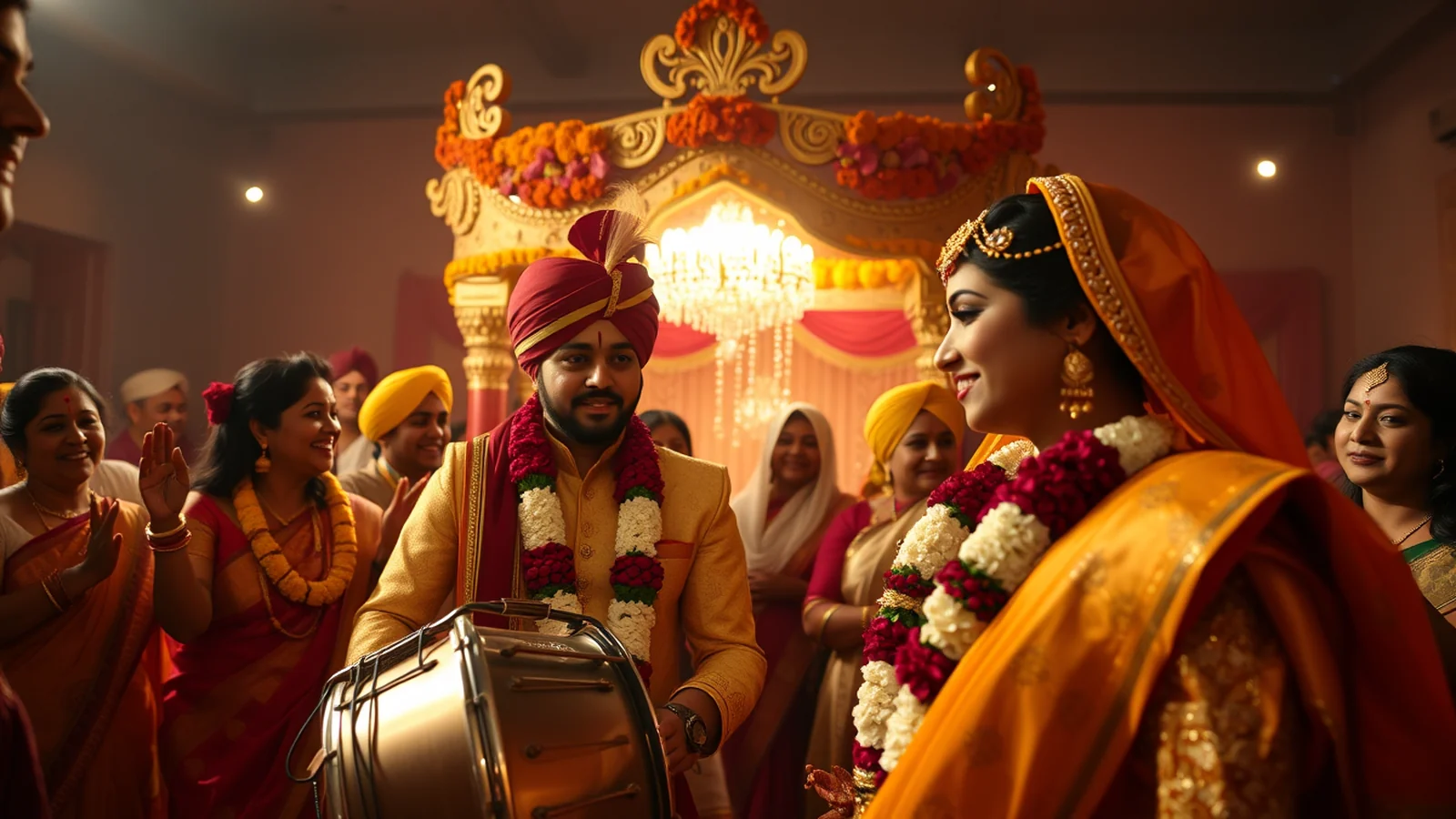
At the groom’s home, the family ties the sehra, a veil of flowers and beads, to his turban, and he then mounts a decorated mare, the ghodi, as family and friends dance around him to the dhol before the baraat departs. The baraat can run from a few dozen to several hundred guests, and managing its route, timing, security, and energy is one of the larger logistics tasks of the day.
Milni and Varmala
The baraat is received at the venue with the Milni, where corresponding relatives from both families, the two fathers, the maternal uncles, are introduced and embrace, usually with garlands and shagun. The Varmala or Jaimala follows, where the couple exchange flower garlands on a raised stage, often amid friendly attempts by each side to lift their own to make the exchange harder.
Anand Karaj or Pheras
For Sikh families, the Anand Karaj is conducted in the presence of the Guru Granth Sahib, with the couple taking four laavan, or rounds, as the hymns are sung. See our dedicated Sikh wedding planner guide. For Hindu Punjabi families, the couple takes the pheras around the sacred fire with the saat phere and the seven vows. Planner note: Anand Karaj timing and gurudwara protocol, head covering, no flowers or fire on the palki sahib, differ sharply from a havan ceremony, and the brief to decor and photography vendors must reflect exactly which one you are having.
Planning a Punjabi wedding?
Velvet Knot plans luxury Punjabi weddings end to end, from the sacred rituals and mandap to the venue, catering and guest hospitality. Share your dates and city for a tailored plan.
Post-wedding rituals
Joota Chupai
The bride’s sisters and cousins steal the groom’s shoes during the ceremony and negotiate a cash ransom for their return, one of the most light-hearted and well-loved moments of the day.
Vidaai and Doli
The emotional farewell as the bride leaves her family home, throwing a handful of rice over her shoulder as a blessing on the home she grew up in, before departing in the doli, traditionally a palanquin and now a decorated car.
Pani Bharna and reception
The bride is welcomed into her new home with the Pani Bharna and grih pravesh rituals, where she gently tips a vessel of rice or oil at the threshold, followed in most families by a grand reception hosted by the groom’s side.
Food and feasting
Food is central to Punjabi hospitality, and the spread is generous to the point of legend. Expect a sprawling chaat and tikka counter at the cocktail evenings, robust mains like sarson da saag with makki di roti, dal makhani, butter chicken, and paneer dishes, and a live tandoor. At Sikh weddings the langar at the gurudwara is a humbling, egalitarian meal served to all. Sweets run to jalebi, gulab jamun, and pinni. Planner note: Punjabi guests judge a wedding by its food, so the catering brief and live-counter planning deserve real attention. See our catering cost guide.
The bride and groom’s look
The Punjabi bride traditionally wears a red or deep pink lehenga or salwar suit, the chooda and kalire, and heavy jewellery including a maang tikka, jhumkas, and often a nath. The groom wears a sherwani with a turban and, for the baraat, the flower sehra. Coordinated family outfits for the sangeet and the wedding are increasingly the norm, and styling them as a set lifts every photograph.
Modern Punjabi weddings and regional variations
Punjabi weddings vary by region and faith. Weddings in Doaba, Malwa, and Majha carry small differences in song and ritual emphasis, and the diaspora in the UK, Canada, and the US has its own evolved versions where the jaggo and sangeet are often the biggest nights. Modern couples increasingly add a destination format, a pre-wedding shoot, and a cocktail night, while keeping the core chooda, milni, and ceremony intact. Inter-community Punjabi weddings, where one side is Sikh and the other Hindu, are common and simply blend the two ceremony formats with both sets of priests briefed in advance.
A typical Punjabi wedding day
The wedding day itself is long and tightly choreographed. It usually opens with the bride’s chooda ceremony and getting ready in the morning, the groom’s sehrabandi and ghodi at his home, and the baraat departing to reach the venue by late afternoon or evening. The milni and varmala follow on arrival, then the Anand Karaj or pheras at their muhurat, dinner through the evening, and the vidaai late at night. A planner’s run-of-show keeps the baraat, the ceremony muhurat, and the catering aligned so the day does not slip into the early hours unintentionally.
How Velvet Knot coordinates a Punjabi wedding
A Punjabi wedding is a large, high-energy, multi-vendor operation, and the seams between functions are where things slip. We handle the baraat route and timing, the dhol and DJ handoffs across the jaggo, sangeet, and reception, the chooda and milni cue sheets, and the gurudwara or havan protocol so the ceremony runs cleanly.
Tell us your dates and guest count and we will send a scoped proposal: request a quote. You can also browse everything a full-service planner coordinates.
Punjabi wedding decor and music
Punjabi wedding decor leans warm and abundant: marigold and rose, phulkari textiles, mirror-work, and bold colour, with a baraat entrance built for impact. Music is non-negotiable, the dhol is present at almost every function, from the jaggo to the baraat to the sangeet, and a good DJ plus a live dhol pairing is the standard. Many families add a bhangra or gidda troupe to lift the sangeet, and brass bands still lead traditional baraats. Budgeting generously for sound, lighting, and the dhol-DJ combination is what gives a Punjabi wedding its signature energy.
Should you hire a planner for a Punjabi wedding?
For a multi-day, large-baraat Punjabi wedding, yes. The volume of functions, vendors, and guests, and the tight ceremony muhurat, make professional coordination the difference between a smooth celebration and a chaotic one.
Related community traditions
What a Punjabi wedding costs
Related wedding rituals
- the chooda and kalire ceremony
- sehrabandi, the groom’s ceremony
- joota chupai, the shoe stealing ritual
- the mehndi ceremony explained
- chunni chadhana explained
- the sagai engagement ceremony
- gath bandhan, the tying of the knot
- pag phera, the bride’s first return home
More community traditions: read about Kashmiri Pandit wedding rituals.
The rite before this one: read our full guide to the mayian and vatna ceremony.
Punjabi wedding rituals at a glance
| Ritual | When | Where | What happens |
|---|---|---|---|
| Roka and Thaka | The first formal step, before any wedding planning | The groom’s home, then the reciprocal visit | The families confirm the match with sweets, fruit and shagun |
| Chunni Chadhana and Sagai | Before the wedding, often on the same day | A family venue | The groom’s family gives the bride a red or pink chunni, jewellery and shagun, and the rings are exchanged |
| Sangeet and Mehndi | The days before, often merged into one evening | Home or a venue | Choreographed family performances, and henna for the bride and the women of the family |
| Jaggo | A night before the wedding | Through the neighbourhood | Relatives dance with a lamp-topped gaggar on the head, waking the neighbours to the dhol |
| Maiyan or Vatna | The days before | The bride’s and groom’s homes, separately | Married women apply a turmeric and mustard-oil paste |
| Chooda and Kalire | The wedding morning | The bride’s home | The mama gifts red and ivory bangles purified in milk and rose petals, and friends tie on the kalire |
| Sehrabandi and Ghodi Chadhna | Before the baraat leaves | The groom’s home | The sehra is tied to his turban and he mounts the ghodi |
| Milni and Varmala | As the baraat arrives | The wedding venue | Matching relatives from both sides embrace with garlands and shagun, then the couple exchange garlands |
| Anand Karaj or Pheras | The ceremony | A gurudwara, or the mandap | Four laavan before the Guru Granth Sahib, or the pheras around the sacred fire |
| Joota Chupai | During the ceremony | The venue | The bride’s sisters hide the groom’s shoes and bargain for their return |
| Vidaai and Doli | After the ceremony | The bride’s home or the venue | The bride throws rice over her shoulder and leaves in the doli |
| Pani Bharna and reception | On arrival at the new home, then an evening event | The groom’s home, then the reception venue | Welcome rites at the threshold, and a reception hosted by the groom’s side |
Anand Karaj and Hindu pheras: what changes for planning
Almost everything around a Punjabi ceremony is shared between Sikh and Hindu families. The ceremony itself is not, and the differences land on the venue, the decor brief and the guest instructions.
| Planning point | Sikh Anand Karaj | Hindu Punjabi pheras |
|---|---|---|
| Centre of the ceremony | The Guru Granth Sahib | The sacred fire |
| The rounds | Four laavan, walked as the hymns are sung | The pheras, with the saat phere and the seven vows |
| Venue | A gurudwara, or a setting that follows gurudwara protocol | A mandap at home, at a hotel or on a lawn |
| Guests | Heads covered, and gurudwara etiquette observed | Set by family custom |
| Decor | No flowers or fire on the palki sahib | The mandap can be decorated freely |
| Timing | Coordinated with the gurudwara | Set by the priest’s muhurat |
Weddings with a Sikh family on one side and a Hindu family on the other are common and usually blend the two. What cannot be blended is the vendor brief: it has to name the ceremony exactly, because a decorator briefed for a havan will build the wrong thing for a gurudwara.
Frequently Asked Questions
Is the baraat compulsory in a Punjabi wedding?
The baraat, the groom’s procession to the venue, is one of the most cherished Punjabi traditions, traditionally with the groom on a decorated mare. Modern urban weddings sometimes simplify it to a short, high-energy entrance, but the dhol-led procession remains central.
What is the role of the mama (maternal uncle) in a Punjabi wedding?
The maternal uncle has a place of honour, most visibly in gifting the bride her chooda bangles on the wedding morning, and is formally greeted during the milni.
How many days does a Punjabi wedding last?
Most Punjabi weddings run three to five days, covering the roka or engagement, sangeet and mehndi, jaggo, the maiyan and chooda, the wedding day with the baraat and ceremony, and the reception.
What is the difference between a Sikh and a Hindu Punjabi wedding?
The main difference is the ceremony. Sikh couples marry with the Anand Karaj around the Guru Granth Sahib, taking four laavan, while Hindu Punjabi couples take the pheras around a sacred fire. Most pre and post-wedding rituals, like roka, jaggo, chooda, and vidaai, are shared.
What is the Jaggo ceremony?
Jaggo is a high-energy night ritual where relatives dance with decorated, lamp-topped pots on their heads, going door to door to announce the wedding. It is one of the most distinctive Punjabi pre-wedding functions.
What is the Chooda in a Punjabi wedding?
The Chooda is a set of red and ivory bangles gifted to the bride by her maternal uncle on the wedding morning, purified in milk and rose petals. Friends then tie dangling kalire to the bangles.
What food is served at a Punjabi wedding?
Expect generous spreads of tandoori starters, sarson da saag with makki di roti, dal makhani, butter chicken, paneer dishes, and sweets like jalebi and gulab jamun. At Sikh weddings, the gurudwara langar is also served.
How much does a Punjabi wedding cost?
It varies widely by scale and city. A mid-range Punjabi wedding in a metro typically runs Rs 25 lakh to Rs 60 lakh, with destination and luxury celebrations going well beyond. See our wedding cost guide for the full breakdown.
Sources and further reading
Velvet Knot believes in showing our work. The references below are the authoritative sources we consult when planning weddings in this category.
- Hindu Marriage Act, 1955 (text): Government of India
- Punjab cultural overview, Britannica: Britannica
Begin Your Engagement
Want a real number for your wedding?
Tell us your city, guest count and dates. Team Velvet Knot will come back within 24 hours with an itemised budget.