Destination Wedding Planner in Rajasthan: The 2026 Complete Guide
- The 6-city comparison at a glance
- The decision framework: which city for which wedding
- Cost ranking, honestly
- The Rajasthan season calendar
- Venue tiers within each city
- Vendor logistics by city
- Permits and the things you do not know to ask
- Camel processions, palace pricing, sand-dune logistics
- When NOT to do Rajasthan
- Why a pan-India planner helps for Rajasthan
- Frequently Asked Questions
- Planning your Rajasthan wedding with Velvet Knot
- Sources and further reading
Velvet Knot plans luxury destination weddings across Rajasthan, from Udaipur’s lake palaces to Jaipur and Jodhpur’s royal hotels and Jaisalmer’s desert forts. We handle venue selection, full design, vendor management and guest hospitality end to end.
If you have searched for a destination wedding planner in Rajasthan, the results are mostly directory listings and thin guides that treat the state as a single venue. Rajasthan is not a venue. It is six distinct wedding cities, each with a different cost profile, venue scale, cultural anchor, season window, and logistical reality. Picking Rajasthan without picking the right city in Rajasthan is the most common mistake families make.
This guide is the layer between “we want a Rajasthan wedding” and “we booked Suryagarh.” We compare Jaipur, Udaipur, Jodhpur, Jaisalmer, Pushkar, and Alwar (plus Kota as a quieter alternative) honestly, with the criteria that actually matter, and tell you which city for which type of wedding.
The 6-city comparison at a glance
| City | Per-plate range | Signature venues | Heritage value | Access from Delhi | Best season | Wedding scale fit |
|---|---|---|---|---|---|---|
| Udaipur | Rs 2,500 to Rs 6,000 | Taj Lake Palace, Leela Palace, Oberoi Udaivilas, Fateh Garh | Highest, lake-and-palace iconography | Flight 1.5 hr | Oct-Mar, peak Nov-Feb | 60 to 600 guests, suits all scales |
| Jaisalmer | Rs 2,500 to Rs 5,500 | Suryagarh, Jawai Bandh-influenced camps, Brij Vilas, sand dune setups | High, fort-and-desert iconography | Flight 2 hr (via Jodhpur) | Oct-Mar, sharp peak Nov-Feb | 80 to 400 guests, sweet spot 150 to 300 |
| Jaipur | Rs 1,800 to Rs 4,500 | Rambagh Palace, Jai Mahal Palace, Samode Palace, Fairmont, ITC Rajputana | Strong, Mughal-Rajput aesthetic | Flight 1 hr, drive 4.5 hr | Oct-Mar | 100 to 1,000 guests, the workhorse |
| Jodhpur | Rs 2,000 to Rs 4,500 | Umaid Bhawan, Raas, Mihir Garh, Bal Samand | Strong, blue-city aesthetic | Flight 1.5 hr | Oct-Mar | 100 to 500 guests |
| Pushkar | Rs 1,200 to Rs 3,200 | Ananta Spa, The Westin, smaller heritage havelis | Moderate, spiritual-pilgrimage anchor | Drive 30 min from Ajmer, 7 hr from Delhi | Oct-Mar (avoid Pushkar Fair week in Nov) | 80 to 300 guests, intimate-feeling |
| Alwar | Rs 1,200 to Rs 3,000 | Neemrana Fort (Alwar district), Tijara Fort, Sariska adjacent properties | Moderate, fort-and-tiger-reserve | Drive 3.5 hr from Delhi | Oct-Mar | 80 to 250 guests, accessible escape |
| Kota | Rs 1,000 to Rs 2,500 | Brijraj Bhawan, Umed Bhawan Kota, riverside heritage hotels | Lower, less-visited heritage | Flight 1.5 hr via Jaipur, drive 5 hr | Oct-Mar | 60 to 200 guests, budget-conscious heritage |
The decision framework: which city for which wedding
If the table is too abstract, the if-then version:
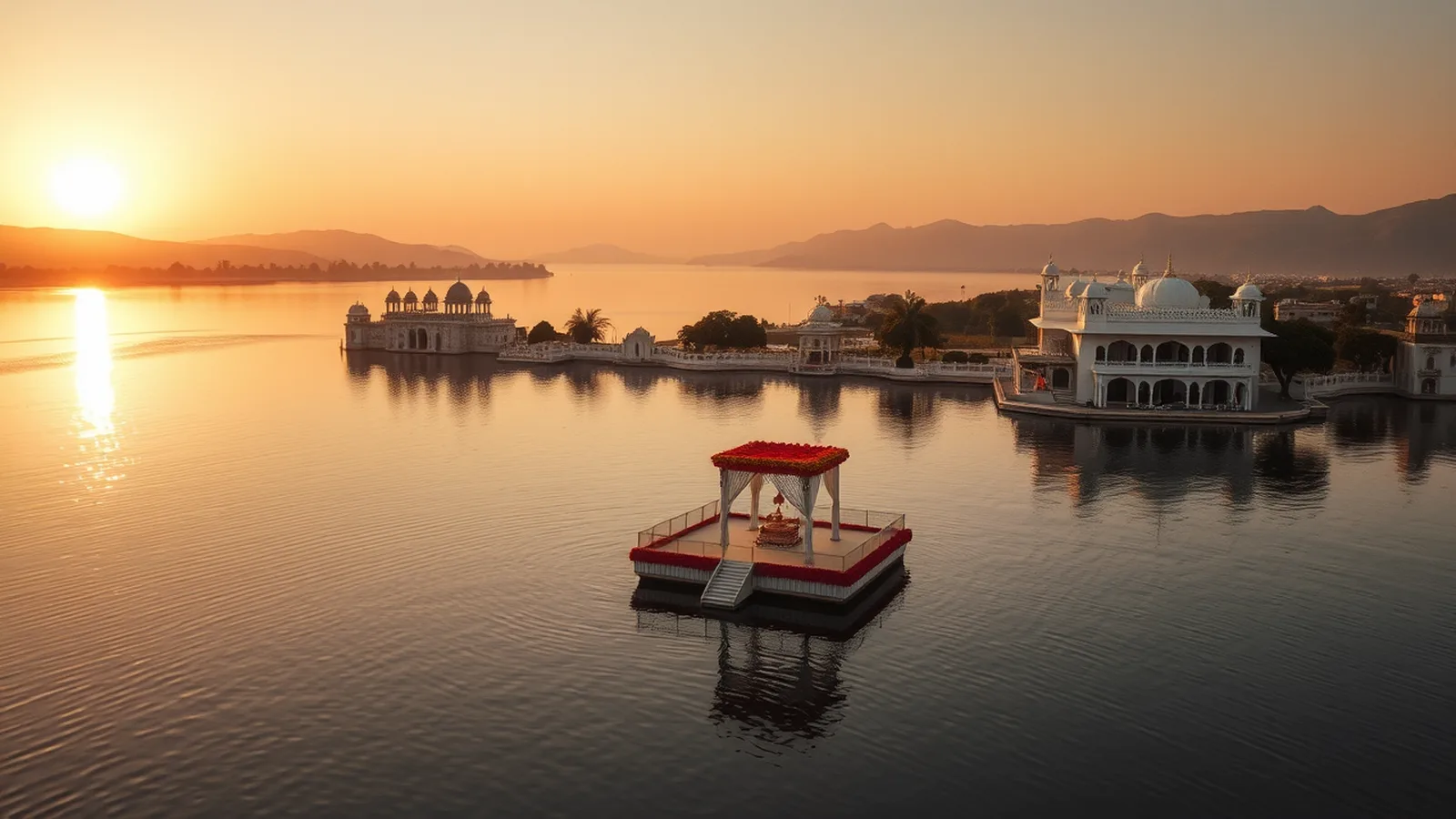
If you want the most photographed venue in India, choose Udaipur. Taj Lake Palace, Oberoi Udaivilas, and the Leela Palace are the three most-recognised wedding venues in the country. The lake-mahal-aarti shoot at golden hour is the iconography couples buy into. The trade-off is cost (highest of the six cities) and venue availability for peak Nov-Feb dates (book 12 to 18 months ahead).
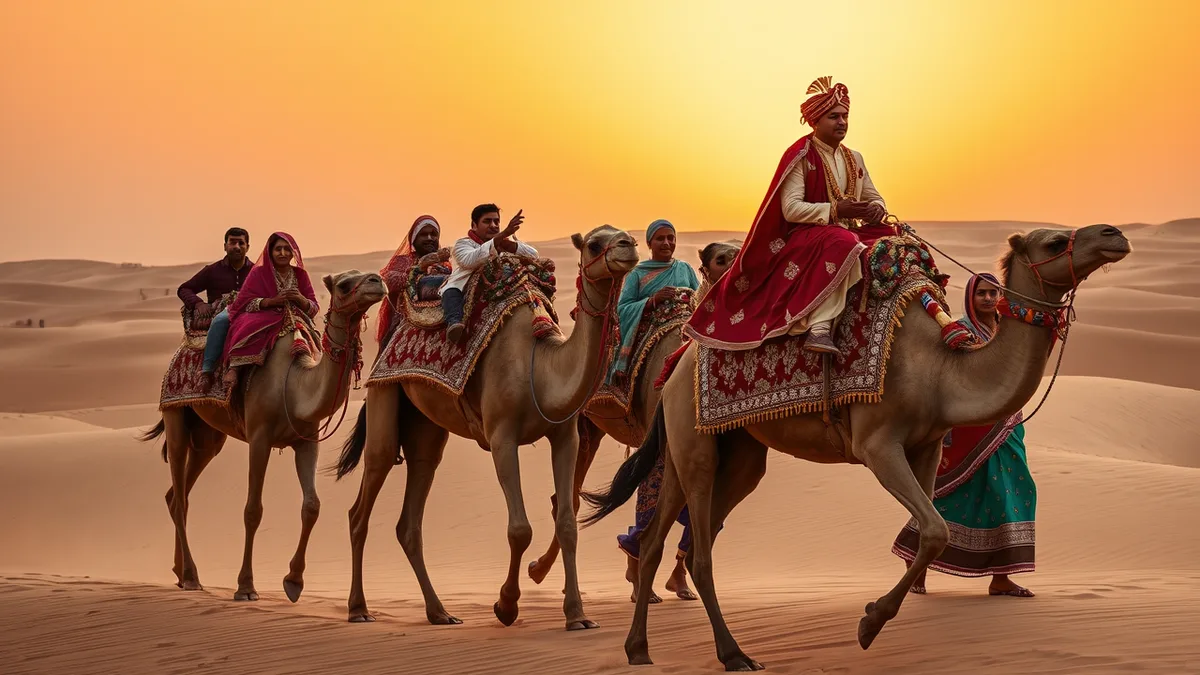
If you want fort-and-desert drama, choose Jaisalmer. Suryagarh is the workhorse, with sand-dune camel processions, Sam dunes for the sangeet, and the Jaisalmer Fort backdrop. Best for 150 to 300-guest weddings. The trade-off is logistics (most vendors travel from Jodhpur or Jaipur) and the sharp peak season window.
If you want scale, vendor depth, and the best price-quality ratio, choose Jaipur. The largest wedding vendor ecosystem in Rajasthan, the broadest venue ladder (Rs 1,800 per plate haveli weddings to Rs 4,500 per plate Rambagh weddings), and the easiest logistics from Delhi. Best for weddings of 250 to 800 guests. Less iconic photo-wise than Udaipur, but the wedding actually executes better at scale.
If you want blue-city aesthetic without the Udaipur premium, choose Jodhpur. Umaid Bhawan is a tier-1 royal venue at a Udaipur-adjacent cost. The Mehrangarh Fort backdrop is uniquely cinematic. Raas and Mihir Garh are quieter, smaller-scale options. Best for 150 to 400-guest weddings.
If you want the spiritual-intimate Rajasthan wedding, choose Pushkar. Pilgrimage town, holy lake, mid-tier heritage venues. Best for 80 to 200-guest weddings where the family wants ceremony depth without palace pricing. Avoid the Pushkar Fair fortnight in November when the town floods with tourists.
If you want easy access from Delhi at lower cost, choose Alwar. Neemrana Fort Palace and Tijara Fort are the two main venues, both heritage forts converted into hotel properties, both drivable from Delhi in 3 to 4 hours. Best for 100 to 250-guest weddings where the guest list is Delhi-NCR heavy.
If you want quieter heritage at clearly lower cost, choose Kota. Brijraj Bhawan and the riverside heritage hotels are genuinely beautiful and meaningfully under-booked, which means availability and rate flexibility. Best for 80 to 200-guest weddings on a Rs 40 to Rs 80 lakh budget.
Cost ranking, honestly
Across comparable wedding spec (200 guests, 3 days, premium-but-not-luxury tier), the ranking on total cost goes:
1. Udaipur (most expensive). Total budget runs Rs 1.4 crore to Rs 3 crore for 200 guests at 5-star palace venues. The Lake Palace and Udaivilas at Rs 4,500 to Rs 6,500 per room per night during peak season set the floor; venue hire and catering scale from there. 2. Jaisalmer (second most expensive). Rs 1.2 crore to Rs 2.5 crore for the same spec. Suryagarh at Rs 15,000 to Rs 35,000 per room peak, plus venue hire and dune logistics. 3. Jodhpur (third). Rs 1 crore to Rs 2.2 crore. Umaid Bhawan as the ceiling, Raas and Mihir Garh as the more accessible premium. 4. Jaipur (fourth, the best value for premium spec). Rs 70 lakh to Rs 1.8 crore for the same 200-guest, 3-day wedding. The vendor depth and venue ladder means you can deliver a genuinely premium wedding at lower total than Udaipur for the same headline guest experience. 5. Pushkar and Alwar (fifth tier). Rs 50 lakh to Rs 1.2 crore. Heritage feel, accessible venues, lower vendor and catering rates. 6. Kota (most accessible). Rs 40 lakh to Rs 90 lakh for the same wedding. The trade-off is less venue prestige and limited 5-star options.
The Rajasthan season calendar
Rajasthan weddings happen between October and March. The reasons are not just temperature; they are also event-feasibility (open-air ceremonies, fort lighting, courtyard receptions) and family-comfort (300 elderly relatives in 42-degree May heat is not workable).
October. Shoulder season, daytime 28 to 32 degrees, evenings cool, fewer crowds, 15 to 25 percent lower venue rates than peak. Risk: late monsoon tail in early October. Sweet spot is mid-October onward.
November. Peak season starts. Cool evenings, the iconic Rajasthan winter light. Pushkar Fair in early November (typically the second week) floods Pushkar specifically; avoid that fortnight or pick a different city. Venue rates start climbing.
December and January. Peak peak. Coldest nights (5 to 10 degrees in Jaipur and Jodhpur, sub-5 in Jaisalmer). Mornings can be foggy in early January. Venue rates at their highest, book 12 to 18 months ahead. The most photogenic period, also the most expensive.
February. Tail of peak season. Slightly warmer, fog risk gone, venue rates still high but availability easier. The smart-money wedding month for couples who want peak quality without peak booking pressure.
March. Shoulder season again. Warming up, daytime 28 to 33, evenings still pleasant in early March, less so by end of month. Rates drop 15 to 30 percent from February. Last workable month.
April to September. Avoid. Daytime 38 to 46 degrees, evening temperatures barely drop, outdoor anything becomes hostile. Some indoor-only weddings happen in this window at deep discounts; the trade-off is the wedding does not look like the Rajasthan wedding you came for.
Venue tiers within each city
Couples often think of Rajasthan as binary (Taj Lake Palace or nothing). The tiered reality:
Udaipur. Tier-1: Taj Lake Palace, Oberoi Udaivilas, Leela Palace, Taj Fateh Prakash. Tier-2: Fateh Garh, Trident, RAAS Devigarh (drive 30 min out). Tier-3: Heritage havelis around Lal Ghat, Jagat Niwas, Devigarh village properties.
Jaipur. Tier-1: Rambagh Palace, Jai Mahal Palace, Samode Palace (drive 50 min). Tier-2: ITC Rajputana, Fairmont, Hyatt Regency. Tier-3: Heritage hotels like Diggi Palace, Narain Niwas, Hotel Pearl Palace; farmhouse weddings on the outskirts.
Jodhpur. Tier-1: Umaid Bhawan Palace, Raas Devigarh. Tier-2: Bal Samand Lake Palace, Mihir Garh, RAAS. Tier-3: Heritage havelis in old city.
Jaisalmer. Tier-1: Suryagarh, Serai (Sujan property). Tier-2: Marvel Jaisalmer, Brij Vilas, Fort Rajwada. Tier-3: Mid-tier hotels in the city, dune-camp setups (transient).
Pushkar. Tier-1: Ananta Spa and Resorts, The Westin Pushkar. Tier-2: Pushkar Resorts, Dera Masuda. Tier-3: Heritage havelis around the lake.
Alwar. Tier-1: Neemrana Fort Palace, Tijara Fort Palace. Tier-2: Hill Fort Kesroli, Sariska-adjacent resorts.
For palace-specific weddings, our Jaipur palace weddings guide and the Udaipur top venues piece go deeper. The royal palace wedding planner page covers the palace-wedding model across India.
Vendor logistics by city
This is the part that decides whether your wedding executes cleanly.
Jaipur and Udaipur have fully formed wedding vendor ecosystems. Decorators, florists, choreographers, photographers, makeup artists, sound-and-light operators, pandits across traditions, all available locally with weekly wedding throughput. Booking 3 to 4 months out is workable, 6 to 8 months ideal for peak season.
Jodhpur has a strong but smaller ecosystem. Premium decor and photography typically comes from Jaipur or Udaipur. Local catering, local choreographers, local sound, all available.
Jaisalmer has a thin local ecosystem. Most premium vendors travel from Jodhpur (3-hour drive) or Jaipur (6-hour drive). Budget 15 to 25 percent vendor premium for travel-and-stay. Build vendor logistics into the planning timeline early.
Pushkar uses the Ajmer-Jaipur vendor pool, 30 minutes to 2.5 hours away. Manageable, but coordination intensive.
Alwar uses the Delhi-Jaipur vendor pool. Delhi vendors specifically work Alwar venues regularly because of the 3.5-hour drive accessibility.
Kota has the thinnest vendor ecosystem of the six. Plan for vendors out of Jaipur or Udaipur, with 4 to 6 hour travel each way.
Permits and the things you do not know to ask
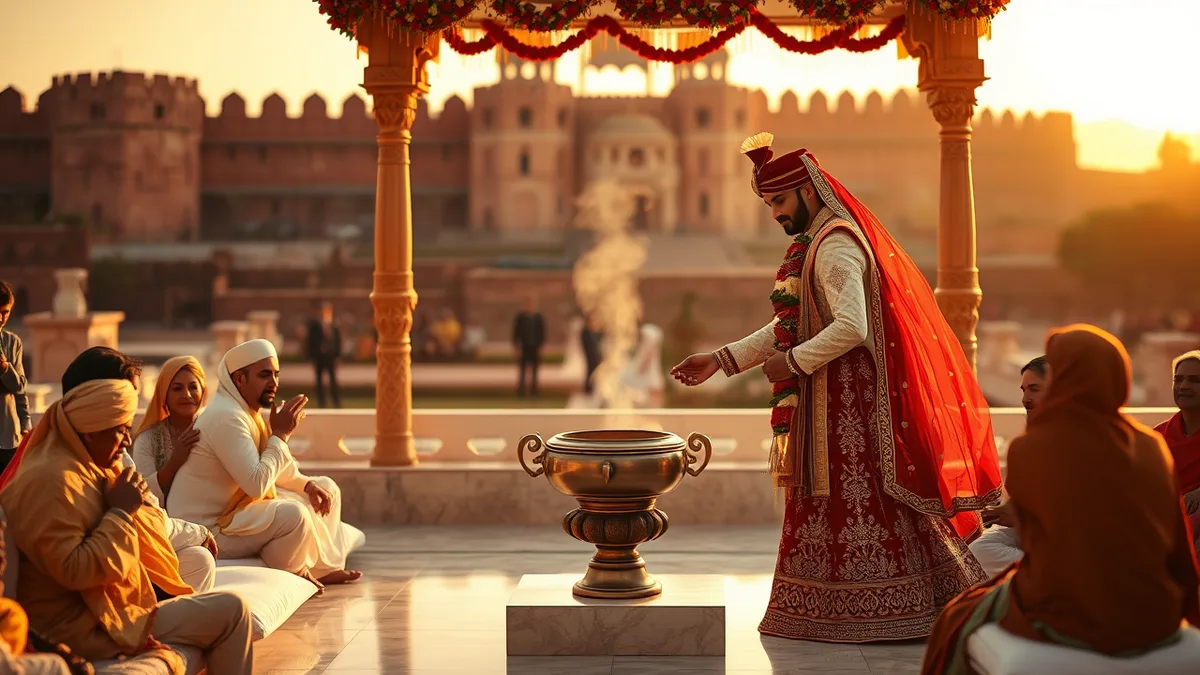
Some heritage venues, particularly those under Archaeological Survey of India (ASI) protection or partial protection, have ceremony restrictions. The Mehrangarh Fort, parts of City Palace Udaipur, Amber Fort sections, and Jaisalmer Fort interior properties carry various levels of protection. The hotel-operator partner of these properties (Taj, Oberoi, others) typically handles the permits, but as the wedding host you should confirm in writing 6 months ahead what is permitted: open flames near protected stonework, drone photography over the structure, decor anchoring to walls, sound levels.
For sand-dune weddings outside Jaisalmer, the dune locations are typically on government-leased or village-cooperative land. The camp operator handles village permits and tourism-department clearances. Confirm before the booking that the operator has permits for your guest count; some operators clear for 80 guests routinely but require additional clearance for 200-plus.
Camel processions through old-city Jaipur, Jodhpur, or Udaipur lanes need permission from the city traffic authority. Most decent decorators or wedding planners handle this; do not assume.
Camel processions, palace pricing, sand-dune logistics
Camel and elephant processions. Camel processions are standard in Rajasthan wedding decor across all six cities and cost Rs 15,000 to Rs 50,000 for 2 to 6 camels with mahouts and decor. Elephant processions are increasingly restricted on welfare grounds and now mostly happen at private venues with the venue’s own animal; expect Rs 50,000 to Rs 2 lakh per elephant where permitted, and a number of premium planners and venues no longer offer this.
Palace wedding pricing. Taj Lake Palace exclusive buyout for a wedding runs Rs 2 to Rs 5 crore for 3 to 4 days, before food and decor. Oberoi Udaivilas similar. Rambagh Palace partial buyout for a wedding wing runs Rs 40 lakh to Rs 1.5 crore. Umaid Bhawan partial-or-full buyout Rs 50 lakh to Rs 3 crore. Samode Palace as a full buyout Rs 35 lakh to Rs 1 crore. These are venue-only numbers; food, decor, vendors all add on top.
Sand-dune logistics in Jaisalmer. Setting up a sangeet or pre-wedding shoot on Sam or Khuri dunes involves: tented sound-and-light setup transported and assembled on-site, generator power (no grid at dune sites), water and toilet logistics for 100 to 300 guests, vehicle convoy from the hotel to the dune site (typically 40 minutes), and post-event teardown the same night. Budget Rs 3 to Rs 8 lakh for a properly-produced dune sangeet, on top of catering.
When NOT to do Rajasthan
The honest cases for picking a different state:
- April to September. The heat is the determinant; no amount of indoor air-conditioning rescues an outdoor Rajasthan wedding in May.
- Sub-Rs 40-lakh total budget for 200 guests. Rajasthan can be done at lower budgets, but the premium-iconography element (palace venue, fort backdrop, dune sangeet) starts compromising. A Rs 30 lakh wedding in Hyderabad or Bangalore at a 5-star hotel often delivers a better guest experience than a Rs 30 lakh wedding in Udaipur at a tier-3 haveli.
- Coastal or beach iconography wanted. Goa, Kerala, the Konkan coast deliver beach weddings that Rajasthan cannot.
- Guest list 70 percent South Indian, with travel sensitivity. A Chennai or Hyderabad wedding plus a smaller Rajasthan reception works better than dragging the full South Indian family north.
- Wedding inside 4 months from booking date. Peak-season Rajasthan venues are typically locked 12 to 18 months ahead. A 4-month window forces tier-2 or tier-3 venue choices and stretches vendor availability.
Why a pan-India planner helps for Rajasthan
Rajasthan weddings benefit from a planner who runs the full state weekly rather than a city-specialist who knows one venue ecosystem. The reasons: cross-city vendor sourcing, comparative venue negotiation across all six cities before the family commits, vendor-travel logistics for Jaisalmer and Pushkar weddings, and the honest cost comparison across cities that a single-city planner does not deliver.
We work destination weddings across India and run a destination wedding planning service for couples weighing Rajasthan against Goa, Kerala, the hills, or international destinations. The destination wedding India cost guide covers the cost comparison across destinations. For palace-specific weddings, the royal palace wedding planner page goes deeper on the palace category, and the luxury weddings page covers the top-end bracket.
For individual cities, the per-city pages cover the specifics: Jaipur, Udaipur, Jodhpur, Jaisalmer, Alwar, and Kota.
Newly costed venues: Trident Udaipur wedding cost, Radisson Blu Udaipur wedding cost, Alsisar Mahal wedding cost, Castle Mandawa wedding cost, The Ummed Jodhpur wedding cost.
Newly costed venues: Wyndham Grand Udaipur wedding cost, Indana Palace Jodhpur wedding cost.
Newly costed venues: Laxmi Niwas Palace Bikaner wedding cost.
Frequently Asked Questions
Which Rajasthan city is best for a 200-guest premium wedding?
Jaipur, on a pure value-for-spec basis. The vendor ecosystem is the deepest in the state, venues like Samode Palace and Jai Mahal Palace deliver iconic Rajasthan aesthetic, and the total cost typically runs 25 to 40 percent below an equivalent Udaipur wedding. Choose Udaipur if the lake-and-palace photography is non-negotiable. Choose Jaisalmer if the desert-and-fort aesthetic is the anchor. Choose Jodhpur if Umaid Bhawan or the blue-city aesthetic is the draw.
What does a Rajasthan palace wedding actually cost?
Total wedding budgets for 200 guests across 3 days at a tier-1 palace venue run Rs 1.4 crore to Rs 3 crore in Udaipur, Rs 1 crore to Rs 2.2 crore in Jodhpur, Rs 70 lakh to Rs 1.8 crore in Jaipur, and Rs 1.2 crore to Rs 2.5 crore in Jaisalmer. Venue-only costs (palace buyout, room blocks) typically run Rs 40 lakh to Rs 3 crore depending on property and exclusivity level, with food, decor, and vendors adding 60 to 70 percent on top.
When is the best month for a Rajasthan wedding?
February is the smart-money month. Peak-season weather (cool, dry, photogenic light), fog risk gone from January, but venue rates ease slightly and availability is easier than November to January. December and January are the iconic peak with the strongest light but highest rates and book 12 to 18 months ahead. October and March are workable shoulder seasons at 15 to 30 percent lower rates. April to September is unworkable for outdoor Rajasthan weddings.
Can we do a Rajasthan wedding on a Rs 50 lakh budget?
Yes, in the right city. A Rs 50 lakh, 150 to 200-guest, 3-day wedding works comfortably in Pushkar, Alwar, or Kota, and at tier-2 venues in Jaipur or Jodhpur. It does not work at tier-1 palace venues in Udaipur, Jodhpur, or Jaisalmer at that budget. The trade-off is venue prestige versus accessibility. For couples wanting heritage feel without palace pricing, Alwar (Neemrana, Tijara) and Kota deliver better than chasing a low-tier Udaipur venue.
How early do we need to book a Rajasthan wedding venue?
For peak-season (November to February) tier-1 palace venues, 12 to 18 months ahead. For October and March shoulder season at the same venues, 9 to 12 months. For tier-2 venues, 6 to 9 months. For tier-3 heritage and budget venues, 4 to 6 months. Jaisalmer, with its sharp peak season and limited tier-1 venues (Suryagarh, Serai), is the tightest booking window of the six cities.
How does Jaisalmer compare to Udaipur for a destination wedding?
Different anchors. Udaipur is lake-and-palace, with Taj Lake Palace, Oberoi Udaivilas, and the Leela as the iconic venues. Jaisalmer is fort-and-desert, with Suryagarh as the primary venue and sand-dune sangeets as the signature production element. Udaipur costs 10 to 20 percent more on equivalent spec. Udaipur has stronger vendor depth; Jaisalmer requires vendors to travel from Jodhpur or Jaipur with associated logistics premiums. Udaipur fits 60 to 600-guest weddings; Jaisalmer has a sweet spot at 150 to 300.
Do we need permits for camel processions or fort venue ceremonies?
Camel processions through old-city lanes in Jaipur, Jodhpur, or Udaipur need traffic-authority permission, usually arranged by the planner or decorator. Heritage venues under ASI protection (sections of Mehrangarh, parts of City Palace Udaipur, Jaisalmer Fort interiors) have ceremony restrictions covering open flames, decor anchoring, drone photography, and sound levels. The venue operator typically handles permits, but confirm specifics in writing 6 months ahead. Sand-dune sites near Jaisalmer require village-cooperative or tourism-department clearance for large guest counts, handled by the dune-camp operator.
Planning your Rajasthan wedding with Velvet Knot
We plan 6 to 10 Rajasthan weddings a year across all six cities, which is what gives the comparative read on cost, venue tier, and vendor logistics that a single-city planner cannot deliver. Most families come to us 10 to 14 months out, and the first conversation is usually the city-comparison rather than the venue-shortlist, because the city decision moves more of the budget than the venue choice does within a city.
If your wedding is 6 to 18 months away and you are between two or three Rajasthan cities, the get-quote conversation is the right first step. You can also reach Saru directly on WhatsApp at +91 7700027573. For couples weighing Rajasthan against other Indian destinations, the destination wedding India cost guide is the right parallel read.
Rajasthan rewards a deliberate city pick. The wedding works in any of the six; the right wedding works in one specific one.
Sources and further reading
Velvet Knot believes in showing our work. The references below are the authoritative sources we consult when planning weddings in this category.
- Rajasthan Tourism, Government of Rajasthan: Government of Rajasthan
- Ministry of Tourism, Government of India: Government of India
More venue cost guides: Westin Pushkar wedding cost.
One of our most-requested Rajasthan venues is covered in the Umaid Bhawan Palace wedding cost guide.
Begin Your Engagement
Want a real number for your wedding?
Tell us your city, guest count and dates. Team Velvet Knot will come back within 24 hours with an itemised budget.