Kayastha Wedding Traditions: Dawat Puja, Kohbar and Every Ritual Explained
- What actually makes a Kayastha wedding distinct
- Chitragupta, the Dawat Puja and why the pen appears at weddings
- Gotra, sub-caste and how matches are actually vetted
- Barikshan, tilak and the moment the match becomes public
- Matkor and matmangara: the soil that starts the wedding
- Haldi, ubtan and the imli ghutai the sisters look forward to
- Dwar puja: the groom stopped at the gate
- Jaimala, mandap entry and the sequence at the vedi
- Kanyadaan, pheras and sindoor daan
- The kohbar ghar and its painted walls
- Chaturthi, the fourth day and the rites after the ceremony
- Vidaai, khoicha and the last thing the bride’s mother does
- How urban Kayastha families run all of this today
- Frequently Asked Questions
- Sources and further reading
A Kayastha wedding follows the broad north Indian Hindu sequence of tilak, haldi, baraat, jaimala, kanyadaan, pheras and sindoor daan, but adds community markers: reverence for Chitragupta, the pen and inkpot honoured in Dawat Puja, the soil-gathering matkor rite, the painted kohbar chamber, and strict gotra and sub-caste checks before a match is fixed.
What actually makes a Kayastha wedding distinct
Start with an honest framing. A Kayastha wedding is a north Indian Hindu wedding at its core. The fire, the pheras, the kanyadaan and the sindoor are shared with almost every community across the Ganga plain. What sets a Kayastha function apart is not a separate rulebook but a distinct set of emphases, and knowing which ones matter saves a planner from designing the wrong evening.
The first emphasis is ancestry. Kayasthas trace descent from Chitragupta, the record keeper of Yama in Hindu tradition, and that lineage story shapes household ritual all year, not only at weddings. The second is literacy as a sacred trait. The pen, the inkpot and the written word carry devotional weight in this community in a way they simply do not elsewhere.
The third is regional layering. A Srivastava family in Lucknow, a Karan Kayastha family in Patna and a Bose family in Kolkata will all call themselves Kayastha and will run visibly different weddings. Anyone planning one needs to ask which region the family follows before assuming a single sequence. Our wider Hindu wedding rituals guide maps the common spine that all three share.
Chitragupta, the Dawat Puja and why the pen appears at weddings
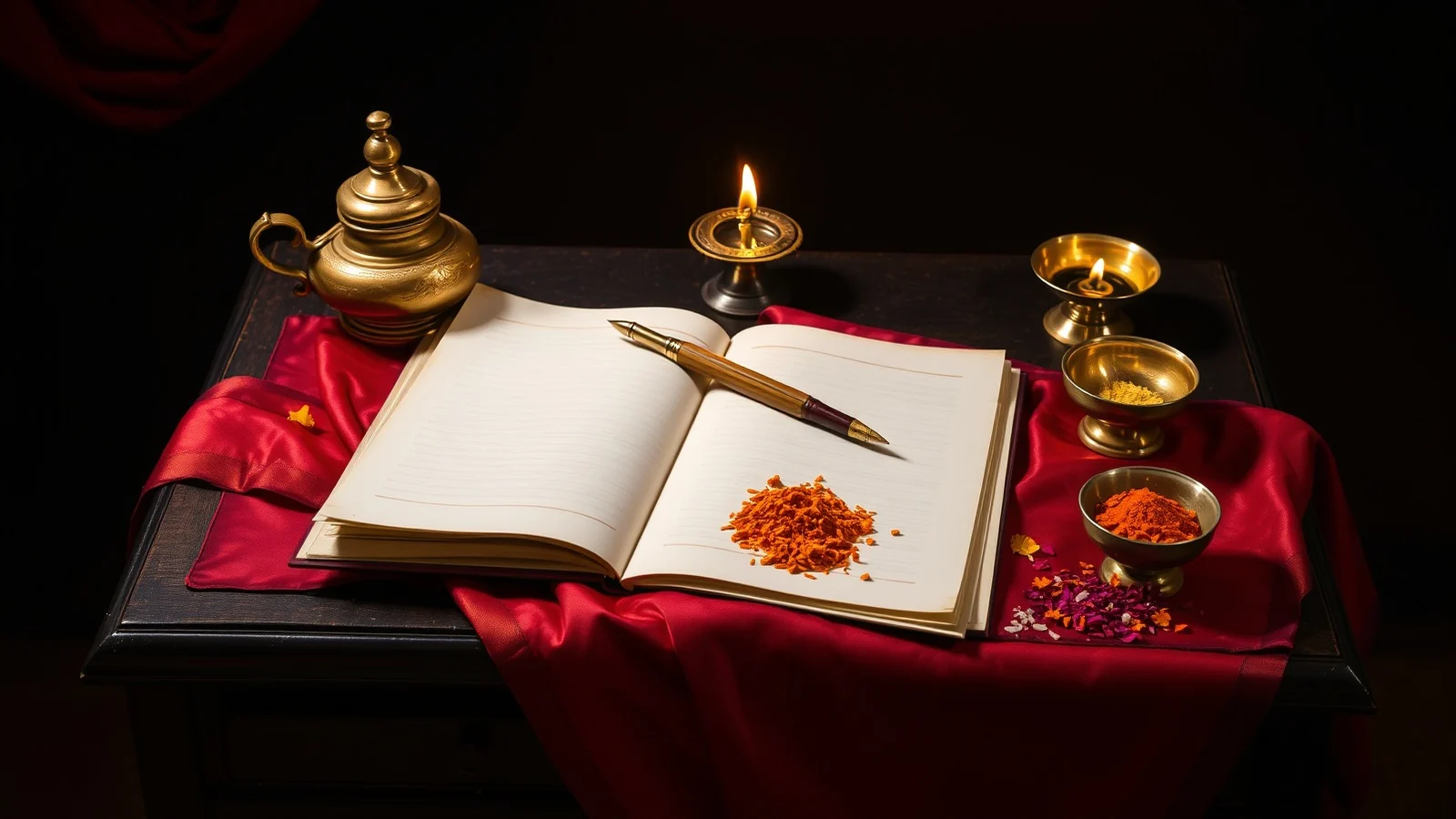
Dawat Puja is the single most distinctive Kayastha observance. Dawat means inkpot. On Chitragupta Jayanti, observed the day after Diwali on Yama Dwitiya, Kayastha households clean and set out a pen, an inkpot, paper and account books, and worship them alongside an image of Chitragupta. No writing is done that day. The instruments of record are the deity’s own.
That reverence spills into the wedding. Many families keep a pen and a fresh ledger on the puja thali at the tilak or at the mandap, ask the couple to write the name of Chitragupta or a simple prayer before signing anything, and treat the first written entry of married life as an auspicious act. Practice varies widely by household, so confirm rather than assume.
The practical planning note: if the family observes it, the pen and inkpot must be new, unused and kept dry. We have watched a decorator sweep a dawat off a table as clutter during a mandap reset. Brief the crew, and give the item a fixed, labelled place beside the Ganesh puja setup.
Gotra, sub-caste and how matches are actually vetted
Chitraguptavanshi Kayasthas are traditionally counted in twelve principal sub-groups. Srivastava, Mathur, Saxena, Nigam, Bhatnagar, Ambashtha, Asthana, Kulshreshtha, Karan, Gaur, Suryadhwaj and Valmiki are the names most often listed, though the exact enumeration differs by region and by which family history you read. Bengali Kayastha surnames such as Bose, Ghosh, Mitra, Dutta, Sen and Guha sit in a separate historical stream.
Most families still check gotra before a match is fixed, ruling out alliances within the same gotra on the paternal side. Beyond that, rules are looser than in many communities. Cross sub-caste marriage, a Saxena with a Srivastava for instance, is common and rarely contested. What older relatives do care about is that both sides can name their gotra correctly, which younger families often cannot.
Ask for the gotra in writing at the first planning meeting. The priest will need it for the sankalp, and the couple’s names, gotras and the names of three paternal generations are recited aloud during the ceremony. Chasing this detail on the morning of the muhurat is a stress you can avoid entirely.
Barikshan, tilak and the moment the match becomes public
Barikshan is the older name for the formal look-over of the groom. In traditional UP and Bihar practice, the bride’s father, uncles and a small male party visited the groom’s home, satisfied themselves about the family, and only then proceeded. Today it survives mostly as a courtesy visit that precedes the tilak rather than a genuine inspection.
The tilak itself is the binding public step. The bride’s father or brother applies a mark of roli and rice to the groom’s forehead and presents clothes, sweets, dry fruit, silver and often a written list of gifts read aloud. In many families this is the point at which the wedding is considered fixed, more so than any ring exchange. Our tilak ceremony guide covers the thali and the gift protocol in detail.
Urban Kayastha families increasingly fold barikshan, tilak and a ring exchange into one evening, sometimes adding a sagai segment for photographs. That is fine, but keep the tilak proper as a distinct, quiet ritual block of fifteen minutes with the priest present. Collapsing it into a cocktail hour is the most common way families later feel something was skipped.
Matkor and matmangara: the soil that starts the wedding
This is the rite most outsiders have never heard of and most Bihari and eastern UP Kayastha families will not skip. Matkor, also called matmangara or mati puja, sends the women of the household in procession to a nearby field, riverbank or clean patch of earth, usually with drums and folk songs, to dig and carry back a small quantity of soil.
The soil is worshipped and used to form the earthen altar or the vedi on which the wedding fire will later be lit, and sometimes to mould small lamps and pots for the mandap. The meaning is direct. The earth is being asked for permission and for fertility before a new household is founded on it. The digging is done with a spade by a married woman, never by a widow.
Two things go wrong here. Cities have no accessible clean earth, so families now use a hotel lawn, a temple garden or a pot of soil brought in the day before. Second, matkor is loud, unscripted and runs on folk singing, so it overruns. Give it ninety minutes and place it early on the first morning, before haldi.
Haldi, ubtan and the imli ghutai the sisters look forward to
Haldi in Kayastha homes is usually called ubtan or hardi. A paste of turmeric, gram flour, mustard oil and sometimes curd is applied to the bride and groom at their own homes on the same day, traditionally by married women, moving from feet to head. The leftover paste is applied by unmarried cousins, which is how the ritual turns into the yellow riot everyone photographs.
Imli ghutai is the Kayastha detail worth protecting. The groom’s sisters or bhabhis rub tamarind on his collarbones, throat and joints, ostensibly to ward off the evil eye and to make him supple for the ceremony, and they extract a cash gift before they stop. It is teasing with structure, the male counterpart to joota chupai, and it is genuinely funny when the family lets it run.
Practical notes from the field: tamarind and turmeric both stain, so old clothes and a plastic sheet under the seating are non negotiable, and mustard oil in the ubtan will ruin a silk kurta. Schedule the mehndi before haldi, never after, or the turmeric dulls the henna colour.
Dwar puja: the groom stopped at the gate
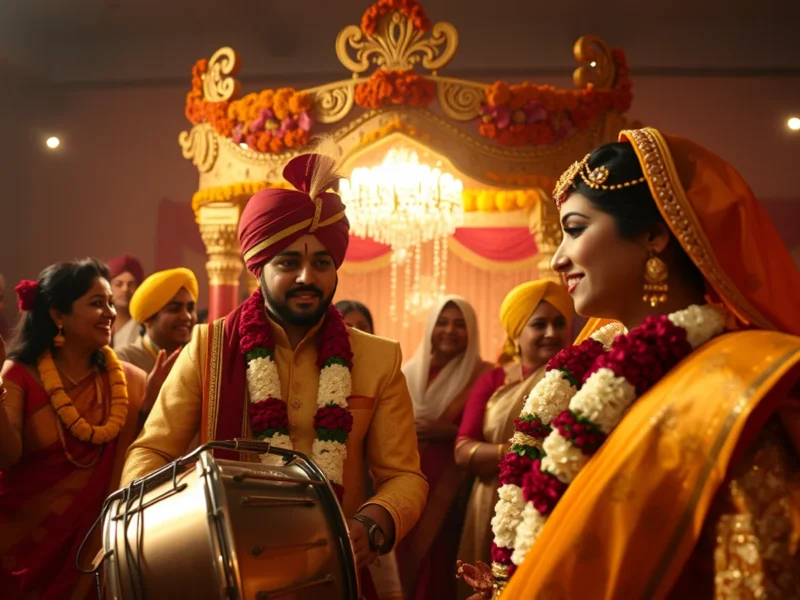
The baraat arrives and is not let in. Dwar puja, also called dwarchar, is the formal reception of the groom at the threshold of the venue. The bride’s father, with the priest, washes the groom’s feet, applies tilak, offers madhupark, a mixture usually of curd, honey and ghee, and only then leads him inside. In many Kayastha families the bride’s mother performs an aarti and touches his nose or ears in a light mock scolding.
In Bihari and eastern UP practice this can be elaborate, with the two sides exchanging verses or the groom’s party negotiating entry. Kayastha families with a scholarly self-image sometimes revive a genuine question-and-answer exchange between the priests of both sides, which is charming when rehearsed and awkward when not.
The failure mode is always the same. The baraat reaches the gate an hour late, the dwar puja is compressed to four minutes, and the muhurat window for the pheras tightens. Build the baraat departure time backwards from the muhurat with a full hour of slack, and give the dhol team a hard stop, because they will not stop on their own.
Jaimala, mandap entry and the sequence at the vedi
The jaimala is the first time the couple face each other publicly. Garlands of rose, marigold or jasmine are exchanged, and in most north Indian families the groom’s cousins lift him so the bride cannot reach, and hers lift her in reply. It is one of the few segments that photograph well without direction, which is why the jaimala is now usually staged on a raised platform.
After the garlands the couple move to the mandap, where the priest opens with Ganesh puja, a punyaha vachan for purification, and the sankalp in which both gotras and lineages are recited. Kayastha ceremonies tend to keep the mantra portion fuller than average, since families with a scribal heritage often want the recitation done properly rather than trimmed.
Ask the priest for a written running order two weeks ahead, with an honest minute count against each block. The number families are given is almost always optimistic by forty percent. A north Indian mandap ceremony run in full is a two and a half to three hour sitting, and the guests need to be fed accordingly.
Kanyadaan, pheras and sindoor daan
Kanyadaan is performed by the bride’s father, or by her brother or paternal uncle if he is not living. Her hand is placed in the groom’s, water is poured over the joined hands, and the daan is completed with a formal declaration. In many Kayastha families the mother sits behind and touches the father’s shoulder or pours the water, which makes the act visibly joint rather than paternal alone. Our kanyadaan explainer covers the variations.
Then comes the gathbandhan knot, the laja homa in which the bride’s brother pours puffed rice into the fire through her hands, and the circumambulation of the fire. North Indian practice typically runs seven pheras with the couple walking around the fire, while much of the south runs saptapadi as seven steps. The distinction is explained in our note on the difference between phera and saptapadi, and the vows themselves in our seven vows guide.
Sindoor daan closes the core ceremony. The groom applies vermilion along the parting of the bride’s hair, usually with a ring, a coin or the edge of a bangle rather than a finger, and covers her head with a chunri. In Bengali Kayastha weddings this moment is heightened, with the bride shielded by a new sari held up around her. The symbolism is set out in our sindoor daan guide.
The kohbar ghar and its painted walls
The kohbar is the nuptial chamber, and in Mithila and Bihari Kayastha homes it is a painted room, not just a decorated one. The walls carry a kohbar design built around a lotus pool, encircling bamboo, fish, birds, tortoises and the sun and moon, drawn by the women of the household in the Madhubani style. Each element is a fertility and continuity motif rather than decoration.
The couple are led to the kohbar after the ceremony for a set of private rites conducted by the women, which commonly include games with a ring in a bowl of milk, the removal of the bride’s veil before the groom’s female relatives, and the first shared meal. In some families the couple sleep in the kohbar under the supervision of a senior aunt for the first nights.
Hotel weddings have largely killed the painted room, and the usual substitute is a printed kohbar panel or a hand-painted canvas hung in a suite. If the family has an artist among the aunts, commission the panel four weeks out. It becomes the most personal object of the entire wedding and it survives long after the flowers do.
Chaturthi, the fourth day and the rites after the ceremony
Chaturthi is the fourth day rite, and it is a real part of the sequence in UP and Bihar rather than an afterthought. A homa is performed, the couple bathe, the gathbandhan knot and the wedding threads are formally untied, and the bride is welcomed into the household in a fuller sense than the wedding night allowed. Some families observe it on the fourth day literally, others compress it to the day after.
Around it sit the familiar post-wedding blocks: the bride’s first entry into her husband’s home with the rice-pot kick and the footprint of alta, described in our griha pravesh guide, the muh dikhai in which the groom’s female relatives see her face and give her gifts, and a reception the Bengali side calls bou bhaat.
Then the bride returns to her parents’ home for pag phera, usually on the third or fifth day, escorted by her brother, and stays for a night or more before returning. Our pag phera guide covers the timing rules, which are worth checking early because they collide with honeymoon bookings more often than any other custom.
Vidaai, khoicha and the last thing the bride’s mother does
Khoicha is the detail that distinguishes an eastern UP or Bihari vidaai. Before the bride leaves, her mother, and then other married women, fill her aanchal or the fold of her sari with rice, turmeric, a coin, sometimes durva grass and a small quantity of dry fruit. It is a wish that she carries plenty from her birth home into her married one, and that neither house is emptied by the marriage.
The bride then throws handfuls of rice backwards over her shoulder as she walks out, symbolically repaying what she has taken from her parents’ home, before stepping into the car. The vidaai is short, it is the most emotionally loaded fifteen minutes of the wedding, and it is almost always mishandled by scheduling.
Our standing advice is to clear the departure route beforehand, keep the photography team at a distance with long lenses, and instruct the driver to be in position with the engine off twenty minutes early. Nothing damages the memory of a wedding more than a family being hurried through a vidaai because the venue wanted the lawn back.
How urban Kayastha families run all of this today
The realistic modern shape is three days, not seven. Day one carries matkor in the morning, mehndi in the afternoon and a sangeet at night. Day two carries haldi and imli ghutai in the morning and the baraat, dwar puja, jaimala and mandap ceremony from evening into the early hours. Day three carries the kohbar rites, chaturthi in compressed form and the reception. Families in Hyderabad, Delhi and Bengaluru run this pattern constantly.
Regional blending is now normal. A Bengali Kayastha bride marrying into a UP Srivastava family will often keep gaye holud, subho drishti and mala badal from her side and add pheras and sindoor daan from his, with two priests coordinating. That works, but only if both priests meet before the wedding day. Our notes on Bengali, Bihari and Maharashtrian weddings are useful reading for a mixed match, the last being relevant for Chandraseniya Kayastha Prabhu families in Maharashtra.
On budget, a Kayastha wedding costs what any comparable north Indian wedding costs in the same city, since none of the distinctive rites are expensive in themselves. Matkor needs drums and soil, imli ghutai needs tamarind, the kohbar panel needs an artist. Our wedding planner cost guide sets out realistic planning fees, which for a full three-day function typically begin around Rs 3,00,000 and scale with guest count and venue tier.
Planning a wedding that honours these traditions?
Team Velvet Knot plans weddings across every major Indian tradition, and we brief vendors on the rituals so nothing gets rushed, mistimed or quietly dropped from the running order. Tell us your dates and your community, and we will come back with an honest plan.
Frequently Asked Questions
What is Dawat Puja and is it part of the wedding?
Dawat Puja is the Kayastha worship of the pen, inkpot and account books alongside Chitragupta, observed principally on Chitragupta Jayanti the day after Diwali. It is a calendar festival rather than a wedding rite. Many families do, however, carry the symbolism into the wedding by placing a new pen and ledger on the puja thali and having the couple write an auspicious first line. Ask the family, because practice differs household to household.
Do Kayasthas follow gotra rules when fixing a match?
Yes. Most families still avoid marriage within the same paternal gotra, and the priest will need both gotras for the sankalp recitation during the ceremony. Marriage across Kayastha sub-groups, for example a Saxena with a Srivastava or a Mathur with a Nigam, is common and generally uncontested. The practical problem is not the rule but the record: many younger families no longer know their gotra and have to ask a grandparent weeks before the wedding.
What is matkor and can it be done in a city hotel?
Matkor, also called matmangara, is the rite in which the women of the household go in procession to dig and carry back clean earth, which is then worshipped and used for the wedding altar. In a city it is routinely adapted: a hotel lawn, a temple garden or a pot of soil sourced the day before all serve. Keep the procession, the drums and the folk songs, because those carry the ritual more than the soil itself does.
What is imli ghutai?
Imli ghutai is a light-hearted Kayastha and Bihari custom in which the groom’s sisters and sisters-in-law rub tamarind on his collarbones, throat and joints around the time of haldi, said to ward off the evil eye and loosen him for the ceremony. They stop only after negotiating a cash gift. It is the male counterpart to shoe-stealing. Allow twenty minutes, old clothes and a covered floor, because tamarind stains badly.
How is a Bengali Kayastha wedding different from a UP one?
Substantially. Bengali Kayastha weddings centre on gaye holud, the bride carried in on a piri, subho drishti when the couple first look at each other, mala badal, sampradan in place of the north Indian kanyadaan, and a bou bhaat reception. UP and Bihar Kayastha weddings centre on tilak, matkor, dwar puja, the fire pheras, the kohbar and chaturthi. Sindoor daan is common to both. In a mixed match, both priests should meet in advance to agree a single running order.
How many days should we plan for a Kayastha wedding?
Three days covers it comfortably for most urban families: matkor, mehndi and sangeet on day one, haldi and imli ghutai leading into the baraat and the mandap ceremony on day two, and the kohbar rites, a compressed chaturthi and the reception on day three. Pag phera follows a few days later at the bride’s parents’ home. Families observing chaturthi on the literal fourth day will need a longer window, so confirm that before booking travel.
Sources and further reading
Begin Your Engagement
Want a real number for your wedding?
Tell us your city, guest count and dates. Team Velvet Knot will come back within 24 hours with an itemised budget.