Konkani Wedding Traditions: The GSB Saraswat Ceremony Explained
- Who the Konkani Hindus are and why their weddings differ
- Soirik and Sakhar Puda: the match and the betrothal
- Dev Karya and Dev-Bhramana: seeking the blessing of gods and ancestors
- Halad, Udik Shastra and Telaphal: the anointing days
- The Mandap, the Muhurat and the naming of the bride
- Antarpat, Kanyadaan and the moment of union
- Saptapadi, the sacred fire and the tying of the mangalsutra
- The Sado, the nine-yard saree and Konkani bridal style
- The Konkani wedding feast served on a plantain leaf
- Post-wedding rites, modern celebrations and planning yours
- Related wedding rituals
- Konkani wedding rituals at a glance
- Konkani Hindu and Konkani Catholic weddings compared
- Frequently Asked Questions
- Sources and further reading
Konkani Hindu weddings, rooted in the Goud Saraswat Brahmin community of Goa, coastal Karnataka and Kerala, weave together Sakhar Puda betrothal, Dev Karya ancestor worship, the Antarpat curtain, Saptapadi vows, mangalsutra tying and a fragrant vegetarian feast served on a plantain leaf.
Who the Konkani Hindus are and why their weddings differ
When people say a Konkani wedding, they usually mean the marriage rites of the Goud Saraswat Brahmin (GSB) community, the Konkani-speaking Hindus whose homeland runs down the western coast from Goa through coastal Karnataka (Mangalore, Udupi, Karwar) into Kerala. Alongside the GSB you will find closely related groups who share much of the same ritual grammar: the Chitrapur Saraswat Brahmins of the Kanara coast, the Daivajna (goldsmith) community, and the Kudaldeshkar Brahmins of the Sindhudurg belt. These families trace their roots to Saraswat Brahmins who migrated south along the Konkan after leaving their older northern homeland, carrying a distinct language, cuisine and set of household deities (the kuladevata) with them.
Because the community straddles several states, a Konkani wedding sits at a cultural crossroads. It keeps the Vedic backbone shared by every Hindu wedding ritual, borrows the coconut-and-plantain warmth of South Indian wedding traditions, and carries clear echoes of Maharashtrian wedding traditions in its use of the Antarpat curtain and the nine-yard saree. One important clarification: this guide is about Konkani Hindu weddings. Konkani Catholic weddings of Goa and Mangalore, with their church nuptials, roce anointing and ros ceremony, are a separate tradition and are only touched on briefly here.
Soirik and Sakhar Puda: the match and the betrothal
A Konkani marriage traditionally begins with the Soirik, the formal proposal and matching of two families. Elders compare horoscopes (kundali matching), confirm that the couple do not share the same gotra or kuladevata lineage, and satisfy themselves that the families are a good fit. Once both sides agree, the union is sealed with the Sakhar Puda, literally the packet of sugar. The groom’s family visits the bride’s home and presents her with sugar, a saree, coconuts, fruit and often gold, while the bride’s people reciprocate for the groom. Distributing and tasting the sugar is a sweet, public commitment that the wedding will happen.
Sakhar Puda plays the same role that a roka ceremony does in the north: it is the moment the two families become vevai, in-laws-to-be. In modern Goa and Mangalore this is frequently combined with a ring exchange and a small reception, but the sugar packet remains the emotional core. The date of the wedding is fixed here, chosen by the family priest against an auspicious window in the Hindu calendar.
Dev Karya and Dev-Bhramana: seeking the blessing of gods and ancestors
No Konkani wedding truly starts until the family deity and the ancestors have been invited. The Dev Karya (also written Devkarya) is a set of preparatory rites, usually a day or two before the wedding, in which both households perform worship of their kuladevata and offer prayers to departed elders (pitru). The logic is simple and deeply felt: a marriage joins not just two people but two lineages, living and dead, so both must give their consent.
A key part of this phase is the Dev-Bhramana, honouring the gods and the Brahmins who will officiate, and the ceremonial installation of the household gods for the duration of the festivities. Families whose kuladevata sits at a specific temple, many GSB families are devoted to shrines such as Shantadurga, Mangeshi or Mahalasa in Goa, will often make a pilgrimage or send offerings so the wedding carries the deity’s blessing. This ancestor-and-deity worship is the quiet spiritual scaffolding beneath everything visual that follows.
Halad, Udik Shastra and Telaphal: the anointing days
The days before the muhurat are given over to cleansing and beautifying the couple. Halad is the Konkani haldi ceremony: a paste of turmeric, sandalwood and oil is applied to the bride and groom in their own homes by married women, turning the skin golden and, by tradition, warding off the evil eye before the big day. Turmeric’s antiseptic glow is both cosmetic and protective, and the ritual is full of teasing songs and laughter.
Two rites often accompany the anointing. Udik Shastra is the ceremonial fetching of sacred water, women of the household go together to draw water that will be used in the ritual bath and the mandap rites, a gesture that pulls the neighbourhood into the celebration. Telaphal refers to the oil-and-fruit anointing, where oil is ceremonially applied and offerings of fruit are made as part of readying the couple’s body and spirit. Together these small rituals mark the transition from ordinary life into the sacred window of the wedding.
The Mandap, the Muhurat and the naming of the bride
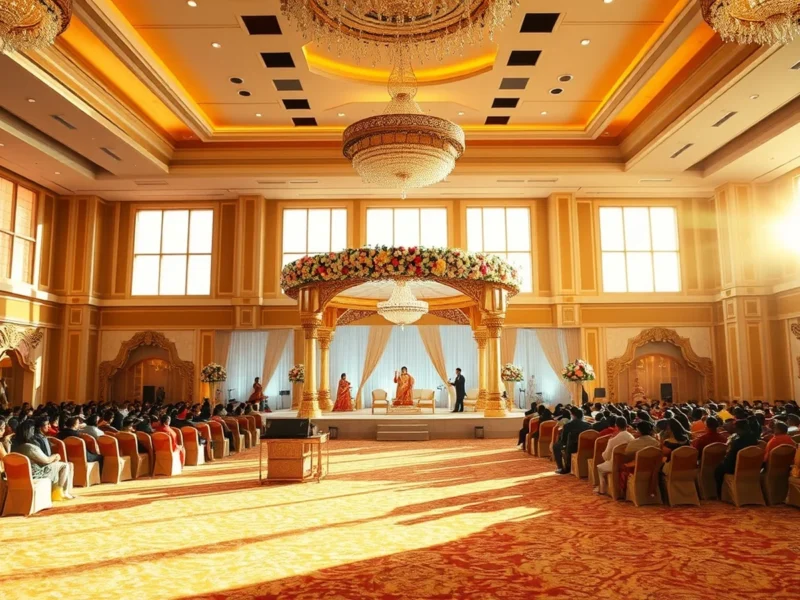
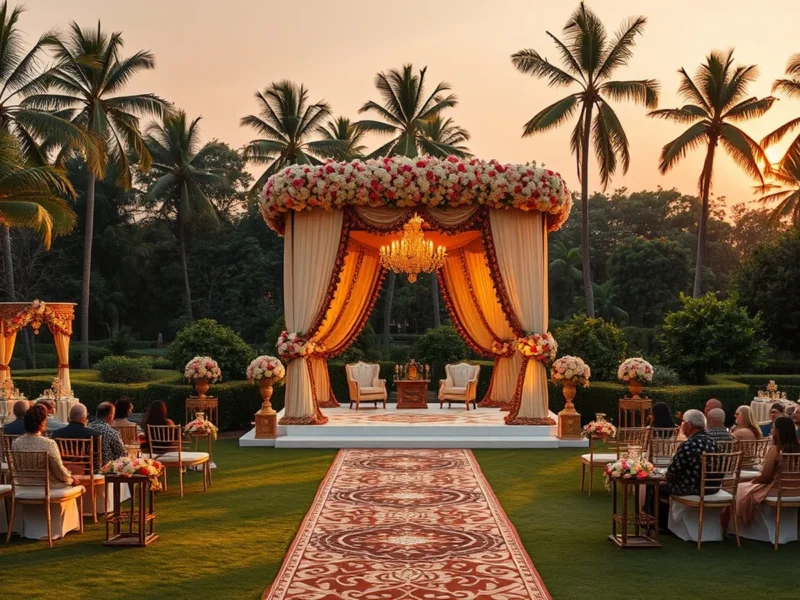
The wedding itself unfolds under the Mandap, a decorated canopy raised on four (or more) pillars and traditionally trimmed with plantain trunks, mango leaves and marigold. The mandap is consecrated before use, and its centre holds the sacred fire (homa) that will witness the vows. The ceremony is timed to the Muhurat, the precise auspicious moment calculated by the priest, and the most important rites are compressed into that window.
A charming Konkani custom is the ritual renaming of the bride as she enters her new family. In many GSB households the bride receives a new name, and terms such as Voijna or Vovhu (the bride, the new daughter-in-law) mark her welcome into the groom’s lineage. The naming signals that she now belongs to a new gotra and household, and it is spoken with affection rather than as a loss. Around this point the groom is formally received (the varapuja, honouring the groom as a form of Vishnu) before the couple are brought together.
Antarpat, Kanyadaan and the moment of union
The single most iconic image of a Konkani wedding is the Antarpat: a cloth curtain held up between the bride and groom so that they cannot see each other as the auspicious moment approaches. The priests chant the mangalashtaka verses, guests shower the couple with rice and vermilion, and at the exact muhurat the Antarpat is dropped. The first look, eye to eye across the falling cloth, is the emotional climax of the whole day. The curtain symbolises the two separate lives that are about to become one, and its removal is the instant of joining.
Before or around this moment comes the Kanyadaan, the giving away of the daughter. The bride’s father places her hand in the groom’s and formally entrusts her to him, one of the most sacred acts a Hindu parent performs. The meaning and mantras behind this rite are explored in our guide to the meaning of kanyadaan. In GSB practice the gift is accompanied by pouring of sacred water and the joining of hands (panigrahana), sealing the father’s trust that the groom will cherish his daughter as an equal partner in dharma.
Saptapadi, the sacred fire and the tying of the mangalsutra
With the couple united, the marriage is made binding around the fire. In the Saptapadi the bride and groom take seven steps together, each step a vow for their shared life: nourishment, strength, prosperity, happiness, progeny, seasons of togetherness and lifelong friendship. Only after the seventh step is the marriage complete in the eyes of dharma and, indeed, of Indian law. Our detailed breakdown of the seven vows of the Saptapadi walks through each promise. Alongside or interwoven with it, the couple circle the sacred fire (the pheras) with Agni as the divine witness.
The visible seal of the marriage is the tying of the mangalsutra. The groom knots the sacred thread or gold-and-black-bead necklace around the bride’s neck, usually in two or three knots, while the priests chant. From this moment she is a married woman. The symbolism of this thread across Hindu communities is covered in our piece on the meaning of the mangalsutra. The application of vermilion (sindoor) and the tying of toe rings often follow, completing the bride’s markers of married status.
Planning the wedding these ceremonies belong to? We plan weddings across India and can take the schedule, the logistics and the coordination off your family entirely.
The Sado, the nine-yard saree and Konkani bridal style
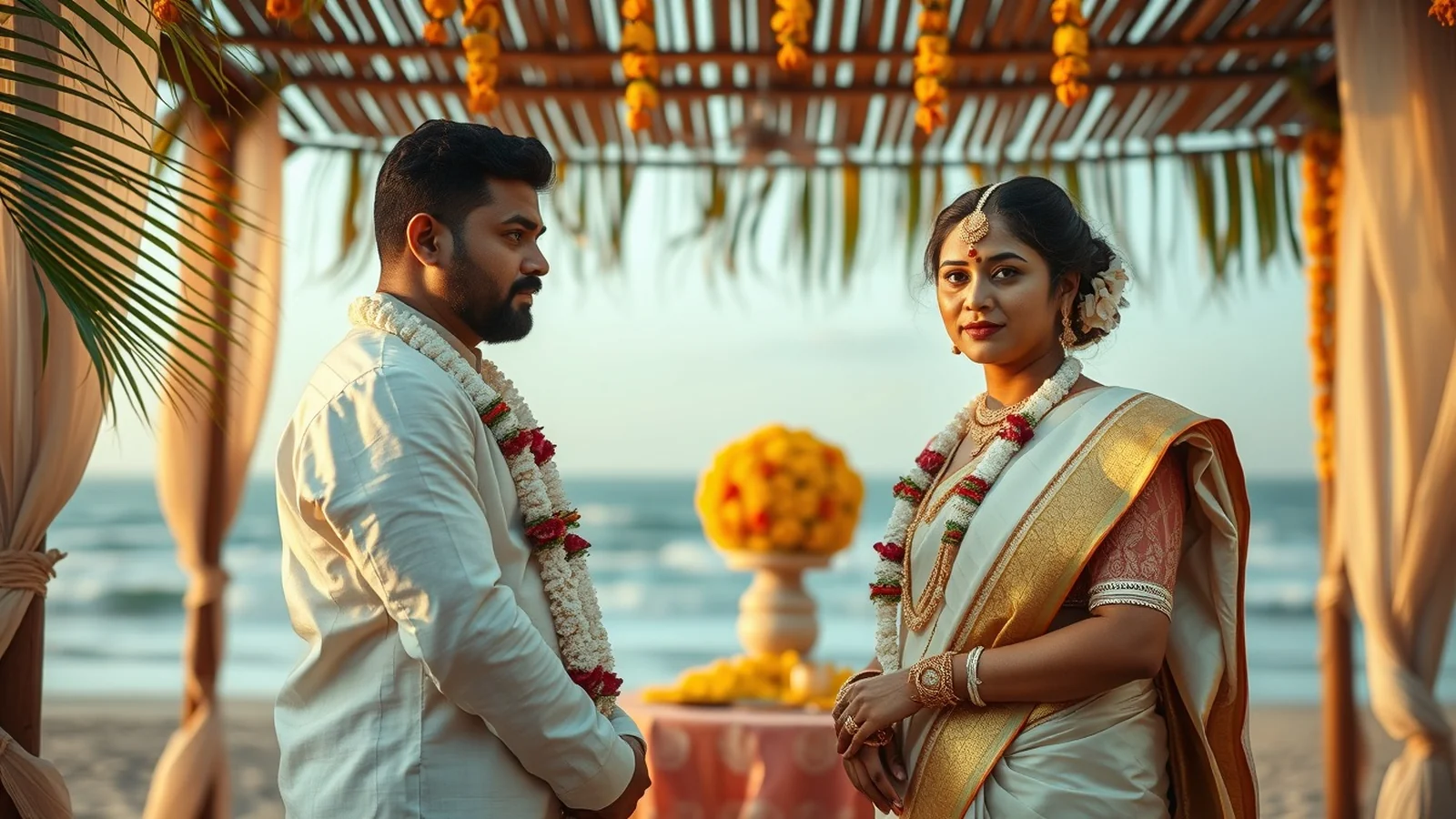
Konkani bridal dress is understated compared to the heavy lehengas of the north, and all the more elegant for it. The classic GSB bride wears the Nauvari or Kirwani, a nine-yard saree draped in the distinctive kachcha style that lets her move freely for the fire rituals, echoing the Maharashtrian nine-yard tradition of the shared Konkan coast. In Kerala-settled and southern GSB families the kasavu, the cream saree with a lustrous gold zari border, is equally beloved for its serene, temple-like beauty.
A garment with special meaning is the Sado, the auspicious wedding saree that the groom’s family traditionally gifts the bride to wear for the ceremony, often a rich silk in red or maroon. Wearing the Sado marks her acceptance into the new family. Jewellery leans towards temple gold: the mundavalya or strings of pearls tied across the forehead, delicate kasu-mala coin necklaces, green glass bangles and fragrant jasmine (mogra) woven into the hair. The groom typically wears a silk dhoti and angavastram with a turban (mundaas), keeping the look rooted and priestly.
The Konkani wedding feast served on a plantain leaf
Ask any Konkani family what makes their wedding special and the answer will quickly turn to food. The wedding bhojan is strictly vegetarian (even in fish-loving GSB homes, the wedding feast is meatless as a sacred meal) and is served the traditional way on a fresh plantain leaf, each dish placed in its appointed position. The centrepiece is the pancha-bhakshya, the auspicious set of five festive preparations that a proper Saraswat banquet should include.
Signature dishes carry the coconut-forward, gently spiced character of the coast. Patholi (patoli) are sweet parcels of rice batter and coconut-jaggery filling steamed inside turmeric leaves, which lend a haunting fragrance and are strongly associated with Saraswat celebrations. Khatkhate is the iconic mixed-vegetable stew, a medley of seasonal vegetables and lentils spiced with the aromatic tirphal (Sichuan-like pepper) that is almost the community’s signature. Sweet endings come as godshe or payasam, the coconut-milk or dal-and-jaggery pudding that closes the meal. Add rice, saru or dalitoy, a vegetable upkari, pickle and papad, and the plantain leaf becomes a complete portrait of Konkani hospitality.
Post-wedding rites, modern celebrations and planning yours
After the vows, the bride is welcomed into the groom’s home with a threshold ritual and the customary farewell from her own family, the Konkani counterpart of the vidaai, tearful and tender in equal measure. Games between the newlyweds, the seeking of blessings from elders (namaskar), and a homecoming satyanarayan puja often round out the celebrations over the following days.
Modern Konkani weddings in Goa, Mangalore and beyond blend this ritual depth with contemporary staging. Couples now add a sangeet and mehndi evening, host beach or resort receptions along the Goan coast, and photograph the Antarpat drop as the hero moment of the album, yet the muhurat rites, the mangalsutra and the plantain-leaf feast remain non-negotiable. Whether you are planning an intimate temple wedding in Mangalore or a two-hundred-guest celebration in Goa, the guiding principle is the same: honour the deities and ancestors first, keep the food authentically Saraswat, and let the Antarpat moment breathe. Those three instincts are what carry the tradition forward.
Planning a wedding rooted in your traditions?
Tell us your community, dates and vision. Team Velvet Knot will honour every ritual and put together a tailored plan and an honest budget for it.
Related wedding rituals
- the mehndi ceremony explained
- griha pravesh, the bride’s first entry
- the Ganesh puja that opens a wedding
Traditions in this region: read our full guide to Tulu and Bunt wedding traditions.
Konkani wedding rituals at a glance
A Konkani wedding has more named preparatory rites than most, and families from Goa, Mangalore and Kerala do not always use the same names. The table sets out the rites this guide covers, in order, as a single reference.
| Stage | Rite | Meaning | What happens |
|---|---|---|---|
| Match | Soirik | The proposal | Horoscopes and lineages are compared |
| Betrothal | Sakhar Puda | Packet of sugar | Sugar, a saree, coconuts and gold are exchanged, and the date is fixed |
| Preparation | Dev Karya | Work for the gods | Worship of the family deity and the ancestors at both homes |
| Preparation | Dev-Bhramana | Honouring gods and priests | Household gods are installed for the festivities |
| Anointing | Udik Shastra | Fetching sacred water | Women draw the water for the ritual bath |
| Anointing | Halad | Turmeric | Turmeric, sandalwood and oil are applied at home |
| Anointing | Telaphal | Oil and fruit | Oil is applied and fruit is offered |
| Wedding | Varapuja | Honouring the groom | The groom is received as a form of Vishnu |
| Wedding | Antarpat | The curtain | The cloth between the couple drops at the muhurat |
| Wedding | Kanyadaan | Giving the daughter | Hands are joined and water is poured |
| Wedding | Saptapadi and pheras | Seven steps | Vows taken around the sacred fire |
| Wedding | Mangalsutra | The sacred thread | Tied by the groom, followed by sindoor and toe rings |
| After | Homecoming | Welcome | Threshold rite, blessings from elders and often a Satyanarayan puja |
Konkani Hindu and Konkani Catholic weddings compared
Search results often mix the two, because they share a language and a coastline. The difference matters most to guests deciding what to wear and when to arrive.
| Element | Konkani Hindu (GSB) | Konkani Catholic |
|---|---|---|
| Where the vows are taken | Under a mandap, around a sacred fire | In a church |
| Officiant | Family priest | Parish priest |
| Pre-wedding anointing | Halad with turmeric and sandalwood | Roce or ros, an anointing with coconut milk and oil |
| The key moment | The Antarpat dropping at the muhurat | The exchange of vows and rings at the nuptial Mass |
| Timing | Set by the muhurat | Set by the church schedule |
| Wedding meal | Vegetarian, served on a plantain leaf | Often includes meat and seafood at the reception |
For a Hindu Konkani wedding the timing constraint is the muhurat, so book the venue after the priest has fixed it, not before. Coastal Karnataka families who also follow Tulu customs will find the neighbouring tradition in our Tulu and Bunt wedding guide.
Also on Velvet Knot: Mangalorean Catholic wedding traditions.
Frequently Asked Questions
What is a Konkani wedding?
A Konkani wedding is the Hindu marriage ceremony of the Konkani-speaking communities of the west coast, principally the Goud Saraswat Brahmins (GSB) of Goa, coastal Karnataka and Kerala, along with related groups such as the Chitrapur Saraswats and Daivajna. It follows Vedic rites like the Saptapadi and mangalsutra tying, distinguished by the Antarpat curtain, the Sakhar Puda betrothal and a vegetarian coconut-rich feast.
What is the Antarpat in a Konkani wedding?
The Antarpat is a cloth curtain held up between the bride and groom so they cannot see each other while the priests chant the mangalashtaka verses. At the exact auspicious moment (muhurat) the curtain is dropped, and the couple’s first look at each other marks the joining of their two lives into one. It is the most emotionally charged moment of the ceremony.
What is Sakhar Puda?
Sakhar Puda, literally the packet of sugar, is the Konkani betrothal ceremony. The groom’s family visits the bride with sugar, a saree, coconuts and gold (and the bride’s family reciprocates), and the sharing of sugar publicly seals the engagement. It is the point at which both families commit to the marriage and usually fix the wedding date.
How is a Konkani Hindu wedding different from a Konkani Catholic wedding?
A Konkani Hindu (GSB) wedding is a Vedic ceremony held under a mandap around a sacred fire, with rites such as Dev Karya, Antarpat, Saptapadi and mangalsutra tying. A Konkani Catholic wedding of Goa or Mangalore is a Christian ceremony held in a church, preceded by customs such as the roce or ros anointing. They share a language and coastal culture but are entirely separate religious traditions.
What food is served at a Konkani wedding?
The Konkani wedding feast is strictly vegetarian and served on a plantain leaf. It centres on the pancha-bhakshya (five festive dishes) and coastal specialities: patholi (sweet rice-and-coconut parcels steamed in turmeric leaves), khatkhate (a mixed-vegetable stew spiced with tirphal), godshe or payasam for dessert, plus rice, dalitoy, upkari, pickle and papad.
What does a Konkani bride wear?
The traditional GSB bride wears a nine-yard Nauvari or Kirwani saree draped in the kachcha style, or in southern families the cream-and-gold kasavu. The groom’s family often gifts the auspicious wedding saree called the Sado. Jewellery is temple gold, with a mundavalya of pearls tied across the forehead, green glass bangles and jasmine flowers in the hair.
What are the main rituals in a Konkani wedding, in order?
Soirik and Sakhar Puda fix the match, Dev Karya honours the family deity and ancestors, and the Udik Shastra, Halad and Telaphal rites prepare the couple. On the day come the Varapuja, the Antarpat, Kanyadaan, Saptapadi and the tying of the mangalsutra, followed by the homecoming rites.
Sources and further reading
Begin Your Engagement
Want a real number for your wedding?
Tell us your city, guest count and dates. Team Velvet Knot will come back within 24 hours with an itemised budget.