Assamese Wedding Traditions: The Biya Rituals Explained
- What an Assamese Wedding Is: The Biya
- Juron Diya: The Groom’s Family Brings Gifts
- Tel Diya and the Nuoni Ritual Bath
- Pani Tola: Fetching the Sacred Water
- The Biya: Main Ceremony and the Homa Fire
- Xoru Xoru, the Gosani and Ritual Roles
- The Gamosa, Xorai and Tamul-Paan
- Mekhela Sador: The Muga Silk Bridal Attire
- Biya Naam, Joranaam and the Wedding Songs
- Assamese Wedding Cuisine: Fish, Pitha and Larus
- Modern Guwahati Weddings and Farewell
- What an Assamese wedding costs
- Related post-wedding rituals
- Frequently Asked Questions
- Sources and further reading
Assamese wedding traditions, known as Biya, follow a warm multi-day sequence: Juron Diya gift-giving, Tel Diya and Nuoni ritual bath, Pani Tola sacred-water fetching, and the Biya homa fire. The Gamosa, Muga silk Mekhela Sador, Xorai and betel nut carry deep cultural meaning.
What an Assamese Wedding Is: The Biya
An Assamese Hindu wedding is called the Biya, a word that simply means marriage in Assamese. Rooted in the Brahmaputra valley and the culture of Assam, the Biya is less about ostentation and more about warmth, community feasting, folk song, and the quiet dignity of ritual. Where many North Indian weddings run loud and long, the classical Assamese Biya is intimate, matriarchal in feel, and shaped by the rhythms of an agrarian, river-fed land.
The ceremonies unfold over several days and are shared between the two households, the groom’s home and the bride’s home, each hosting its own rites. The central sacraments follow the pan-Hindu Vedic template of fire, vows and the giving of the daughter, but the texture around them is unmistakably Assamese: the red-and-white Gamosa, the golden Muga silk of the bride, the brass Xorai heaped with betel nut, and the women’s chorus of Biya Naam that carries every rite along. If you are comparing regional customs, our guide to Hindu wedding rituals maps the shared Vedic backbone that the Biya localises so beautifully.
Juron Diya: The Groom’s Family Brings Gifts
The formal build-up to the wedding begins with Juron Diya, one of the most cherished pre-wedding rites. The groom’s mother and the women of his family travel to the bride’s home carrying an array of gifts for her. This is a mother-in-law’s public acceptance and welcome of the girl who will join her home, and it is deeply symbolic.
The gifts are laid out with care and always include sindoor (vermilion), a Mekhela Sador woven in silk for the bride to wear, gold and traditional jewellery, a comb, bangles, a small mirror, and cosmetics. The groom’s mother applies sindoor to the bride’s forehead and adorns her, a tender moment that formally marks her as the incoming daughter-in-law. Trays of Tamul-Paan (areca nut and betel leaf), curd, and sweets accompany the offering. Juron in spirit resembles the vermilion promise you can read about in our note on the meaning of the sindoor daan ritual, though here it arrives as a gift of welcome rather than a wedding-day sacrament.
Tel Diya and the Nuoni Ritual Bath
Close to the wedding day comes a cluster of purifying rites. Tel Diya is the ceremonial application of oil. Elder married women anoint the bride, and separately the groom at his own home, with mustard oil, smoothing it into the hair and skin as a blessing for health and radiance. It is a gentle grooming ritual charged with affection and good wishes.
This flows into Nuoni, also called Daiyan Diya, the ritual bath. The bride is bathed in water infused with turmeric paste, black gram (matimah) and herbs, then dressed in fresh clothes. The turmeric cleanse brightens the skin and, like the wider North Indian haldi ceremony, marks a threshold: the ordinary self is washed away so the bride can step forward renewed for marriage. The women sing throughout, and the mood is playful, intimate and full of teasing laughter.
Pani Tola: Fetching the Sacred Water
One of the most distinctive and beautiful Assamese rites is Pani Tola, the ceremonial fetching of sacred water. On the morning of the ritual bath, the mother of the bride (and correspondingly the groom’s mother at his home) leads a procession of married women to a nearby pond, river or well.
The women carry brass pitchers, and the mother draws the sacred water that will be used for the Nuoni bath. The act is accompanied by the blowing of the conch, the ululation known as uruli, and Biya Naam sung in chorus. Coins, betel nut and flowers are offered to the water body as thanks. In a land defined by the mighty Brahmaputra, honouring water as the source of life and purity is profoundly fitting, and Pani Tola places the mother, not a priest, at the heart of the sanctifying act. It is one of the clearest signs of how matriarchal warmth threads through the whole Biya.
The Biya: Main Ceremony and the Homa Fire
The wedding proper is simply called the Biya, held at the bride’s home beneath a decorated canopy. The groom arrives with his party for the Bor-Biya, the grand wedding, and is received with a Xorai of betel nut, curd, sweets and the ceremonial washing of his feet. The bride’s family welcomes him as an honoured guest and a son.
At the sacred heart of the ceremony is the Hom or homa, the fire ritual. The priest kindles the sacred fire, and the couple make offerings into it while Vedic mantras are chanted, calling Agni the fire god to witness the union. The bride and groom then complete the circumambulation of the fire and the vow-taking that anchors every Hindu marriage. These sacraments echo the saptapadi seven vows at the core of the ceremony. The father of the bride performs the giving away of his daughter, the emotional pivot explained in our piece on the meaning of kanyadaan, placing her hand in the groom’s and entrusting her to his care.
Xoru Xoru, the Gosani and Ritual Roles
The Biya is guided by figures who carry specific ritual duties. The household deity, the Gosani, is honoured before the wedding begins, with the family seeking the blessing of their ancestral goddess so the marriage proceeds under divine protection. Offerings are placed before the Gosani, and no major rite starts without this acknowledgement.
The rituals also feature the small preliminary observances collectively kept alive by the elder women who direct the ceremony, ensuring the correct sequence of oil, turmeric, water and fire is honoured. Married women, considered auspicious, dominate the ritual space, singing, applying sindoor, bathing the bride and leading the water procession. The priest handles the Sanskrit sacraments, but the living texture of the Biya, its songs, its welcomes and its blessings, is carried by the community of women and elders, which is exactly what gives an Assamese wedding its famously gentle, familial character.
The Gamosa, Xorai and Tamul-Paan
No Assamese ritual is complete without three cultural anchors. The Gamosa is a handwoven white cotton cloth bordered in red, the single most important emblem of Assamese identity. In a wedding it is offered as a mark of respect and blessing, draped around elders and guests, wrapped around the Xorai, and exchanged as a token of honour. To give a Gamosa is to give regard itself.
The Xorai is a bell-metal or brass pedestalled tray with a cover, the traditional vessel of Assamese hospitality and offering. At weddings it is heaped with Tamul-Paan, the areca nut and betel leaf that signal invitation, welcome and auspiciousness. Offering tamul is how an Assamese family invites guests to the wedding and how it honours them once they arrive. Betel nut, curd, jaggery and sweets served from the Xorai are a language of respect that runs through every stage of the Biya, from Juron to the farewell.
Mekhela Sador: The Muga Silk Bridal Attire
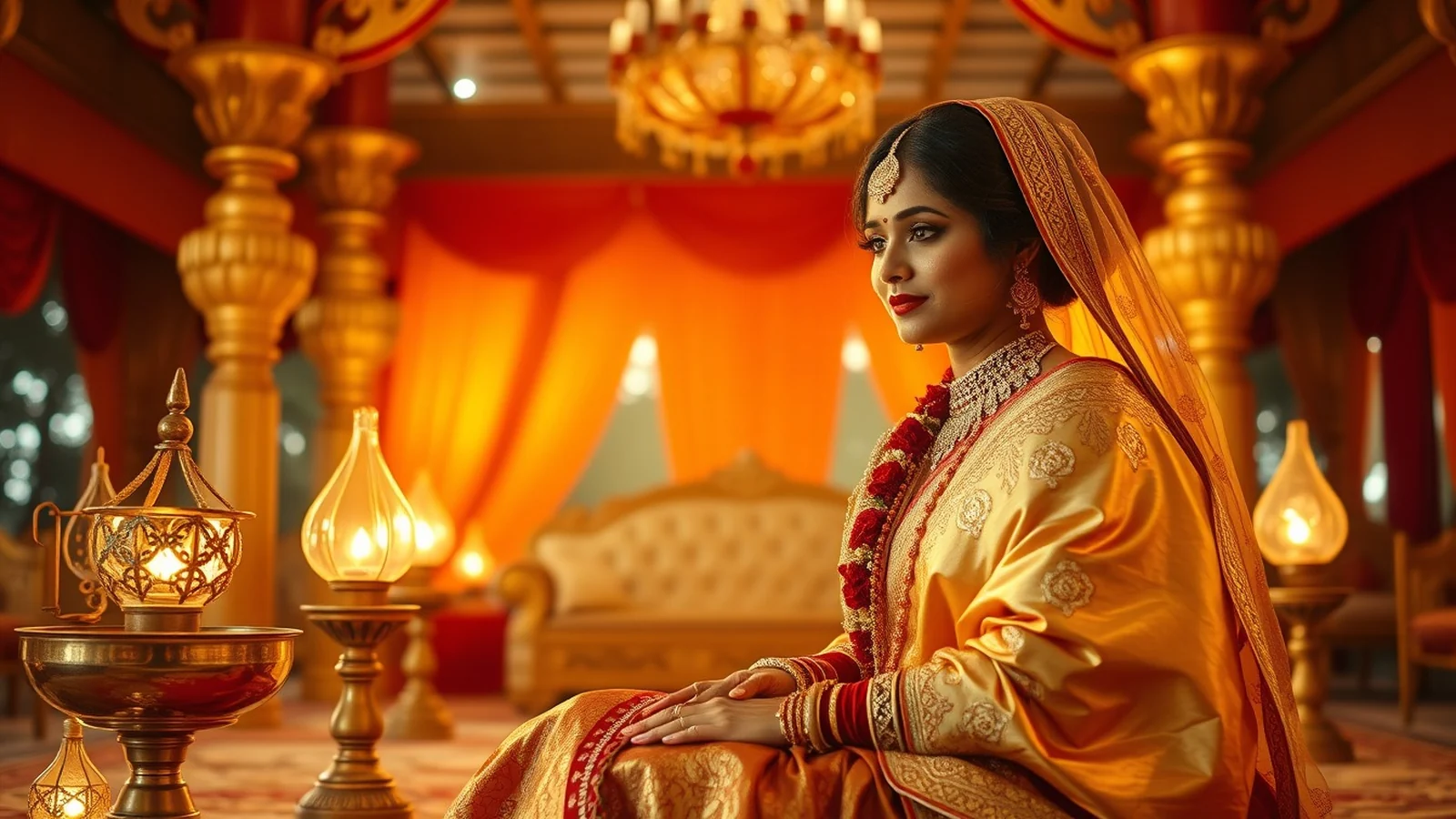
The Assamese bride wears the Mekhela Sador, the region’s two-piece traditional drape. The mekhela is the lower cylindrical skirt pleated at the waist, and the sador is the long upper cloth wrapped elegantly across the torso and over the shoulder, with a fitted blouse beneath. It is graceful, understated and unmistakably Assamese.
The finest bridal Mekhela Sador is woven in Muga silk, the golden silk unique to Assam and prized across India for its natural glowing sheen and durability. Muga is a Geographical Indication of Assam and grows more lustrous with age, making it an heirloom textile. Bridal sets are woven with traditional motifs such as the kingkhap, miri and floral butta patterns, often in cream and gold, and paired with distinctive Assamese gold jewellery like the Jonbiri, Gam-kharu, Dugdugi and Loka Paro. The overall look is quietly regal rather than heavy, and it stands in interesting contrast to the crimson-and-conch aesthetic of a Bengali wedding.
Biya Naam, Joranaam and the Wedding Songs
If one thing gives the Assamese Biya its soul, it is song. Biya Naam are the traditional wedding folk songs sung by the women of the household at every ritual, from oil and bath to the water procession and the welcoming of the groom. Passed down orally through generations, they narrate the emotions of marriage: a mother’s joy and sorrow, the beauty of the bride, gentle teasing of the in-laws, and prayers for the couple.
A special category, sometimes called joranaam, includes the mischievous, humorous verses aimed at the groom and his party, full of witty banter that lightens the ceremony. Alongside the singing come the lively customs of Khel Dhemali, the good-natured games and playful teasing between the two families, Suwago, the auspicious welcoming and honouring gestures, and Bhori-Toola, a fun ritual in which the groom is lifted or his feet are ceremonially raised as part of the reception play. These songs and games are what make an Assamese wedding feel like a village gathering, warm, unhurried and communal.
Assamese Wedding Cuisine: Fish, Pitha and Larus
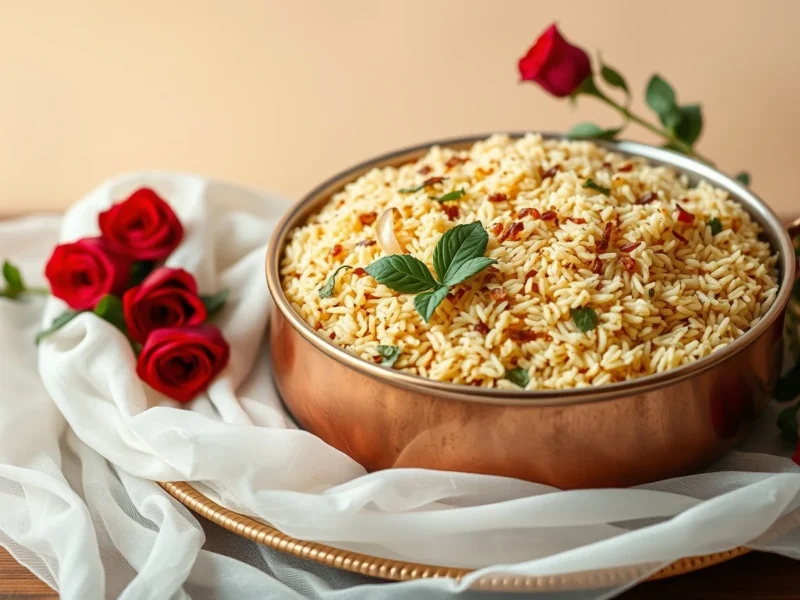
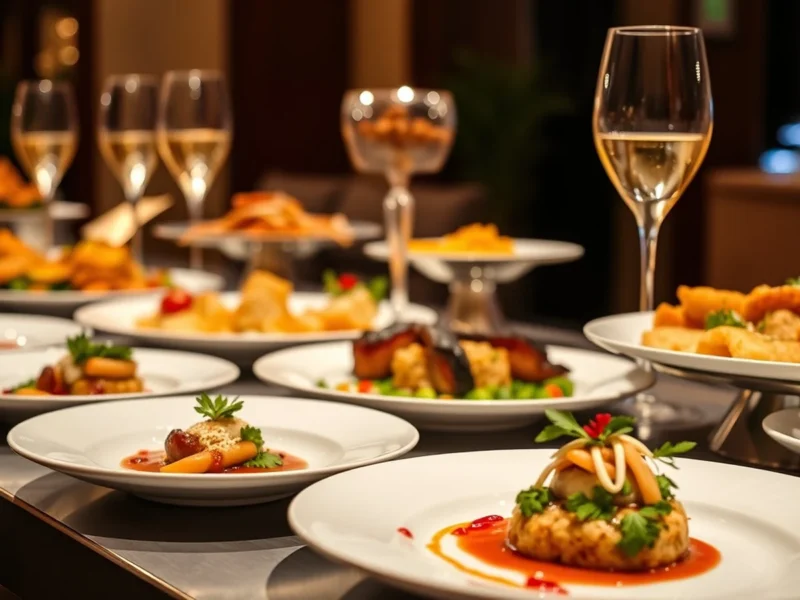
The wedding feast is a proud showcase of Assamese food, generally served on brass or bell-metal plates and eaten seated. Rice is the foundation, accompanied by an array of dishes that reflect the valley’s rivers and gardens. Fish is deeply auspicious in Assamese culture and central to celebration, prepared in tenga (a light sour curry), fried, or in rich gravies. Meat dishes and duck may also feature at grander feasts.
Bamboo shoot, known as khorisa, lends its distinctive tang to many curries, and seasonal greens, dals and khar (an alkaline preparation) round out the savoury spread. The sweets are a highlight: pitha, the traditional rice-flour cakes filled with jaggery, sesame or coconut, come in fried, steamed and roasted varieties such as til pitha and ghila pitha. Larus (or ladoos) made from coconut, sesame and puffed rice bound with jaggery are shared generously, along with curd and doi-chira. The food is fresh, subtly spiced and rooted in the land, an edible expression of the same gentle abundance that defines the whole Biya.
Modern Guwahati Weddings and Farewell
Contemporary Assamese couples, especially in Guwahati and other cities, blend heritage with modern celebration. The core rites of Juron, Nuoni, Pani Tola and the homa fire endure, but they now sit alongside cocktail evenings, curated decor, professional photography and larger receptions. Many families compress the timeline to fit urban schedules while carefully preserving the Gamosa, the Muga silk and the Biya Naam that make the wedding authentically Assamese.
The ceremony closes with the emotional departure of the bride to her new home, an Assamese counterpart to the vidaai farewell, followed by her reception at the groom’s house where she is welcomed as the new daughter of the family. Couples increasingly complete the legal side too, and our overview of the marriage registration process in India is a useful companion for that step. What remains constant, whether in a riverside village or a Guwahati banquet hall, is the spirit of the Biya: a marriage carried on song, welcomed with betel nut, blessed by fire, and wrapped in golden silk.
Planning a wedding rooted in your traditions?
Tell us your community, dates and vision. Team Velvet Knot will honour every ritual and put together a tailored plan and an honest budget.
What an Assamese wedding costs
Related post-wedding rituals
More community traditions: read our full guide to Nepali wedding traditions.
Also on Velvet Knot: Manipuri wedding traditions, Khasi wedding traditions.
Also on Velvet Knot: Naga wedding traditions.
Also on Velvet Knot: Bodo wedding traditions.
Frequently Asked Questions
What is an Assamese wedding called?
An Assamese Hindu wedding is called the Biya, the Assamese word for marriage. The grand main wedding is known as Bor-Biya. It unfolds over several days through rites such as Juron Diya, Tel Diya, Nuoni, Pani Tola and the homa fire ceremony, all carried by community singing and feasting.
What is Juron Diya in an Assamese wedding?
Juron Diya is the pre-wedding rite in which the groom’s mother and female relatives visit the bride’s home with gifts: sindoor, a Mekhela Sador, gold jewellery, a comb, bangles, a mirror and cosmetics, plus betel nut and sweets. The groom’s mother applies vermilion and adorns the bride, formally welcoming her as the incoming daughter-in-law.
What is Pani Tola?
Pani Tola is the sacred water-fetching ceremony. The bride’s mother, and separately the groom’s mother, leads a procession of married women to a pond, river or well to draw holy water for the ritual bath (Nuoni). It is performed with conch blowing, ululation and Biya Naam songs, honouring water as a source of purity and life.
What does an Assamese bride wear?
An Assamese bride wears the Mekhela Sador, a graceful two-piece drape with a lower mekhela skirt and an upper sador cloth. The finest bridal versions are woven in Assam’s golden Muga silk, often cream and gold with traditional motifs, and paired with distinctive Assamese gold jewellery such as the Jonbiri and Gam-kharu.
What is the significance of the Gamosa and Xorai?
The Gamosa is a red-bordered white woven cloth that is the emblem of Assamese identity and respect, offered to elders and guests and used to honour the ceremony. The Xorai is a pedestalled brass or bell-metal tray heaped with Tamul-Paan (betel nut and leaf), sweets and curd, the traditional vessel of Assamese hospitality and auspicious welcome.
What food is served at an Assamese wedding?
The feast centres on rice with auspicious fish dishes such as fish tenga, along with meat or duck, bamboo shoot (khorisa) curries, khar, dals and seasonal greens. Sweets include pitha (rice-flour cakes filled with jaggery, sesame or coconut) and larus made from coconut, sesame and puffed rice, served with curd on brass plates.
Sources and further reading
Begin Your Engagement
Want a real number for your wedding?
Tell us your city, guest count and dates. Team Velvet Knot will come back within 24 hours with an itemised budget.