Khasi Wedding Traditions: Matrilineal Customs, Church Weddings and Planning in Meghalaya
- The Khasi and their society
- The clan rule: who may marry whom
- The youngest daughter and the family home
- The husband’s place
- Agreeing the marriage
- The church wedding
- The traditional Niam Khasi wedding
- Kwai: betel nut and leaf
- What the bride and groom wear
- The reception and the feast
- Planning a wedding in Shillong and Meghalaya
- Engagement and gifts
- Children and the clan name
- Music at the reception
- A sample wedding day
- Guests from outside: courtesies
- What drives the cost
- Marrying a Khasi partner from outside the community
- Related north-eastern traditions
- Frequently Asked Questions
- Sources and further reading
Khasi weddings in Meghalaya are shaped by one of the world’s best-known matrilineal societies. Children take their mother’s clan name, and marrying within one’s own clan is forbidden. The youngest daughter keeps the family home, and in many marriages the husband moves to the wife’s home. Most Khasis today marry in church. Families who follow the traditional Niam Khasi faith keep their own rites, and kwai, betel nut and leaf, is offered throughout.
The Khasi and their society
The Khasi are the largest community of Meghalaya, living mainly in the Khasi Hills around Shillong. They are known worldwide as one of the few large matrilineal societies: descent and clan membership pass through the mother, and children take their mother’s clan name, not their father’s. That single fact shapes almost everything about a Khasi marriage, from who may marry whom to where the couple live afterwards.
Most Khasis today are Christian, belonging to the Presbyterian, Catholic and other churches, and marry in church. A significant minority follow the traditional Khasi faith, Niam Khasi, and keep its own marriage rites. Many families blend the two, with a church wedding and traditional customs around it. Details vary between families and localities, so treat this as the common pattern.
The clan rule: who may marry whom
A Khasi belongs to the clan, the kur, of their mother. Marriage within one’s own clan is strictly forbidden, as it is considered incest, however distant the relationship. Before a marriage is agreed, families check that the two do not share a clan, and in practice they also look at related clans that trace descent from a common ancestress. This check is taken extremely seriously, and it comes before any other discussion of the marriage.
The youngest daughter and the family home
In Khasi custom the youngest daughter, ka khadduh, is the custodian of the ancestral home and its property. She stays in the family house, cares for her parents and keeps the house for the clan. Her husband, when she marries, usually comes to live in her family’s home. Elder daughters may set up their own homes after marriage, often near their mother’s house.
This is the reverse of the pattern most Indian families expect, and it matters in practice. When a Khasi woman marries a man from outside the community, the question of where the couple will live, and what the khadduh’s obligations are, needs to be discussed openly between the families before the wedding.
The husband’s place
Although descent passes through the mother, Khasi society is not run by women alone. The mother’s brother, the maternal uncle, has traditionally held authority in clan matters, and the husband and father is respected as the provider and protector of his wife’s household. Children take their mother’s clan, but they know and honour their father’s clan too. A Khasi wedding reflects this balance: both clans are present, and both have roles.
Agreeing the marriage
A Khasi marriage traditionally begins with the man’s family approaching the woman’s family through respected representatives, who carry the proposal and discuss the match. Once the clans are checked and both families agree, the date is set. In Christian families the church is approached at this stage to book the wedding and complete its requirements. Many young Khasis choose their own partners today, and the families’ role is to formalise and bless the match.
The church wedding
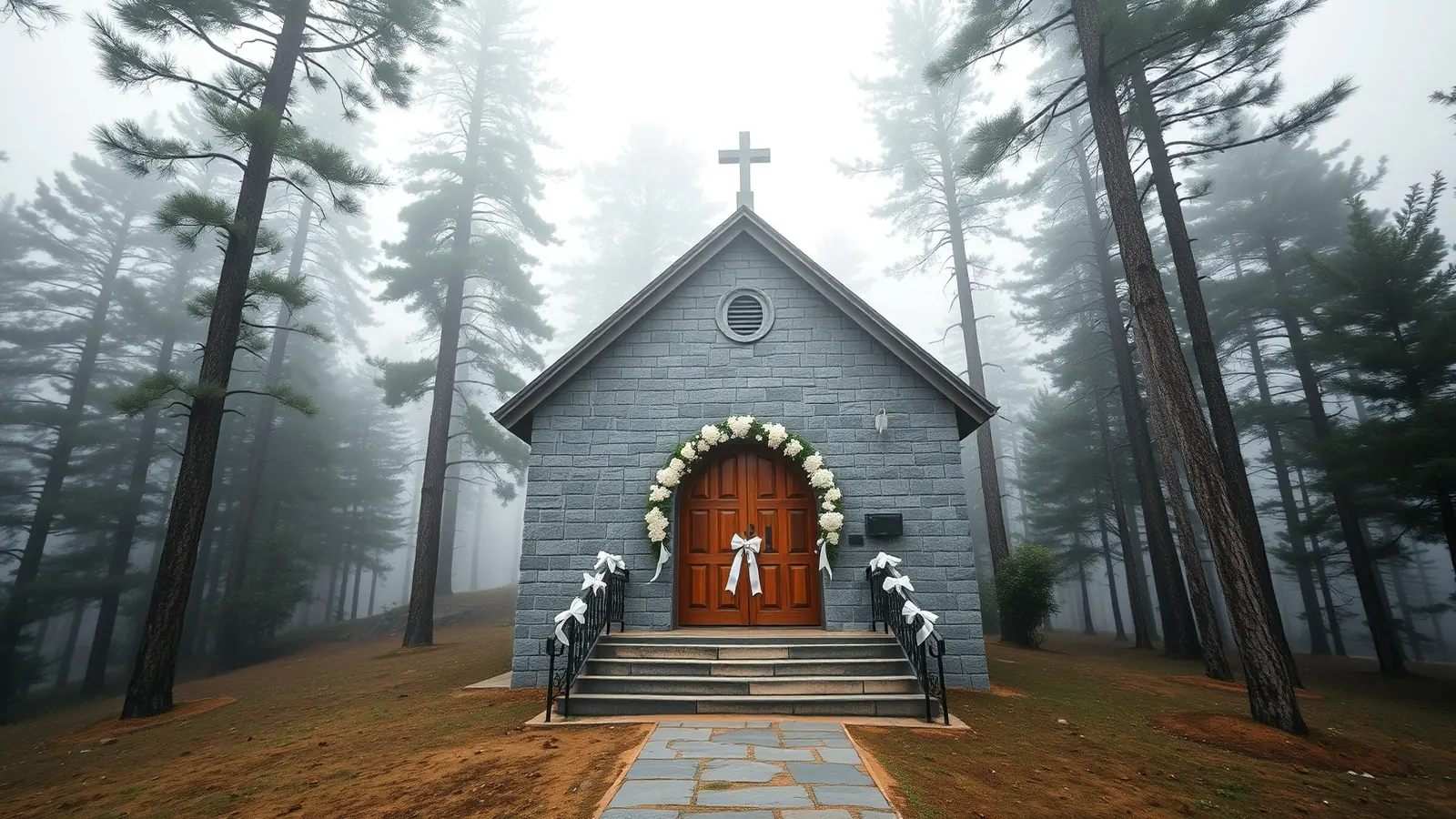
For most Khasi couples, the wedding is a church service, with hymns sung in Khasi and English, the exchange of vows and rings, and the blessing of the pastor or priest. Church weddings follow the requirements of the couple’s own church, including any marriage preparation and the publication of the intended marriage, and the marriage is recorded by the church. Our Christian marriage registration guide covers registering the marriage with the state, and our Christian wedding traditions guide covers church weddings across India.
The traditional Niam Khasi wedding
Families who follow the traditional Khasi faith hold the marriage according to its own rites, at the home of the bride’s family. The groom comes with his family’s representatives, and the ceremony includes prayers and invocations, the presence and blessing of both clans, and the sharing of kwai. The traditional rites are kept by the community’s own elders and religious leaders, and families following them will have their own customs and order.
Kwai: betel nut and leaf
No Khasi occasion happens without kwai, betel nut with betel leaf and lime, offered to every guest as the first act of hospitality. At a wedding, kwai is shared between the families and offered to all who come. It is so central to Khasi life that sharing kwai is an expression of welcome and friendship, and guests from outside should accept it graciously even if they do not chew it.
What the bride and groom wear
For a church wedding, many Khasi brides wear a white gown and veil. For traditional ceremonies and for the reception, the bride wears the jainsem, the traditional Khasi dress of two lengths of fabric pinned at the shoulders, often in fine silk such as the local muga or eri silk, with a gold or silver crown and heavy gold and coral necklaces. The groom wears a suit for church or the traditional jacket and turban for traditional rites.
The reception and the feast
After the church service, the families host a reception, often in a church hall, a community hall or a hotel in Shillong. Khasi wedding food centres on rice and meat: jadoh, rice cooked with pork or chicken and spices, dohneiiong, pork cooked with black sesame, and tungrymbai, fermented soybean, alongside more familiar dishes for guests from outside. Tea, cake and kwai follow.
Planning a wedding in Shillong and Meghalaya
- Season. Meghalaya has one of the heaviest monsoons on earth, from roughly June to September, with Mawsynram and Sohra (Cherrapunji) among the wettest places recorded. Most weddings are held from October to April.
- Getting there. Shillong is about three hours by road from Guwahati airport; Shillong’s own airport at Umroi has limited flights.
- Venues. Churches, church halls, community halls, Shillong’s hotels and resorts around Umiam Lake. Most are suited to 100 to 400 guests.
- Entry rules. Meghalaya has had visitor registration rules; check current requirements for guests from outside the state and abroad.
Engagement and gifts
After the families agree a marriage, many Khasi families hold a small engagement, often with a church blessing in Christian families, at which rings are exchanged and the families meet formally. Gifts between the families are modest compared with many Indian communities, and the matrilineal custom means there is no tradition of the bride’s family giving dowry to the groom’s. Couples marrying across communities should know this, because the other family’s expectations of gifts may be very different, and it is better discussed early than discovered at the wedding.
Children and the clan name
Children of a Khasi mother take her clan name, and this is one of the most important things for a family from outside to understand before a marriage. It shapes the children’s identity in the community, and, together with the rules on property and the youngest daughter, it is the part of Khasi custom that most often surprises families from patrilineal communities. Where the father is Khasi and the mother is not, the position differs, and families should ask Khasi elders how it applies to them.
Music at the reception
Shillong has one of India’s liveliest music scenes, with a long tradition of choirs, bands and singers in English and Khasi, and that shows at its weddings. Church choirs sing at the service, and receptions often feature a live band playing everything from hymns to rock and country. If you are planning a Shillong wedding from outside, ask local families for recommendations: the best bands and choirs are booked well ahead for the winter season.
A sample wedding day
| Time | What happens |
|---|---|
| Morning | Families gather; kwai offered to arriving guests |
| Late morning | Church service with hymns, vows and rings |
| Afternoon | Reception lunch in a church hall, community hall or hotel |
| Evening | Family dinner at the bride’s family home |
Christian Khasi weddings are usually held in daylight, which suits Shillong’s short winter days and cold evenings. Ask the church for its available times early in the season.
Guests from outside: courtesies
Guests from elsewhere in India are warmly received at Khasi weddings. Accept kwai when it is offered, even if you only hold it. Dress warmly for a winter wedding in the hills, and modestly for church. Gifts are usually given in envelopes or as household items, and the reception is the time to give them. Respect the church’s rules about photography during the service. For travel and rooms, our outstation guest planning guide covers the logistics, and the Guwahati wedding planning page covers the region’s main airport city.
What drives the cost
A Khasi church wedding with a reception in a church or community hall is moderate in cost: the main lines are the reception meal, the hall, the bride’s dress and jewellery, the music and the decoration. Hotel receptions and resorts around Umiam Lake cost more, and costs rise when many guests travel from outside the state, because Shillong’s hotel inventory is limited in the winter season and flights land at Guwahati, three hours away. Book rooms for outside guests early.
Marrying a Khasi partner from outside the community
Marriages between Khasis and people from elsewhere in India are increasingly common. Three things are worth discussing early and openly: the clan rule and the children’s clan, which in Khasi custom will be the mother’s if she is Khasi; where the couple will live, especially if the bride is the youngest daughter; and which ceremonies will be held, church, traditional, the other family’s, or a combination. Families who talk these through calmly before the wedding avoid most of the misunderstandings that otherwise surface after it.
Related north-eastern traditions
Khasi customs sit alongside those of Meghalaya’s other major communities, the Garo, who are also matrilineal, and the Jaintia, close relatives of the Khasi. For the Assamese wedding traditions of the neighbouring Brahmaputra valley, see our Assamese wedding traditions guide, and for another north-eastern tradition our Manipuri wedding guide.
Also on Velvet Knot: Mizo wedding traditions.
Also on Velvet Knot: Garo wedding traditions.
Frequently Asked Questions
Is Khasi society matrilineal?
Yes. Children take their mother’s clan name, and the youngest daughter traditionally keeps the ancestral home and its property.
Can Khasis marry within their own clan?
No. Marriage within one’s own clan is strictly forbidden, and families check the clans before agreeing a marriage.
Where does a Khasi couple live after marriage?
Often in the wife’s family home, especially if she is the youngest daughter. Elder daughters may set up their own homes.
Do Khasis have church weddings?
Yes. Most Khasis are Christian and marry in church. Families who follow the traditional Niam Khasi faith keep its own rites.
What is kwai?
Betel nut with betel leaf and lime, offered to every guest as the first act of Khasi hospitality, including at weddings.
What does a Khasi bride wear?
Often a white gown for church, and the jainsem with gold and coral jewellery and a crown for traditional ceremonies and receptions.
When is the best time for a wedding in Shillong?
October to April, avoiding the heavy monsoon from roughly June to September. Winter days are clear but evenings are cold.
Does the Khasi groom take the bride to his home?
Not necessarily. In Khasi custom the husband often moves to the wife’s family home, especially if she is the youngest daughter. Elder daughters may set up their own homes, and many couples today decide for themselves where to live.
Is there dowry in Khasi marriages?
There is no Khasi tradition of the bride’s family giving dowry to the groom’s. Gifts between the families are modest, and dowry is in any case illegal in India.
Sources and further reading
Planning a wedding in Shillong, or bringing two very different families together? Tell us your dates and guest count and we will send a tailored plan and quote.
Begin Your Engagement
Want a real number for your wedding?
Tell us your city, guest count and dates. Team Velvet Knot will come back within 24 hours with an itemised budget.