Garo Wedding Traditions: Matrilineal Customs, the Nokna, Church Weddings and Tura
- The Garo people
- Clans and the rules of marriage
- The nokna and the nokrom
- The maternal uncles
- Traditional Garo marriage
- Negotiations between the families
- The church wedding
- Dress
- The feast
- Wangala and the Garo calendar
- A sample church wedding day
- Gifts and the community
- Decor and photography
- What drives the cost
- Weddings outside the Garo Hills
- Planning a wedding in the Garo Hills
- Songsarek and change
- Marrying a Garo partner from outside the community
- Related north-eastern traditions
- What to settle beforehand
- Frequently Asked Questions
- Sources and further reading
The Garo, or A’chik, of Meghalaya are matrilineal: children take their mother’s clan, and one daughter, the nokna, inherits the family home. Her husband, the nokrom, comes to live there and to care for her parents. Marriages are arranged by the families, and the maternal uncles have a central voice. Today most Garos are Christian and marry in church. Families who follow the traditional Songsarek faith keep its own rites, and a community feast follows.
The Garo people
The Garo, who call themselves A’chik, live mainly in the Garo Hills of western Meghalaya, centred on the town of Tura, with communities in Assam and Bangladesh. Like their Khasi neighbours, the Garo are matrilineal, one of the largest such societies in the world, and that shapes their marriages profoundly: who may marry whom, where the couple live, and who inherits the family’s home and land.
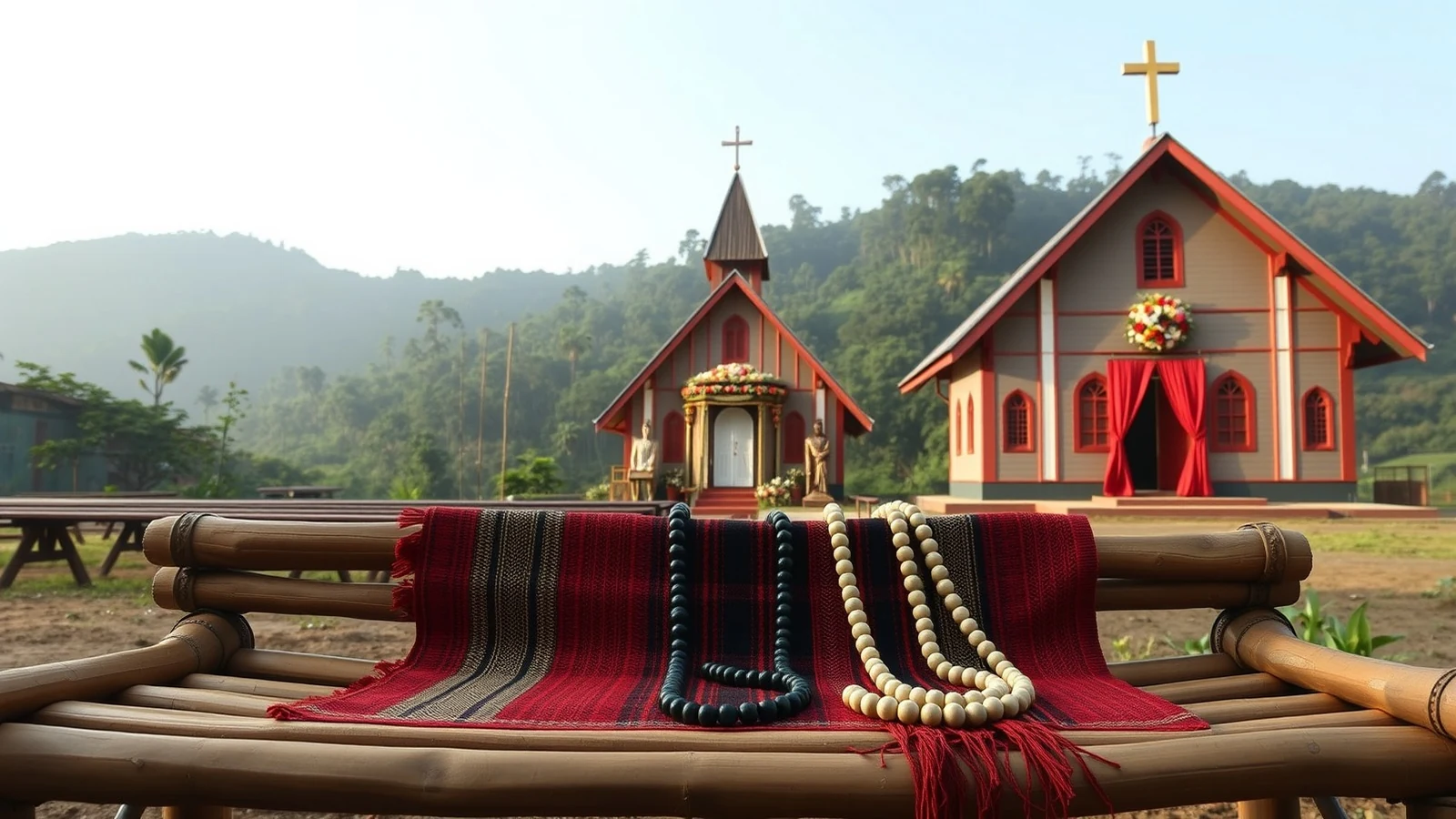
Most Garos today are Christian, belonging mainly to Baptist and Catholic churches, and marry in church. A minority follow the traditional Garo faith, Songsarek, and keep its own rites. Many families blend church weddings with Garo customs. Customs vary between clans, villages and families, so treat what follows as the common pattern. Our Khasi wedding traditions guide covers Meghalaya’s other great matrilineal community.
Clans and the rules of marriage
Every Garo belongs to the clan of their mother, and the clans are grouped into larger divisions. Marriage within one’s own clan, or within closely related clan groups, is forbidden. Traditionally, Garo custom also favoured marriage with particular relatives, especially for the heiress daughter, whose husband was often chosen from her father’s clan, so that the families’ ties and the land stayed bound together. These customs are less strict today, but families still check clans carefully before agreeing a marriage.
The nokna and the nokrom
In each Garo family, one daughter, often but not always the youngest, is chosen as the nokna, the heiress. She inherits the family home and its property, and with them the duty to care for her parents in their old age. Her husband, the nokrom, comes to live in her parents’ house, helps manage the family’s land, and takes on responsibilities toward her parents and her clan. Choosing the nokrom has traditionally been a serious matter for the whole family, and the maternal uncles have a strong say.
Other daughters may set up their own homes when they marry, often nearby, and sons usually go to live with their wives’ families. For families from outside the community, this is the most important thing to understand about a Garo marriage: the man often moves to the woman’s family, not the other way round.
The maternal uncles
The mother’s brothers, known as the chra, hold authority in clan matters and play a central role in arranging and approving marriages. They represent the clan in negotiations, give their blessing, and in the case of a nokna, help choose and approve her husband. A marriage the chra have not approved faces real difficulty, so involving them early, and with respect, is essential.
Traditional Garo marriage
Traditional Garo custom included the practice of the bride’s family’s young men “capturing” the chosen groom and bringing him to the bride’s home, sometimes more than once if he ran away, a ritualised custom that showed the bride’s family’s choice and the groom’s modesty. The marriage itself, in the Songsarek tradition, is conducted by a priest with prayers and offerings, and the couple share food and drink to seal the marriage, followed by a feast. These customs survive mainly among Songsarek families and in villages, and many families today keep only some elements.
Negotiations between the families
Once a match is proposed, the two families, led by the chra and other elders of each clan, meet to discuss it. They confirm that the clans permit the marriage, agree what gifts or contributions each side will make, and, for a nokna, settle the arrangements for the couple’s home and the care of her parents. These meetings are formal and respectful, with food and tea, and often more than one is needed. A couple who have chosen each other still go through this process, because it binds the clans and gives the marriage the community’s support.
The church wedding
For most Garo couples today, the wedding is a church service with hymns in Garo and English, vows, rings and the blessing of the pastor or priest. Church requirements, including membership, counselling and the announcement of the marriage, apply. The church records the marriage; our Christian marriage registration guide covers registration with the state, and our Christian wedding traditions guide covers church weddings across India.
Dress
Garo traditional dress for women is the dakmanda, a woven wrap-around skirt, worn with a blouse, and the dokachi, a shawl or cloth over the shoulder, in rich colours and patterns, with beaded jewellery. Men wear a woven cloth and jacket, and on festive occasions a headdress, sometimes with feathers. At a church wedding, many brides wear a white gown and change into traditional dress for the celebration; others wear traditional dress throughout.
The feast
A Garo wedding feast is a community affair, with relatives and neighbours helping to cook. Pork and chicken are central, cooked with bamboo shoot, dried fish, local greens and fiery chillies, with rice. Traditional dishes include kapa, meat cooked with a soda made from plant ash, a distinctive Garo technique. Tea is served throughout. Rice beer has a place in traditional Garo culture, but many Christian families serve no alcohol at weddings.
Wangala and the Garo calendar
Wangala, the harvest festival honouring the sun god Saljong, is the most important Garo celebration, held in the autumn, famous for its Hundred Drums dance near Tura. Christmas is the biggest celebration for Christian Garos. Families often avoid holding weddings during major festivals, and the drier months after the monsoon, roughly October to March, are the usual wedding season.
A sample church wedding day
| Time | What happens |
|---|---|
| Early morning | Relatives and neighbours begin cooking for the feast |
| Late morning | The church service, with hymns in Garo and English |
| Midday | The feast at the church hall, community hall or the bride’s family home |
| Afternoon | Speeches, songs, traditional dances and photographs |
| Evening | The couple settle at the home where they will live, often the bride’s family home |
Gifts and the community
Guests bring gifts or envelopes for the couple, and relatives contribute to the feast in money, rice, pigs or labour. The families exchange gifts as part of the agreement, according to their clans’ customs. Much of the work of a Garo wedding, from cooking to setting up the hall, is done by relatives and the community, and that shared effort is part of what the wedding means.
Decor and photography
Garo weddings are usually decorated simply: flowers at the church, a stage for the couple at the hall, and the colours of the dakmanda and dokachi worn by the women. Portraits in traditional dress against the green hills around Tura make striking photographs. Ask the church about its rules on photography during the service, and ask before photographing elders.
What drives the cost
The main costs of a Garo wedding are the feast, the hall, the bride’s dress and jewellery, and any customary gifts between the families. Much of the cooking and labour is contributed by the community, which keeps costs moderate. Costs rise for guests from outside the region, because of the long road journey and limited rooms. Our outstation guest planning guide covers travelling guests.
Weddings outside the Garo Hills
Garo families in Shillong, Guwahati, Delhi and abroad sometimes hold weddings where they live, in a church with a Garo or north-eastern congregation, with traditional dress and a feast cooked by the local community. The clan checks, the chra’s involvement and the question of where the couple will live are settled with the family back home, and many couples hold a second celebration in the family’s village.
Planning a wedding in the Garo Hills
- Getting there. Tura is reached by road from Guwahati or from Shillong; the journey takes several hours. Tura’s own airstrip has had limited service.
- Venues. Churches, church and community halls, family homes and a small number of hotels in Tura.
- Season. October to March; the monsoon is heavy.
- Rooms. Hotel inventory in Tura is limited, so guests from outside should book early or stay with family.
Our Guwahati wedding planning page covers the region’s main hub for flights, vendors and venues.
Songsarek and change
The Songsarek faith, with its priests, the kamal, and its offerings to the spirits of the land and the clan, was once the religion of all Garos. Today it is followed by a minority, mostly in villages, while Christianity has become the majority faith over the last century and a half. Many Christian Garo families still value traditional dress, songs, the Wangala festival and clan customs as part of their identity, and weddings often show that blend: a church service, followed by a feast with traditional dress, songs and dances.
Marrying a Garo partner from outside the community
Marriages between Garos and people from elsewhere are increasingly common, and the matrilineal customs need to be discussed early. If the bride is Garo, the children will traditionally belong to her clan, and if she is the nokna, the couple may be expected to live in her parents’ home and care for them. The chra should be involved in the discussions, and the church’s requirements apply if the couple marry in church. Families who talk these questions through calmly before the wedding avoid most later misunderstandings.
Related north-eastern traditions
Garo customs share much with the Khasi and other peoples of the region; our guides to Assamese and Naga weddings cover two more.
What to settle beforehand
- The clans of both partners, checked early.
- The chra’s involvement and blessing.
- Whether the bride is the nokna, and where the couple will live.
- Church or Songsarek ceremony, or both.
- The feast, and who will help cook.
- Travel and rooms for guests from outside.
Frequently Asked Questions
Are the Garo matrilineal?
Yes. Children take their mother’s clan, and one daughter, the nokna, inherits the family home and property, with the duty to care for her parents in their old age.
What is a nokna?
The heiress daughter of a Garo family, who inherits the home and cares for her parents; her husband, the nokrom, comes to live with her family.
Who arranges a Garo marriage?
The families, with the mother’s brothers, the chra, playing a central role in negotiating and approving the marriage.
What is Wangala?
The Garo harvest festival honouring the sun god Saljong, held in the autumn and famous for its Hundred Drums dance near Tura.
Is alcohol served at Garo weddings?
Rice beer has a place in traditional Garo culture, but many Christian Garo families serve no alcohol at weddings. Ask the hosts.
Do Garos have church weddings?
Yes. Most Garos are Christian and marry in church; families following the Songsarek faith keep its own rites, and many blend the two.
What does a Garo bride wear?
Often a white gown for church, and the dakmanda with a dokachi and beaded jewellery for traditional ceremonies and celebrations. Some brides wear traditional dress for the whole day, which many families particularly value.
When do Garo weddings usually take place?
Mostly from October to March, avoiding the monsoon and major festivals such as Wangala and Christmas.
Where does a Garo couple live after marriage?
Often with the bride’s family, especially if she is the nokna, the heiress daughter. Other daughters may set up their own homes nearby.
What is Songsarek?
The traditional Garo faith, with its own priests, offerings and rites, now followed by a minority of Garos, mostly in villages.
Sources and further reading
Planning a wedding in Meghalaya, or bringing a Garo family and another together? Tell us your dates and guest count and we will send a tailored plan and quote.
Begin Your Engagement
Want a real number for your wedding?
Tell us your city, guest count and dates. Team Velvet Knot will come back within 24 hours with an itemised budget.


