Kashmiri Pandit Wedding Rituals: The Complete Ceremony Guide (2026)
- Pre-wedding rituals
- Wedding day rituals
- Post-wedding rituals
- Food and the Wazwan
- The bride and groom’s look
- More Kashmiri Pandit customs
- Modern Kashmiri Pandit weddings
- How Velvet Knot coordinates a Kashmiri Pandit wedding
- A typical Kashmiri Pandit wedding day
- Kashmiri Pandit wedding decor and the home setting
- Related community traditions
- Related wedding rituals
- The Kashmiri Pandit wedding cycle at a glance
- Wanvun, and why it cannot be outsourced
- Running a home-centred tradition out of a hotel
- Frequently Asked Questions
- Sources and further reading
A Kashmiri Pandit wedding is a deeply ritual-rich, several-day affair with a core sequence of Kasamdry, Livun, Wanvun singing, Maenziraat (mehndi night), Devgun, the Lagan ceremony with its Posh Puza, Kanyadaan and Saptapadi, and the Vidaai. The Posh Puza, where the couple are showered with flowers under a cloth canopy, is considered one of the most sacred moments.
The Kashmiri Pandit wedding is one of India’s most distinctive Hindu wedding traditions, shaped by the community’s unique Shaivite heritage. It is rich in symbolism, song, and a sequence of home-based rituals that build over several days toward the Lagan ceremony. Many traditions revolve around the home, the family elders, and the community’s folk songs, the Wanvun, rather than around scale or spectacle.
This guide walks the Kashmiri Pandit wedding sequence in order. With the community now spread across Delhi, Jammu, and cities worldwide, we coordinate these weddings wherever the family is based, holding the home-centred rituals together with the venue functions.
Pre-wedding rituals
Kasamdry
The formal engagement, held in a temple or at home in the presence of a priest and family elders, where the families commit to the alliance, exchange gifts, and fix the match. It opens the wedding cycle.
Livun and Krool Khanun
A few days before the wedding, both homes are ritually cleaned in the Livun, and the Krool Khanun marks the decoration and consecration of the doorways, signalling that the celebrations have begun. Planner note: because so much of a Kashmiri Pandit wedding happens at home, home decor, seating, and catering logistics matter as much as the main venue.
Wanvun and Maenziraat
Through the pre-wedding days, the women gather to sing Wanvun, traditional Kashmiri folk songs sung in chorus that form the living soundtrack of the celebrations. The Maenziraat is the mehndi night, when henna is applied to the bride and the family gathers for music, a ceremonial bath, and feasting late into the night.
Devgun
A solemn purification ritual performed separately for the bride and the groom before the wedding, marking a rite of passage into adulthood and spiritual readiness for marriage. The bride wears the traditional headdress, and after the Devgun she is considered prepared for the Lagan.
Wedding day rituals
Dwar Puza and welcome
The groom and the baraat are received at the bride’s home or venue with the Dwar Puza at the threshold, where the two families meet, lamps are lit, and the groom is formally welcomed in.
Lagan and the sacred fire
The main ceremony, the Lagan, is conducted before the sacred fire by the family priests, with extended Vedic recitation that is notably elaborate in the Kashmiri Pandit tradition. The rites build through the Kanyadaan, where the bride’s parents give her hand in marriage, and the joining of the couple’s hands.
Posh Puza
The most distinctive and sacred Kashmiri Pandit moment: the couple are seated together and covered with a cloth canopy while elders shower them with flowers, the posh, and recite hymns, treating the couple in that moment as embodiments of Shiva and Parvati. Planner note: this is the photographic and emotional centre of the wedding and should be lit and timed with care, since it is brief and unrepeatable.
Saptapadi and Athwas
The couple take the seven steps around the fire, and in the Athwas the marriage is sealed. The bride traditionally wears the kalpush and tarang headdress and the dejhoor, a gold ornament suspended from the ears that marks a married Kashmiri Pandit woman, similar in significance to the mangalsutra elsewhere.
Planning a Kashmiri Pandit wedding?
Velvet Knot plans luxury Kashmiri Pandit weddings end to end, from the sacred rituals and mandap to the venue, catering and guest hospitality. Share your dates and city for a tailored plan.
Post-wedding rituals
Vidaai and Roth Khabar
The bride departs for her new home in an emotional Vidaai. The Roth Khabar, where the bride’s family sends a ceremonial roth, a sweet bread, to the groom’s home along with gifts, is a distinctive Kashmiri post-wedding exchange.
Satraat and Phirlath
In the days after the wedding, the bride makes a return visit to her parents’ home, the Phirlath, and the Satraat marks the close of the wedding cycle, after which normal life resumes.
Food and the Wazwan
No account of a Kashmiri wedding is complete without the food. While the Kashmiri Pandit feast is vegetarian-friendly and includes dishes like dum aloo, nadru (lotus stem), chaman, and rajma, the community also shares the broader Kashmiri love of the multi-course feast. Saffron, fennel, and dry ginger define the flavours, and the meal is an event in itself. Planner note: authentic Kashmiri cuisine needs a specialist caterer, and the menu should be planned around the community’s specific vegetarian and ceremonial preferences. See our catering cost guide.
The bride and groom’s look
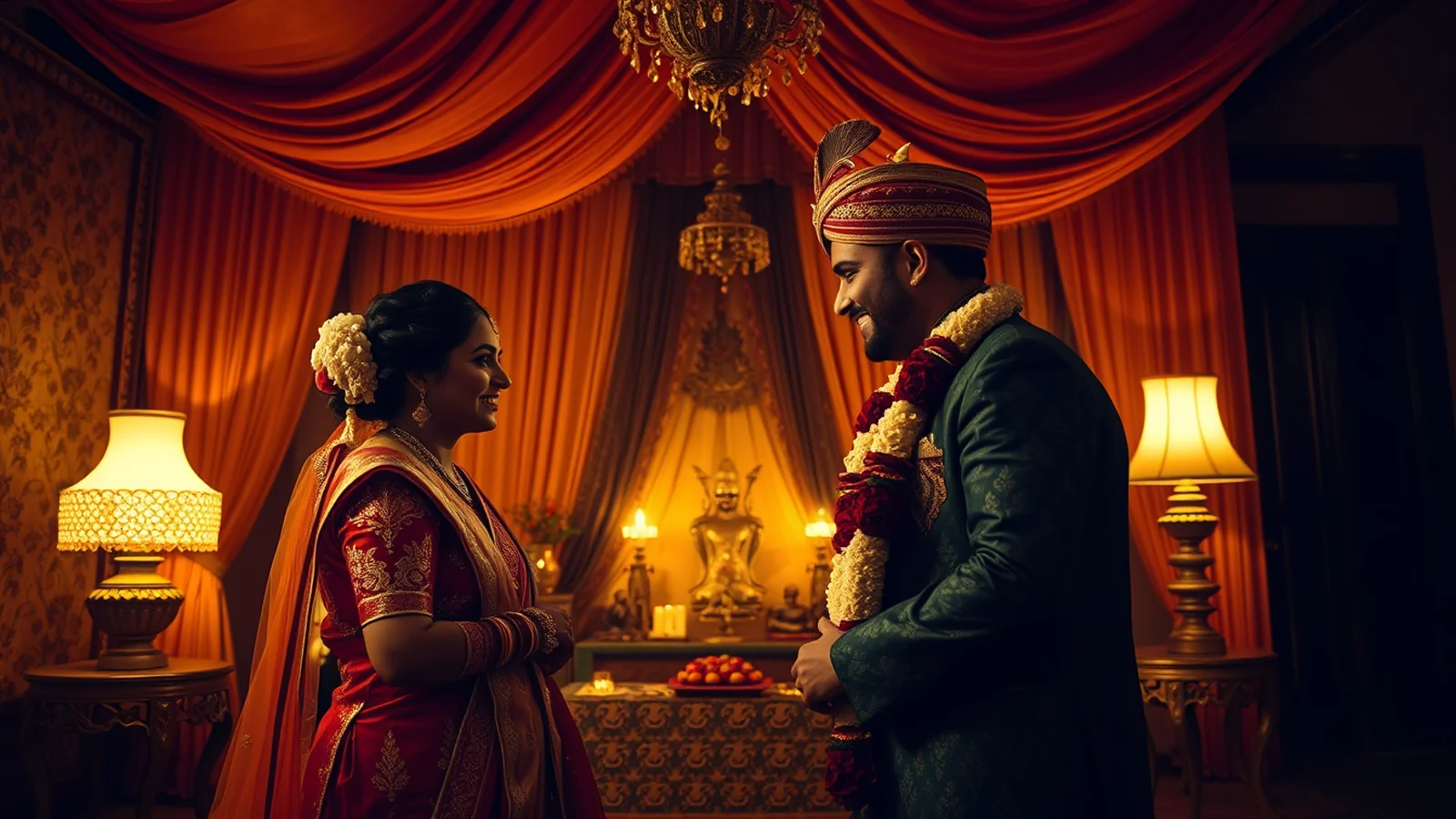
The Kashmiri Pandit bride is instantly recognisable in the tarang, a tall, tapering headdress draped with a veil, paired with heavy traditional jewellery and the dejhoor. The look is regal and distinct from any other Indian bridal tradition. The groom traditionally wears a sherwani or pheran with a turban.
More Kashmiri Pandit customs
The Kashmiri Pandit wedding carries several customs that reflect its unique heritage. The Yagneopavit, or sacred-thread ceremony, is sometimes performed for the groom close to the wedding. The bride’s ceremonial bath and the elaborate dressing in the tarang are events in themselves, attended by the women singing Wanvun. The Duribat is a feast hosted before the wedding, and the exchange of the Roth, the decorated sweet bread, threads through several points in the cycle. Salt, traditionally, is never given as a gift in Kashmiri Pandit custom, and many small observances around thresholds, lamps, and the first meals in the new home carry specific meaning. The community’s displacement has made preserving these home-based rituals, wherever the family now lives, a point of real importance.
Modern Kashmiri Pandit weddings
With the community spread across Delhi, Jammu, Bangalore, and abroad, modern Kashmiri Pandit weddings often compress the home-based rituals into a hotel or a single family residence, with the Wanvun gatherings and the Maenziraat held in suites or banquet spaces rather than a Srinagar home. Couples increasingly add a sangeet and a reception, but the Devgun, the Lagan, and the Posh Puza remain carefully preserved, often with elders flown in specifically to lead the songs and rites correctly.
How Velvet Knot coordinates a Kashmiri Pandit wedding
The Kashmiri Pandit wedding is unusually home-centred and ritual-dense, which makes coordination across multiple home functions, the Wanvun gatherings, and the venue ceremony the real challenge, especially for a community now dispersed across cities. We hold the home and venue logistics together, brief vendors on the Posh Puza and Devgun cues, and source authentic Kashmiri catering and the specialist priests the Lagan requires.
Tell us your dates and guest count and we will send a scoped proposal: request a quote. You can also browse everything a full-service planner coordinates.
A typical Kashmiri Pandit wedding day
The Lagan day builds on several days of home rituals. It opens with the bride’s dressing in the tarang amid Wanvun singing, while the groom prepares separately. The baraat is received with the Dwar Puza, the Lagan is conducted before the sacred fire with extended Vedic recitation, and the Posh Puza, the flower-shower under the canopy, forms the emotional centre. The Kanyadaan, Saptapadi, and Athwas seal the marriage, followed by the feast and a late, emotional Vidaai. Because the rites are long and precise, the day runs on a careful schedule held together by the family priests.
Kashmiri Pandit wedding decor and the home setting
Much of the visual character of a Kashmiri Pandit wedding comes from the home: consecrated, lamp-lit doorways from the Krool Khanun, the women gathered in pherans singing Wanvun, and warm interiors rather than grand stages. Where a venue is used, decor leans toward saffron, walnut wood, papier-mache motifs, and chinar-leaf themes that echo Kashmir. The soundscape is the Wanvun itself, sung live, which no playlist can replicate.
Related community traditions
Related wedding rituals
- the mehndi ceremony explained
- muh dikhai, the face showing ceremony
- the sagai engagement ceremony
- gath bandhan, the tying of the knot
The Kashmiri Pandit wedding cycle at a glance
This is one of the few Indian wedding traditions where most of the sequence happens
before anyone reaches a venue. The table gives the order and, just as importantly, where
each rite is performed, because the home is not a nice-to-have setting here but the place
the tradition actually lives.
| Rite | When | Where | What it marks |
|---|---|---|---|
| Kasamdry | Opens the cycle | Temple or home | The families commit to the match before a priest and the elders |
| Livun | Days before | Both homes | The ritual cleaning of each house |
| Krool Khanun | Follows the Livun | Both homes | The doorways are decorated and consecrated, declaring the celebrations open |
| Wanvun | Through the pre-wedding days | Home, nightly | The women gather to sing, which is the living soundtrack of the whole cycle |
| Duribat | Before the wedding | Home | A feast hosted for family and community |
| Maenziraat | The night before | Home | Henna, a ceremonial bath, music and feasting late into the night |
| Devgun | Before the Lagan | Home, separately for each | The solemn purification marking readiness for marriage |
| Dwar Puza | Wedding day, on arrival | Threshold of the venue or home | The groom’s party received, lamps lit, the two families formally meet |
| Lagan | Wedding day, the main rite | Before the sacred fire | The extended Vedic ceremony, including the Kanyadaan |
| Posh Puza | Within the Lagan | Under a cloth canopy | Flowers showered on the couple as Shiva and Parvati. Brief and unrepeatable |
| Saptapadi and Athwas | Closing the Lagan | Before the fire | The seven steps, and the sealing of the marriage |
| Vidaai | Late on the wedding day | The bride’s home or venue | The bride’s departure for her new home |
| Roth Khabar | Days after | Sent to the groom’s home | The ceremonial sweet bread and gifts from the bride’s family |
| Phirlath and Satraat | The days following | The bride’s parents’ home | The bride’s return visit, then the formal close of the cycle |
Wanvun, and why it cannot be outsourced
Wanvun is chorus singing performed by the women of the family through the pre-wedding
days, and it is the single element that most distinguishes a Kashmiri Pandit wedding from
any other. It is not background music and it is not a performance booked from a vendor. The
songs mark specific points in the cycle, they are sung by the family rather than to it, and
they are learned by ear across generations rather than from a book.
That creates a real and increasingly common problem. After displacement the community is
spread across Delhi, Jammu, Bengaluru and abroad, and the women who carry the full
repertoire are often the oldest members of a family and not always the ones living nearest
the wedding. Families who care about getting this right treat it as a travel and logistics
question months ahead, not a week-of one: identifying who actually knows the songs, getting
them there for the days the singing happens rather than only for the Lagan, and giving them
a room where the gathering can happen properly.
The practical consequence for the schedule is that Wanvun evenings need to be real
evenings with space and time, not fifteen minutes wedged between other functions. Where
families have compressed them, it is the part of the wedding they most often say afterwards
they wish they had protected.
Running a home-centred tradition out of a hotel
Most Kashmiri Pandit weddings now happen somewhere other than a Kashmiri home, which
means a tradition built around the house has to be reassembled inside a venue. It can be
done well, and it needs deciding early rather than improvising.
- Pick a room that can be the house. The Livun, the Krool Khanun, the
Wanvun gatherings and the Devgun all want one continuous space that stays yours for several
days, not a banquet hall booked by the session. A villa, a set of connected suites or a
small heritage property usually serves this better than a large hotel. - The doorway matters. The Krool Khanun consecrates a threshold. Agree
with the venue in advance which doorway that is and that its decoration stays up for the
duration, which is not a normal request for a banquet operations team. - Brief the venue on the Posh Puza. It is brief, it happens under a
canopy, and it is the emotional centre of the wedding. Lighting and camera positions have
to be settled before the Lagan begins. - Source the priest first. The Lagan carries unusually extended Vedic
recitation in this tradition, and a priest who does not know it cannot improvise it. In
most cities this means booking a specific person well ahead, and often flying them in. - Catering is a specialist job. The dishes are specific and a generic
North Indian kitchen will not produce them. Establish this at the venue negotiation, since
many hotels resist outside caterers and that is easier to settle before signing.
Also on Velvet Knot: Kashmiri Muslim wedding traditions.
Frequently Asked Questions
Is there a baraat in a Kashmiri Pandit wedding?
The groom and his party arrive and are received with the Dwar Puza at the threshold, but the emphasis is on the welcome and the home-based rituals rather than a large North Indian-style procession.
Why are Kashmiri Pandit weddings so home-centred?
Many of the most important rituals, the Livun, Wanvun, Maenziraat, and Devgun, are traditionally performed at home with family elders leading them. This makes the home, wherever the displaced community now lives, central to preserving the tradition.
What is the most important ritual in a Kashmiri Pandit wedding?
The Posh Puza is considered one of the most sacred moments, where the couple are covered with a cloth canopy and showered with flowers by elders reciting hymns, treating them as Shiva and Parvati.
What is Wanvun?
Wanvun are traditional Kashmiri folk songs sung in chorus by the women of the family through the pre-wedding days. They are central to the celebrations and give a Kashmiri Pandit wedding its distinctive soundtrack.
What is the Devgun ceremony?
The Devgun is a solemn purification rite performed separately for the bride and groom before the wedding, marking their spiritual readiness for marriage.
What is the dejhoor?
The dejhoor is a gold ornament worn by married Kashmiri Pandit women, tied during the wedding rituals, similar in significance to the mangalsutra in other Hindu traditions.
What does a Kashmiri Pandit bride wear?
The bride wears the tarang, a tall tapering headdress with a veil, along with heavy traditional jewellery and the dejhoor, a look distinct from any other Indian bridal tradition.
How many days does a Kashmiri Pandit wedding take?
The full cycle runs several days, from the Livun and Maenziraat through the Devgun, the Lagan ceremony, and the post-wedding Roth Khabar and Phirlath visits.
Sources and further reading
Velvet Knot believes in showing our work. The references below are the authoritative sources we consult when planning weddings in this category.
- Hindu Marriage Act, 1955: Government of India
- Kashmiri Pandits, Encyclopaedia Britannica: Britannica
Begin Your Engagement
Want a real number for your wedding?
Tell us your city, guest count and dates. Team Velvet Knot will come back within 24 hours with an itemised budget.