Mizo Wedding Traditions: Church Weddings, the Puanchei and Customs of Mizoram
- The Mizo and their weddings
- The wedding in order
- The proposal and the representatives
- The bride price
- The church wedding
- The puanchei and wedding dress
- The feast and the community
- Mizo food at the feast
- Gifts and contributions
- A sample wedding day
- Music
- Alcohol
- After the wedding
- Weddings outside Mizoram
- Planning a wedding in Mizoram
- Guests from outside Mizoram
- Marrying a Mizo partner from outside the community
- Decor and photography
- What drives the cost
- Related north-eastern traditions
- What to settle beforehand
- Frequently Asked Questions
- Sources and further reading
Most Mizo weddings in Mizoram are church weddings, since the Mizo are overwhelmingly Christian. They are wrapped in Mizo custom: the customary bride price, or man, agreed between the families, the bride in a puanchei, Mizoram’s most colourful hand-woven puan, and a feast prepared with help from relatives and the community. Visitors from outside the state need an Inner Line Permit, and weddings cluster in the drier months.
The Mizo and their weddings
The Mizo are the people of Mizoram, in India’s north-east, bordering Myanmar and Bangladesh. Christianity came to the Mizo hills in the late nineteenth century and today the great majority of Mizos are Christian, with the Presbyterian Church the largest denomination, followed by the Baptist and other churches. Church life is central to Mizo society, and weddings are church weddings, shaped by Mizo customs of family, dress, food and community.
Customs vary between families, churches and clans, and Mizo society includes several related peoples with their own variations. Treat what follows as the common pattern. Our Christian wedding traditions guide covers church weddings across India.
The wedding in order
| Stage | What happens |
|---|---|
| Proposal | The groom’s family, through representatives, approaches the bride’s family. |
| Agreement | The families agree the marriage and the customary bride price, and fix the date. |
| Church | The couple register their intention with the church and complete its requirements. |
| Wedding day | The church service, with hymns, vows and the pastor’s blessing. |
| Wedding day | The feast, with the community. |
| After | The bride moves to the groom’s family home in most families. |
The proposal and the representatives
In Mizo custom, a marriage is negotiated between the families through representatives, respected relatives or elders who carry the proposal from the groom’s family to the bride’s and discuss the terms. Even when the couple have chosen each other, as most do today, this formal process remains an important part of the wedding, because it binds the two families and their clans.
The bride price
Mizo customary law includes a bride price, called man, paid by the groom’s family to the bride’s family, with portions that go to particular relatives of the bride. Historically it was reckoned in mithun, the semi-domesticated cattle of the hills; today it is a sum of money, often largely symbolic. The amount and its distribution follow custom and are agreed during the negotiations. The bride price is also relevant in Mizo customary law on marriage and divorce, which the state has partly codified, so it is more than a formality. Families settle it according to their own custom and their clan’s.
The church wedding
The wedding itself is a church service: the couple, the families and the congregation, hymns sung with the famous Mizo choral tradition, the exchange of vows and rings, and the blessing of the pastor. Churches have their own requirements for members who marry, such as membership, counselling or the announcement of the marriage, and these are arranged through the local church. The marriage is recorded by the church; our Christian marriage registration guide covers registration with the state.
The puanchei and wedding dress
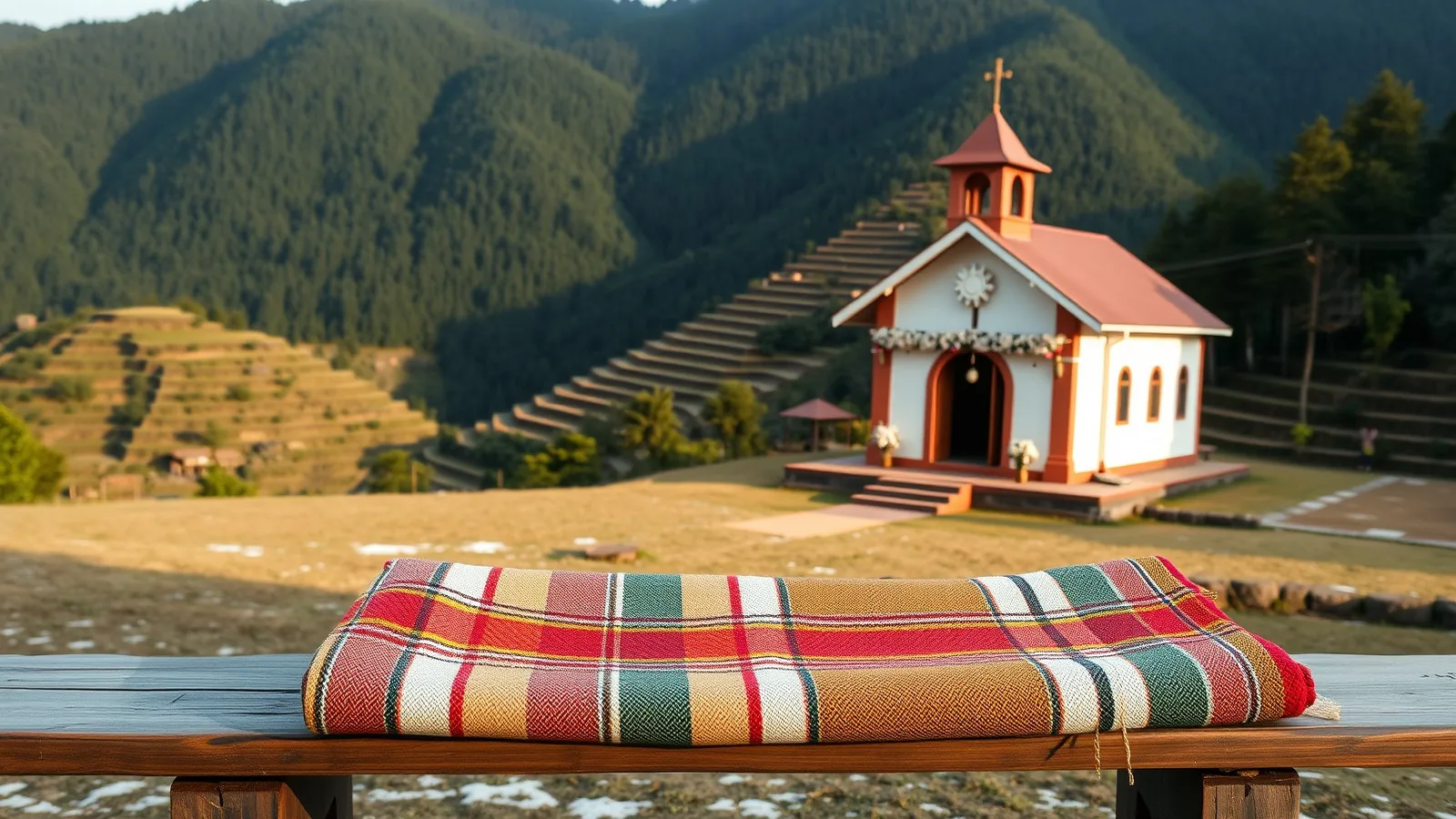
The puan is the Mizo wrap-around skirt, hand-woven on a loin loom, and the puanchei, with its bands of colour and intricate patterns, is the most colourful and festive of them. Many Mizo brides wear a puanchei with a traditional blouse, the kawrchei, for the wedding or for part of the day, while others wear a white gown for church and the puanchei for the celebrations. Women guests often wear their finest puan. Grooms usually wear a suit, sometimes with a traditional Mizo shawl.
The feast and the community
A Mizo wedding feast is a community effort. Relatives, neighbours and members of the church and the local branch of the Young Mizo Association, the YMA, the community organisation found in every locality, often help prepare and serve the food and manage the guests, as they do at funerals and other community events. The feast usually centres on rice and meat, with pork prominent, and simple vegetable dishes and Mizo specialities. Tea is served throughout.
Mizo food at the feast
The wedding feast is simple and generous. Rice is at its centre, with pork, often boiled or smoked, and chicken or beef, alongside Mizo dishes such as bai, a light stew of vegetables and greens, and sawhchiar, a savoury rice porridge cooked with meat. Chutneys with fiery local chillies and fermented flavours accompany them. Tea is served throughout, and cakes and snacks for the guests. The cooking is usually done in large pots by relatives and volunteers.
Gifts and contributions
Guests usually bring gifts or envelopes for the couple, and relatives often contribute to the cost of the feast in money or kind, as part of the strong Mizo tradition of community support known as tlawmngaihna, the ethic of helping others selflessly. That ethic is visible at a wedding, where volunteers cook, serve and clean without being asked, and it is one of the things guests from outside Mizoram most often remember.
A sample wedding day
| Time | What happens |
|---|---|
| Morning | Volunteers begin cooking; the bride dresses |
| Late morning | The church service with hymns, vows and the blessing |
| Midday | The feast at the church hall, a community hall or the family home |
| Afternoon | Singing, greetings and photographs |
| Evening | The bride goes to the groom’s family home |
Many Mizo weddings take place in daylight, which suits the church service and the short winter days.
Music
Mizo choral singing is one of the glories of the north-east, and a wedding is an occasion for it: church choirs, family groups and friends sing hymns and Mizo songs at the service and the feast. Many weddings also feature a band, given the strong tradition of Western popular music in Aizawl.
Alcohol
Mizoram has had laws prohibiting the sale and consumption of alcohol for much of its recent history, with changes over the years, and the churches strongly discourage drinking. Mizo weddings are generally dry. Couples from outside the state planning a wedding in Mizoram should not assume a bar is possible, and should check the current law.
After the wedding
In most Mizo families the bride moves to the groom’s family home after the wedding, and the families exchange visits and meals in the days that follow. The two families, and their clans, now have obligations to each other that last well beyond the wedding: they help at each other’s celebrations and funerals, and the bride price discussion is remembered as the moment those ties were made. Many couples today set up their own homes soon after the wedding, especially in Aizawl and outside Mizoram, while keeping these family ties.
Weddings outside Mizoram
Many Mizos live and work in Delhi, Bengaluru, Shillong, Guwahati and abroad, and some hold their weddings there, often in a Mizo church congregation in that city, with Mizo hymns, the puanchei and a feast cooked by the local Mizo community. The negotiations between the families and the bride price usually still follow Mizo custom, often settled back home in Mizoram.
Planning a wedding in Mizoram
- Inner Line Permit. Indian visitors from outside Mizoram need an Inner Line Permit to enter the state, and foreign nationals have their own requirements. Permits can be applied for online through the state’s permit portal. Build this into guest communication early.
- Getting there. Lengpui airport, outside Aizawl, has flights from Kolkata, Guwahati and other cities. Roads into the state are long and winding.
- Season. Mizoram has a long, heavy monsoon. Most weddings are held in the drier months from about November to March.
- Venues. Churches, church and community halls, and hotels in Aizawl; Aizawl’s hillside setting makes parking and access the main practical challenge.
Guests from outside Mizoram
Guests from elsewhere in India should apply for their Inner Line Permits well before travelling, dress modestly for church, and expect a dry celebration. Aizawl is built along steep ridges, so comfortable shoes and patience with traffic help. Rooms in Aizawl are limited compared with larger cities, so book them early, especially in the busy winter season and around festivals such as Chapchar Kut, the spring festival in March. Our outstation guest planning guide covers the logistics, and the Guwahati wedding planning page covers the region’s main hub.
Marrying a Mizo partner from outside the community
When a Mizo marries someone from elsewhere in India, the church wedding and the bride price discussion are the parts the families most need to understand. Church requirements may apply to both partners, and the customary bride price, although often modest, is important to the bride’s family. Many couples hold the church wedding in Mizoram and a reception or second ceremony in the other family’s city. Discuss which customs both families will follow early, and invite the other family into the negotiations through representatives in the Mizo way; it is a sign of respect.
Decor and photography
Mizo weddings are understated compared with many Indian weddings. Church decor is simple flowers and ribbons, and halls are decorated with flowers, drapes and lights. The colour comes from the people: the puanchei of the bride and the puans of the women guests. For photographs, the church service, the choir, the couple in their puan and the community feast are the moments families value. Ask the church about photography during the service, as some limit movement and flash.
What drives the cost
A Mizo wedding is moderate in cost by Indian standards, because the church, the community and the volunteers carry much of it. The main lines are the feast, the hall, the bride’s dress and the puanchei, which can be expensive when finely woven, the bride price, and any band or photographer. Costs rise when many guests travel from outside the state, because of flights, permits and rooms in Aizawl.
Related north-eastern traditions
Mizo customs share much with those of neighbouring peoples. Our guides to Naga wedding traditions, Khasi wedding traditions and Manipuri wedding traditions cover three of them.
What to settle beforehand
- The representatives and the bride price, settled between the families.
- The church, the date and the church’s requirements.
- The puanchei and the wedding dress.
- The feast, and who will help with it.
- Inner Line Permits for guests from outside the state.
Also on Velvet Knot: Garo wedding traditions.
Frequently Asked Questions
What is a Mizo wedding like?
Usually a church wedding with hymns and vows, preceded by negotiations between the families through representatives and followed by a community feast.
What is the Mizo bride price?
The man, a customary payment from the groom’s family to the bride’s family, with portions for particular relatives. Today it is a sum of money, often largely symbolic, settled during the negotiations between the families’ representatives.
What does a Mizo bride wear?
Often a puanchei, the most colourful Mizo hand-woven puan, with a traditional blouse, or a white gown for church and the puanchei for the celebrations.
Do guests need a permit to attend a wedding in Mizoram?
Indian visitors from outside the state need an Inner Line Permit, available online through the state’s portal. Foreign nationals have separate requirements. Apply well before travelling, and carry the permit throughout the stay.
Is alcohol served at Mizo weddings?
Generally no. Mizoram has had prohibition laws, and the churches discourage drinking. Check the current law before planning anything for guests from outside the state.
When are weddings held in Mizoram?
Mostly in the drier months, roughly November to March, avoiding the long monsoon.
Who helps with a Mizo wedding feast?
Relatives, neighbours, church members and the local Young Mizo Association often help cook and serve, in the Mizo tradition of community support.
What food is served at a Mizo wedding?
Rice with pork and other meats, bai, sawhchiar, chutneys and tea, cooked by relatives and volunteers in large pots.
Sources and further reading
Planning a wedding in Aizawl, or bringing a Mizo and a non-Mizo family together? Tell us your dates and guest count and we will send a tailored plan and quote.
Begin Your Engagement
Want a real number for your wedding?
Tell us your city, guest count and dates. Team Velvet Knot will come back within 24 hours with an itemised budget.