Manipuri Wedding Traditions: The Meitei Luhongba, the Potloi and the Rituals
- Manipur and its weddings
- Before the wedding: the proposal and heijapot
- The luhongba: the wedding
- What the bride and groom wear
- The wedding feast
- After the wedding
- Manipuri Muslim and Christian weddings
- The Ras Lila connection
- How guests should behave
- A sample wedding day
- What drives the cost
- Planning a wedding in Manipur
- A Manipuri wedding outside Manipur
- The sankirtan in more detail
- When a Manipuri marries outside the community
- Photography
- Related north-eastern traditions
- What to settle beforehand
- Frequently Asked Questions
- Sources and further reading
A Meitei wedding in Manipur, the luhongba, is held at the bride’s home, usually in the courtyard, with Vaishnav rites and devotional singing. The bride wears the potloi, a stiff, embroidered cylindrical skirt also seen in the Ras Lila dance. The groom wears white with a white turban. The bride circles the groom and the couple exchange garlands, and a vegetarian feast for the community follows.
Manipur and its weddings
Manipur, in India’s north-east, is home to several communities with distinct wedding traditions: the Meitei, who live mainly in the Imphal valley and are largely Vaishnav Hindu, with some following the older Sanamahi faith; the Meitei Pangal, Manipuri Muslims; and the Naga and Kuki-Zo peoples of the hills, most of whom are Christian. This guide covers the Meitei Hindu wedding, which is what most people mean by a “Manipuri wedding”, and notes the others briefly.
Meitei weddings combine Vaishnav Hindu ritual, introduced to the kingdom in the eighteenth century, with older Meitei customs and a distinctive aesthetic of dress, music and dance. Details vary between families and localities, so treat what follows as the common pattern.
Before the wedding: the proposal and heijapot
A Meitei marriage, whether arranged or a love match, is formalised through a series of visits between the families. The best known is the heijapot, when the groom’s family visits the bride’s family with offerings of fruit, sweets and other gifts carried on trays, formally confirming the match. The offerings are distributed among the bride’s relatives and neighbours, which announces the engagement to the community. The date of the wedding is then fixed, usually with the help of an astrologer or priest.
Elopement followed by a later formal wedding is also an accepted path in Meitei society, and families have customary ways of regularising such a marriage.
The luhongba: the wedding
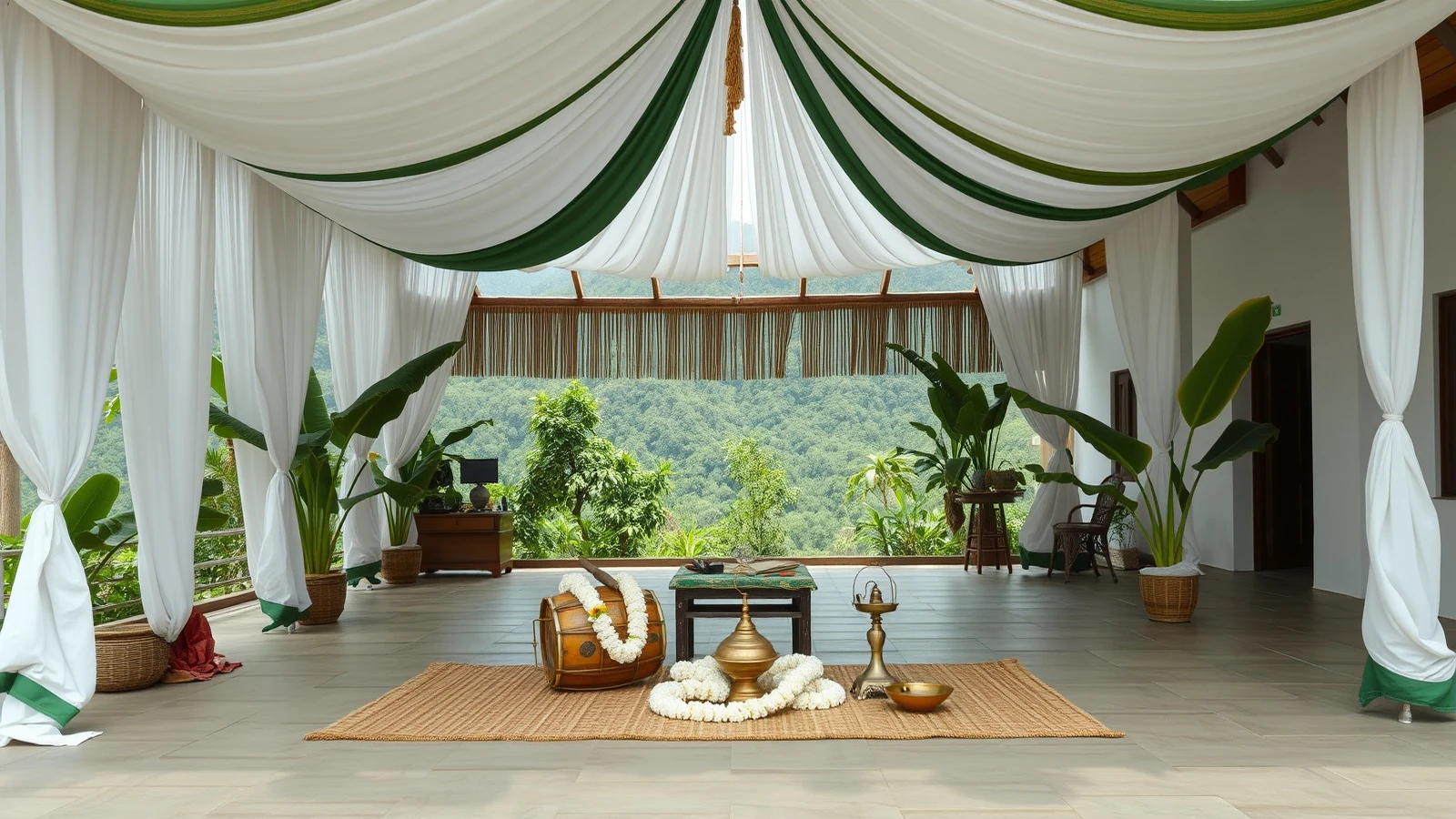
The wedding itself, the luhongba, is held at the bride’s home, traditionally in the courtyard. A canopy is set up, the space is decorated, and a priest conducts the Vaishnav rites. Devotional singers perform nat sankirtan, the ritual singing and drumming for which Manipur is renowned, and which UNESCO recognises as part of the intangible cultural heritage of humanity. The sankirtan is not background music: it frames the ceremony and is part of its meaning.
The groom arrives with his party and is seated in the ceremonial space. The bride is brought out, and in many families she circles the groom seven times, offering flowers, before the couple exchange garlands. The priest performs the rites and the families bless the couple. The ceremony is graceful, measured and quiet compared with many Indian weddings, and it is usually held in daylight.
What the bride and groom wear
The Meitei bride wears the potloi, a stiff, cylindrical skirt heavily decorated with mirrors and embroidery, the same costume worn by Radha and the gopis in the Manipuri Ras Lila dance. With it she wears a fine, translucent veil, a decorated blouse and gold jewellery, and her hair is dressed with ornaments. The potloi is heavy and rigid, and the bride moves in it slowly and carefully. Many families hire the potloi from specialist makers rather than buying one.
The groom wears white: a white dhoti, a white kurta or shirt and a white turban, often with a garland. The contrast between the groom’s simple white and the bride’s elaborate potloi is the signature image of a Manipuri wedding.
The wedding feast
The luhongba is followed by a feast for the families and the community. A traditional Meitei wedding feast is vegetarian and is often cooked by specialist cooks in the open air, served on banana leaves to rows of seated guests. Dishes typically include several vegetable curries, singju, a fresh salad, and chak-hao kheer, a pudding made from Manipur’s black rice. Practice around fish and meat at weddings varies between families, so ask the hosts before planning a menu for guests from outside.
After the wedding
After the luhongba, the bride goes to the groom’s home. Some days later, in many families on the fifth day, the couple return to the bride’s family home for a meal, the mangani chakouba, with the groom’s family. It formally reconnects the bride with her own family and the two families with each other.
Manipuri Muslim and Christian weddings
Meitei Pangal weddings follow Islamic practice, with a nikah, combined with Manipuri customs of dress and food; our Muslim wedding traditions guide covers the nikah. Most Naga and Kuki-Zo weddings in the hills are church weddings with community feasts and their own customs of bride price, dress and song, which differ between tribes. Our Christian wedding traditions guide covers church weddings in India more broadly.
The Ras Lila connection
The potloi comes from the Manipuri Ras Lila, the dance drama of Krishna and the gopis that is the heart of Manipuri classical dance. The Ras Lila took its classical form under the Meitei king Bhagyachandra in the late eighteenth century, as Vaishnavism spread through the kingdom, and the costume he is credited with devising became, over time, the bridal dress of the Meitei. When a Meitei bride wears the potloi, she is dressed as Radha. That link between devotion, dance and marriage is what gives a Manipuri wedding its particular grace.
How guests should behave
Guests from outside Manipur are warmly welcomed at a luhongba, and a few courtesies help. Remove shoes before entering the ceremonial space. Sit where the hosts indicate, often on mats or low seating. Dress modestly, and many guests from outside wear white or pale colours as a sign of respect. Keep phones silent during the sankirtan and the rites, and do not walk across the ceremonial space while the ceremony is in progress. Accept food and betel when offered. If in doubt, follow what the older guests do.
A sample wedding day
| Time | What happens |
|---|---|
| Morning | The courtyard is prepared; the cooks begin the feast |
| Late morning | The sankirtan begins; guests arrive |
| Midday | The groom’s party arrives and the groom is seated |
| Early afternoon | The bride is brought out; circling, garlands and the rites |
| Afternoon | The feast for the families and the community |
| Evening | The bride leaves for the groom’s home |
The priest and the astrologer fix the auspicious time, and the day is arranged around it. Ask the family for its own order.
What drives the cost
A Manipuri wedding at home is modest in cost compared with most Indian weddings: the main lines are the feast for the community, the sankirtan group and the priest, the potloi and jewellery, and the decoration of the courtyard. Costs rise when the wedding moves to a hall or a hotel, when guests travel from outside the state, or when the wedding is held outside Manipur and the potloi makers, singers and cooks have to travel. For guests travelling from elsewhere, our outstation guest planning guide covers rooms and transport.
Planning a wedding in Manipur
Couples marrying in Manipur, or families from Manipur holding a wedding there from elsewhere, should plan for a few practical realities.
- The Inner Line Permit. Since 2019, visitors to Manipur who are not residents, including Indian citizens from other states, have needed an Inner Line Permit. Foreign nationals have separate requirements. Guests must arrange this before travelling; check the current rules with the Manipur government.
- Getting there. Imphal airport has flights from Guwahati, Kolkata, Delhi and other cities. Road travel into the state can be long, and conditions change.
- Local conditions. Check the current situation in the state before fixing dates and inviting guests from outside, and keep plans flexible.
- Season. The cooler, drier months from October to March are the usual wedding season. The monsoon from June to September is wet.
A Manipuri wedding outside Manipur
Many Meitei families live in Delhi, Bengaluru, Guwahati and abroad, and hold weddings where they live. The core can travel: the priest, the sankirtan singers, the potloi and the cooks can all be brought from Manipur or found within the community, and a hall or a lawn can be set up to recreate the courtyard ceremony. Book the potloi maker and the sankirtan group months ahead, and plan their travel and stay as part of the wedding. Many families combine the luhongba with a reception for friends from outside the community.
The sankirtan in more detail
Nat sankirtan is performed by a group of male singers and drummers, dressed in white with white turbans, who sing devotional songs about Krishna while playing the pung, the Manipuri barrel drum, and cymbals, and dance as they play. A sankirtan performance has a fixed structure and can last for hours, and at a wedding it is part of the ritual rather than entertainment. Families book a sankirtan group they know, often one the family has used for other ceremonies. If the wedding is outside Manipur, the group usually travels from Imphal, and its travel, stay and meals become part of the wedding plan.
When a Manipuri marries outside the community
In a wedding between a Meitei family and a family from elsewhere in India, many couples hold the luhongba as one ceremony and the other family’s ceremony separately, or blend elements, such as the potloi for the Manipuri ceremony and a lehenga or saree for the other. Explaining the sankirtan and the slow, quiet pace of the luhongba to the other family in advance helps them appreciate it rather than wait for a party that comes later.
Photography
A Manipuri wedding is one of the most visually striking in India: the potloi, the white of the groom, the sankirtan drummers in white, the courtyard decorations. It is held in daylight, which suits photography. Brief the photographer on the ceremony’s pace and its devotional character: a quiet, unobtrusive approach is expected, and flash during the rites is not welcome.
Related north-eastern traditions
Manipur’s neighbours have their own distinct wedding traditions. Our guides to Assamese wedding traditions and Khasi wedding traditions cover two of them, and the Guwahati wedding planning page covers the region’s main hub for venues and vendors.
What to settle beforehand
- The date, fixed with the priest or astrologer, and the heijapot visit.
- The venue: the bride’s home courtyard, or a hall set up to recreate it.
- The priest and the sankirtan group.
- The potloi, whether bought or hired, and its fittings.
- The cooks and the feast.
- For outside guests, Inner Line Permits and travel.
Also on Velvet Knot: Naga wedding traditions.
Frequently Asked Questions
What is a Manipuri wedding called?
The Meitei wedding ceremony is called the luhongba. It is held at the bride’s home, usually in the courtyard.
What does a Manipuri bride wear?
The potloi, a stiff, cylindrical, heavily decorated skirt also worn in the Ras Lila dance, with a fine veil, a blouse and gold jewellery.
What does a Manipuri groom wear?
White: a dhoti, a kurta or shirt and a white turban, usually with a garland.
What is heijapot?
The formal visit in which the groom’s family brings fruit, sweets and gifts to the bride’s family, confirming the match.
What is mangani chakouba?
A meal at the bride’s family home some days after the wedding, in many families on the fifth day, when the couple and the groom’s family return to reconnect the two families.
What music is played at a Manipuri wedding?
Nat sankirtan, the devotional singing and drumming of Manipur, which frames the ceremony.
Do guests need a permit to attend a wedding in Manipur?
Non-residents, including Indian citizens from other states, have needed an Inner Line Permit since 2019. Check the current rules before travelling.
Where is a Manipuri wedding held?
Traditionally in the courtyard of the bride’s family home. Families living outside Manipur often recreate the courtyard ceremony in a hall or on a lawn.
Sources and further reading
- Manipur Tourism, Government of Manipur
- Britannica: Manipur
- UNESCO: Sankirtana, ritual singing, drumming and dancing of Manipur
Planning a Manipuri wedding in Imphal, Delhi or Bengaluru? Tell us your dates and guest count and we will send a tailored plan and quote.
Begin Your Engagement
Want a real number for your wedding?
Tell us your city, guest count and dates. Team Velvet Knot will come back within 24 hours with an itemised budget.