Bodo Wedding Traditions: Bathou and Brahma Rites, the Dokhona and the Bagurumba
- The Bodo people
- Bathou weddings
- Brahma weddings
- Christian Bodo weddings
- Elopement and its blessing
- The wedding in order
- Dress: the dokhona and the aronai
- Music and the bagurumba
- The feast
- Weaving and the bride’s trousseau
- The Bodo calendar
- Planning a Bodo wedding
- A sample wedding day
- Gifts and the aronai
- Decor and photography
- The groom and the bride’s jewellery
- Guests from outside the community
- What drives the cost
- Bodo families in Guwahati and beyond
- Mixed weddings
- What to settle beforehand
- Frequently Asked Questions
- Sources and further reading
Bodo weddings in Assam follow one of three traditions. Bathou weddings are conducted before the sijou plant altar of Bwrai Bathou. Brahma weddings centre on a fire rite, and church weddings serve Christian Bodos. Around the ceremony, the bride wears the dokhona, the woven wrap of Bodo women, and the aronai scarf is given as an honour. Music comes from the kham drum and sifung flute, with the bagurumba dance and a feast of pork, fish and ondla.
The Bodo people
The Bodos are the largest plains tribe of Assam, living mainly on the north bank of the Brahmaputra, in the Bodoland Territorial Region centred on Kokrajhar, and in neighbouring districts. They have their own language, Bodo, which is one of India’s scheduled languages, and a rich culture of weaving, music and dance. Bodo weddings reflect the community’s religious diversity: many Bodos follow Bathouism, the traditional faith; many follow Brahma Dharma, a reform tradition of the early twentieth century; and many are Christian.
Customs vary between these traditions, between villages and between families. Treat what follows as the common pattern, and ask the families for theirs. Our Assamese wedding traditions guide covers the wider Assamese Hindu wedding.
Bathou weddings
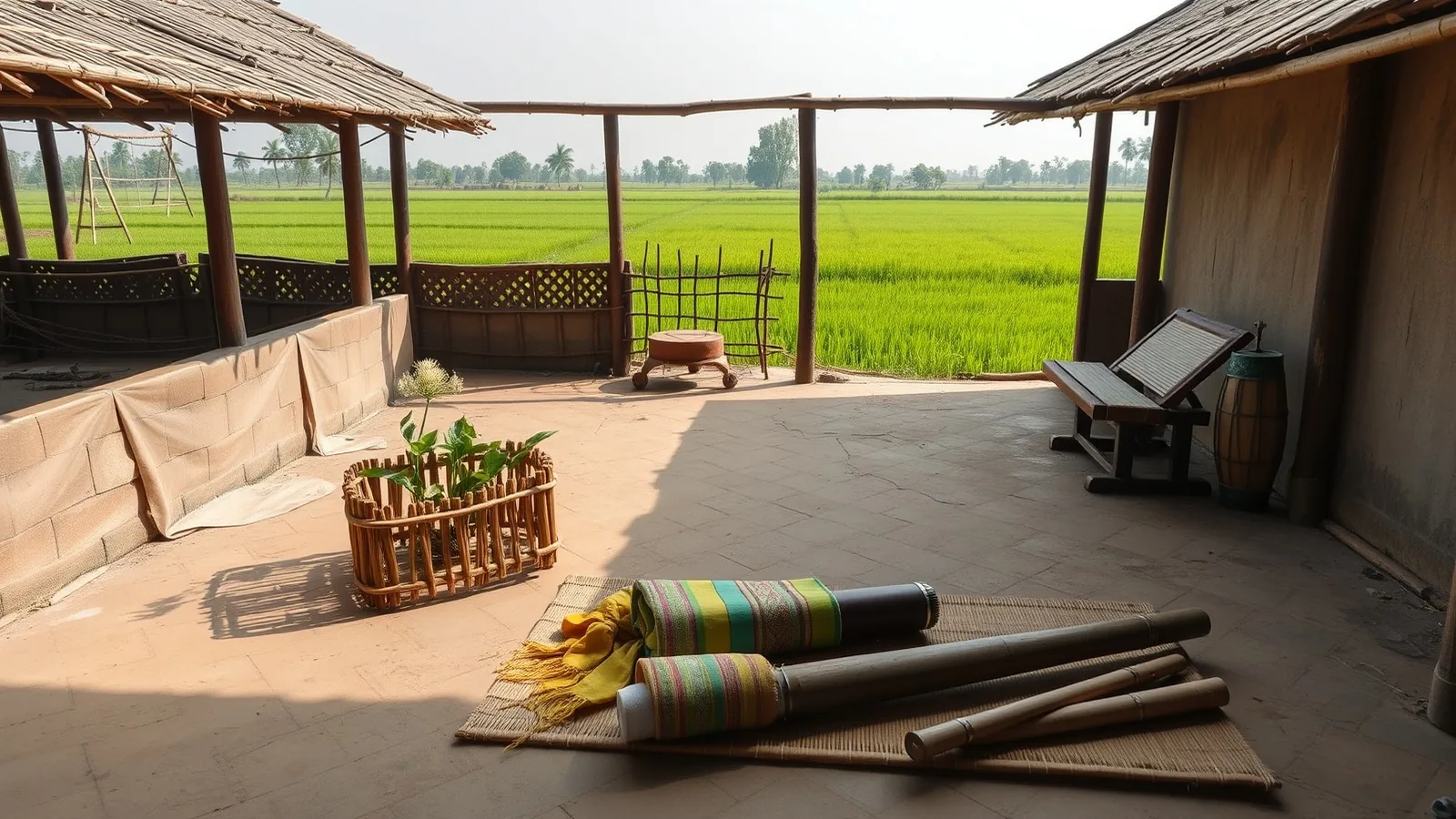
Bathouism centres on the worship of Bwrai Bathou, the supreme deity, represented by the sijou plant, a species of euphorbia, planted on an altar in the courtyard of a Bodo home and enclosed by a fence of bamboo. A Bathou wedding is conducted by the douri, the priest, before the sijou altar, with prayers, offerings and the blessing of the couple by the elders. The ceremony binds the bride and groom and their families before Bathou, and a feast for the village follows.
Brahma weddings
The Brahma Dharma movement, which spread among the Bodos in the early twentieth century, introduced a reformed ritual centred on the sacred fire. A Brahma wedding is conducted with a havan, offerings into the fire and prayers, and the couple are married before it, with the elders and the community as witnesses. Brahma weddings are often simpler in their rituals than village Bathou weddings, reflecting the movement’s emphasis on reform.
Christian Bodo weddings
Christian Bodo families marry in church, with a service in Bodo or English, vows, rings and the blessing of the pastor or priest, followed by a feast. Many keep Bodo dress, music and food for the celebration, so that the wedding is both Christian and recognisably Bodo. Our Christian wedding traditions guide covers church weddings across India.
Elopement and its blessing
Like many communities of the north-east, the Bodos have long recognised marriages that begin with a couple eloping, which are later regularised by the families and the community, with the elders’ blessing, a ceremony and a feast. Today most Bodo marriages are arranged with the families’ agreement or are love matches approved by them, but the older custom is remembered, and families have accepted ways of bringing such marriages into the fold. Ask the elders how their village handles it if the question arises.
The wedding in order
| Stage | What happens |
|---|---|
| Proposal | The groom’s family, through relatives or elders, approaches the bride’s family. |
| Agreement | The families agree the marriage and the date, often with the elders of both villages. |
| Preparations | Weaving or buying the bride’s dokhona and the aronai for honoured guests. |
| Ceremony | Bathou, Brahma or church ceremony, according to the families’ faith. |
| Celebration | Feast, music and the bagurumba dance. |
| After | The bride’s welcome at the groom’s home and visits between the families. |
Dress: the dokhona and the aronai
Bodo women’s traditional dress is the dokhona, a woven cloth wrapped around the body from the chest to the ankles, worn with the jwmgra, a woven wrap or shawl over the shoulders. Bodo women are celebrated weavers, and a bride’s dokhona is often woven at home or by a skilled weaver in the village, in colours such as yellow, green and red with intricate motifs. Men traditionally wear the gamsa, a woven cloth. The aronai, a small woven scarf, is the Bodo symbol of honour and welcome, given to guests, elders and the couple, and at a wedding many aronais are given and received.
Music and the bagurumba
Bodo music is played on the kham, a long drum, the sifung, a long bamboo flute with a deep sound, and the serja, a bowed string instrument, along with cymbals. The bagurumba, the graceful Bodo women’s dance, with dancers in dokhonas moving like butterflies, is performed at weddings and festivals, especially Bwisagu, the spring festival in April. A wedding with a bagurumba performance is a memorable one, and dance groups can be invited from Kokrajhar and other towns.
The feast
A Bodo wedding feast is generous and communal. Pork and fish are central, with chicken, and dishes such as ondla, a curry thickened with rice powder, and narzi, dried jute leaves cooked with meat, along with rice, local greens and chutneys. Jou, the traditional rice beer, has a place in Bodo culture and is served at many weddings, especially in Bathou families; Brahma and Christian families often serve no alcohol. Relatives and the village help cook.
Weaving and the bride’s trousseau
Weaving is at the heart of Bodo women’s culture, and in many families a girl learns to weave on the family loom from childhood. A bride’s trousseau traditionally included dokhonas, jwmgras and aronais she had woven herself or that the women of her family had made, and many brides still bring handwoven cloth to their new home. The motifs woven into Bodo textiles, flowers, animals and geometric patterns, have names and meanings, and a well-woven dokhona is a source of pride for the whole family. Families from outside the community often find that a gift of handwoven Bodo cloth is the most treasured souvenir of the wedding.
The Bodo calendar
Bwisagu, the Bodo spring festival celebrated in April at the same time as the Assamese Bohag Bihu, is the most important festival, with music, dance and visits to elders. Weddings are generally held outside the main festival days and outside the heaviest monsoon months, and the cooler, drier months after the harvest, roughly November to March, are popular.
Planning a Bodo wedding
- Getting there. Kokrajhar and the other towns of Bodoland are reached by road and rail from Guwahati, a few hours away; Guwahati has the nearest major airport.
- Venues. Family homes and courtyards for Bathou weddings, Brahma community halls, churches, and community halls and hotels in the towns.
- Weavers. Order a handwoven dokhona early, because skilled weaving takes time.
- Musicians and dancers. Book a kham and sifung group and bagurumba dancers through local cultural organisations.
Our Guwahati wedding planning page and Guwahati wedding cost guide cover the region’s main city.
A sample wedding day
| Time | What happens |
|---|---|
| Early morning | Relatives begin cooking; the courtyard and altar are prepared |
| Morning | The bride dresses in her dokhona and jwmgra |
| Late morning | The ceremony: Bathou before the sijou, Brahma before the fire, or in church |
| Midday | The feast for the families and the village |
| Afternoon | Music, the bagurumba, aronais for honoured guests |
| Evening | The bride goes to the groom’s home |
Gifts and the aronai
Guests usually bring gifts or envelopes, and the families exchange gifts according to custom. The aronai is the most characteristic gift: honoured guests, elders and in-laws are welcomed by having an aronai placed around their necks, and the couple receive many. Guests from outside the community who are given an aronai should accept it with both hands and keep it.
Decor and photography
Bodo weddings are decorated with woven cloth, bamboo, banana plants and flowers, and the colours of the dokhonas worn by the women do much of the work. The moments families want photographed are the ceremony at the altar or fire, the bride in her dokhona, the bagurumba and the giving of aronais. Ask before photographing the altar and the rituals, and follow the douri’s or priest’s guidance.
The groom and the bride’s jewellery
The groom traditionally wears a gamsa with a shirt or jacket and an aronai around his neck, or a dhoti and kurta in Brahma families, and a suit for a church wedding. The bride wears gold jewellery, often including traditional Assamese and Bodo designs, with her dokhona; many brides choose jewellery that complements the colours woven into the cloth. Families often give the bride jewellery as part of the wedding gifts.
Guests from outside the community
Guests from elsewhere are warmly welcomed at Bodo weddings. Accept an aronai with both hands if it is offered; remove footwear near the altar in a Bathou courtyard; ask before photographing the rituals; and accept food and drink politely, declining alcohol if you do not drink. Dressing modestly and joining the dancing when invited are always appreciated. Our outstation guest planning guide covers travel and rooms.
What drives the cost
A village Bodo wedding is modest in cost, with the community contributing labour and much of the food, and the main expenses being the feast, the bride’s dokhona and jewellery, and gifts. Weddings in towns, at halls or hotels, cost more, and costs rise with guests travelling from outside the region. A handwoven dokhona of fine silk can be a significant expense, and families often treat it as an heirloom.
Bodo families in Guwahati and beyond
Many Bodo families now live in Guwahati, Delhi, Bengaluru and other cities, and some hold weddings there, in a church, a Brahma community hall or a rented hall, with a Bathou or Brahma ceremony conducted by a priest who travels from Bodoland. The dokhona, the aronai, Bodo food and the bagurumba keep the wedding Bodo wherever it is held, and many families hold a second celebration in the home village so that the elders and the community can join.
Mixed weddings
Bodo families marry into Assamese and other communities, and couples often combine traditions: a Bathou or Brahma ceremony with an Assamese Hindu ceremony, or a church wedding with Bodo dress and music. The aronai and the bagurumba are easy to share, and guests from other communities usually enjoy them most. Discuss early which ceremonies will be held, by whom and where.
What to settle beforehand
- The tradition: Bathou, Brahma or church, and who conducts the ceremony.
- The bride’s dokhona and jwmgra, and aronais for guests.
- Musicians and bagurumba dancers.
- The feast, and whether jou will be served.
- Travel and rooms for guests from outside the region.
Frequently Asked Questions
What is a Bodo wedding like?
A ceremony in the Bathou, Brahma or Christian tradition, followed by a feast, music on the kham and sifung, and the bagurumba dance, with the bride in a dokhona.
What is a Bathou wedding?
A wedding conducted by the douri before the sijou plant altar of Bwrai Bathou, the supreme deity of the traditional Bodo faith.
What does a Bodo bride wear?
A handwoven dokhona wrapped from chest to ankle, with a jwmgra over the shoulders and jewellery.
What is an aronai?
A small woven scarf, the Bodo symbol of honour and welcome, given to guests, elders and the couple at weddings. Guests who receive one should accept it with both hands and keep it.
What is the bagurumba?
The graceful Bodo women’s dance, performed at weddings and at Bwisagu, the spring festival, by dancers in dokhonas whose movements are said to resemble butterflies.
What food is served at a Bodo wedding?
Pork, fish and chicken, ondla, narzi with meat, rice and greens, with jou rice beer in many families.
What is a Brahma wedding among the Bodos?
A wedding in the Brahma Dharma reform tradition, conducted before the sacred fire with offerings and prayers, usually simpler than a village Bathou wedding.
When are Bodo weddings usually held?
Mostly in the drier months after the harvest, roughly November to March, outside the main days of Bwisagu.
Sources and further reading
Planning a Bodo or Assamese wedding in Kokrajhar, Guwahati or beyond? Tell us your dates and guest count and we will send a tailored plan and quote.
Begin Your Engagement
Want a real number for your wedding?
Tell us your city, guest count and dates. Team Velvet Knot will come back within 24 hours with an itemised budget.