Tamil Muslim Wedding Traditions: Rowther, Marakkayar, Labbai and Kayalpattinam
- Who Tamil Muslims are
- The nikah
- Rowther weddings and the procession
- Kayalpattinam: the wife’s house
- Dress
- The wedding feast
- Mehendi and the functions around the nikah
- Registration in Tamil Nadu
- Families in the Gulf, Malaysia and Singapore
- Timing
- A sample Tamil Muslim wedding schedule
- Tamil Muslim and Mappila weddings compared
- Dargahs and blessings
- What to settle beforehand
- Planning notes
- Frequently Asked Questions
- Sources and further reading
A Tamil Muslim wedding centres on the nikah, the Islamic marriage contract with its mahr, witnesses and khutbah, set inside customs that are distinctly Tamil. Rowther families have kept a horseback procession for the groom. In coastal Marakkayar towns such as Kayalpattinam, the husband traditionally moves into the wife’s home, and weddings take over closed-off streets. The feast is often a seeraga samba mutton biryani. Every marriage in Tamil Nadu must also be registered.
Who Tamil Muslims are
Tamil Muslims are Tamil-speaking Muslims, numbering roughly ten million in India, most of them in Tamil Nadu, with old communities in Sri Lanka, Malaysia and Singapore and a large working population in the Gulf. Islam reached the Tamil coast through Arab and Persian traders centuries before it arrived overland in much of North India, and the coastal towns of Kayalpattinam, Keelakarai and Nagore are among its oldest centres. Most Tamil Muslims are Sunni, and the majority follow the Shafi’i school, which sets them apart from the Hanafi majority of North India.
The community is not one group. The main subgroups usually named are:
- Rowthers, historically landholders and cavalrymen associated with the horse trade, and the largest group of Tamil-speaking Muslims in the state.
- Marakkayars, a maritime trading community of the southern coast.
- Labbais, traditionally associated with religious scholarship.
There are also Urdu-speaking Muslim families in Tamil Nadu, especially in the north of the state and in Chennai, whose weddings are closer to the Deccani pattern described in our Hyderabadi Muslim wedding guide. This page is about the Tamil-speaking communities.
The nikah
The religious core of the wedding is the same as in any Muslim marriage: the bride’s consent, the offer and acceptance (ijab and qubul) before two witnesses, the mahr agreed and recorded, a khutbah, and the signing of the nikahnama. A qazi or the local imam usually officiates, and in Tamil Nadu many marriages are recorded in the register kept by the jamaat, the mosque committee of the neighbourhood. Our nikah ceremony guide explains each element and our mehr guide explains the bride’s gift.
Seating is usually separate. In many Tamil Muslim weddings the men sit facing the stage where the nikah is performed and the women sit behind or in a separate hall, and the bride gives her consent in the women’s section through the wali and witnesses rather than appearing on the stage.
Rowther weddings and the procession
Rowther families are known for keeping customs that echo their history as horsemen, including a procession in which the groom rides to the wedding on horseback. In a town this is a short, festive walk with music and family around the horse; in a city hotel it may become a brief arrival at the porch. Book the horse with a handler who has worked weddings before, check the venue allows it, and keep the route short and clear of fireworks.
Kayalpattinam: the wife’s house
Kayalpattinam, on the coast near Thoothukudi, is one of the oldest Muslim towns in South India, and its wedding customs are unusually well documented. The town is traditionally matrilocal: ownership of the house passes to the women of the family, and after the wedding the husband moves into his wife’s home rather than the other way round. Marriages have traditionally been made within the same clan, street or neighbourhood, with the Marakkayar, Labbai and other lineages each marrying among themselves, and marriage into neighbouring Keelakarai is accepted.
A Kayalpattinam wedding also uses the town itself. Interior streets are closed for a few hours and turned into a wedding hall, with a decorated stage at one end for the nikah, the men facing it and the women seated behind. After the nikah the feast is served in a long line with guests seated on the floor, and two or three men share food from the same dish, a custom townspeople describe as a sign of brotherhood. When the couple first enter the house after the wedding, they come in through the thalaivasal, the women’s side door, rather than the front.
Matrilocal residence of this kind also appears among some coastal Muslim communities elsewhere on the Tamil and Kerala coasts and among the Muslims of Sri Lanka. It shapes the wedding in a practical way: the bride’s family is often preparing or handing over a house, which is a far larger undertaking than the ceremony itself, and the timeline of the wedding may follow the timeline of the house.
Dress
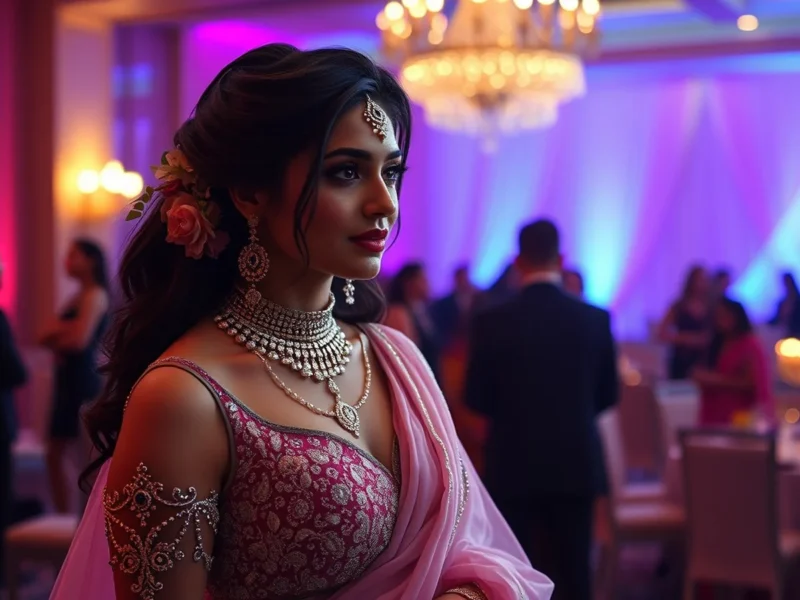
Tamil Muslim brides traditionally wore a sari with a white thuppatti, a veil worn over it that left only the face visible. Today most brides wear a silk sari or a lehenga, often in red or deep pink, with a dupatta over the head, and many women guests wear an abaya with a headscarf. Grooms wear a sherwani or a white shirt and veshti with a cap. Gold is central: the jewellery given to the bride is a significant part of what her family and the groom’s family give at the wedding.
The wedding feast
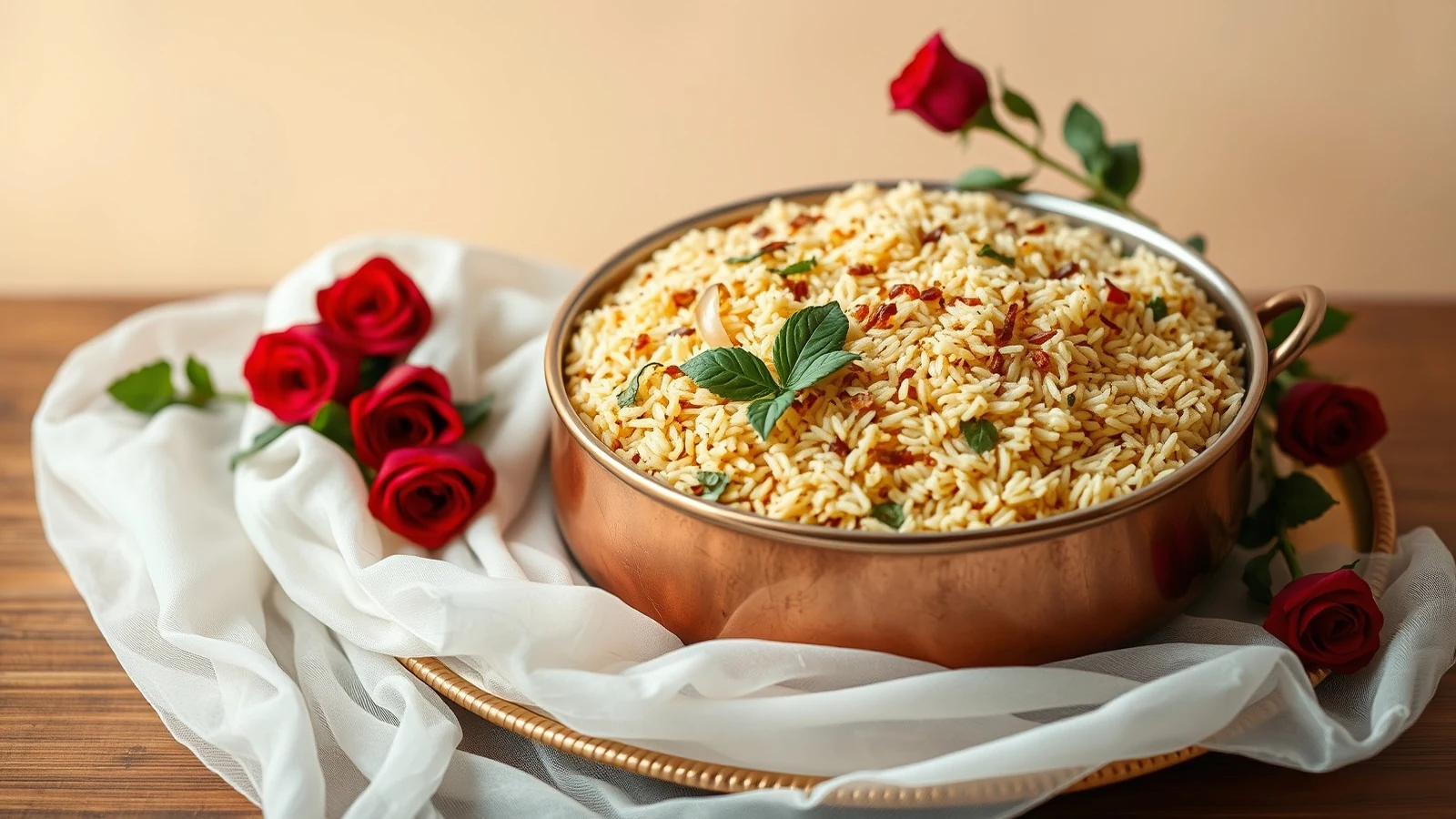
Biryani is the wedding dish. The Tamil style uses seeraga samba, a short-grained fragrant rice, rather than the long-grained basmati of the north, and a mutton biryani in the Rawther style is a favourite for weddings and Eid. In the Cauvery delta, Anju Kari Soru, five curries served with rice, was the traditional wedding spread, though it has become rarer. In Kayalpattinam the cooking reflects the town’s trade with Sri Lanka and Southeast Asia: maasi, the cured tuna of the Maldives, Sri Lankan cinnamon, pandan leaves, and milky tea. The menu is halal and alcohol is not served. Our wedding catering cost guide explains how caterers price per plate.
Mehendi and the functions around the nikah
Most Tamil Muslim weddings include a mehendi evening for the bride with the women of both families, and many now add a haldi or a sangeet in the style of North Indian weddings. After the nikah, the groom’s family hosts the walima, the wedding feast that is a recommended practice in Islam. Our mehndi ceremony guide and walima guide cover both.
Registration in Tamil Nadu
The nikahnama records the marriage under Muslim personal law, but Tamil Nadu requires every marriage solemnised in the state to be registered under the Tamil Nadu Registration of Marriages Act, 2009, whatever the couple’s religion. Registration is done with the Sub-Registrar through the state’s registration portal, with the nikahnama or the jamaat’s certificate among the supporting documents. A registered certificate is what passport offices, visa applications and foreign employers will ask for. See our Tamil Nadu marriage registration guide and Muslim marriage registration guide.
Families in the Gulf, Malaysia and Singapore
Many Tamil Muslim families have members working in the Gulf or long settled in Malaysia and Singapore, and weddings are often timed around their leave. A short trip can work if the nikah, the walima and the registration are planned together: book the Sub-Registrar appointment for the days immediately after the wedding and bring every document from abroad in the original. Our guide for Gulf-based families covers leave, travel and paperwork.
Timing
Muslim weddings do not follow the Hindu panchang, but they do follow the Islamic calendar. Families generally avoid holding weddings during Ramadan and often during the first ten days of Muharram, and the weeks after Eid are popular. Because the Islamic calendar is lunar, these periods move about eleven days earlier each year, so check the dates for your year with your imam before booking. In southern Tamil Nadu, the northeast monsoon from about October to December is the main weather risk for open-air events.
A sample Tamil Muslim wedding schedule
| When | Event | Hosted by |
|---|---|---|
| Weeks before | Formal agreement between the families, mahr discussed, jamaat informed | Both families |
| Two days before | Mehendi for the bride with the women of both families | Bride’s family |
| Wedding morning | Groom’s procession, on horseback in many Rowther families, then the nikah, khutbah and nikahnama | Bride’s family and the jamaat |
| Wedding afternoon | The feast, usually biryani, with separate seating for men and women | Bride’s family |
| Same evening or next day | Walima | Groom’s family |
| Following week | Registration with the Sub-Registrar | The couple |
In matrilocal families the order of the last steps changes, because the couple settle in the bride’s family home and the groom moves in rather than the bride leaving.
Tamil Muslim and Mappila weddings compared
Couples marrying across the Tamil Nadu and Kerala border often ask how the two traditions differ. Both are Shafi’i Sunni communities on the old trading coast, and both have matrilocal families in parts of their coastline. The differences are mostly of language, food and ceremony style.
| Element | Tamil Muslim | Mappila (Malabar) |
|---|---|---|
| Language of the wedding | Tamil, with Arabic for the nikah | Malayalam, with Arabic for the nikah |
| Biryani rice | Seeraga samba | Kaima rice, in the Thalassery style |
| Residence after marriage | Patrilocal in most families, matrilocal in towns such as Kayalpattinam | Matrilocal in parts of north Malabar, patrilocal elsewhere |
| The women’s evening | Mehendi, often with Tamil and Urdu songs | Mehendi with mappila pattu songs and the oppana clapping dance |
| The new groom | Mappillai, the Tamil word for groom | Puthiyappila, the new bridegroom, who in north Malabar traditionally lived at the bride’s home |
Our Mappila wedding traditions page covers the Kerala side in full.
Dargahs and blessings
Many Tamil Muslim families visit a dargah or the neighbourhood masjid at the major moments of life, births, marriages and deaths among them, and some include a visit to a shrine such as the dargah at Nagore before or after the wedding. Practice differs sharply between families, and some reformist families do not visit shrines at all, so ask rather than assume, and leave room in the schedule if a visit is planned. If guests are travelling to the coast for the wedding, a dargah visit is also often the moment relatives from other towns choose to join the family.
What to settle beforehand
- Who officiates the nikah, and which jamaat records it.
- The mahr, agreed and written down before the day.
- Whether the couple will live with the bride’s or the groom’s family, and what that means for the house.
- The seating plan and how the bride’s consent is taken.
- Who hosts the walima, and when.
- The registration appointment, and which original documents each side must bring.
Planning notes
- Prayer times. Build the programme around the day’s prayers, with a space set aside for prayer near the venue.
- Separate seating. Agree in advance whether the hall is divided and how the bride’s consent will be taken.
- Halal catering. Confirm the caterer’s meat source and that no alcohol is served or stored on site.
- The house. In matrilocal families, agree early who is preparing which home, because it decides where the couple go after the wedding.
- Photography. Many families prefer women photographers in the women’s section; ask before booking.
Frequently Asked Questions
What are the main Tamil Muslim communities?
Rowthers, Marakkayars and Labbais are the groups most often named, alongside Urdu-speaking Muslim families in the north of Tamil Nadu and in Chennai.
What is special about a Kayalpattinam wedding?
The town is traditionally matrilocal, so the husband moves into the wife’s home. Weddings are held in closed-off streets with a stage for the nikah, and the couple first enter the house through the women’s side door, the thalaivasal.
Is a Tamil Muslim marriage registered in Tamil Nadu?
Yes. Tamil Nadu requires all marriages solemnised in the state to be registered under its 2009 Act, in addition to the nikahnama.
What is served at a Tamil Muslim wedding?
Usually a mutton biryani made with seeraga samba rice. Coastal towns such as Kayalpattinam add dishes with maasi, the cured Maldivian tuna.
Do Rowther grooms ride a horse?
Rowther families are known for keeping a horseback procession for the groom, a custom tied to the community’s history as horsemen.
Sources and further reading
- Wikipedia: Tamil Muslims
- M. Noushad: Matrilocality, Mudukku and Maasi, Kayal’s distinct cultural saga
- Registration Department, Government of Tamil Nadu (TNREGINET)
Planning a Tamil Muslim wedding in Chennai, the southern coast or abroad? Tell us your date and guest count and we will send a tailored plan and quote. Our Muslim wedding planning page explains how we work.
Begin Your Engagement
Want a real number for your wedding?
Tell us your city, guest count and dates. Team Velvet Knot will come back within 24 hours with an itemised budget.