Hyderabadi Muslim Wedding Traditions: Sanchaq, Jalwa, the Khada Dupatta and the Feast
- Hyderabad’s wedding culture
- The wedding in order
- Sanchaq: the groom’s family’s gifts
- Mehendi
- The nikah
- The jalwa and the aarsi mushaf
- The khada dupatta
- Rukhsati
- Jumagi and chauthi
- The Hyderabadi wedding menu
- Venues
- Seating, timing and the guest flow
- Sunni and Shia families
- Gifts and salami
- Decor and photography
- Families in the Gulf, the United States and the United Kingdom
- A sample wedding week
- What to settle beforehand
- Frequently Asked Questions
- Sources and further reading
A Hyderabadi Muslim wedding runs as a sequence of family events: the manjha, then the sanchaq, when the groom’s family sends the bride’s wedding clothes, then the mehendi and the nikah. Then comes the jalwa, when the couple first see each other in a mirror beside the Quran, followed by the rukhsati and the walima. The bride wears the khada dupatta, and the feast runs from marag to biryani and khubani ka meetha.
Hyderabad’s wedding culture
Hyderabad’s Muslim weddings carry four centuries of Deccani culture, from the Qutb Shahi sultans to the Nizams’ court, and they have a vocabulary of their own. Words like sanchaq, jalwa and jumagi are heard at Hyderabadi weddings and rarely elsewhere, and the khada dupatta and the wedding biryani are known across India. Velvet Knot is based in Hyderabad, and these are the weddings we know best. Customs still vary between families, older Old City households and newer families in the western suburbs, and between Sunni and Shia families, so treat what follows as the common pattern.
The nikah itself is covered in our nikah guide, the manjha in our ubtan and manjha guide, and the groom’s feast in our walima guide.
The wedding in order
| When | Event | What happens |
|---|---|---|
| Months before | Proposal and engagement | The families agree the match; rings and gifts are exchanged; the mehr is discussed. |
| Days before | Manjha | Turmeric for the bride, who wears yellow and stays home in many families. |
| Two or three days before | Sanchaq | The groom’s family brings the bride’s wedding outfit, jewellery, henna and gifts. |
| Day before | Mehendi | Henna for the bride; the bride’s family sends gifts to the groom. |
| Wedding day | Nikah | The marriage contract before the qazi and witnesses. |
| Wedding day | Jalwa | The couple’s first look at each other in a mirror, with the Quran. |
| Wedding night | Rukhsati | The bride leaves her parents’ home. |
| After | Jumagi and chauthi | Family visits and meals in the first days of the marriage, in many families. |
| After | Walima | The groom’s family’s feast. |
Sanchaq: the groom’s family’s gifts
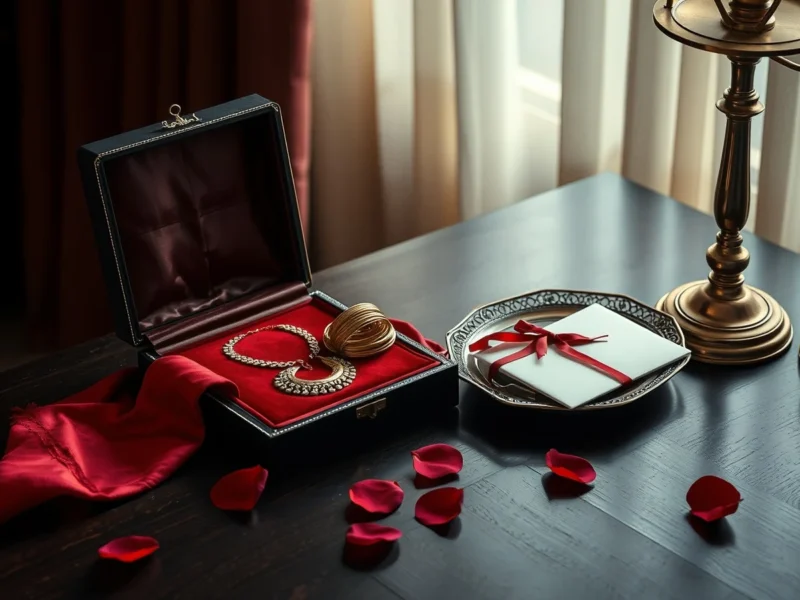
The sanchaq is one of the most distinctive Hyderabadi customs. Two or three days before the wedding, the women of the groom’s family arrive at the bride’s home with decorated trays carrying her wedding outfit, often the khada dupatta set, her jewellery, cosmetics, henna, perfume, dry fruit, sweets and gifts for her family. The trays are received and displayed, the women of both families sing, and there is a meal. The sanchaq is a statement of the groom’s family’s care for the bride, and families take great pride in it.
The bride’s family responds with its own gifts to the groom and his family, often on the mehendi day, carried to the groom’s home in the same way.
Mehendi
The mehendi is held at the bride’s home or a hall on the day before the wedding. The henna sent with the sanchaq is applied to the bride’s hands and feet, the women sing and play the dholak, and the evening becomes a celebration. In many families the groom’s sisters bring the henna and apply the first touch. Our mehendi guide covers the henna itself.
The nikah
The nikah is conducted by a qazi, at a function hall, the bride’s home or a mosque, in the presence of the families and witnesses. The mehr is stated and recorded in the nikahnama; our guide to mehr explains how it is fixed. In many Hyderabadi families the bride and groom are in separate rooms or areas for the nikah, and the qazi or the bride’s representative goes to the bride for her consent. After the nikah, the groom is congratulated, often with the men embracing him in turn, and dried dates and sweets are distributed.
The jalwa and the aarsi mushaf
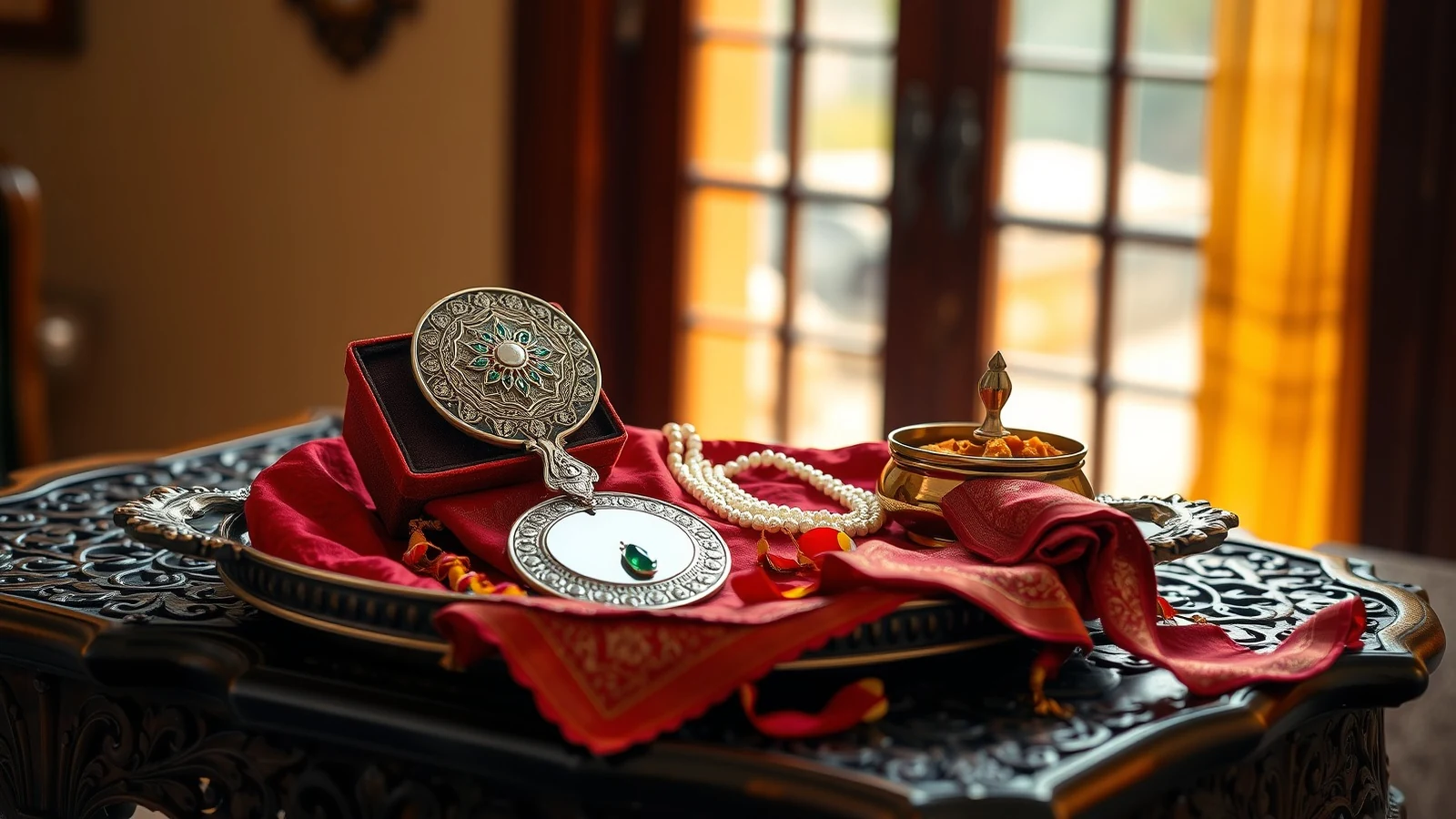
After the nikah, the couple are brought together for the jalwa, their first sight of each other as husband and wife. They sit side by side, a dupatta or a sheet is held over their heads, and a mirror is placed in front of them with a copy of the Quran. The couple look at each other’s reflection in the mirror, the first time they see each other as a married couple. The ritual, also called the aarsi mushaf, is often followed by playful moments: the bride’s sisters tease the groom, and in many families he is asked to describe what he sees. It is one of the most cherished moments of a Hyderabadi wedding.
The khada dupatta
The Hyderabadi bride’s traditional outfit is the khada dupatta: a long kurta, a churidar, and a dupatta of about six yards, draped across the head and body, usually in red or a deep colour with heavy zari work. It is worn with traditional Hyderabadi jewellery: the satlada, a seven-stranded necklace of pearls and emeralds, the jugni, the jhoomar on one side of the head, and the tika. Many brides wear it for the nikah, and many families consider it the true Hyderabadi bridal dress. The groom wears a sherwani, often cream or gold, with a turban or a cap, and a sehra of flowers in many families.
Rukhsati
The rukhsati is the bride’s departure from her parents’ home, late in the evening after the nikah and the dinner. A copy of the Quran is often held over her head as she leaves, the women of her family say their farewells, and the groom’s party takes her to his family’s home, where she is welcomed by her mother-in-law.
Jumagi and chauthi
In many Hyderabadi families the first days of the marriage are marked by visits and meals. The jumagi, on the first Friday after the wedding, and the chauthi, on the fourth day, involve the bride’s family visiting or hosting the couple, with gifts and food, and the bride returning briefly to her parents’ home. The customs vary a great deal between families and are less observed today, but where they are kept they are warm occasions for the two families to come together.
The Hyderabadi wedding menu
Food is central. A classic Hyderabadi wedding dinner begins with marag, a spiced mutton soup, and moves on to the kacchi gosht ki biryani, mutton biryani cooked from raw marinated meat with rice in a sealed pot, served with mirchi ka salan and dahi ki chutney. Kebabs, korma, dum ka murgh and naan or sheermal may join it. Dessert is double ka meetha, a bread pudding, and khubani ka meetha, stewed apricots with cream. All food is halal. Hyderabad has specialist wedding caterers, the bawarchis, who are booked months ahead for the season. Our wedding catering cost guide covers how they price per plate.
Venues
Hyderabadi Muslim weddings are held at function halls across the city, especially in the Old City, Tolichowki, Mehdipatnam and Banjara Hills, at convention centres that seat thousands, and at hotels for smaller and more formal weddings. Many halls are built for exactly this kind of wedding, with separate seating areas for men and women. For a luxury wedding, the city’s palace and heritage hotels, including Taj Falaknuma Palace, host receptions and walimas. Our Hyderabad wedding cost guide and the Hyderabad wedding planning page cover the city’s options.
Seating, timing and the guest flow
Many families seat men and women separately, and some halls have separate entrances and dining. Hyderabadi weddings also run late: a nikah after the evening prayer, dinner afterwards, and the rukhsati near midnight is a common pattern. Plan the bawarchi’s service for the guest peak, keep the biryani coming in successive rounds, and give the bride’s family a dedicated person to manage the women’s side.
Sunni and Shia families
Hyderabad has large Sunni and Shia communities, and both share the city’s wedding culture: the sanchaq, the khada dupatta, the jalwa and the biryani. The nikah is conducted according to each community’s own practice, by a qazi or an alim of that community, and the wording and some details of the ceremony differ. Some customs around the wedding also vary. For mixed Sunni and Shia families, the families agree in advance who will conduct the nikah and how, which is a conversation for the elders and the religious scholars, not the planner.
Gifts and salami
Gifts move in both directions throughout a Hyderabadi wedding: the sanchaq trays, the bride’s family’s gifts to the groom, and the salami, the cash gift that elders give the couple, and the groom in particular, after the nikah and at the jalwa. Guests at the walima often give envelopes. A family member on each side should record what is received, both for thank-yous and because many families keep careful account of gifts to return them in kind at other families’ weddings.
Decor and photography
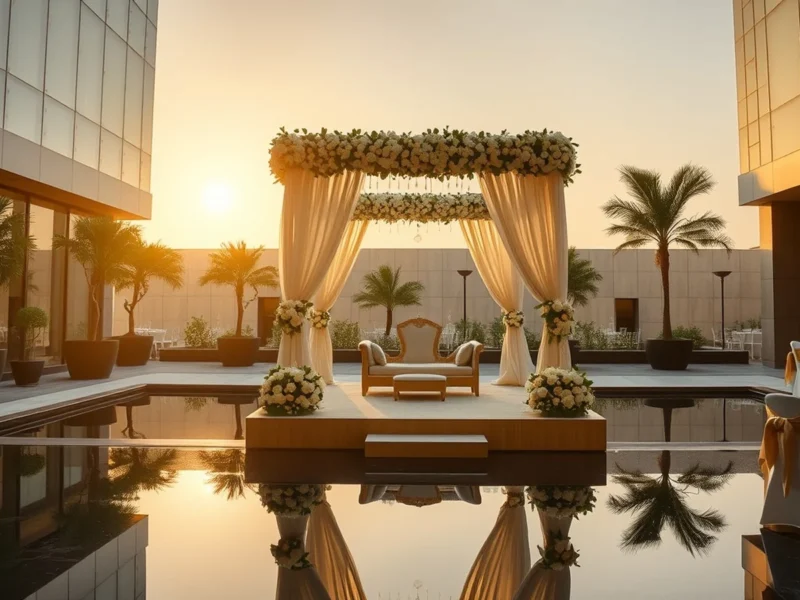
Hyderabadi wedding decor favours fresh flowers, especially jasmine, roses and rajnigandha, strings of lights across the family home, and a richly decorated stage for the couple at the hall. The jalwa needs a small, intimate setting with good light on the mirror; plan it with the photographer in advance, because the moment is brief and crowded. Many families do not want photographs of the women’s side, or want only a woman photographer there, so agree this before the day.
Families in the Gulf, the United States and the United Kingdom
Many Hyderabadi families have relatives in the Gulf, the United States and the United Kingdom, and weddings are often planned around their visits, with the busiest season in the winter months and around the school holidays. The sanchaq and the khada dupatta are often ordered from Hyderabad even when the family lives abroad, and many families hold the nikah in Hyderabad and a reception abroad. Book the function hall and the bawarchi as soon as the date is fixed: the best dates in the season go months ahead.
A sample wedding week
| Day | Event |
|---|---|
| Monday | Manjha at the bride’s home |
| Wednesday | Sanchaq: the groom’s family brings the trays |
| Thursday | Mehendi at the bride’s side |
| Friday | Nikah after the evening prayer, jalwa, dinner, rukhsati |
| Sunday | Walima hosted by the groom’s family |
What to settle beforehand
- The mehr and the qazi.
- The sanchaq trays and the return gifts.
- The khada dupatta and jewellery, often ordered months ahead.
- The bawarchi, the menu and the guest count.
- Separate seating and entrances, if wanted.
- Who hosts the walima, and when.
Also on Velvet Knot: Tamil Muslim wedding traditions.
Frequently Asked Questions
What is sanchaq in a Hyderabadi wedding?
The ceremony, two or three days before the wedding, when the groom’s family brings the bride’s wedding outfit, jewellery, henna and gifts on decorated trays.
What is the jalwa ceremony?
After the nikah, the couple sit together under a dupatta and see each other for the first time as husband and wife in a mirror placed with a copy of the Quran.
What is a khada dupatta?
The Hyderabadi bride’s traditional outfit: a long kurta, churidar and a six-yard dupatta with heavy zari work, worn with the satlada necklace and the jhoomar.
What is served at a Hyderabadi wedding?
Marag, kacchi gosht ki biryani with mirchi ka salan and dahi ki chutney, kebabs and korma, and double ka meetha and khubani ka meetha.
What are jumagi and chauthi?
Visits and meals in the first days after the wedding, on the first Friday and the fourth day, kept by many Hyderabadi families.
What is marag?
A spiced mutton soup served at the start of a Hyderabadi wedding dinner, before the biryani arrives.
What is salami at a Hyderabadi wedding?
The cash gift elders give the couple, and especially the groom, after the nikah and at the jalwa.
Where are Hyderabadi Muslim weddings held?
At function halls across the city, many built with separate men’s and women’s areas, at convention centres for very large weddings, and at hotels and palace venues for smaller or luxury weddings.
Sources and further reading
Planning a Hyderabadi nikah and walima? We are based in Hyderabad. Tell us your dates and guest count and we will send a tailored plan and quote.
Begin Your Engagement
Want a real number for your wedding?
Tell us your city, guest count and dates. Team Velvet Knot will come back within 24 hours with an itemised budget.