Ubtan and Manjha: The Muslim Pre-Wedding Turmeric Ceremony, Explained
- What ubtan is
- Where it sits in the wedding
- The paste
- The ceremony
- The groom’s ubtan
- The yellow dress
- Hyderabad’s manjha and sanchaq
- Ubtan as skin care in the weeks before
- Where to hold it
- Decor, music and photography
- Food
- A sample manjha day
- Guests, rooms and the seclusion period
- How ubtan connects to the rest of the wedding
- In a mixed or modern wedding
- What to settle beforehand
- Frequently Asked Questions
- Sources and further reading
Ubtan is the pre-wedding ceremony in many Indian Muslim families. The bride, and in many families the groom, is anointed with a fragrant paste of gram flour, turmeric, sandalwood and rose water. In Hyderabad it is called manjha and in parts of North India mayun. The bride wears yellow, women of the family apply the paste with songs, and in many families she stays at home until the nikah.
What ubtan is
Ubtan is a paste of gram flour, turmeric, sandalwood, rose water and oil, used for generations across South Asia to cleanse and brighten the skin. Before a wedding, the bride is anointed with it at a small family ceremony, and the ceremony takes its name from the paste. Many Indian Muslim families hold one for the groom as well, separately at his home.
The ceremony is known by different names in different regions. In Hyderabad and much of the Deccan it is the manjha. In Lucknow, Delhi and parts of North India it is often called mayun or simply ubtan. In Pakistan and among some North Indian families it is part of the mayun period, when the bride stays in seclusion before the wedding. The rituals overlap a great deal, and every family has its own version.
It is the Muslim counterpart of the Hindu haldi, and the two share their purpose and their mess. What differs is the setting, the songs, the clothes and, in many families, the seclusion that follows. Our Muslim wedding traditions guide places ubtan in the full sequence of the wedding.
Where it sits in the wedding
| When | Event | What happens |
|---|---|---|
| Several days before | Manjha or mayun | Ubtan is applied to the bride; in many families she stays home afterwards. |
| Two or three days before | Sanchaq (Hyderabad) | The groom’s family sends the bride’s wedding clothes, jewellery and gifts. |
| One or two days before | Mehendi | Henna for the bride, with music and dinner. |
| Wedding day | Nikah and rukhsati | The marriage, dinner, and the bride’s departure. |
| After | Walima | The groom’s family’s feast. |
The order and the gap between events vary. Some families hold the manjha a week before the nikah and keep the bride at home for the whole period; others hold it the day before, or on the same day as the mehendi. Ask the elders what the family’s custom is before booking anything.
The paste
A traditional ubtan is made of besan (gram flour), turmeric, sandalwood powder, rose water and a little oil, often mustard or almond oil. Some families add saffron, milk, cream or crushed almonds. It is mixed into a thick paste the morning of the ceremony.
Turmeric stains, and some skin types react to it or to mustard oil. If the bride has sensitive skin, test a little on her arm a week before. Her makeup artist will also want to know when the ubtan is, because the skin can look yellow for a day or two afterwards, which matters if the mehendi photographs follow immediately.
The ceremony
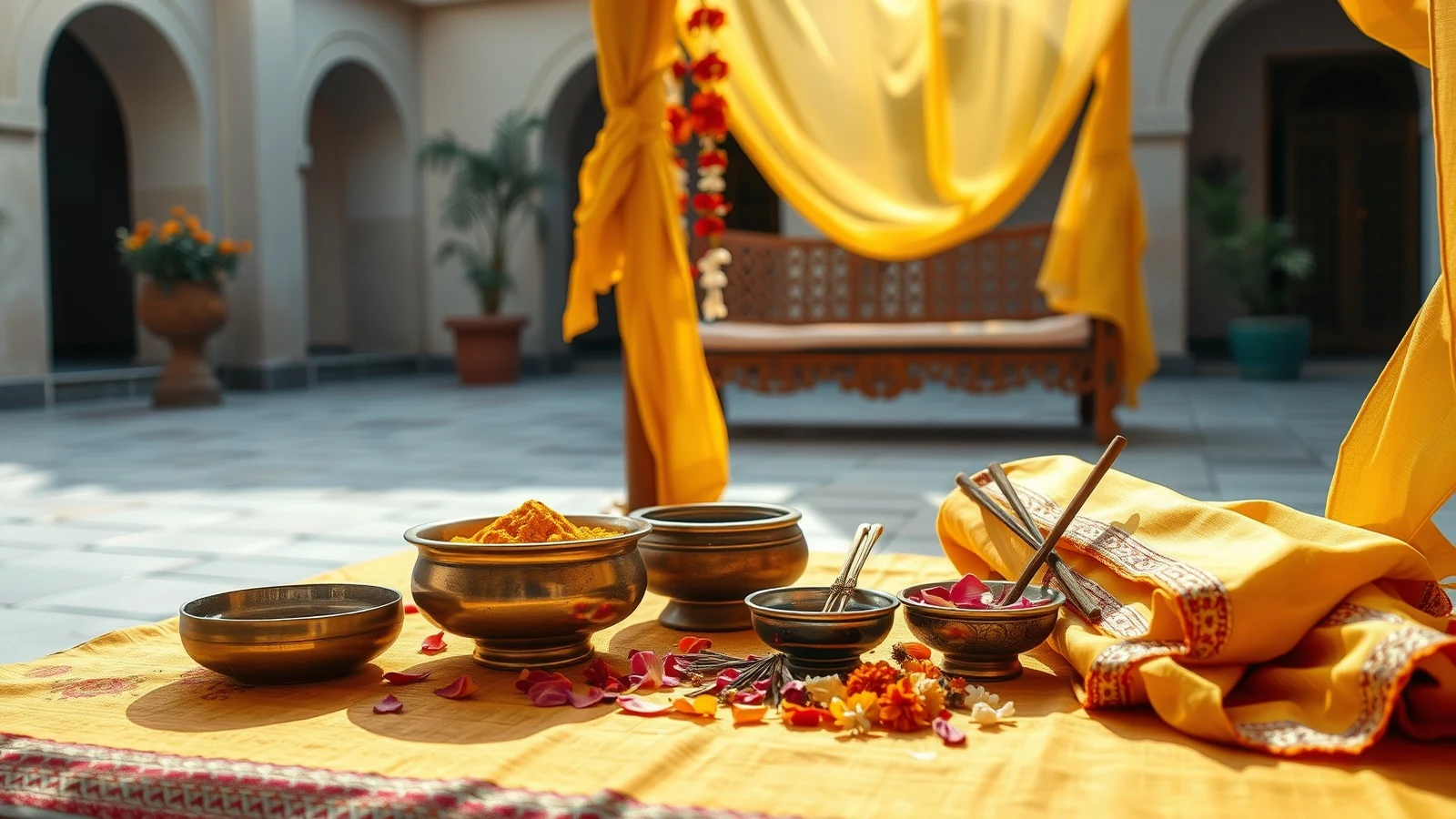
The bride is seated, usually on a low stool or a decorated seat, often under a canopy of yellow fabric held by four women of the family or fixed above her. She wears yellow or a simple outfit she does not mind staining. The married women of the family, starting with the elders, apply the ubtan to her face, arms, hands and feet, and feed her a sweet. The women sing traditional wedding songs, often teasing ones, and many families play the dholak.
After the ubtan, the bride bathes. In many families she is now in a period of seclusion until the nikah: she stays at home, does not meet outsiders, and in some families does not see the groom’s family. The period varies from one day to a week or more. It is a family custom rather than a religious requirement, and many modern families keep it short or skip it.
The groom’s ubtan
Many families hold an ubtan for the groom too, at his home, with his family’s women and his friends. It is usually louder and messier than the bride’s, and his friends often make sure that more turmeric ends up on them than on him. If both events are on the same day, the groom’s family may send some of the groom’s ubtan to the bride’s house, as a sign of the coming union.
The yellow dress
The bride’s manjha or mayun outfit is traditionally yellow, often a simple yellow cotton or silk kurta with a gharara or sharara, or a yellow saree, with flower jewellery of jasmine, roses or marigolds instead of gold. Many brides now wear a more elaborate yellow outfit for the photographs and change into an old one for the ubtan itself. Gold jewellery is usually kept away from the paste.
Hyderabad’s manjha and sanchaq
In Hyderabad, the manjha is part of a distinct sequence of Deccani Muslim wedding customs. A few days before the nikah, the groom’s family brings the sanchaq to the bride’s house: trays of the bride’s wedding clothes, jewellery, cosmetics, dry fruit and sweets. Later, at the nikah, the bride and groom see each other for the first time as a married couple in a mirror placed between them, the aarsi mushaf, with a copy of the Quran. Our Hyderabad wedding planning page covers the city’s venues and vendors.
Ubtan as skin care in the weeks before
Many brides use ubtan not just at the ceremony but for several weeks before the wedding, applying a milder version at home once or twice a week as a traditional skin treatment, in place of or alongside a salon routine. If the bride does this, tell her makeup artist and do a patch test on the full recipe early, because the ceremony paste is usually stronger and more heavily coloured with turmeric than the weekly one. Avoid any new paste, peel or facial in the last week before the nikah: a reaction then cannot be hidden by makeup.
Where to hold it
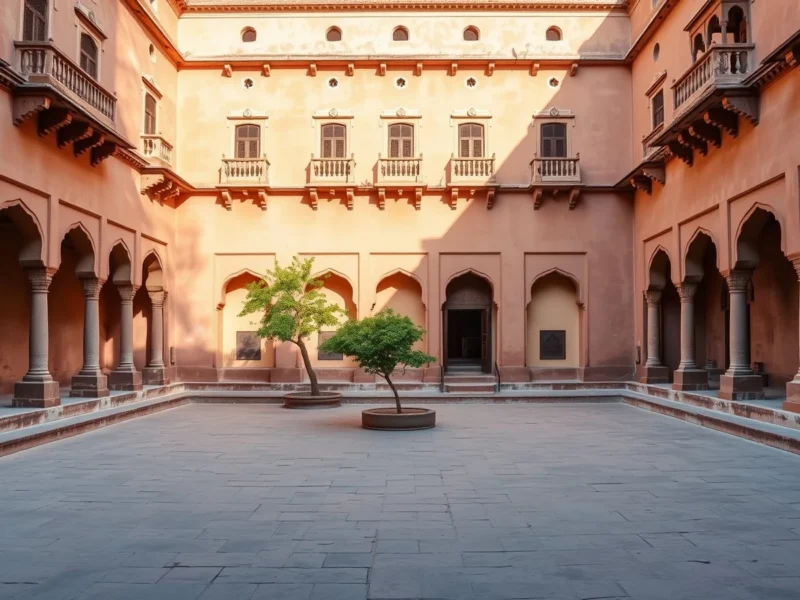
Ubtan is a home ceremony in most families, held in a courtyard, a large room or a terrace. Because the paste stains floors, upholstery and grout, a hotel will usually want it on a lawn or a terrace with sheets on the floor, and some charge a cleaning fee. Ask when booking. At a destination wedding, a garden or a poolside lawn in the morning works well, with a shower close by.
Decor, music and photography
Ubtan decor is yellow and green: marigolds, mango leaves, a yellow canopy, a low decorated seat, and brass or silver bowls for the paste. A dholak player and the family’s women singing are the music. Photographs are best in morning light, and the moments families want are the elders applying the paste, the bride laughing as her friends join in, and the canopy held above her.
Some families do not want photographs of the women at the ubtan, or want a woman photographer only. Agree this in advance. In families that observe seclusion, the photographs of the bride from the ubtan may be the last until the nikah.
Food
Ubtan is usually followed by a lunch or snacks for the women of the family. Many families serve sweet dishes, including a sweet rice or a halwa, alongside a light meal. In families that observe the bride’s seclusion, the food for the following days is brought to her by the women of the house.
A sample manjha day
| Time | What happens |
|---|---|
| 10.00 am | The women of the family arrive; the paste is mixed |
| 10.30 am | The bride is seated under the yellow canopy |
| 10.45 am | The elders apply ubtan, then the other women; songs and dholak |
| 11.45 am | The bride bathes and changes |
| 12.30 pm | Lunch for the women; sweets for the guests |
| Evening | A family dinner, or the mehendi if both are on the same day |
If the manjha and the mehendi fall on the same day, leave at least four hours between them. Henna takes poorly on skin with turmeric residue, and the bride needs time to bathe, rest and dry before the mehendi artists start.
Guests, rooms and the seclusion period
The manjha is usually a small, women-only family event, but in families who observe the bride’s seclusion, aunts and cousins often move into the bride’s home or a nearby hotel for the days between the manjha and the nikah, to keep her company and help with the preparations. If relatives are travelling for the wedding, book their rooms from the manjha, not from the nikah, and plan meals for the house. Our outstation guest planning guide covers the logistics.
How ubtan connects to the rest of the wedding
The manjha opens the wedding week. The sanchaq brings the bride’s wedding clothes, the mehendi follows, and the week builds to the nikah and then the walima hosted by the groom’s family. Seen together, they give each family its own events: the bride’s family hosts the manjha, the mehendi and the nikah dinner, and the groom’s family hosts the sanchaq and the walima. Planning the week as one sequence, rather than event by event, avoids two families booking the same caterer for the same night. Our Muslim wedding planning page covers how we run it end to end.
In a mixed or modern wedding
When a Muslim family marries into a Hindu, Sikh or Christian family, the ubtan and the other family’s haldi often sit side by side, sometimes as a joint event. They are close enough that guests from both sides recognise what is happening. Agree in advance whose songs, whose paste and whose customs apply, and keep the religious parts of each family’s ceremony distinct.
What to settle beforehand
- The name and the day: manjha, mayun or ubtan, and how many days before the nikah.
- Whether the bride will observe seclusion, and for how long.
- Whether the groom has his own ubtan, and whether the paste travels between the homes.
- Where it is held, and the venue’s rules on cleaning.
- Photography, and whether a woman photographer is needed.
- The bride’s yellow outfit and flower jewellery.
Also on Velvet Knot: Hyderabadi Muslim wedding traditions.
Frequently Asked Questions
What is the ubtan ceremony?
Ubtan is the Muslim pre-wedding ceremony in which the bride, and often the groom, is anointed with a paste of gram flour, turmeric, sandalwood and rose water by the women of the family.
What is manjha in a Hyderabadi wedding?
Manjha is the Hyderabadi name for the ubtan ceremony. The bride wears yellow and is anointed with turmeric paste, and in many families she stays home until the nikah.
What is the difference between ubtan and haldi?
They are close counterparts. Ubtan is the Muslim ceremony, usually followed by a period of the bride staying at home; haldi is the Hindu ceremony. The paste is similar.
What does the bride wear for ubtan?
Traditionally yellow, often a simple kurta with a gharara or sharara, with flower jewellery instead of gold.
How many days before the nikah is the ubtan?
It varies by family, from the day before to a week or more. In families that observe the bride’s seclusion, the manjha is often held earlier, so that she has several quiet days at home before the nikah. Ask the elders what the family’s custom is.
Is ubtan a religious requirement?
No. It is a cultural custom shared across South Asia, not part of the nikah itself.
Does the groom also have an ubtan?
In many families, yes, at his own home with his family’s women and his friends. Some families send part of the groom’s paste to the bride’s house.
Can ubtan and mehendi be on the same day?
Yes, but leave several hours between them, because henna takes poorly on skin with turmeric on it.
Sources and further reading
- All India Muslim Personal Law Board
- Andhra Pradesh Tourism, Government of Andhra Pradesh
- Britannica: Hyderabad, India
Planning a Hyderabadi wedding with a manjha, sanchaq, nikah and walima? Tell us your dates and guest count and we will send a tailored plan and quote.
Begin Your Engagement
Want a real number for your wedding?
Tell us your city, guest count and dates. Team Velvet Knot will come back within 24 hours with an itemised budget.