Royal Wedding Theme Ideas: The Palace and Heritage Look for Indian Weddings
- What makes a wedding theme feel truly royal
- Signature royal colour schemes
- Decor that builds the palace look
- Palace and heritage venues that carry the theme
- Lighting: fanoos, candelabra, and warm glow
- Royal invitations: scroll, box, and wax seal
- Bridal and groom attire cues
- Regal entry moments
- Getting the royal look on different budgets
- Frequently Asked Questions
- Sources and further reading
A royal wedding theme borrows from India’s palaces and havelis: deep maroon and gold, crystal chandeliers, heavy drapes, jharokha backdrops, fanoos lighting, throne seating, and heirloom jewellery. Here is how to build the regal look across colours, decor, venues, invitations, and attire on any budget.
What makes a wedding theme feel truly royal
A royal wedding theme is not one decor element. It is a language of restraint and richness spoken across every surface, from the invitation card to the last chair at the reception. The palaces of Rajasthan, the Nawabi havelis of Hyderabad, and the forts of the Deccan share a common grammar: symmetry, height, heirloom materials, and a colour discipline that never feels cluttered.
The regal look leans on a few anchors. Deep, saturated colours instead of pastels. Metals, especially antique gold and brass, instead of chrome. Height and drama through chandeliers and drapes rather than sprawling floral carpets. And motifs drawn from courtly art: elephants, peacocks, lotus, and the arched jharokha window. Get those anchors right and even a mid-budget wedding reads as palace-grade. Our full wedding theme ideas guide places the royal look alongside rustic, floral, and minimalist directions so you can see where it fits your celebration.
Signature royal colour schemes
Colour is where the royal theme is won or lost. Four palettes carry the aesthetic best, and each suits a different mood and skin tone across the wedding party.
Deep maroon and gold is the classic Rajasthani coronation palette. Maroon reads as ceremonial and grounded, gold lifts it into opulence. It photographs beautifully under warm lighting and flatters heirloom kundan and polki jewellery.
Emerald green and gold nods to Mughal and Nawabi courts. Emerald feels jewel-like against ivory drapes and works especially well for a mehendi or a daytime haldi turned regal.
Royal blue and silver is cooler and more contemporary, ideal for an evening reception where sapphire uplighting can do dramatic work. Ivory and gold is the most versatile, a soft, luminous base that lets flowers and jewellery become the accent. If you are torn between directions, our wedding colour palette guide shows how each scheme translates across mandap, stage, and tablescape. The rule of thumb: pick one dominant colour, one metallic, and one accent, then hold that trio across every event.
Decor that builds the palace look
Royal decor is architectural before it is floral. Start with the vertical and let flowers finish it.
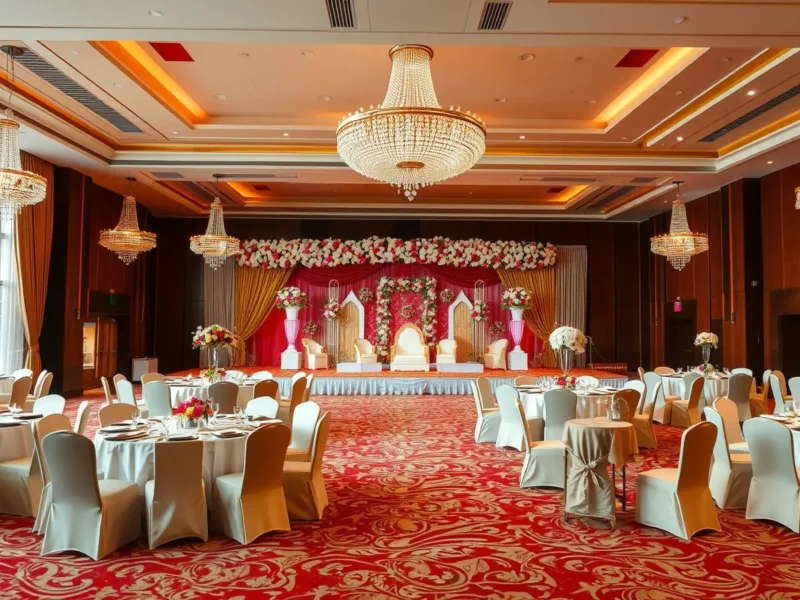
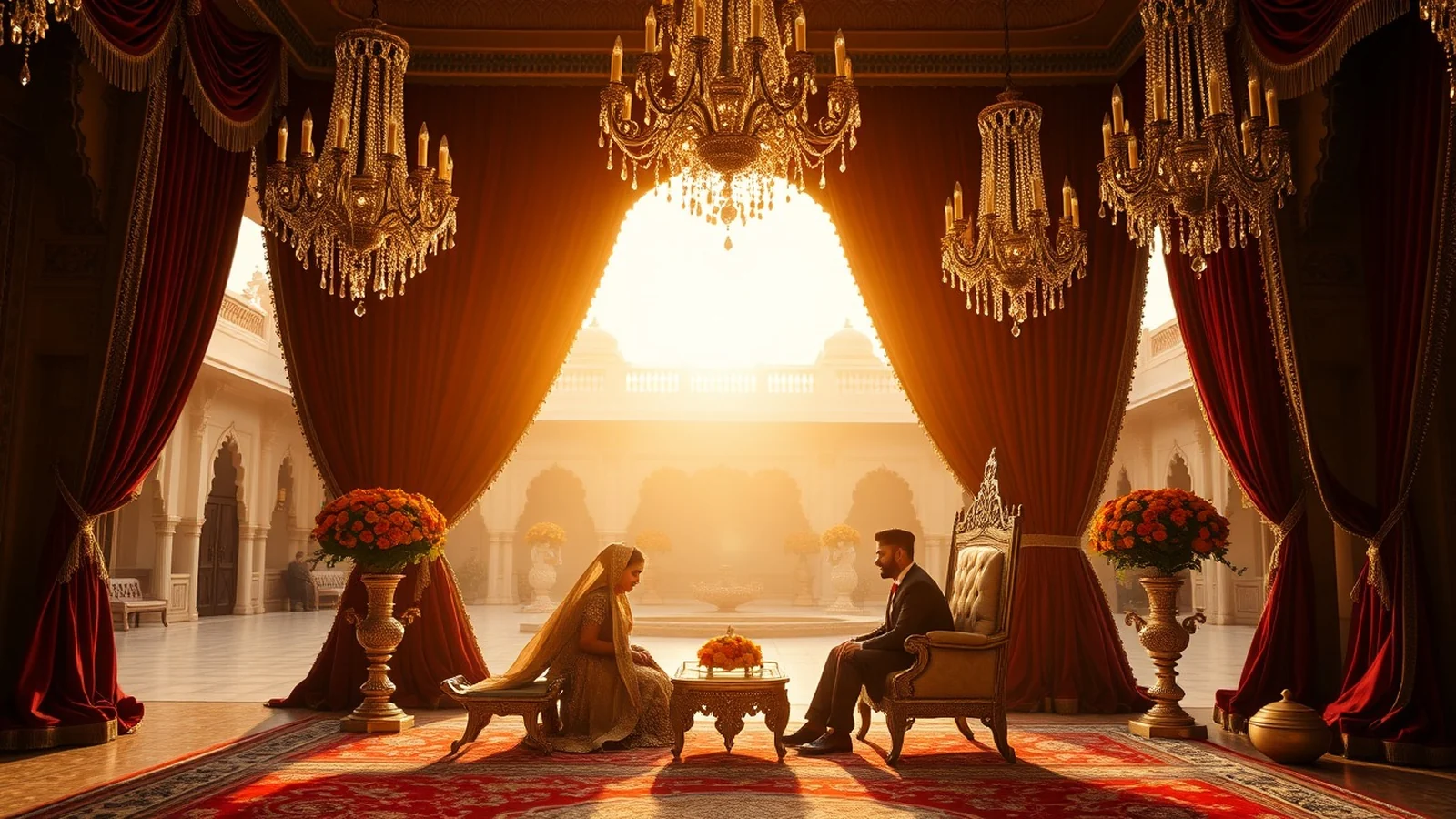
Crystal chandeliers and fanoos set the ceiling as a design surface. A cluster of chandeliers over the mandap or the reception aisle instantly signals grandeur. Heavy drapes in velvet, raw silk, or brocade frame the space and hide banquet-hall ceilings; layered curtains in the maroon-gold or emerald palette do more for the room than any centrepiece.
Throne and chaise seating for the couple is the single most photographed royal element. A carved, high-backed throne or a low chaise on a raised platform, flanked by brass urns and marigold garlands, becomes the anchor of the entire stage. Jharokha backdrops, the arched palace-window frames, are the defining architectural motif; used behind the couple or along entry corridors they read as heritage instantly.
Elephant and peacock motifs in cutwork, appliqued drapes, or metal statuary carry the courtly story, while brass and marigold keep it rooted in Indian tradition rather than generic luxury. For the two most important surfaces, see our stage decoration ideas and mandap decoration ideas, and the broader wedding decoration guide for how to layer these without overcrowding.
Palace and heritage venues that carry the theme
Nothing sells the royal look like a genuinely royal setting, where the architecture does the heavy lifting and your decor simply amplifies it.
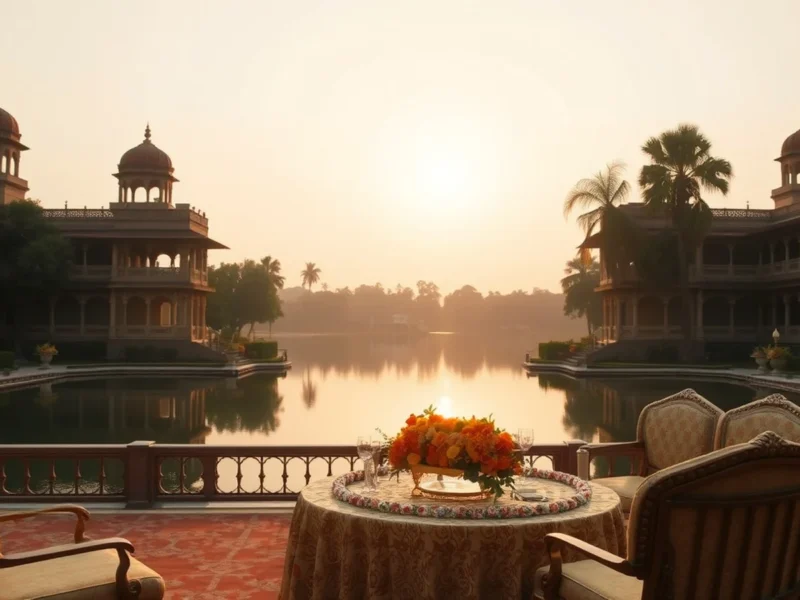
Rajasthan palaces are the obvious first choice: the lake palaces of Udaipur, the forts and havelis of Jaipur and Jodhpur, and the desert palace-hotels around Jaisalmer. Marble courtyards, mirror halls, and floodlit ramparts give you a backdrop no set-builder can match. Our guide to the best palace wedding venues in Rajasthan breaks down the standout properties by capacity and mood.
Hyderabad Nawabi havelis and palaces offer a Deccan alternative with a distinct Indo-Islamic character: scalloped arches, Belgian chandeliers, and durbar halls. Falaknuma Palace is the benchmark, but the city has a range of heritage havelis and palace-style banquet estates. Forts across Rajasthan, Madhya Pradesh, and the Deccan bring rugged grandeur and dramatic elevation for baraat and entry moments. Heritage venues price at a premium, so read our palace wedding cost guide before you fall in love with a property, and request a quote if you want us to shortlist venues to your guest count and budget.
Lighting: fanoos, candelabra, and warm glow
Royal lighting is warm, layered, and never flat. The palaces were lit by lamplight and candle, and the best modern royal weddings honour that.
Fanoos, the ornate Middle Eastern and Nawabi lanterns, hung in clusters along corridors and over dining tables, throw patterned shadows that read instantly as heritage. Candelabra on long banquet tables bring intimacy and height at once, especially for a seated dinner. Layer three sources: overhead chandeliers or fanoos for the ceiling, candelabra and lanterns at table level, and warm amber uplighting to wash the drapes and jharokha frames.
Keep the colour temperature warm, around 2700K, and avoid cool white LEDs, which flatten gold and make velvet look cheap. For outdoor palace lawns and fort ramparts, floodlighting the architecture in soft amber turns the building itself into your grandest decor element, at almost no added cost.
Royal invitations: scroll, box, and wax seal
The invitation is the first taste of the theme, and a royal wedding announces itself before the guest reads a word. Three formats dominate.
Scroll invitations, printed on textured or handmade paper and rolled inside a velvet-lined tube or tied with zari cord, echo the royal farman, the courtly decree. Box invitations layer the card with dry fruits, sweets, or a small brass keepsake inside a fabric-wrapped or mother-of-pearl box, and carry real weight, literally and figuratively.
A wax seal, stamped with a monogram or a peacock or elephant crest, is the finishing detail that ties either format to the courtly story. Carry your chosen palette and motif from the invitation straight through to the signage, menu cards, and welcome kits so the theme feels authored rather than assembled. Even on a tighter budget, a single well-designed scroll with a wax seal sets the tone more effectively than an expensive but generic card.
Bridal and groom attire cues
The couple are the centrepiece of any royal frame, so attire and jewellery deserve the same intent as the decor.
For the bride, a Sabyasachi-style lehenga in deep maroon, emerald, or regal red, with heavy zardozi and velvet, is the archetype. What makes it read as royal is not the label but the weight of the work and the heirloom jewellery: uncut polki, kundan, a matha patti, a nath, and a substantial rani haar. Layered, antique-finish gold beats a single delicate set every time. If you are budgeting the outfit, our bridal lehenga cost guide covers couture, made-to-order, and rental routes to the same silhouette.
For the groom, the safa, the turban, is non-negotiable, ideally in a palette-matched silk with a kalgi brooch and a pearl or emerald sarpech. A sherwani in ivory, gold, or deep tones with a contrasting stole, mojari, and a heirloom brooch or kamarbandh completes the maharaja look. The couple should coordinate, not match: complementary tones within the same palette photograph best against the mandap and throne.
Regal entry moments
The entrance is where a royal theme becomes theatre, and it is the moment guests remember. Draw on the courtly repertoire.
For the groom, a baraat on a decorated horse or in a vintage car, or on rare heritage occasions an elephant where permitted and ethical, under a canopy of fanoos and sparklers, sets the maharaja tone. For the bride, a phoolon ki chadar, a canopy of flowers carried by brothers, or an entry framed by liveried attendants holding brass lamps and rose petals, brings the palace procession to life.
Reception entries can lean cinematic: a slow walk down a jharokha-lined, candlelit corridor, or a reveal from behind parting velvet drapes. Live shehnai or a nadaswaram ensemble replaces recorded music and instantly elevates the arrival. For a full menu of staged and traditional options, see our bride and groom entry ideas. The principle is simple: give the couple height, framing, and a slow reveal, and the royal theme peaks exactly where the cameras are pointed.
Getting the royal look on different budgets
The palace aesthetic scales. You do not need a fort and 500 candelabra to read as regal, you need the right anchors placed where they count.
Premium budget: book a genuine heritage or palace venue, layer real chandeliers and fanoos, commission custom jharokha sets, and let the architecture carry the theme. This is where the palace wedding cost guide matters most.
Mid budget: choose a banquet or resort with high ceilings, then invest in heavy drapes to transform the box, one statement chandiler cluster over the couple, a strong throne-and-jharokha stage, and warm fanoos lighting. Spend the decor money vertically, on the ceiling and the stage, not spread thin across every table.
Lean budget: concentrate everything on the two photographed surfaces, the stage and the entry. A single well-built jharokha backdrop, a rented throne, marigold and brass accents, warm amber lighting, and disciplined maroon-gold styling deliver 80 percent of the effect at a fraction of the cost. Across every tier, colour discipline and warm lighting are free and matter more than budget. If you want a costed plan matched to your guest count, request a quote and we will map the royal look to your numbers.
Planning a luxury wedding?
Tell us your dates and vision. Team Velvet Knot will put together a tailored plan and an honest budget.
Frequently Asked Questions
What is a royal wedding theme?
A royal wedding theme recreates the palace and heritage aesthetic of Indian courts: deep jewel-tone colours like maroon, emerald, and royal blue with gold, crystal chandeliers, heavy drapes, throne seating, jharokha backdrops, warm fanoos lighting, and heirloom attire and jewellery. It leans on symmetry, height, and rich materials rather than sheer volume of decor.
Which colours work best for a royal wedding?
The strongest royal palettes are deep maroon and gold, emerald green and gold, royal blue and silver, and ivory and gold. Pick one dominant colour, one metallic, and one accent, then carry that trio consistently across the invitation, mandap, stage, and reception for a cohesive regal effect.
Do I need a palace venue for a royal theme?
No. A genuine palace, haveli, or fort makes it effortless, but you can achieve the look in a high-ceilinged banquet or resort by adding heavy drapes, a chandelier cluster, a strong throne-and-jharokha stage, and warm fanoos lighting. Concentrating decor on the ceiling, stage, and entry delivers most of the royal effect at a lower cost.
How can I get the royal look on a smaller budget?
Focus spending on the two most photographed surfaces, the stage and the entry. A single jharokha backdrop, a rented throne, marigold and brass accents, warm amber lighting, and disciplined maroon-gold styling create a convincingly regal frame without a palace venue or hundreds of chandeliers. Colour discipline and warm lighting cost nothing and matter most.
What attire suits a royal wedding theme?
Brides suit a heavy zardozi or velvet lehenga in maroon, emerald, or regal red, layered with heirloom polki or kundan jewellery, a matha patti, and a rani haar. Grooms wear a safa with a kalgi, an ivory or deep-toned sherwani, mojari, and a heirloom brooch or sarpech. Coordinate tones within one palette rather than matching exactly.
What lighting creates a regal atmosphere?
Warm, layered lighting around 2700K is key. Combine overhead crystal chandeliers or clustered fanoos lanterns, candelabra at table level, and amber uplighting washing the drapes and jharokha frames. For palace lawns or forts, floodlighting the architecture in soft amber turns the building itself into your grandest decor element.
Sources and further reading
Begin Your Engagement
Want a real number for your wedding?
Tell us your city, guest count and dates. Team Velvet Knot will come back within 24 hours with an itemised budget.