Walima: The Muslim Wedding Feast, Its Meaning, Timing and How to Plan It
- What the walima is
- Its basis in the Sunnah
- When the walima is held
- Who hosts and who pays
- Who is invited
- The walima menu
- Alcohol and music
- The couple on stage
- Venues for a walima
- A walima at a destination wedding
- Keeping the walima within means
- Decor and photography
- Gifts and the guest queue
- Guests who stay between the nikah and the walima
- Questions to ask the venue
- What to settle beforehand
- Frequently Asked Questions
- Sources and further reading
The walima is the wedding feast hosted by the groom’s family after the nikah. It is a Sunnah: the Prophet told a newly married companion to give a walima “even with one sheep”. It announces the marriage to the community and thanks God for it. Most families hold it the day after the nikah or within a few days, and in India it is usually the largest reception of a Muslim wedding.
What the walima is
The walima is the feast that follows a Muslim marriage. The nikah makes the marriage; the walima celebrates it. It is hosted by the groom and his family, and its purpose is twofold: to give thanks to God for the marriage, and to announce it publicly, so that the community knows the couple are married.
In Indian Muslim weddings the walima has grown into the main reception of the wedding, often bigger than the nikah itself, with hundreds of guests, a stage for the couple and a long dinner. At its core, though, it remains a simple act: the groom’s family feeds people in gratitude for the marriage. Our Muslim wedding traditions guide places it in the full sequence of events.
Its basis in the Sunnah
The walima is a Sunnah, a practice of the Prophet Muhammad. The best-known source is a hadith in Sahih al-Bukhari: when the Prophet learned that one of his companions, Abdur Rahman ibn Awf, had married, he told him to give a walima, even if only with one sheep. The Prophet himself gave walimas after his own marriages, some lavish and some very simple.
Scholars of the different schools describe the walima as a strongly recommended Sunnah, and some consider it obligatory. All agree on its spirit: it should be generous within the host’s means, it should not be a display of wealth, and the poor should not be left out. A walima to which only the rich are invited is criticised in the hadith literature.
When the walima is held
Traditionally, the walima is held after the marriage has been consummated, which in practice means the day after the nikah, or within the following few days. That is the most common pattern in India: the nikah and the bride’s family’s dinner on one day, the rukhsati when the bride leaves with the groom, and the walima hosted by the groom’s family on the following day or the following weekend.
| Day | Event | Host |
|---|---|---|
| Days before | Manjha or ubtan, mehendi, sanchaq | Both families |
| Wedding day | Nikah, followed by dinner | Bride’s family |
| Wedding night | Rukhsati: the bride leaves for the groom’s home | Bride’s family |
| Next day or soon after | Walima | Groom’s family |
Some families now hold the walima on the same day as the nikah, or combine it with a joint reception, especially at destination weddings where guests cannot stay for extra days. That is a practical choice, and many scholars accept it; ask the family’s imam if there is any doubt.
Who hosts and who pays
The walima is the groom’s responsibility, and in practice his family’s. The bride’s family is a guest at the walima, just as the groom’s family is a guest at the nikah dinner. That division is worth stating clearly to both families early in the planning, because in many modern weddings costs are shared or the events are merged, and assumptions differ.
Some families agree that the bride’s family will contribute to a joint reception instead of hosting a separate dinner. That works if it is agreed openly. What causes friction is one family assuming the other is paying.
Who is invited
The walima is meant to be public, so the invitation list is usually wide: relatives, friends, neighbours, colleagues and the community. Many families make a point of inviting people who could not otherwise afford a feast, or of sending food to a mosque, a madrasa or an orphanage on the day, in keeping with the hadith that criticises a walima from which the poor are excluded.
Accepting a walima invitation is itself encouraged in the Sunnah, which is one reason walimas in India are often large: guests come.
The walima menu
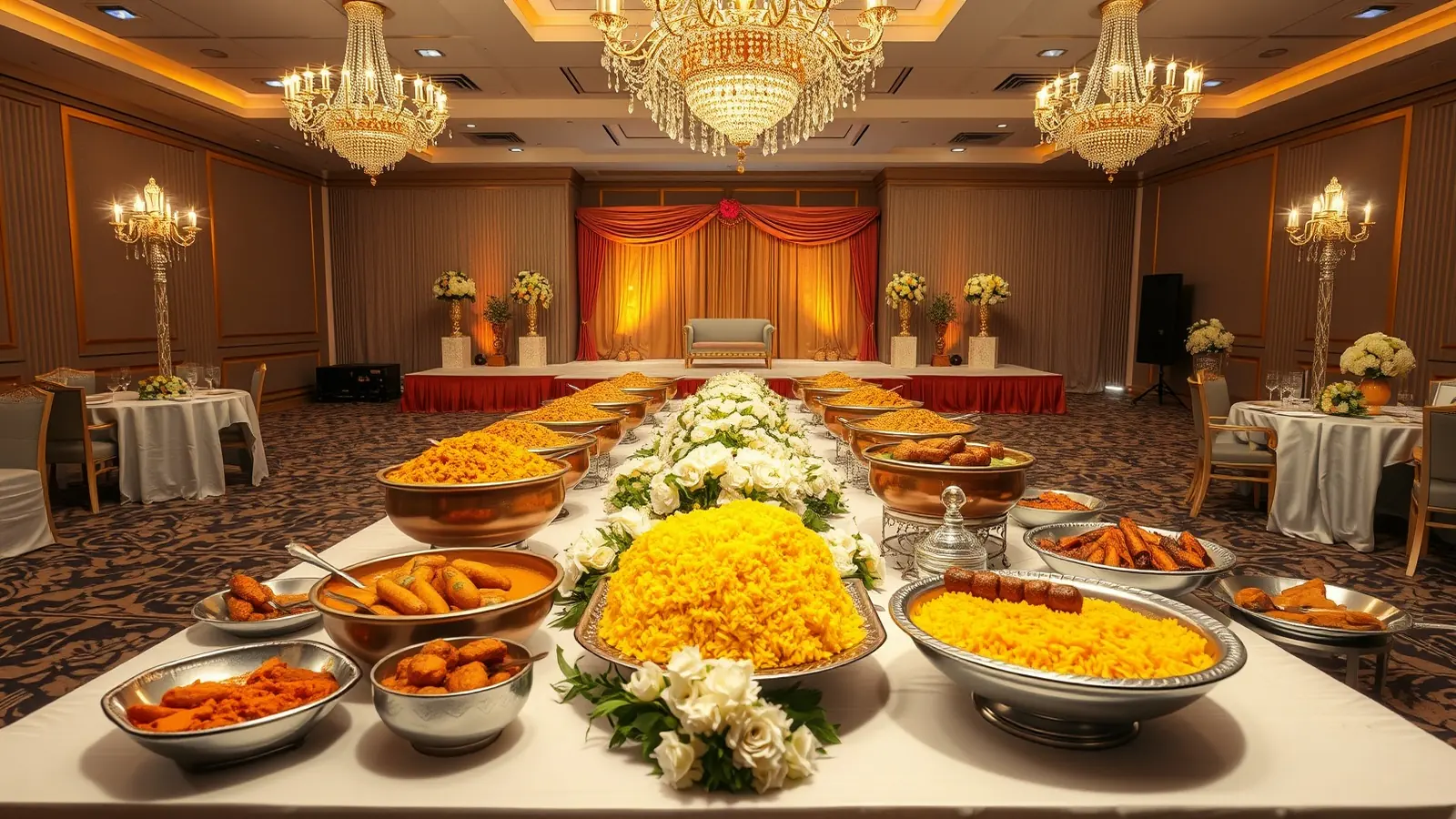
Food is the heart of the walima. In Hyderabad, where the site’s team is based, a walima menu typically includes biryani, often both mutton and chicken, with mirchi ka salan and dahi ki chutney, a korma or kebabs, khubani ka meetha and double ka meetha. In Lucknow it is likely to be awadhi biryani, kormas and sheermal; in Kerala, a Malabar biryani with pathiri; in Bengal and Bangladesh, kacchi biryani, rezala and firni.
All meat must be halal, which is easy with a Muslim caterer and needs explicit confirmation with a hotel kitchen. Many families also prefer a caterer whose kitchen does not serve pork or alcohol, and at a hotel that may mean a separate kitchen or a certified halal outside caterer. Our wedding catering cost guide covers how caterers price per plate.
Alcohol and music
Alcohol is not served at a walima in observant Muslim families, and most hotels are used to running a dry reception. Make sure the hotel’s bar is closed or out of sight in the reception space.
Music varies a great deal. Some families have qawwali or a live band, some have recorded music, and some have none, in keeping with their own understanding of what is appropriate. The same goes for whether men and women are seated together or separately. These are family decisions, and the planner’s job is to set up the room to match them: a partition, separate entrances and separate dining areas if segregation is wanted.
The couple on stage
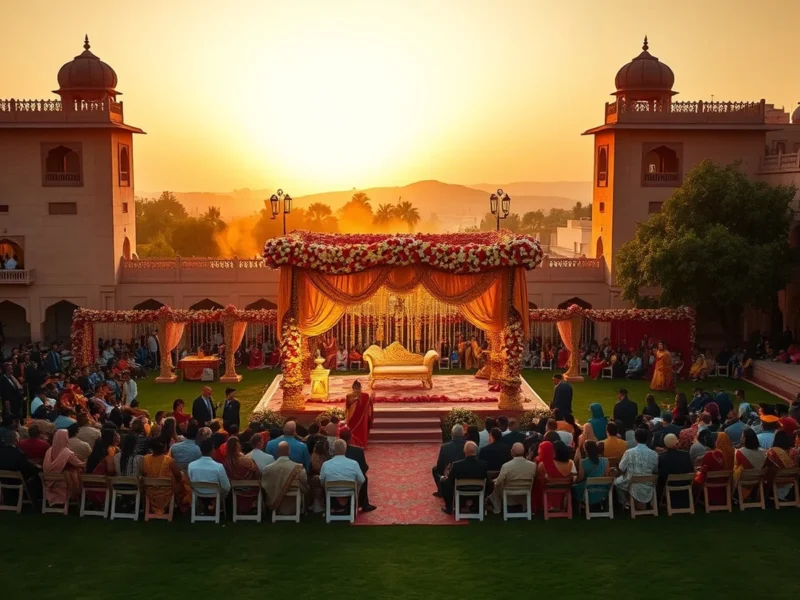
At most Indian walimas the couple sit on a decorated stage while guests come up to congratulate them, give gifts and take photographs. The bride usually wears a heavy outfit from the groom’s family, often a lehenga, gharara or saree, and the groom a sherwani. A walima can run for three or four hours, so the stage needs comfortable seating, water and a person managing the queue of guests.
Venues for a walima
Walimas are held in function halls, banquet halls, hotel ballrooms and lawns. In Hyderabad, large function halls and convention centres that can take 1,000 guests or more are common, as are hotel ballrooms for smaller and more formal walimas. Because the walima is usually the day after the nikah, it is often booked at a different venue, closer to the groom’s family. Our Hyderabad wedding cost guide and the Hyderabad wedding planning page cover the city’s options.
A walima at a destination wedding
At a destination wedding, the walima is often held on the last evening, after the nikah earlier in the trip. Everyone is already there, so the guest list is the same as for the nikah, and the walima becomes the farewell dinner. Some families then hold a second walima at home for the wider community who could not travel, which is entirely in keeping with its purpose of announcing the marriage.
Keeping the walima within means
The walima has become expensive in many Indian cities, with families competing on guest numbers, decor and menus. The Sunnah points the other way: the Prophet’s own walimas ranged from a meal of meat and bread to a simple meal of dates and barley, and the hadith “even with one sheep” sets a modest floor, not a ceiling. Several community organisations in India campaign for simpler weddings for exactly this reason.
A planner’s practical advice is the same: decide the guest list and the budget first, and let the menu and venue follow. A well-run walima for 300 people with excellent food is better remembered than a stretched one for 1,500.
Decor and photography
Walima decor centres on the stage: a backdrop, a seat for the couple, flowers and lighting, with the rest of the hall dressed simply around the dining area. Many Hyderabadi families favour white and gold, or deep reds and greens, and fresh flowers rather than fabric. If men and women are seated separately, each side needs its own decor and its own view of the stage, or a separate stage for the bride on the women’s side.
Brief the photographer on any segregation before the day. Many families want a woman photographer on the women’s side, and some do not want photographs of women guests at all. Agree which parts of the evening may be photographed, and keep the couple’s portraits to a short session before guests arrive, when the light and the stage are fresh.
Gifts and the guest queue
Guests usually bring gifts or envelopes to the stage. A relative from the groom’s side should sit near the stage to receive and note them, and one named person should take them home at the end. On a large walima, the queue of guests waiting to greet the couple can stretch for two hours; open dinner from the start so that nobody waits to eat until they have reached the stage.
Guests who stay between the nikah and the walima
When the walima is the day after the nikah and relatives have travelled, they need a second night of rooms, breakfast and lunch on the walima day, and transport to the walima venue, which is often in a different part of the city. Plan this as part of the wedding. A small room block near the walima venue and a simple lunch for the elders keep the day comfortable. Our outstation guest planning guide covers how to organise it.
Questions to ask the venue
- Can the kitchen guarantee halal meat, or will you allow a halal outside caterer?
- Will the bar be closed or out of sight?
- Can the hall be partitioned, with separate entrances, if needed?
- Is there a prayer space for guests at maghrib and isha?
- What time must the event end, and is there overtime?
The prayer space is often forgotten, and on a walima that starts in the evening it matters to many guests. Our Muslim wedding planning page covers how we run the full nikah and walima.
What to settle beforehand
- The day of the walima, and whether it is separate from the nikah dinner.
- Who hosts and pays, stated plainly to both families.
- The guest list, and whether food will also be sent to a mosque or charity.
- Halal catering, and the hotel kitchen’s arrangements.
- Music, seating and any segregation.
- The bride’s outfit from the groom’s family.
Also on Velvet Knot: Hyderabadi Muslim wedding traditions.
Frequently Asked Questions
What is a walima?
A walima is the wedding feast hosted by the groom’s family after the nikah. It is a Sunnah of the Prophet and announces the marriage to the community.
When should the walima be held?
Traditionally after the marriage is consummated, which usually means the day after the nikah or within a few days. Some families hold it on the same day.
Who pays for the walima?
The groom and his family. The bride’s family is a guest at the walima.
Is the walima compulsory?
It is a strongly recommended Sunnah, and some scholars consider it obligatory. It can be very simple; the hadith speaks of a walima “even with one sheep”.
What is the difference between a walima and a reception?
In India the walima usually is the reception, hosted by the groom’s family. Its religious purpose is to give thanks and announce the marriage.
What food is served at a walima?
Regional dishes, always halal. In Hyderabad that usually means biryani, salan, korma or kebabs, and khubani or double ka meetha.
Can the walima be held before the nikah?
No. The walima celebrates a marriage that has already taken place, so it always follows the nikah. A dinner before the nikah is a separate event, such as a mehendi or a pre-wedding party.
Sources and further reading
- Sahih al-Bukhari, Book of Wedding (Nikah), sunnah.com
- All India Muslim Personal Law Board
- The Quran, Surah An-Nisa, quran.com
Planning a nikah and walima in Hyderabad or at a destination? Tell us your dates and guest count and we will send a tailored plan and quote.
Begin Your Engagement
Want a real number for your wedding?
Tell us your city, guest count and dates. Team Velvet Knot will come back within 24 hours with an itemised budget.