Wedding Invitation Wording, Quotes and Messages for Indian Weddings
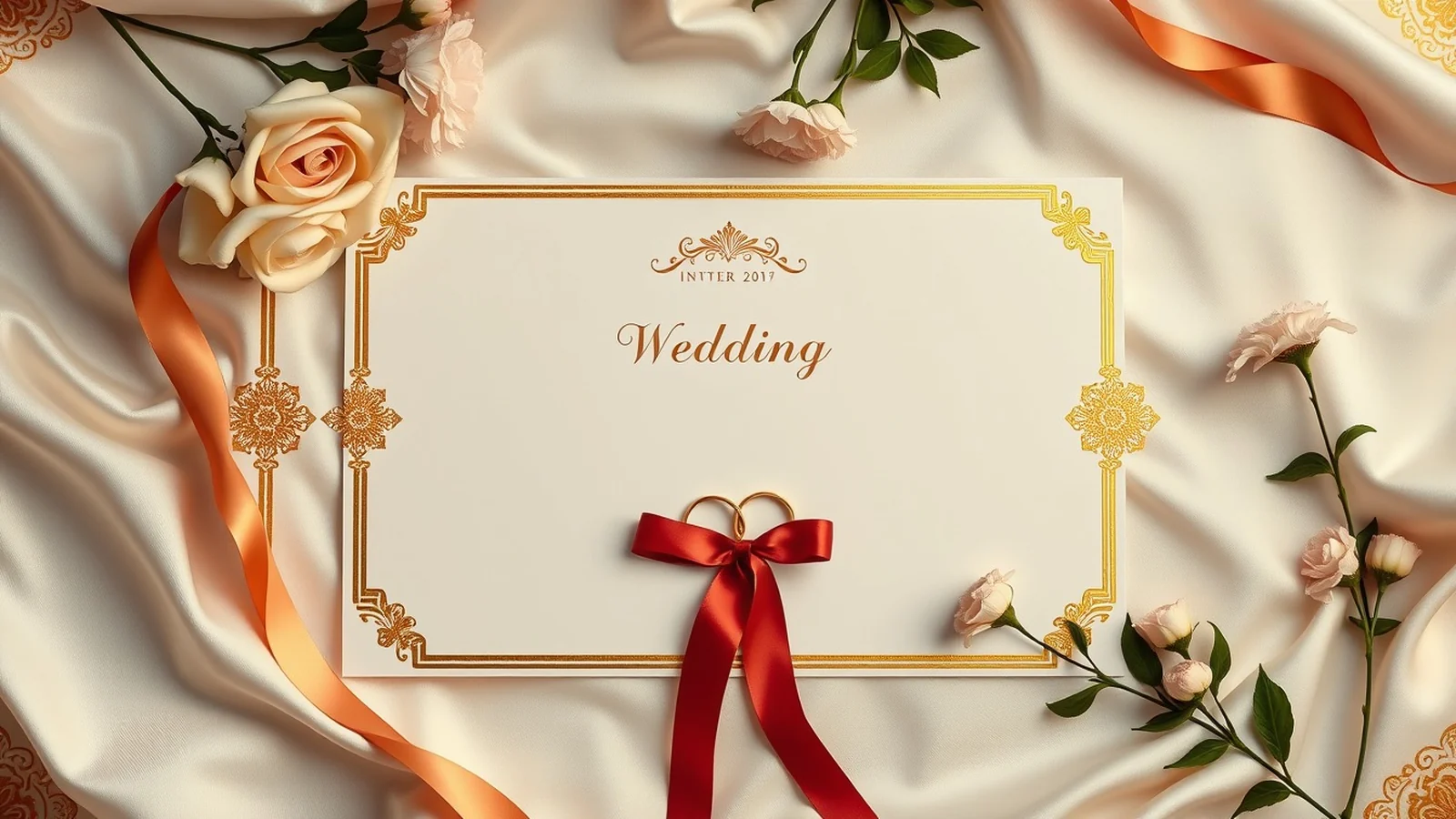
- The anatomy of an Indian wedding invitation
- Traditional Hindu wording with Ganesha invocation
- Muslim and Nikah wording
- Christian wedding wording
- Sikh, interfaith and modern secular wording
- Wording for individual functions: mehndi, haldi, sangeet and reception
- Digital and WhatsApp invite wording
- Tone, hosting lines, RSVP and dress-code etiquette
- Common wording mistakes to avoid
- Save the dates and RSVPs
- Marriage invitation quotes and short messages
- Frequently Asked Questions
- Sources and further reading
This guide breaks down the anatomy of an Indian wedding invitation and gives ready-to-use wording samples for Hindu, Muslim, Christian, Sikh, interfaith and modern secular weddings, plus function cards, digital invites, RSVP lines and the common mistakes to avoid.
The anatomy of an Indian wedding invitation
Every good wedding invitation, whether it is a gilded box card or a WhatsApp graphic, is built from the same seven parts. Get the structure right and the wording almost writes itself.
- Host line: who is inviting you. Traditionally the parents or grandparents of the couple, sometimes the couple themselves.
- Request line: the warm phrasing that does the actual inviting, such as ‘request the pleasure of your company’ or ‘joyfully invite you to celebrate’.
- Couple names: the bride and groom, usually with the bride named first in North Indian cards and either order in the South.
- Date, time and muhurat: the calendar date plus the auspicious ceremony window. Fixing this comes first, so review our guide to wedding muhurat dates before you print anything.
- Venue: full name and address of each function, since Indian weddings run across multiple venues.
- RSVP: a name and phone or WhatsApp number for confirmations.
- Extras: dress code, function schedule, hashtags or a QR code to a wedding website.
Print budgets vary widely by finish and insert count, so it helps to know the real numbers early. Our breakdown of wedding invitation cost in India covers box cards, foil work and digital options.
Traditional Hindu wording with Ganesha invocation
A classic Hindu card opens with an invocation to Lord Ganesha, the remover of obstacles, often written as ‘Shubh Vivah’ or a Sanskrit shloka at the top. The parents are named as hosts, and the ceremony details follow.
|| Shree Ganeshaya Namah ||
Shubh Vivah
Mr. and Mrs. Rajesh Sharma
request the honour of your gracious presence
at the wedding of their beloved daughterAnanya
with
Karthik
son of Mr. and Mrs. Suresh Reddyon Sunday, the 8th of February 2026
Muhurat at 7:45 PM
at Taj Falaknuma Palace, HyderabadRSVP: Priya 98490 00000
South Indian families often add the gotra, the family deity or a line inviting guests to bless the couple. The wedding itself unfolds through a long sequence of rites, and naming them correctly matters on multi-function cards. Our Hindu wedding rituals guide explains each ceremony so your inserts use the right terms.
Muslim and Nikah wording
A Muslim wedding invitation traditionally opens with ‘Bismillah ir-Rahman ir-Rahim’ and centres on the Nikah and the Walima reception. The tone is gracious and God-conscious, and elders are named as hosts.
Bismillah ir-Rahman ir-Rahim
By the grace of the Almighty
Mr. and Mrs. Aslam Khan
request the pleasure of your company
at the Nikah ceremony of their daughterZoya
to
Imran
son of Mr. and Mrs. Farooq AhmedNikah on Friday, the 20th of March 2026, after Asr prayer
followed by Walima on Saturday, the 21st of March 2026, 8:00 PM onwards
at Chowmahalla Palace, HyderabadRSVP: Sania 90000 00000
Many families list the Nikah and Walima on separate inserts because the two events often fall on different days and venues. For the customs behind each ritual, see our overview of Muslim wedding traditions in India.
Christian wedding wording
Indian Christian invitations follow a church-service structure and usually name both sets of parents. The wording often includes a short scripture line and the phrase ‘solemnisation of the marriage’.
‘Those whom God has joined together, let no one separate.’
Mr. and Mrs. Thomas George
and
Mr. and Mrs. Anil Dsouza
request the honour of your presence
at the solemnisation of the marriage ofRebecca
and
Danielon Saturday, the 11th of April 2026, at 4:00 PM
at St. Mary’s Basilica, Secunderabad
followed by the reception at Taj Deccan, Banjara HillsRSVP: Merlyn 88000 00000
The church ceremony, the exchange of vows and rings, and the reception each have their own customs worth knowing before you word the card. Our guide to Christian wedding traditions in India walks through the order of service.
Sikh, interfaith and modern secular wording
A Sikh wedding centres on the Anand Karaj, held in the presence of the Guru Granth Sahib, and the card often opens with ‘Ik Onkar’ or ‘Waheguru Ji Ka Khalsa, Waheguru Ji Ki Fateh’.
Ik Onkar
S. and Sardarni Harpreet Singh
request your blessings and presence
at the Anand Karaj of their daughterSimran
with
Arjunon Sunday, the 3rd of May 2026
Ardaas at 9:00 AM, Anand Karaj at 10:30 AM
at Gurudwara Saheb, Ameerpet, HyderabadRSVP: Manpreet 77000 00000
For an interfaith wedding, keep the wording neutral, name both families with equal warmth, and skip any single-faith invocation unless both sides agree to include both.
Together with their families
Meera and Joseph
invite you to celebrate their marriage
as two families and two traditions become oneon Saturday, the 6th of June 2026, at 6:30 PM
at Novotel HICC, HyderabadRSVP by 20th May: 66000 00000
A modern secular card lets the couple host in their own voice, playful or elegant, without religious lines.
We are getting married!
Nisha and Rohan
would love you by their side
as they say ‘I do’Saturday, 12th September 2026, 7:00 PM
Park Hyatt, Hyderabad
Dinner, dancing and dessert to follow
Wording for individual functions: mehndi, haldi, sangeet and reception
The pre-wedding functions call for lighter, more playful wording than the main ceremony. Each card should still carry the couple names, date, time, venue and RSVP, but the voice can loosen up.
Mehndi
Henna, hues and happy hearts
Join us for Ananya’s Mehndi
Friday, 6th February 2026, 11:00 AM onwards
at the Sharma Residence, Jubilee Hills
Wear your brightest colours
Haldi
A splash of turmeric, a lot of love
Come bless Karthik at his Haldi
Saturday, 7th February 2026, 10:00 AM
at Reddy Farmhouse, Shamirpet
Dress code: yellow, and no white!
Sangeet
Dust off your dancing shoes
The Sharmas and Reddys invite you to the Sangeet
Saturday, 7th February 2026, 8:00 PM
at Taj Krishna, Banjara Hills
An evening of music, dance and dinner
Reception
Mr. and Mrs. Rajesh Sharma
request the pleasure of your company
at the reception in honour of
Ananya and Karthik
Sunday, 8th February 2026, 8:30 PM onwards
at Taj Falaknuma Palace, Hyderabad
Coordinating colours across these cards is easier when your decor is planned first. Browse our wedding theme ideas and wedding decoration guide so the invitation palette matches the mandap.
Digital and WhatsApp invite wording
Digital invites are now standard for save-the-dates, function reminders and out-of-town guests. Keep the wording tight, front-load the essentials, and always include a link or QR code for directions and RSVP.
Save the date
Save the date!
Ananya and Karthik are tying the knot
8th February 2026, Hyderabad
Formal invitation to follow
WhatsApp function reminder
You are warmly invited!
Sharma and Reddy wedding festivities
Mehndi and Haldi: 6th and 7th Feb
Sangeet: 7th Feb, 8 PM, Taj Krishna
Wedding: 8th Feb, 7:45 PM, Taj Falaknuma Palace
Tap for venue map and RSVP: [link]
We cannot wait to celebrate with you
For WhatsApp, avoid dense paragraphs. Use short lines, one or two emojis at most for a premium feel, and put the RSVP link on its own line so it stays tappable on every phone.
Tone, hosting lines, RSVP and dress-code etiquette
The single biggest wording decision is who hosts, because it sets the entire tone. When parents or grandparents host, the phrasing is formal and third-person.
Mr. and Mrs. Rajesh Sharma request the honour of your presence at the wedding of their daughter Ananya…
When grandparents are named alongside, add a line such as ‘Along with the blessings of their grandparents, Late Shri and Smt. Mohan Lal Sharma’. When the couple hosts themselves, the voice shifts to first person and warms up.
Together with our families, we, Ananya and Karthik, invite you to share in our joy…
Formal versus casual: a formal card uses full names, honorifics and ‘request the honour of your presence’. A casual card uses first names, contractions and ‘come celebrate with us’. Pick one register and keep it consistent across every insert.
RSVP etiquette: always give a name plus a phone or WhatsApp number, and add a deadline for catering, for example ‘Kindly RSVP by 25th January’. For a strict headcount, add ‘Non-transferable’ or ‘Admits two’.
Dress code: place it on the relevant function insert, not the main card. Use clear cues such as ‘Indian formal’, ‘Traditional South Indian’, ‘Cocktail’ or a colour like ‘Shades of ivory and gold’.
Common wording mistakes to avoid
Small errors on a wedding card are hard to unsee once thousands are printed. Watch for these.
- Spelling names or gotras wrong. Proof every name, especially the in-laws’ family names and any Sanskrit or Urdu invocation, against a written source.
- Wrong day for the date. Confirm that ‘8th February 2026’ really is a Sunday. Mismatched day and date is the most common printed error.
- Muhurat versus arrival time. State both clearly so guests do not miss the ceremony or arrive hours early.
- Mixing formal and casual registers across inserts, which reads as careless.
- Burying the RSVP or leaving off a deadline, which wrecks the catering count.
- Overloading the main card. Keep the wedding card clean and move mehndi, haldi and sangeet to separate inserts.
- Forgetting full venue addresses for guests using maps, particularly for palace and farmhouse venues with no obvious pin.
If wording, printing and function coordination feel like a lot, our planners handle the full invitation suite. Get a quote and we will map your cards, inserts and RSVP flow end to end.
Planning a luxury wedding?
Tell us your dates and vision. Team Velvet Knot will put together a tailored plan and an honest budget.
Save the dates and RSVPs
Marriage invitation quotes and short messages
A short quote at the top of a card, or a one-line message with an e-invite, sets the tone before the formal wording begins. These are original to Velvet Knot and free to use.
Traditional and spiritual quotes
- With the blessings of the Almighty and our elders, we invite you to share in our joy.
- Two souls, one journey, and the blessings of all who love them.
- Seven steps, seven promises, and your presence to make them complete.
- By the grace of God and the love of our families, a new journey begins.
- Where there is love, there is a celebration. Please come and bless the couple.
Modern and simple quotes
- We are getting married, and we would love you there.
- Two hearts, one celebration. Join us.
- Our forever starts here. Come and celebrate with us.
- Good food, good music and the best people. Save the date.
- Join us as we say yes to forever.
Short messages to send with an e-invite
- To friends: We are finally doing it. The invite is attached, and the dance floor will be waiting for you.
- To family: With the blessings of the elders, we are happy to share our wedding invitation. Your presence means everything to us.
- To colleagues: We would be delighted if you could join us for our wedding celebrations. Details are in the invitation attached.
- For a sister’s wedding: My sister is getting married, and our family would be honoured to have you with us. Please find the invitation attached.
- For a brother’s wedding: Our family is celebrating my brother’s wedding, and we would love for you to join us. The invitation is attached.
Quotes for a reception invite
- The vows are taken. Now let the celebration begin.
- Join us for an evening of food, music and new beginnings as we celebrate the newlyweds.
- Mr and Mrs request the pleasure of your company at their wedding reception.
Keep the quote to one line and let the formal wording do the work. If you want something warmer for the card that goes with a gift, our wedding wishes guide has lines for every relationship.
Also on Velvet Knot: wedding wishes and messages for every relationship.
Frequently Asked Questions
Whose name goes first on an Indian wedding invitation?
In most North Indian Hindu cards the bride is named first, then the groom. South Indian and many other communities are flexible, and interfaith couples often use alphabetical order or simply lead with whoever hosts. Consistency across all inserts matters more than a fixed rule.
What should a Hindu wedding invitation open with?
Traditionally it opens with an invocation to Lord Ganesha, written as ‘|| Shree Ganeshaya Namah ||’ or ‘Shubh Vivah’, symbolising an auspicious, obstacle-free start. Some families add a Sanskrit shloka, the family gotra or the name of their kuldevta above the host line.
How do I word a Muslim Nikah invitation?
Open with ‘Bismillah ir-Rahman ir-Rahim’, name the hosting elders, then invite guests to the Nikah and, on a separate line or insert, the Walima reception. Keep the tone gracious and God-conscious, and list both events with their own dates, times and venues since they often differ.
How do I word an interfaith or secular wedding invitation?
Keep it neutral and warm. Skip single-faith invocations unless both families agree to include both, name both families equally, and use inclusive phrasing such as ‘Together with their families, invite you to celebrate their marriage’. Secular cards can be hosted in the couple’s own first-person voice.
What is the correct RSVP etiquette on a wedding card?
Give a specific name plus a phone or WhatsApp number, and add a deadline so caterers get an accurate count, for example ‘Kindly RSVP by 25th January’. For a controlled headcount, add ‘Admits two’ or ‘Non-transferable’. On digital invites, put the RSVP link on its own tappable line.
Should the dress code go on the main wedding card?
No. Put the dress code on the relevant function insert, such as the mehndi, sangeet or reception card, not on the main wedding invitation. Use clear cues like ‘Indian formal’, ‘Traditional South Indian’ or a colour palette so guests know exactly what to wear to each event.
What is a good quote for a marriage invitation?
Something short that suits the tone of the card. A traditional choice is “With the blessings of the Almighty and our elders, we invite you to share in our joy”; a modern one is “Two hearts, one celebration. Join us.” Put it above the formal wording and keep it to one line.
What message should I send with a wedding e-invite?
One or two warm lines that name the occasion and invite the person directly, for example: “With the blessings of the elders, we are happy to share our wedding invitation. Your presence means everything to us.” Send it personally rather than in a large group.
Sources and further reading
Begin Your Engagement
Want a real number for your wedding?
Tell us your city, guest count and dates. Team Velvet Knot will come back within 24 hours with an itemised budget.