The Sri Lankan Tamil Wedding: Rituals, Dress, Cards and Halls in Jaffna and Colombo
- Who marries this way
- What makes the Jaffna wedding its own
- Before the wedding: astrologers, porutham and property
- Setting up the wedding place
- The ceremony, in the order it happens
- The thaali and its design
- Tamil wedding dress: the bride, the groom and the guests
- Tamil wedding cards and invitations
- Jaffna wedding halls
- A Tamil wedding in Colombo
- The wedding meal
- Diaspora couples marrying in Sri Lanka
- A planning order that works
- Frequently Asked Questions
- Sources and further reading
A Sri Lankan Tamil Hindu wedding is usually a Saiva ceremony led by a priest before a small fire. In Jaffna, the gold for the thaali is melted at the groom’s house days before, the registration often happens first at the bride’s home, and the bride changes into the koorai saree before the groom ties the thaali with three knots.
Who marries this way
Most Sri Lankan Tamils are Hindu, and most Hindu Tamils follow the Saiva tradition: in 1981 about four in five Sri Lankan Tamils were Shaiva Hindus, with Roman Catholics making up most of the rest. The balance shifts by region. Tamils in the Northern and Eastern Provinces are mainly Hindu, while many Tamil families in the Western Province, around Colombo, are Catholic. This page covers the Hindu wedding, the form you will meet at most Jaffna and Batticaloa family weddings and at many Colombo ones. For the Catholic and Muslim Tamil ceremonies on the Indian side, see our guides to Tamil Christian wedding traditions and Tamil Muslim wedding traditions; for the island’s Sinhala, Muslim and Christian customs, start with Sri Lankan wedding traditions.
Who leads the rites also depends on the temple world a family belongs to. In the anthropologist Bryan Pfaffenberger’s account of the Jaffna Tamils, Brahman priests serve the temples that follow the Agamas, while a small caste of non-Brahman priests, the Saiva Kurukkals, perform rites at other temples. Families usually ask the priest of the temple they already attend, and that choice shapes the length of the ceremony, the language of the chants and the fee, so settle it before anything else.
What makes the Jaffna wedding its own
A guest who has been to a wedding in Chennai will recognise the fire, the music and the thaali. Several Jaffna customs, though, are recorded specifically among Sri Lankan Tamils, and they are worth knowing if you are planning one:
- The registration comes first. The legal registration, with the couple exchanging rings and signing before the registrar, is usually held before the traditional wedding, often at the bride’s house, and followed by a meal for the relatives present.
- Ponnurukku, the melting of the gold. A few days before the wedding, close relatives gather at the groom’s house while a goldsmith melts the gold that will become the thaali. The groom sits in front of the goldsmith, and if the molten gold sets into an even, round piece, the family reads it as a good sign.
- A brother and a sister as companions. The bride’s younger brother travels with the groom to the venue as his companion, dressed much like him. On the other side, it is the groom’s sister who brings the bride to the wedding seat.
- The change into the koorai. Partway through the ceremony the bride is given a new silk saree, the koorai, and leaves to change into it. The thaali is tied only once she returns wearing it.
None of these is universal. Customs differ between Jaffna, the Vanni, Trincomalee and Batticaloa, and between castes and families. On the east coast, for example, many Tamil communities are organised into matrilineal clans called kudis: children belong to the mother’s kudi, and a man may not marry within his own. Ask both families early which customs they expect.
Before the wedding: astrologers, porutham and property
The astrologer and marriage porutham
Astrologers are consulted routinely in Tamil Sri Lanka at birth, at marriage and in times of trouble, and for most Hindu families the wedding begins with the horoscopes. The system used is porutham, often searched as marriage porutham or wedding porutham: a comparison of the bride’s and groom’s birth stars (nakshatra) and signs (rasi) under ten headings. The ten are Dinam, Ganam, Mahendram, Stree Deergham, Yoni, Rasi, Rasi Adhipathi, Vasya, Rajju and Vedhai. Traditional texts read them as signs about health, temperament, children, prosperity and the length of the marriage, and families weigh them differently; some treat Rajju as decisive. Once the families are content, the astrologer fixes the muhurtham, the auspicious time for the thaali, and everything else is planned backwards from that minute. We do not offer horoscope matching; the families’ own astrologer handles that. Our South Indian muhurtham guide explains how the time itself is chosen on the Indian side.
The Thesavalamai and the property side
Northern Tamil families live under an extra layer of law. The Thesavalamai, the customary law of the Tamil inhabitants of the Northern Province, was codified by the Dutch in 1707 and still governs property, inheritance and marriage for the people it applies to. One of its ideas is the tediatettam, the property either spouse acquires during the marriage, of which the wife is entitled to half. Pfaffenberger describes the traditional settlement in Jaffna as giving the couple lands and a house, with the new household set up on its own rather than inside either parent’s home. If land, a house or family gold is moving between families, have a lawyer who knows the Thesavalamai look at it before the wedding, not after. The civil registration itself is covered in our guide to marriage registration in Sri Lanka.
Setting up the wedding place
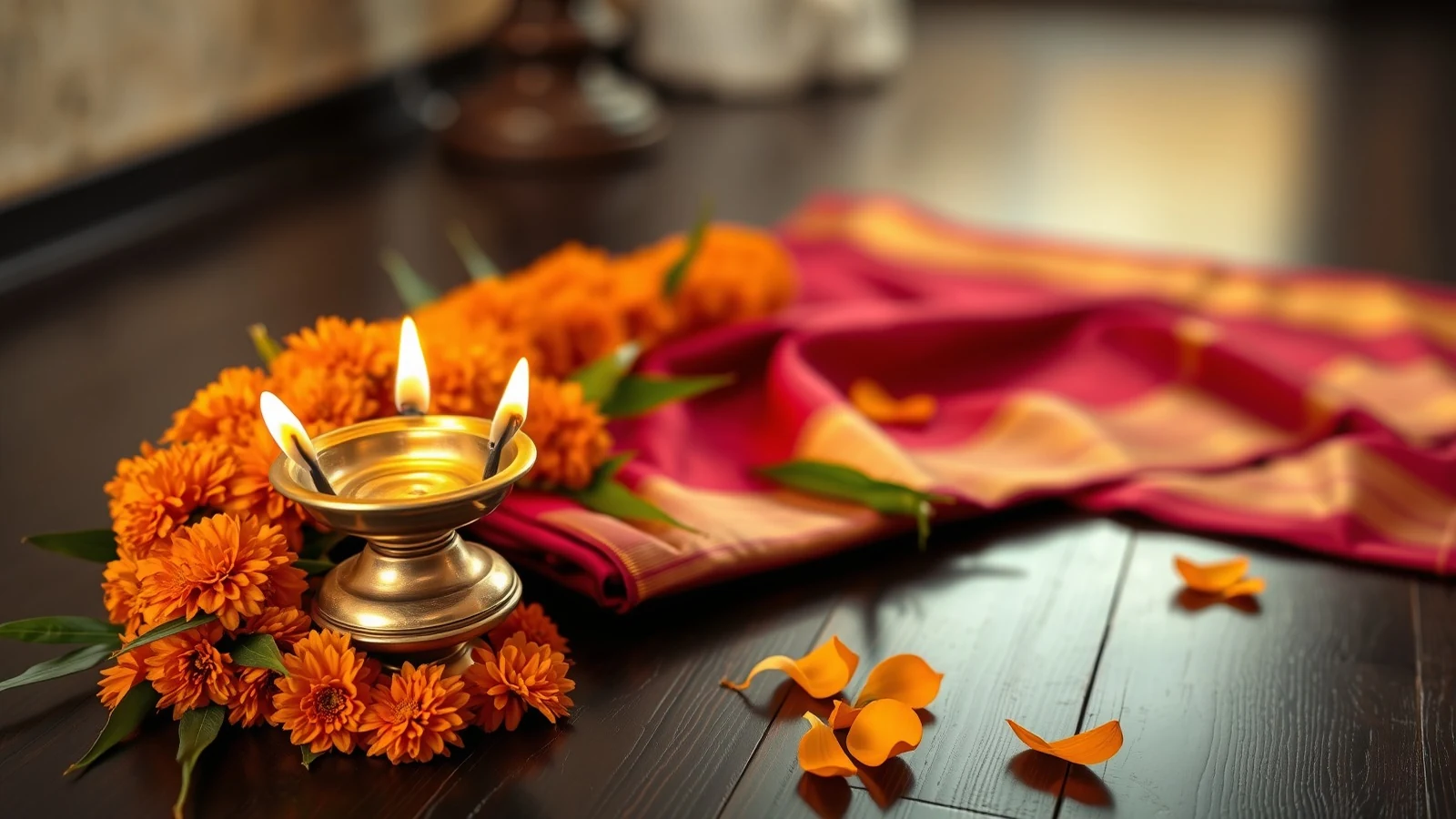
A Jaffna wedding was traditionally held at the bride’s house or at a temple. At home, the family built a temporary shed lined with white cloth and decorated with flowers and coconut palm leaves, set plantain trees at the entrance, and placed a niraikudam, the full pot, on a table with lamps beside it as a sign of plenty and a welcome to guests. More families now hire a reception hall, but the same elements travel with them: the plantain trees at the door, the niraikudam and lamps at the entrance, and white and flowers inside. When you brief a decorator for a hall, list these by name. A Hindu wedding hall decoration that skips the niraikudam will look wrong to the elders, however lavish the flowers.
The music is the nadhaswaram, and in a Jaffna wedding it plays throughout the ceremony rather than only at the entrance. Book the players with the priest’s timings in hand, so they are in place well before the muhurtham.
The ceremony, in the order it happens
The priest lights a small fire in front of the wedding seat and begins the rites. The groom arrives with his companion, the bride’s younger brother, and takes his seat first, and the priest performs the opening rituals with him alone. The groom’s sister then brings the bride in and seats her on the groom’s right. The bride is presented with the koorai and goes to change. When she returns, the groom ties the thaali around her neck with three knots, at the muhurtham, to the full sound of the nadhaswaram. This is the centre of the whole day. Afterwards the bride moves from the groom’s right to his left, the place of a wife in Hindu custom, and the guests come forward to sprinkle rice mixed with auspicious items over the couple’s heads as their blessing.
The detailed Vedic rites in between vary with the priest and the family, and we have not listed them here. If you want to compare the Sri Lankan order with a Tamil Nadu ceremony, our page on Tamil Brahmin wedding rituals describes that sequence in full.
The thaali and its design
The thaali is a pendant on a cord, and its design is chosen by the groom’s family according to their own custom, which is why two thaalis at the same wedding season can look nothing alike. One recorded Sri Lankan Tamil form is the Amman thali kodi, a design rooted in the worship of Shakti, the goddess. The cord may be a yellow thread prepared with turmeric or a gold chain. Because the gold is melted at the ponnurukku, the goldsmith has to be booked well ahead, and the family must decide the design before that day, not after it. For the wider history of the necklace across South Asia, see our page on the mangalsutra.
Tamil wedding dress: the bride, the groom and the guests
The bride and the koorai
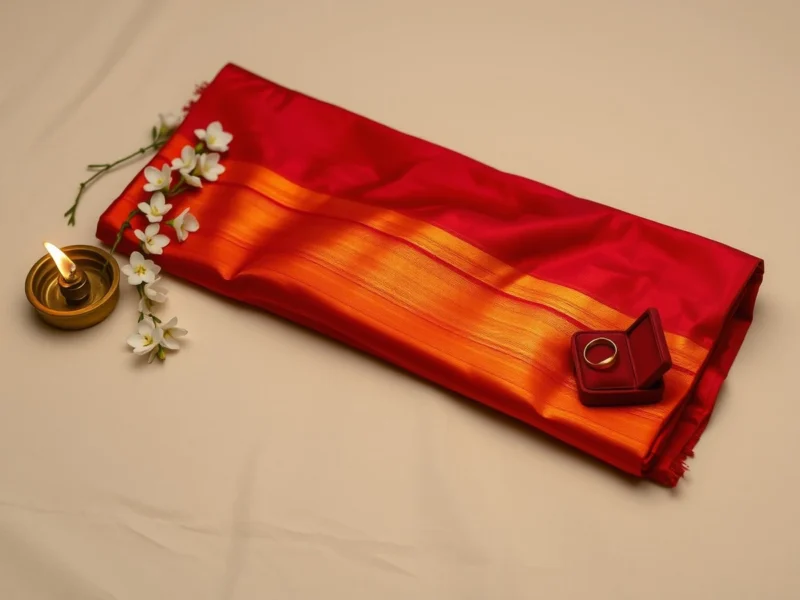
The Tamil wedding dress for the bride is a silk saree draped in the Indian style. That matters in Sri Lanka, where the best-known bridal look is the Kandyan osariya: the osariya is mainly worn by women from the hill country, and Jaffna women drape the saree the Indian way. Most brides wear two sarees on the day. The first is worn into the ceremony; the second is the koorai, received during the rites and worn for the thaali. The name comes from Koorai Naadu, today’s Koranad in Mayiladuthurai, Tamil Nadu, home of a handloom silk-and-cotton weave worn by brides at the muhurtham. That weave is now rare, with only an estimated 20 to 30 weavers left by the 2020s, so in practice the word koorai names the role of the saree in the ceremony rather than guaranteeing the weave. Colours vary by family: do not assume one shade, and ask the groom’s side what they plan to give before choosing the first saree, so the two do not clash in the photographs.
Two practical points for a Tamil wedding saree. First, the bride changes in the middle of the ceremony, so book a changing room within a minute’s walk of the wedding seat, and a dresser who can re-drape and re-pin jewellery quickly. Second, if the koorai arrives from the groom’s family only days before, have a blouse made for it early, from a measurement the bride’s side sends over.
The groom and the guests
Men at Jaffna weddings wear either traditional dress or a Western suit, and the groom’s choice usually sets the tone for his side. Women guests wear bright silk sarees, often with gold borders, so a Jaffna wedding hall is a sea of colour. If you are unsure of the Hindu wedding dress code as a guest, a silk saree or a smart traditional outfit is a safe choice, and the family will tell you if they expect anything else.
Tamil wedding cards and invitations
Tamil wedding cards in Sri Lanka do more work than a European invitation, because a family may be inviting guests to two events: the registration, often at the bride’s home, and the wedding itself. Jaffna has its own wedding-card printers. Print in Tamil, and consider an English insert or a second version for colleagues and friends who do not read it. A good Tamil wedding invitation card states:
- The muhurtham, the exact time of the thaali, since guests plan their arrival around it.
- The venue, with a landmark such as the nearest temple or junction, for guests travelling from out of town.
- Both sets of parents, and often grandparents, by name and village.
- The meal, if lunch or dinner follows, so guests know how long to stay.
Order cards once the muhurtham is fixed, and allow time for elders to be invited in person before the cards are posted. Our guide to wedding card design in Sri Lanka covers printers, paper and timing across the island.
Jaffna wedding halls
The move from home weddings to halls has created a small Jaffna wedding hall market of hotels and stand-alone halls. The figures below come from each venue’s own or listed details; none publishes a wedding price, so ask each for a written quote.
| Venue | Location | Largest space | Best for |
|---|---|---|---|
| Tilko Jaffna City Hotel | K.K.S. Road, Jaffna | Banqueting hall, up to 600 | Large family weddings |
| The Thinnai | Palaly Road, Thirunelveli | Hall for about 200 | Mid-size weddings with rooms for out-of-town family |
| Loyolas Wedding Hall | Jaffna town | n/a | A long-running local hall, open since 2001 |
| Jetwing Jaffna | Jaffna town | Restaurant, up to 100 | Registration dinners and small receptions |
When you visit a Jaffna hall, check four things: whether the priest may light a fire indoors, whether there is a room near the stage for the koorai change, whether the kitchen can serve a full vegetarian meal on plantain leaves, and how many guests the hall can seat at once for the meal, which is often fewer than it can hold for the ceremony. Our directory of wedding halls in Sri Lanka covers the rest of the island.
A Tamil wedding in Colombo
In Colombo the home wedding is rarer, and hotels compete for Hindu weddings directly. The Kingsbury, for example, advertises ornate mandaps decorated with marigolds and jasmine, nadhaswaram music, and South Indian and vegetarian feasts, for anything from a full kalyanam to a smaller pooja ceremony. Our Kingsbury Colombo wedding cost page has the hotel’s own published rates and halls, and our guide to wedding venues in Colombo for alternatives. When you compare quotes, ask each hotel whether its menu price covers a vegetarian-only kitchen, whether an outside priest and nadhaswaram players are allowed, and whether a fire is permitted in the ballroom. Our page on wedding plate prices in Sri Lanka helps you read per-head quotes.
The wedding meal
The traditional Jaffna wedding meal is lunch or dinner served on plantain leaves, and at home weddings guests sat on the floor to eat. Many Hindu families keep the wedding meal vegetarian; confirm this with both sides before you brief the caterer. In a hall you can keep the leaf even if you drop the floor seating. If the muhurtham falls early in the morning, plan a breakfast for the closest family and keep the main meal for midday.
Diaspora couples marrying in Sri Lanka
Many Sri Lankan Tamil couples now plan from abroad, and some are reworking the ceremony. One Jaffna-born lawyer in Canada, Supanki Kalanadan, has drawn attention for reviving older Tamil rites: betel leaves placed in a pot that stands for a well, prayers to the five landscapes of classical Tamil poetry, blessings before photographs of ancestors, an oath taken on the Thirukkural, and the parai drum and the conch, while doing without the sacrificial fire. Most families keep the priest-led ceremony, but it is worth knowing that a wider range exists if the couple want it. For couples planning from overseas, the order matters: fix the muhurtham, book the hall, and book flights for the family in that order. Our Sri Lanka wedding planning checklist sets out the timeline, and many couples add a few days away afterwards; see our list of honeymoon hotels in Sri Lanka.
A planning order that works
- Agree which priest and which temple tradition will lead the ceremony.
- Have the families’ astrologer complete the porutham and fix the muhurtham.
- Book the hall or temple for that date, then the nadhaswaram players and the cook or caterer.
- Choose the thaali design and book the goldsmith and the ponnurukku day.
- Print the Tamil wedding cards and invite the elders in person.
- Book the registrar for the registration, which in Jaffna custom comes before the wedding.
- Plan the koorai change: the room, the dresser, and the time it takes.
- Brief the photographer on the three moments families most want in their Tamil wedding photos: the ponnurukku, the bride’s return in the koorai, and the thaali.
Also on Velvet Knot: the Sri Lankan Muslim wedding.
Frequently Asked Questions
What is the koorai saree at a Sri Lankan Tamil wedding?
It is the silk saree the bride is given during the ceremony and changes into before the thaali is tied. The name comes from Koorai Naadu in Tamil Nadu, but colours and weaves vary from family to family.
What is ponnurukku?
A small ceremony a few days before a Jaffna wedding, at the groom’s house, where a goldsmith melts the gold for the thaali in front of the groom and close relatives. An even, round piece of gold is read as a good sign.
Is the registration done on the same day as a Tamil Hindu wedding in Sri Lanka?
Often it is not. In Jaffna custom the registration, with rings and signatures before the registrar, is usually held before the traditional wedding, frequently at the bride’s house.
What is marriage porutham?
A traditional comparison of the couple’s birth stars and signs under ten headings, such as Dinam, Ganam, Rajju and Vedhai, done by the families’ astrologer before the wedding is agreed. Families weigh the results in their own way.
How many knots does the groom tie in the thaali?
Three, at the muhurtham, while the nadhaswaram plays. The bride then moves from the groom’s right side to his left.
How big are wedding halls in Jaffna?
They range widely. The Tilko Jaffna City Hotel lists a banqueting hall for up to 600, while The Thinnai’s hall takes about 200. Ask how many the hall can seat for the meal, which is often fewer than for the ceremony.
Sources and further reading
- Wikipedia: Sri Lankan Tamils
- Wikipedia: Thesavalamai
- Encyclopedia of World Cultures: Tamil of Sri Lanka (Bryan Pfaffenberger)
- The Federal: a Jaffna-born lawyer reviving ancient Tamil marriage rituals
Planning a Tamil wedding in Jaffna, Colombo or anywhere else? Tell us about your wedding, or read how we work as a wedding planner in Sri Lanka.
Marrying in Sri Lanka?
Plan it with a team on the ground
Our month-by-month checklist for a Sri Lankan wedding, and how our team plans across the island.
Begin Your Engagement
Want a real number for your wedding?
Tell us your city, guest count and dates. Team Velvet Knot will come back within 24 hours with an itemised budget.