Tamil Christian Wedding Traditions: Parisam, the Thali, the Church Service and the Feast
- Tamil Christians
- The wedding in order
- Parisam: the betrothal
- Church requirements
- The thali at the church
- The service
- The bride’s saree and the groom
- The reception and the feast
- Tamil customs that many families keep
- Venues and timing
- A sample wedding day
- The welcome at the groom’s home
- Photography
- Pentecostal and other congregations
- Gifts and jewellery
- Decor
- Diaspora weddings
- Guests and rooms
- Mixed weddings
- What to settle beforehand
- Frequently Asked Questions
- Sources and further reading
Tamil Christian weddings join a church service with Tamil family custom. Most are held in the Church of South India or the Catholic Church. Many families hold a parisam, the betrothal at which gifts are exchanged. At the service, in many churches, the groom ties the thali, often bearing a cross, around the bride’s neck. The bride usually wears a white or cream silk saree for church and a coloured silk for the reception, followed by a feast.
Tamil Christians
Tamil Nadu has one of India’s larger Christian communities, with deep roots in the south of the state, in Chennai, and in the Tamil diaspora in Sri Lanka, Malaysia, Singapore, the Gulf and beyond. Most Tamil Christians belong either to the Church of South India, the Protestant church formed in 1947 by the union of several denominations, or to the Catholic Church, with smaller Pentecostal, Lutheran and other congregations. Their weddings combine the church’s rite with Tamil customs of family, dress, jewellery and food.
Customs vary between churches, dioceses, regions and families, so treat what follows as the common pattern. Our Christian wedding traditions guide covers church weddings across India, and our Syrian Christian guide covers Kerala’s oldest Christian tradition.
The wedding in order
| Stage | What happens |
|---|---|
| Agreement | The families agree the match and meet; the date is fixed with the church. |
| Parisam | The betrothal: gifts, the bride’s saree, and often rings; prayers in many families. |
| Church requirements | Marriage preparation, documents and the announcement of the marriage. |
| Before the wedding | Family gatherings; in some families a turmeric or mehendi event. |
| Wedding day | The church service: vows, rings and, in many churches, the thali. |
| Wedding day | The reception and the feast. |
| After | The couple’s welcome at the groom’s home and family visits. |
Parisam: the betrothal
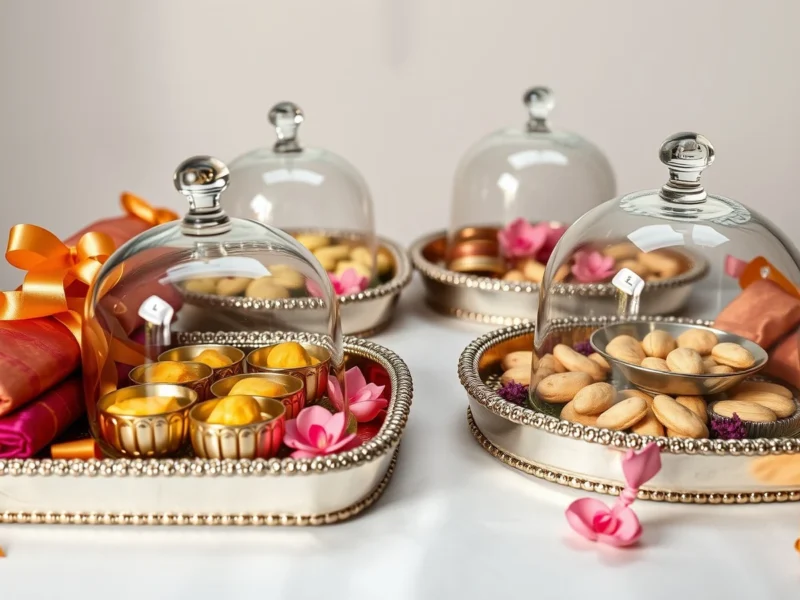
Many Tamil Christian families keep the parisam, the betrothal, a custom shared with other Tamil communities. The groom’s family visits the bride’s family, often with a pastor or priest to lead prayers, and brings gifts on trays: a silk saree for the bride, fruit, flowers, sweets and often jewellery. Rings are exchanged in many families, and the date of the wedding is confirmed. In Catholic families, the betrothal may be blessed in church. The parisam is the formal moment when the two families commit to the marriage.
Church requirements
A church wedding has requirements that start months ahead. The details are set by the church and the diocese and differ between them, but usually include: meeting the pastor or priest; baptism and, for Catholics, confirmation certificates; marriage preparation or counselling; and the announcement of the intended marriage in the church, traditionally called the banns, on successive Sundays. When the partners belong to different churches or one is not Christian, the church will explain its own permissions and conditions. Christian marriages in India are governed by the Indian Christian Marriage Act, 1872, and the church records the marriage; our Christian marriage registration guide covers registration with the state.
The thali at the church
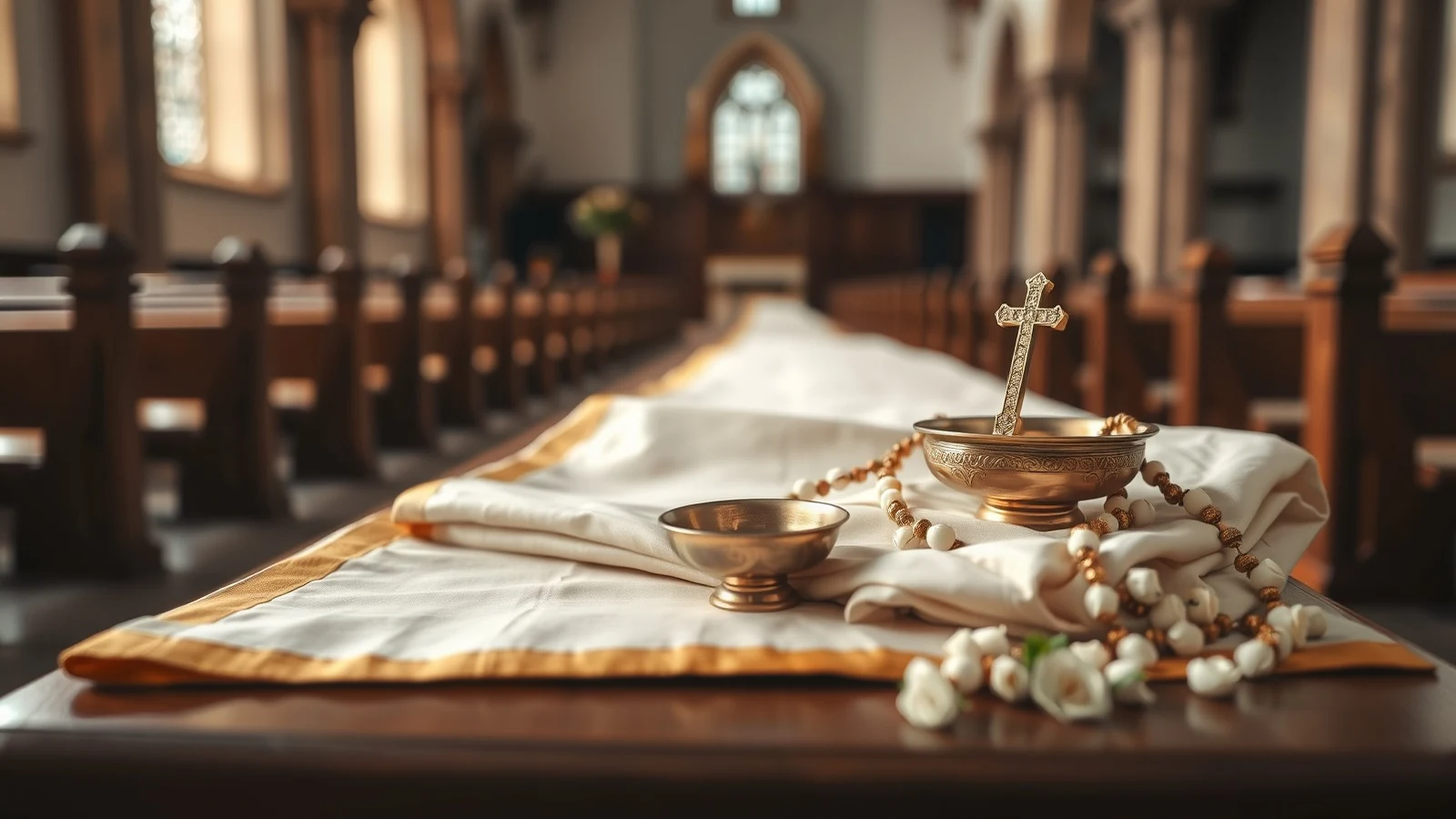
The most distinctive feature of many Tamil Christian weddings is the thali. In many churches in Tamil Nadu, the groom ties a thali, the gold pendant on a chain or a yellow thread that marks a married woman in Tamil culture, around the bride’s neck during the service, alongside or instead of the exchange of rings. Tamil Christian thalis often bear a cross, and the design may also carry a dove or other Christian symbols. Practice varies: some churches and families use only rings, some use both, and the moment in the service when the thali is tied differs. Ask the pastor or priest how the church does it.
The service
The service follows the church’s order of worship for marriage: the entrance of the bride, usually escorted by her father, hymns in Tamil and English, readings from the Bible, a sermon, the vows, the exchange of rings and the thali, prayers and the blessing, and the signing of the register. In Catholic weddings, the marriage is usually celebrated within a nuptial Mass. Services run from about forty-five minutes to well over an hour. Music matters: church choirs and hymns are central, and some couples add a Tamil Christian lyric that their family loves.
The bride’s saree and the groom
Many Tamil Christian brides wear a white or cream silk saree for the church, often a Kanjeevaram with a gold border, sometimes with a veil, and change into a richly coloured silk saree for the reception. Others wear a white gown. Jewellery is gold, in traditional Tamil designs. The groom wears a suit or a sherwani, or in some families a white veshti and shirt with an angavastram. The bride’s parisam saree, given by the groom’s family, is often worn for one of the events.
The reception and the feast
After the church, the families host a reception, often in a church hall, a community hall, a wedding hall or a hotel. Tamil Christian wedding food is generous and often non-vegetarian: chicken or mutton biryani, which is a fixture of Tamil wedding feasts, chicken and mutton curries, fish in coastal families, along with vegetarian Tamil dishes, payasam and wedding cake. Many families also serve a traditional meal on banana leaves. The cake cutting, a toast and speeches are common at the reception, reflecting the church tradition.
Tamil customs that many families keep
Beyond the church service, many Tamil Christian families keep Tamil wedding customs that are cultural rather than religious: the parisam, the thali, the importance of the maternal uncle in some families, gifts of silk sarees between the families, the welcome of the bride at the groom’s home, and family visits in the days after the wedding. Some families hold a turmeric or mehendi gathering for the bride. Which customs are kept is a family decision and varies between denominations and between more traditional and more urban families.
Venues and timing
The church is booked first, and its available dates decide the wedding date. In Chennai and other cities, popular churches and halls book out months ahead for the wedding season, roughly November to February, and Sunday is often unavailable for weddings because of worship. Many Catholic churches avoid weddings during Lent. The reception venue should be close to the church to keep guests together. Our Chennai wedding cost guide and the Chennai wedding planning page cover venues in the city, and our Madurai wedding cost guide covers the south.
A sample wedding day
| Time | What happens |
|---|---|
| Morning | The bride dresses at home; family prayers |
| 10.00 am | Guests arrive at the church |
| 10.30 am | The service: entrance, hymns, vows, rings and thali, blessing |
| 12.00 pm | Photographs at the church |
| 12.45 pm | Reception lunch: cake, toast and feast |
| Evening | The couple are welcomed at the groom’s home |
The welcome at the groom’s home
After the reception, the bride is welcomed at the groom’s family home, in many families with an aarti-style welcome adapted to Christian practice, a prayer, or simply the family gathered at the door. In some families she brings a Bible or a cross for the new home. The days that follow bring visits between the families and meals, and the bride’s first visit back to her parents’ home is often a small occasion of its own.
Photography
Many churches limit where photographers can stand and whether flash can be used during the service. Brief the photographer on the church’s rules, and on the moments the family wants: the bride’s entrance, the vows, the tying of the thali, the signing of the register and the couple leaving the church. The thali moment is brief and often crowded by family, so agree a position in advance.
Pentecostal and other congregations
Tamil Nadu also has large Pentecostal and independent congregations, whose weddings differ from those of the older churches. Some Pentecostal churches discourage jewellery, including the thali, and expect simple dress and celebrations, while others are relaxed about it. Music in these churches tends toward contemporary worship songs, and the service may include extended prayer and preaching. Ask the pastor early what the church expects, especially about the thali, the bride’s jewellery and the music.
Gifts and jewellery
Gold is a significant part of most Tamil weddings, Christian ones included: the thali, the bride’s necklaces and bangles, and gifts from both families. Silk sarees are the other great gift, from the groom’s family at the parisam and to the women of the family at the wedding. Guests usually give envelopes or household gifts. Many families record the gifts carefully, as in other Tamil communities, to reciprocate at other weddings.
Decor
Church decor is usually flowers on the pews and the altar, within the church’s rules, often in white with gold. Reception halls are decorated with a stage for the couple, flowers and lights, and a cake table. Many Tamil Christian families also use jasmine and other traditional Tamil flowers, for the bride’s hair and for garlands at the reception.
Diaspora weddings
Tamil Christian families in Singapore, Malaysia, the Gulf, the United Kingdom and North America often return to Tamil Nadu for the wedding, or hold it in their church abroad with a reception in India. Church paperwork must be coordinated between the parishes or congregations in both places, which can take time. Start early, and keep certified copies of baptism certificates and other documents.
Guests and rooms
Tamil Christian weddings bring together large families, and relatives often travel from the south of the state, from other cities and from abroad. Book rooms near the church and the reception, plan transport between them, and give elderly relatives seats close to the front at the church, where the thali moment happens. Our outstation guest planning guide covers the logistics.
Mixed weddings
When a Tamil Christian marries a Hindu partner or a Christian from another tradition, the church’s requirements decide whether and how a church wedding is possible, and many couples also hold a second ceremony or a reception that honours the other family. The thali is often the bridge between the two families’ traditions, since it is meaningful to both Tamil Christian and Tamil Hindu families.
What to settle beforehand
- The church, the date and the church’s requirements.
- The parisam: date, gifts and prayers.
- Whether the thali, the rings or both will be used, and the thali’s design.
- The bride’s sarees for the church and the reception.
- The reception venue, the menu and the cake.
- Photography rules at the church.
Also on Velvet Knot: Nadar wedding rituals.
Frequently Asked Questions
Do Tamil Christians tie a thali?
In many churches and families, yes. The groom ties a thali, often bearing a cross, during the service, alongside or instead of rings.
What is parisam in a Tamil Christian wedding?
The betrothal, when the groom’s family brings gifts including a silk saree for the bride, rings are exchanged in many families, and prayers are said.
What does a Tamil Christian bride wear?
Often a white or cream silk saree for church and a coloured silk saree for the reception; some brides wear a white gown.
Which law governs a Tamil Christian wedding?
The Indian Christian Marriage Act, 1872. The church records the marriage, and couples can register it with the state, which many do soon after the wedding, especially if they will travel or live abroad.
What food is served at a Tamil Christian wedding?
Often biryani and other non-vegetarian dishes alongside Tamil vegetarian dishes, payasam and wedding cake.
When are Tamil Christian weddings held?
Mostly from November to February, on dates the church has available, usually not on Sundays and, in many Catholic churches, not during Lent.
Do Tamil Christian weddings have a mehendi or haldi?
Some families hold a turmeric or mehendi gathering for the bride as a cultural custom; many do not. It is a family choice.
Sources and further reading
- Church of South India
- Catholic Bishops’ Conference of India
- Tamil Nadu Tourism, Government of Tamil Nadu
Planning a Tamil Christian wedding in Chennai or the south? Tell us your dates and guest count and we will send a tailored plan and quote.
Begin Your Engagement
Want a real number for your wedding?
Tell us your city, guest count and dates. Team Velvet Knot will come back within 24 hours with an itemised budget.