The Sri Lankan Muslim Wedding: Nikah, Walima, the Law, Dress and Venues
- Who marries under Muslim law in Sri Lanka
- The law: the Muslim Marriage and Divorce Act
- Customs recorded among Sri Lankan Moors
- A Memon wedding in Colombo
- Malay families
- Bridal dress for the nikah and the walima
- Cards, wishes and photographs
- Halls, hotels and halal food
- Planning a Muslim wedding in Sri Lanka, month by month
- Frequently Asked Questions
- Sources and further reading
A Muslim wedding in Sri Lanka has two legal and social anchors: the nikah, registered on the spot by a Muslim Marriage Registrar under the Muslim Marriage and Divorce Act of 1951, and the walima feast that follows. Moor, Memon and Malay families each add their own customs around them.
Who marries under Muslim law in Sri Lanka
Muslims made up 10.5 per cent of Sri Lanka’s population in the 2024 census, a little under 2.3 million people. They are not one community. Most are Moors, Tamil-speaking Sunni Muslims whose families have lived on the island for centuries; then come the Malays, recorded at 26,650 in the same census, and smaller groups such as the Memons and the Bohras, the last being the island’s Shia minority. Where a family lives matters as much as which group it belongs to. The Western Province, around Colombo, has the largest Muslim population, about 710,000, followed by the Eastern Province with about 576,000, then the North Western and Central Provinces with roughly 269,000 and 264,000.
That spread is why there is no single “Sri Lankan Muslim wedding”. A nikah in Kattankudy, a Memon wedding in Colombo’s Pettah and a Malay wedding in Slave Island or Hambantota share the same religious core and the same marriage law, but the customs around them, the language of the sermon and even where the couple live afterwards can differ. This guide covers what is specific to Sri Lanka. For the religious contract itself, read our nikah ceremony guide; for the bride’s mahr, our page on mehr in Muslim marriage. For how Muslim customs sit beside the Sinhala and Tamil ones, start with Sri Lankan wedding traditions.
The law: the Muslim Marriage and Divorce Act
Sri Lanka runs separate marriage laws side by side. The general Marriage Registration Ordinance covers couples of any religion “provided both parties are not Muslims”, in the words of the Registrar General’s Department. When both partners are Muslim, the marriage falls under the Muslim Marriage and Divorce Act, No. 13 of 1951, usually shortened to the MMDA. It is the Muslim marriage act Sri Lanka families refer to, and it governs marriage, divorce and related family matters for the community.
How a Muslim marriage is registered
The Department appoints Muslim Marriage Registrars, and the order of events is fixed. The nikah is performed first. Then the officiating priest, the bride’s wali (her guardian), the groom and two further male witnesses meet the Muslim Marriage Registrar and have the marriage registered. The Department sets out no waiting period for Muslim marriages like the 14 days that follow notice under the general law; the registrar is part of the wedding day itself, which is why families book him as early as they book the mosque or hall.
Three practical points follow from the Department’s own forms and pages:
- The wali makes a declaration. The Department’s Format E2/3 is a “Declaration by a Wali of a Bride under Section 18(1)”, and the groom makes his own declaration. Settle early who will act as wali, especially if the bride’s father has died or lives abroad.
- A second marriage needs a notice. Format E8 is a “Notice of Intention to Contract a Second or Subsequent Marriage”. If either family is unsure of the groom’s status, this is the document that answers it.
- A missed registration can be repaired. If a marriage is not registered at the time, the District Registrar, who is the Divisional Secretary, can order the Muslim Registrar to re-register it as a delayed Muslim marriage. Abroad, a Muslim Registrar must be present for a registration under Muslim law at a Sri Lankan mission.
Divorce does not go through the registrar. A wife or husband applies to the Quazi appointed for the area by the Ministry of Justice, and the Quazi issues the woman a free copy of the divorce certificate. The Department’s fees for the declarations, the registration and for authorising a registrar from another area are listed on our guide to marriage registration in Sri Lanka, so we do not repeat them here.
The reform debate, in dates
The MMDA has been under review for years, and couples now marrying will hear about it from relatives and the press. These are the dated public milestones we could verify. The law you marry under is the law in force on your wedding day, so check the current position with the registrar or a lawyer.
| Date | What happened | Source |
|---|---|---|
| 1997 | Reforms raised the minimum marriage age to 18 for all citizens except Muslims. The MMDA itself sets no minimum age; under Section 23 a girl under 12 can be married with a Quazi’s authorisation. | The Morning, 12 August 2022 |
| 2018 | A committee chaired by retired Justice Saleem Marsoof reported on reform. | The Morning, 15 February 2026 |
| August 2019 | Cabinet approved instructing the Legal Draftsman. The proposal set 18 as the minimum age for both partners, with 16 to 18 year olds allowed to marry with Qazi approval, and made the bride’s signature on the registration mandatory. | Sunday Times, 21 and 25 August 2019 |
| 2021 | A further committee, chaired by Attorney-at-Law Shabry Haleemdeen, reported. The Human Rights Commission says Cabinet decided that year to abolish the quazi system, ban polygamy and legislate a minimum age. | The Morning, 15 February 2026 |
| 5 January 2026 | MP Faiszer Musthapha handed a private member’s bill on the MMDA to Parliament. | The Morning, 15 February 2026 |
| January to February 2026 | The Ministry of Justice consulted on five areas: minimum age, the bride’s signature and the wali’s role, conditions for polygamy, the forum for disputes, and women as quazis. The Minister said he could not give a timeline. | The Morning, 15 February 2026 |
Customs recorded among Sri Lankan Moors
The nikah itself is short. What makes a Moor wedding recognisably Sri Lankan is what happens around it, and several customs are recorded in the ethnographic and press accounts we read:
- The crescent necklace. In Jay DiMaggio’s entry on the Moors in the Encyclopedia of World Cultures, the bride must be present at the wedding because the groom adorns her with a wedding necklace, usually bearing a crescent. Older accounts also note that the thaali, a Tamil and Sinhala custom, was once widely worn by Muslim brides.
- The fez. The North African style fez worn at marriage ceremonies is one of the Arab customs that marked Moor weddings out from their neighbours.
- The bride’s family hosts. The same encyclopedia entry describes the girl’s parents looking for a suitable groom, the families agreeing the settlement, and the bride’s family paying most of the wedding costs, often for several hundred guests.
- The couple start at the bride’s home. Postmarital residence at the bride’s house is described as the norm among Sri Lankan Muslims, for months or years. A 2023 Daily Mirror feature found matrilocal marriage alive among Moor families in the Eastern Province and customary in coastal towns such as Beruwala, Aluthgama, Maggona, Galle and Puttalam, especially where a family has one daughter. Asked why, the couples gave one word: practicality.
- The bride’s cake. Moor brides of old sent the groom a kaivicci paniyaram the day before the wedding, an oil cake of rice flour, ghee and sugar coloured with marutu leaf juice and made only for that occasion. Few families still make it, which is a reason to ask the grandmothers.
Most Moor families on the east coast are also organised into kudis, matrilineal clans inherited through the mother, a pattern they share with their Tamil neighbours. Kudi membership can shape who is considered a suitable match, so it is worth understanding before the families meet, even if the couple chose each other.
A Memon wedding in Colombo
The Memons, a Gujarati-origin trading community centred on Colombo, keep a longer wedding calendar than most Moor families, and a 2023 account in Sailan Muslim records it in detail. It is a good example of how much happens beyond the nikah:
- Nathro: the engagement, kept to close family at the girl’s home, opened with a sweet called kheer-kuma, followed later by a larger feast where the groom receives clothes and perfume and the bride’s side give jewellery.
- Vanna party: about a week before the wedding, the bride’s parents display her trousseau, the dej, and the groom’s party brings the bridal outfit and jewellery.
- Khoro, pitih and mehendi: a women’s lunch at the bride’s house, then turmeric paste for the bride one or two days before, and an all-female henna night.
- Consent and nikah: on the morning of the wedding the bride’s agent and two witnesses go to ask for her consent. The nikah is usually held at the Memon Hanafi Mosque on Third Cross Street, Pettah, after the Asr prayer, with dates and rock candy for the men.
- Dinner and likheti: the reception at the Memon Hall in Kollupitiya or another hall, with men and women in separate rooms, then the bride is taken to the groom’s home.
- Sattaro: a few days later the bride’s family hosts a meal for the couple and the groom’s family, the Memon equivalent of a homecoming.
Memon families also avoid the month of Safar, Ramazan and the first ten days of Muharram when fixing the date. Ask both families which months they avoid, and pick the month before you approach venues.
Malay families
Sri Lankan Malays are Muslim by religion but have their own language, Sri Lanka Malay, and their own history, with old mosques in Slave Island and along the south coast at Hambantota. Their marriage rites are described as fusing Islamic practice with older Hindu and Buddhist elements, many of which are now fading. We have not found a reliable published account of a full Malay wedding sequence, so if you are planning one, the family elders are the source, and a planner’s job is to write down what they remember before the dates are fixed.
Bridal dress for the nikah and the walima
Dress is where families differ most, and where the bride usually has two outfits rather than one. For the nikah, modesty sets the frame: a covered head, long sleeves and a calmer colour are the usual choices, partly because the ceremony may be at a mosque. The walima is the reception, and the walima bridal dress is where the embroidery, the colour and the jewellery go. Memon brides traditionally wear the sarara, a long skirt heavily worked with sequins and gold thread, with a matching bodice and shawl. Many Moor brides choose a saree, an embellished gown or a lehenga, with the shawl or dupatta arranged to cover the hair; Muslim bridal shawl wrapping is a skill in itself, and a dresser who does it every week is worth booking for both events.
Plan the dress around the timetable. If the nikah is after Asr and the walima the same evening, the change has to happen in an hour, which argues for a hijab style that can stay in place under a second shawl. If the walima is on another day, two dressers and two looks are realistic. For the groom, a sherwani, a jubba or a dark suit are all common in Colombo, and some families still bring out the fez.
Guests who are unsure what to wear to a Muslim wedding should cover shoulders and knees, and women should carry a shawl for the mosque. At a Memon or conservative family reception men and women may be seated apart, so couples arriving together should expect to separate at the door.
Cards, wishes and photographs
Muslim wedding invitation cards in Sri Lanka are often bilingual or trilingual, because guest lists cross Tamil, Sinhala and English speakers, and the first design decision is whether to open with the Bismillah in Arabic script. Decide early whether the nikah and walima go on one card or two: a separate nikah card for close family and a walima card for everyone is a common answer when the guest lists differ. Our guide to wedding card design in Sri Lanka covers printing, languages and timelines.
The most widely used Islamic wedding wish comes from a hadith recorded by Tirmidhi, who graded it sound: “Barakallahu laka wa baraka alaika wa jama’a bainakuma fi khair”, May Allah bless you, send blessings upon you and join you together in goodness. It works as a line inside the card, on the welcome board, or as the muslim marriage dua guests say to the couple.
For Muslim wedding photography, brief the photographer on three things before the day: whether the nikah may be photographed at the mosque at all, whether women’s areas at the walima are off limits to a male photographer, and which family members do not want to be photographed. A female second shooter solves most of these. Our page on wedding photography costs in Sri Lanka explains how packages are priced.
Halls, hotels and halal food
The nikah is usually at a mosque or the bride’s home, so the venue decision is really about the walima. Three hotel developments are worth knowing:
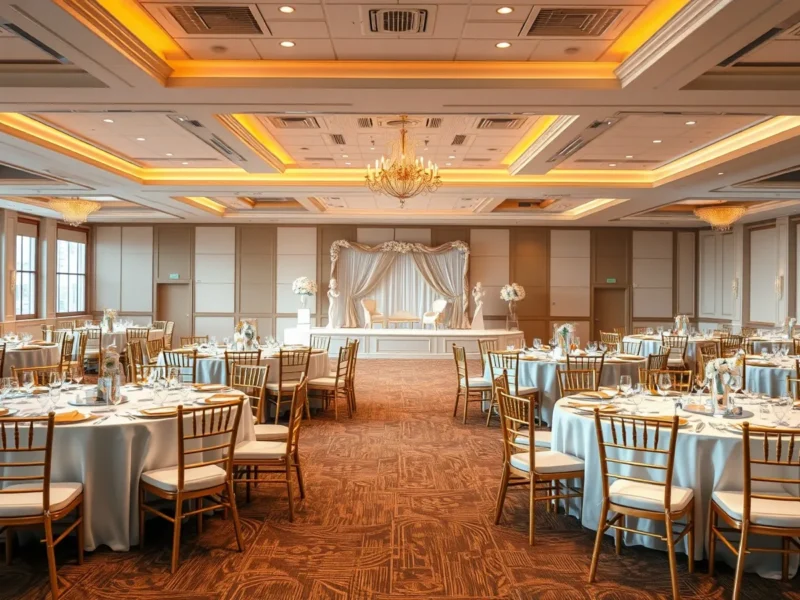
- The Kingsbury Colombo promoted Nikah and Waleema weddings in July 2025, offering intimate seating for the ceremony, customisable menus and dedicated wedding specialists. For its rates and halls, see our Kingsbury Colombo wedding guide.
- Hilton Colombo Residences held a Nikah and Waleema showcase in its Union Ballroom on 7 February 2026, with packages for 300 to 600 guests. It is a separate property from the Hilton Colombo hotel.
- Shangri-La Hambantota received Halal-Friendly Certification from Trace and Able in early 2026, covering identified halal dining options prepared under documented protocols. Shangri-La Colombo had expressed its intent but had not completed the process as of March 2026. See our Shangri-La Hambantota wedding guide.
Most Colombo hotel kitchens will say their wedding menu is halal. Ask the follow-up questions: is the meat from a certified supplier, is there a separate kitchen or only separate dishes, and is alcohol served anywhere in the same hall on the same day. For a larger walima, many families use a community or banquet hall and a halal caterer instead; our guide to wedding halls in Sri Lanka covers what to check, and wedding plate prices explains how per-head menus are built.
On Muslim wedding food, the Memon table gives a sense of the range: biryani with basmati and layered meat, akni (turmeric rice with beef and potatoes), jarda, a sweet saffron rice with raisins and cashews, kachumbar, raita and samosas. Whatever the menu, settle the dessert and the drinks with the caterer in writing, since a walima without alcohol leaves more of the budget for the food.
Planning a Muslim wedding in Sri Lanka, month by month
| When | What to settle | Why it cannot wait |
|---|---|---|
| Twelve to nine months out | The month, avoiding Ramazan and any months your families avoid; whether the walima is the same day as the nikah | Ramazan and Hajj season move each year, and hall demand piles up around them |
| Nine to six months | The walima venue and caterer, with the halal questions answered in writing; seating plan for separate or mixed halls | Separate men’s and women’s rooms need a venue with two spaces or a dividable hall |
| Six to four months | The mosque or home for the nikah, the officiating priest, and a Muslim Marriage Registrar for the date | The registrar must be physically present; a registrar from another area needs authorisation |
| Four to two months | Wali, witnesses and documents; bridal dresser and second outfit; invitation cards | Cards go out six to eight weeks ahead; the wali’s declaration needs the right person available |
| Final month | Mehendi night, photographer brief, transport between mosque and hall, homecoming meal | Timing between the nikah and the walima is where most wedding days run late |
Our Sri Lankan wedding planning checklist covers the general tasks; the table above adds the ones only a Muslim wedding has.
Frequently Asked Questions
How is a Muslim marriage registered in Sri Lanka?
After the nikah, the officiating priest, the bride’s wali, the groom and two other male witnesses meet a Muslim Marriage Registrar, who registers the marriage under the Muslim Marriage and Divorce Act of 1951. The registrar attends on the day, so book one early.
What is the Muslim marriage act in Sri Lanka?
The Muslim Marriage and Divorce Act, No. 13 of 1951, governs marriage and divorce when both partners are Muslim. Couples where only one partner is Muslim marry under the general law instead. Reform has been debated since at least 2018 and was still at consultation stage in February 2026.
Who handles a Muslim divorce in Sri Lanka?
The Quazi appointed for the area by the Ministry of Justice, not the marriage registrar. The Quazi gives the wife a free copy of the divorce certificate, and further certified copies come from the Divisional Secretariat.
What does a Sri Lankan Muslim bride wear?
Usually two outfits: a modest, covered look for the nikah and a richer walima bridal dress, such as an embellished saree, gown or lehenga with a matching shawl over the hair. Memon brides traditionally wear the sarara, worked in sequins and gold thread.
What is a good Islamic wedding wish to write in a card?
“Barakallahu laka wa baraka alaika wa jama’a bainakuma fi khair”: May Allah bless you, send blessings upon you and join you together in goodness. It comes from a hadith recorded by Tirmidhi.
Do Sri Lankan Muslim couples live with the bride’s family after marriage?
Often, especially among Moor families. Residence at the bride’s house is the traditional pattern, and it remains customary in the Eastern Province and in coastal towns such as Beruwala and Aluthgama, though many couples now set up on their own.
Sources and further reading
- Registrar General’s Department: Registration of Marriages
- The Morning (15 February 2026): Fresh MMDA consultations as member’s bill adds pressure
- Wikipedia: Sri Lankan Moors
- Encyclopedia of World Cultures: Moor of Sri Lanka (Jay DiMaggio)
Planning a nikah and walima in Colombo, on the east coast or anywhere else? Tell us about your wedding and choose Sri Lanka, or read how we work as a wedding planner in Sri Lanka.
Marrying in Sri Lanka?
Plan it with a team on the ground
Our month-by-month checklist for a Sri Lankan wedding, and how our team plans across the island.
Begin Your Engagement
Want a real number for your wedding?
Tell us your city, guest count and dates. Team Velvet Knot will come back within 24 hours with an itemised budget.