The Sri Lankan Homecoming: Ceremony, Dresses, Cake and Planning
- What the homecoming actually is
- Where the custom comes from
- Who hosts, and who is invited
- How soon after the wedding
- Wedding day and homecoming compared
- Homecoming dresses for the bride
- Homecoming saree jacket designs
- What the groom wears
- Homecoming cake designs
- Homecoming venues and decorations
- Homecoming invitation cards
- Planning the wedding and the homecoming together
- Frequently Asked Questions
- Sources and further reading
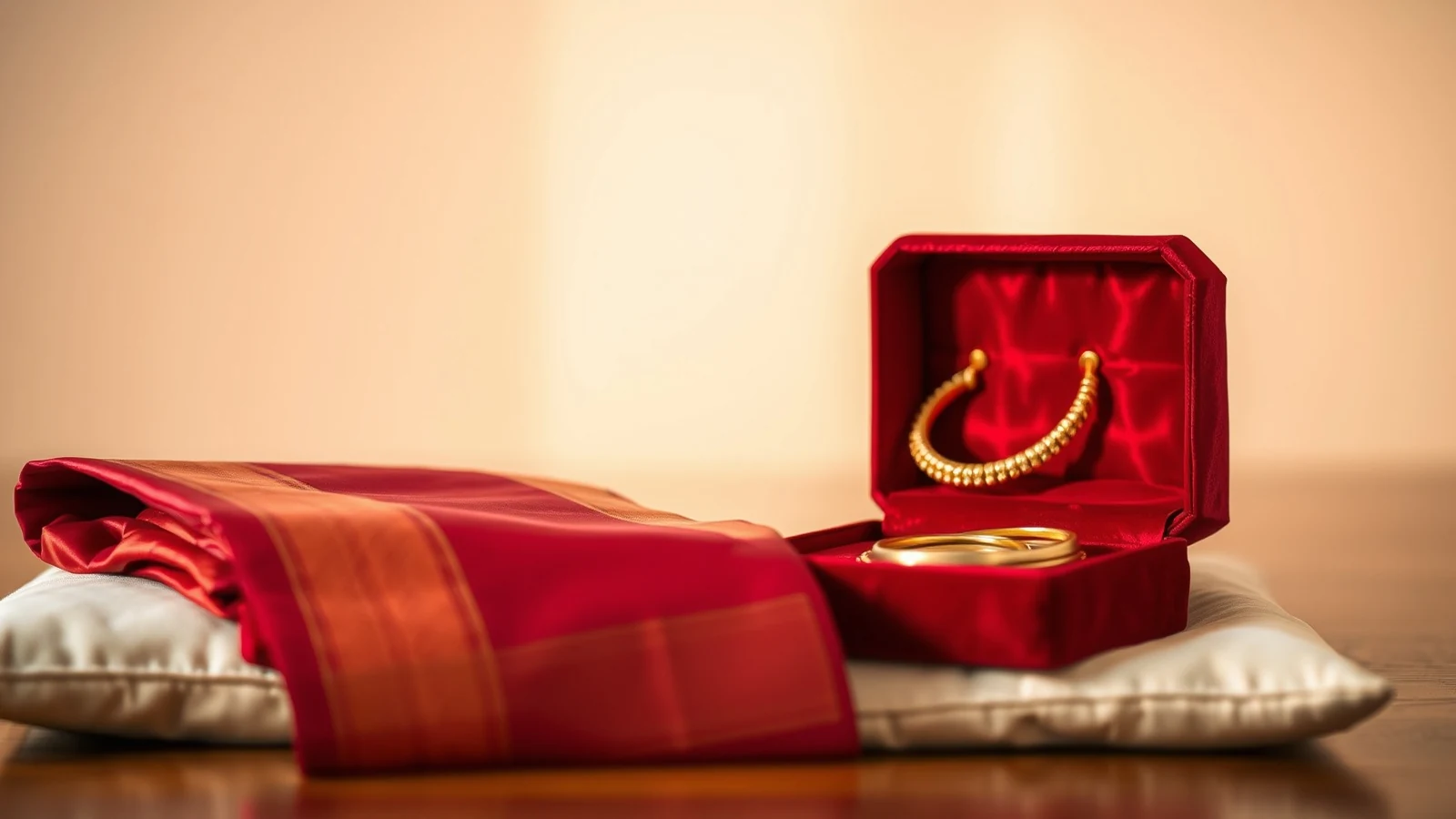
The Sri Lankan homecoming is a second celebration, hosted by the groom’s family a few days after the wedding, that welcomes the bride into his household. It has far fewer rituals than the wedding: an evening dinner with music and dancing, where the bride swaps the white osariya for a red or bright saree, gown or lehenga.
What the homecoming actually is
In Sinhala the event is gedara enawa, literally coming home, and the English word homecoming is a direct translation of it. The idea behind it is the bride’s arrival at her husband’s family home. The wedding belongs to the bride’s family, who host it; the homecoming belongs to the groom’s family, who host it in turn and formally receive the bride as one of their own. A Sunday Times columnist once suggested Sri Lanka may be the only country with the custom under this name, and whether or not that is strictly true, couples marrying abroad or to a partner from another country often find they have to explain it.
The event is lighter than the wedding. There is no poruwa, no astrologer’s minute to hit, and no long sequence of rites. What remains is a welcome, a dinner, speeches, music and dancing, and a new set of outfits. For the wedding-day rituals themselves, see our guide to Sri Lankan wedding traditions and the step-by-step poruwa ceremony guide.
Where the custom comes from
The homecoming makes most sense against the older Kandyan law of marriage, which recognised two forms. In a diga marriage, the usual form, the woman went to live in her husband’s house and gave up her claim to the parental estate. In a binna marriage the husband moved into the wife’s house instead, and binna marriages are still recognised in the Kandyan districts. The homecoming is the ceremony of a diga household: the moment the bride crosses into her husband’s family.
In the older Sinhala Buddhist pattern, the groom came to the bride’s home to bring her back. After the poruwa, the couple travelled to his house in a procession called the Mangala Perahera, riding in a decorated bullock cart with relatives following in their own carts, and the last cart carrying the bride’s dowry. The bride did not change her clothes on the way, on the belief that she should leave home as the same bride who was blessed at the poruwa. When the procession reached the groom’s house, a decorated gokkola thorana, an arch of young coconut leaves, stood at the door, and the groom’s side served the Yodara Batha, the last of the four meals of the traditional wedding feast. In other words, the homecoming used to happen on the wedding day itself. Honeymoons, in this telling, simply did not exist.
Today the two are almost always on separate dates, with the honeymoon in between, and the groom’s family holds the homecoming as a party of its own. That separation is why the event now has its own guest list, its own venue booking and its own wardrobe.
Who hosts, and who is invited
The groom’s parents host and, by custom, pay. Their names go on the invitation, they greet guests at the door, and the speeches usually come from the groom’s side. The guest list leans the same way: relatives, neighbours, family friends and colleagues of the groom’s family who may not have been at the wedding, plus the bride’s close family, who come as honoured guests rather than hosts.
Practice varies by community. Among Sri Lankan Moors the tradition has often been matrilocal, with the husband moving into his wife’s family home or community, so the logic of the event is different there; our guide to the Sri Lankan Muslim wedding covers the walima and what follows. Tamil Hindu families have their own post-wedding customs, described on our Sri Lankan Tamil wedding page. The homecoming as a named, separate party grew out of the Sinhala diga custom described above.
If the two families are from different communities, or if the couple will live alone rather than with the groom’s parents, agree early whether there will be a homecoming at all, and if so, whether it is a full reception or a smaller dinner. Leaving it undecided until after the wedding invites friction between the two sides.
How soon after the wedding
The usual gap is a few days, long enough for a short honeymoon. In one account, girls from the family sing welcome songs as the couple arrive back from that honeymoon, which shows how the order of events works: wedding, going away, honeymoon, homecoming. In practice the date is shaped by four things:
- The honeymoon. A three or four night trip within the island fits neatly before a homecoming the following weekend. A longer overseas trip pushes it back a week or more.
- The venue. Hotel ballrooms are booked months in advance in the wedding season, so the homecoming date often has to be fixed at the same time as the wedding date, not after it.
- Guests from abroad. If relatives are flying in for the wedding, a gap of two or three days lets them stay for both events. A gap of two weeks usually means they miss one.
- The family’s own customs. If your family consults an astrologer for the wedding nekath, ask at the same meeting whether they want an auspicious time for the homecoming as well.
A couple can also hold the homecoming the day after the wedding, or hold the two events in the same hotel on consecutive evenings. That quietly brings the custom back to its older same-day form, and it saves a second round of travel for out-of-town guests.
Wedding day and homecoming compared
| Point | Wedding day | Homecoming |
|---|---|---|
| Host | The bride’s family | The groom’s family |
| Rituals | Poruwa, nekath, registration, many rites | Welcome, dinner, speeches, very few rites |
| Bride’s dress | Usually the Kandyan osariya in white or ivory | Red or another bright saree, a gown or a lehenga |
| Usual time | Fixed by the nekath, often morning | Usually evening |
| Mood | Formal and ceremonial | A party, with music and dancing |
| Venue, traditionally | The bride’s home | The groom’s home |
| Venue, today | A hotel or hall | A hotel or hall, often a different one |
The practical consequence is that the homecoming is where the couple can relax. The bride is no longer managing the osariya, the jewellery set and the timings of a ceremony, and many couples choose the homecoming for the first dance, the band and the late finish they could not fit into the wedding.
Homecoming dresses for the bride
The traditional homecoming dress is a red saree, and red is still the default. A gown is the other long-standing choice, and many brides now wear Indian-style outfits in bright colours. The Colombo bridal designer Purnima Abeyratne, interviewed by Life.lk, put the choice as a matter of which form the bride wants: Kandyan, an Indian saree, a dress, a lehenga or a choli. The colours she named as typical were red, orange, magenta and pink.
Choosing between saree, lehenga and gown
Abeyratne’s advice was to choose for the event first: the time of day, the venue, and the bride’s own skin tone, personality and body shape. Put practically:
- A homecoming saree is the safest choice if the groom’s family is traditional, and it photographs well alongside the white osariya from the wedding. Choose a fall that lets you walk and greet guests for four hours.
- A homecoming lehenga suits a bride who plans to dance. It is quicker to put on than a saree and does not need re-pinning during the night.
- A gown or frock suits a ballroom reception with a Western-style first dance.
- A Kandyan homecoming bride wears the osariya again, but in a colour rather than white. The osariya’s shape stays the same: a full blouse covering the midriff, partly tucked in at the front, with puffed sleeves and a frill at the waist. That frill and sleeve are what make it read as Kandyan even in red.
Handloom is having a moment in Sri Lankan bridal wear. The Sunday Times reported in September 2026 on a family label’s bridal sarees spun from bamboo-pulp yarn on hand looms, in a palette that runs from sage green and blush pink to reds and deep oranges. A woven saree like that takes weeks, so order early if you want one.
What else the outfit needs
Abeyratne’s must-haves were simple: comfortable shoes, and hair, make-up and bouquet that match the outfit rather than repeat the wedding look. Two more from planning experience: book the hair and make-up artist for the homecoming at the same time as the wedding, because the best artists fill their season early; and budget for a second set of jewellery or restyle the wedding set, since the full Kandyan set will look heavy with a lehenga.
Homecoming saree jacket designs
In Sri Lanka the saree blouse is called the jacket, and for a homecoming saree it matters more than the drape, because it is what shows in every close photograph. Life.lk’s list of saree jacket styles is a useful vocabulary to take to your tailor. These are general jacket cuts, not homecoming rules, but most homecoming jackets are one of them or a combination:
| Jacket cut | As described | At a homecoming |
|---|---|---|
| Classic puff sleeve | The basic puffed sleeve, carefully stitched; pairs with the Kandyan osari | The natural choice for a coloured osariya |
| Beeralu lace | Intricate lace, best with full sleeves | A traditional look for a church or daytime homecoming |
| Net | Net worked into the sleeves, neckline or back | Lighter for a hot hall or an outdoor lawn |
| High neck | A regal collar; skip the necklace, wear heavy earrings | Shows off statement earrings in portraits |
| Round cut-out back | Stone or bead work around the cut-out, tie-back tassel | Shows on the dance floor and in back-view photographs |
| Artistic sleeves | Mixed sleeve combinations | A way to make a red saree look current |
| Halter neck | Glamorous, suits evening events, shows the back | For a ballroom evening, if the family is comfortable with it |
| Corset or bustier | No sleeves or shoulder cover; suits net sarees | For a modern, party-style homecoming |
Before you choose a homecoming saree jacket design, ask the groom’s mother what she expects. The jacket is the part of the outfit elders comment on, and a backless or corset jacket that suits the bride’s friends may not suit her new in-laws’ guest list. Have the jacket fitted after the wedding dress fittings are done, allow for a final fitting in the week of the wedding, and test that you can lift your arms in it, since you will be dancing, cutting a cake and greeting guests.
What the groom wears
The groom has more freedom at the homecoming than at the wedding, where many grooms wear the Kandyan or national dress. Colombo menswear retailers market wedding ranges that run from tuxedos and linen suits to wedding national kits and kurtas, and any of these works for a homecoming. Whatever the cut, choose the colour to sit next to the bride’s outfit: a dark suit with a red saree, a lighter suit with a pastel lehenga. If the bride wears a lehenga, a kurta or sherwani for the groom makes a matching pair. Our groom outfit ideas page has more on cuts and colours.
Homecoming cake designs
A Sri Lankan wedding cake works differently from a European one, and the homecoming cake follows the same pattern. Two separate things go by the name cake:
- The cake structure. The tall, decorated tower the couple stand beside and cut. Traditionally this is a foam tower dressed with flowers, built for looks and for photographs rather than for eating, with a small real tier for the ceremonial cutting. Couples can ask for real cake in the structure instead, and coordinate it with the florist so the flowers match the hall.
- The cake pieces. Small individual pieces of rich cake, the dark fruit cake made with preserved melon, chow chow in syrup, preserved ginger, cashews, semolina and rose essence, wrapped and handed to guests to take home. One Colombo caterer described making the cake for her extended family to give as wedding favours, wrapping each piece in parchment and brightly coloured cellophane.
For homecoming cake designs, the useful rule is to design from the bride’s outfit, not from the wedding. The wedding cake structure is usually white and gold to sit beside the osariya. The homecoming cake can take the colour of the evening: red roses with a red saree, blush and gold with a pastel lehenga. Simple homecoming cake designs often work best: a single tier or a short structure in the homecoming colours, with the rich cake pieces as the favour. A 2021 Daily Mirror trend piece described exactly this split, a single-tier cake for the couple to cut and individual mini cakes for the guests.
Three practical points. First, decide early whether the homecoming will have its own rich cake pieces or whether the wedding pieces cover both events; with a few days between them, most families order twice. Second, confirm whether the hotel allows an outside cake, and whether it charges a cutting fee. Third, if the structure is foam, make sure the real cutting tier is placed where the photographer can see it. Our page on wedding cake designs in Sri Lanka goes through cake styles in more detail.
Homecoming venues and decorations
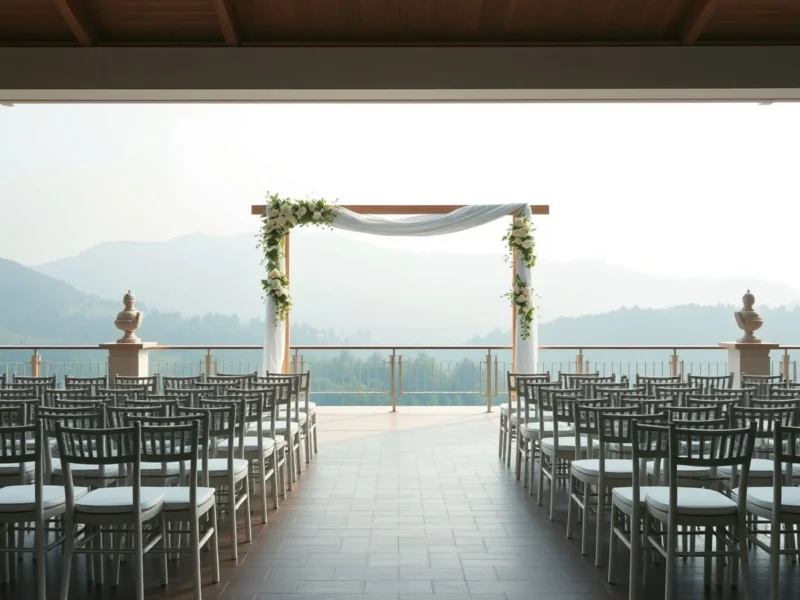
The traditional venue was the groom’s family home, with a gokkola arch at the door. Today it is most often a hotel ballroom or a reception hall, and some hotels now market homecoming packages alongside wedding packages: in early 2026, for example, Hilton Colombo Residences advertised discounts on homecoming packages for events of 300 to 600 guests. Capacities published by a few venues that host both kinds of event give a sense of scale:
| Venue | Area | Spaces and capacities |
|---|---|---|
| Galle Face Hotel | Colombo | Chequerboard up to 1,000; Grand Ballroom 250 to 280; Jubilee Ballroom 150 to 200 |
| Earl’s Regency | Kandy | Regent Ballroom up to 550; Congress Hall up to 150 |
| Weligama Bay Marriott | Weligama, south coast | Pool Lawn up to 600; Rooftop Terrace up to 300; Grand Ballroom over 270 |
None of these publishes a homecoming rate, so ask each for a written quote. What moves a homecoming quote is mostly the same as for a wedding: the per-head menu, the number of guests, whether alcohol is on the hotel’s package or brought in, the hours of the hall, and the decoration. A homecoming usually needs less staging than a wedding, since there is no poruwa, so the decoration budget goes to the entrance, the settee back for the couple, the table centrepieces and the dance floor.
A different venue from the wedding gives the two sets of photographs a different look, and may suit the groom’s family better if they live in another town. For the main areas see our guides to wedding venues in Colombo, Kandy, Gampaha, Galle and Matara, and our directory of wedding halls in Sri Lanka. For homecoming decorations, our Sri Lankan wedding decoration ideas apply, with the colours shifted to the homecoming palette.
Homecoming invitation cards
The homecoming invitation comes from the groom’s parents, and that is the main difference from the wedding card. The usual wording invites guests to the homecoming of their son and his bride, names both, and gives the date, the time and the venue. You can print the homecoming card as an insert in the wedding card, so relatives receive one envelope, or send it separately to guests invited only to the homecoming. Print in Sinhala, English or both, depending on the guest list. Our guide to wedding card design in Sri Lanka covers printers and timing.
Planning the wedding and the homecoming together
Two families, two events, a few days apart: the homecoming goes wrong mostly when it is planned as an afterthought. Treat it as half of one project.
- Agree the format between the families. Full reception or family dinner, which side pays for what, and roughly how many guests. Shrinking guest lists are now common at weddings, and the homecoming does not have to match the wedding’s size.
- Fix both dates at once. Book the homecoming venue in the same week you book the wedding venue, with the honeymoon dates already in mind.
- Split the guest lists clearly. Mark who is invited to the wedding, the homecoming or both, so the two sets of cards go to the right people.
- Book the same photographer for both. One team gives the two albums a consistent look and usually costs less than two separate bookings; our wedding photography cost page shows what drives the price.
- Order both outfits together. The osariya and the homecoming saree or lehenga have different makers and different lead times. Start the homecoming outfit early so its fittings do not crowd the wedding fittings.
- Order the cake twice. A separate structure in the homecoming colours, and a decision on rich cake pieces for each event.
- Keep the honeymoon short or put it after. If the honeymoon is long, some couples hold the homecoming first and travel afterwards; see our list of honeymoon hotels in Sri Lanka for short trips that fit the gap.
A single budget for both events helps both families see the whole cost. Our Sri Lanka wedding budget guide and wedding planning checklist can be used for the homecoming too.
Frequently Asked Questions
What is a homecoming ceremony in Sri Lanka?
A second celebration after the wedding, hosted by the groom’s family, that formally welcomes the bride into his household. It is usually an evening dinner with speeches, music and dancing, with very few rituals.
How many days after the wedding is the homecoming?
Usually a few days, after a short honeymoon. Historically it took place on the wedding day itself, when the procession reached the groom’s house. It can be held the very next day if the families prefer.
What colour does the bride wear for the homecoming?
Red is the traditional colour, and orange, magenta and pink are also common. The bride may wear a saree, a coloured osariya, a gown or a lehenga.
Who pays for the homecoming?
By custom the groom’s family hosts and pays, just as the bride’s family hosts the wedding. Families today often agree their own split, so settle it early.
What is the cake structure at a homecoming?
The decorated tower the couple cut, traditionally a foam structure dressed with flowers with a small real tier for cutting. Guests usually receive separate wrapped pieces of rich cake to take home.
What saree jacket design suits a homecoming?
Puff sleeves suit a coloured osariya, beeralu lace or a high neck suits a traditional family, and a halter, cut-out back or corset jacket suits an evening ballroom party. Check with the groom’s family first.
Sources and further reading
- Sunday Times: Home-comings, Sri Lankan style (2008)
- Yamu: ancient customs missing from Sinhala Buddhist weddings
- Life.lk: homecoming attire, interview with Purnima Abeyratne
- Wikipedia: Osariya
Planning a wedding and a homecoming in Sri Lanka? Tell us about your wedding and choose Sri Lanka, and we will plan both events as one. Read more about how we work as a wedding planner in Sri Lanka.
Marrying in Sri Lanka?
Plan it with a team on the ground
Our month-by-month checklist for a Sri Lankan wedding, and how our team plans across the island.
Begin Your Engagement
Want a real number for your wedding?
Tell us your city, guest count and dates. Team Velvet Knot will come back within 24 hours with an itemised budget.