The Velvet Knot Journal
Wedding planning,
demystified.
Honest guides on cost, timelines, traditions, and what really happens behind a well-planned Indian wedding.
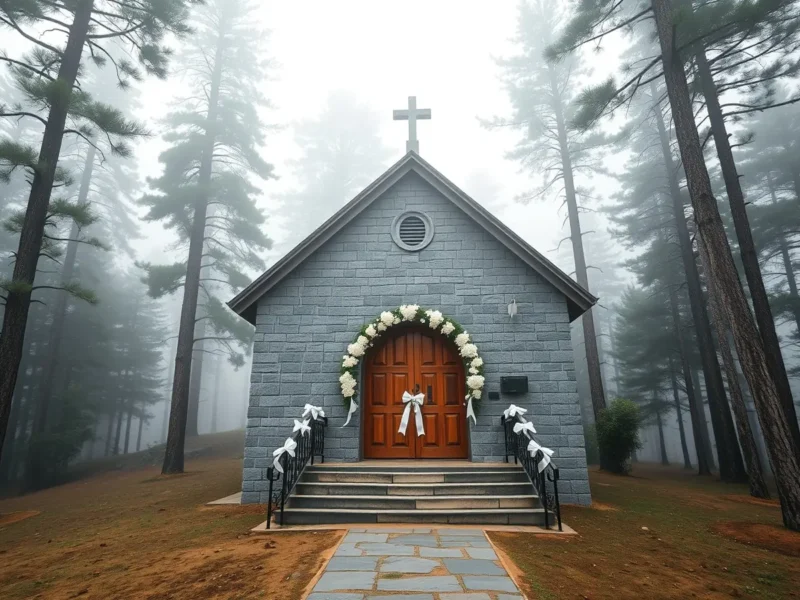
Khasi Wedding Traditions: Matrilineal Customs, Church Weddings and Planning in Meghalaya
Khasi weddings in Meghalaya are shaped by one of the world’s best-known matrilineal societies. Children take their mother’s clan name, and marrying within one’s own clan is forbidden. The youngest daughter keeps the family home, and in many marriages the husband moves to the wife’s home. Most Khasis today marry in church. Families who follow […]
Read article
Manipuri Wedding Traditions: The Meitei Luhongba, the Potloi and the Rituals
A Meitei wedding in Manipur, the luhongba, is held at the bride’s home, usually in the courtyard, with Vaishnav rites and devotional singing. The bride wears the potloi, a stiff, embroidered cylindrical skirt also seen in the Ras Lila dance. The groom wears white with a white turban. The bride circles the groom and the […]
Read article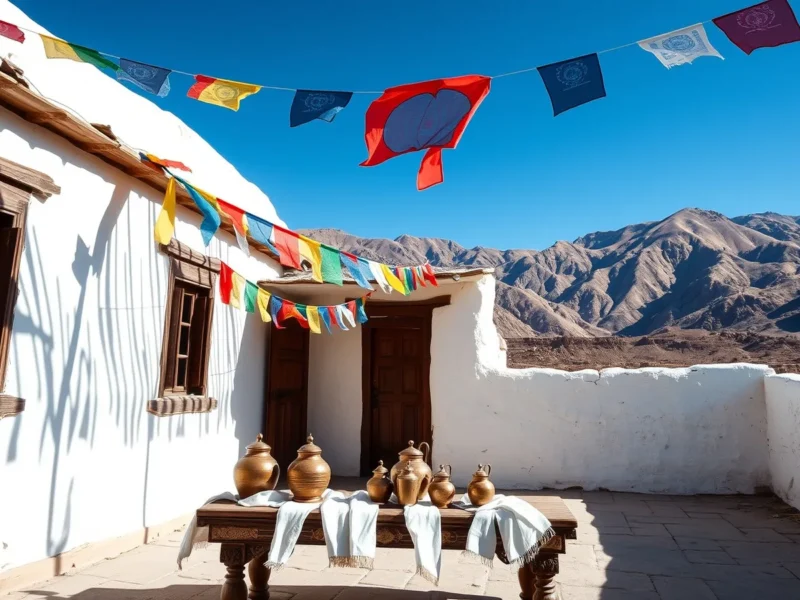
Ladakhi Wedding Traditions: Buddhist Customs, the Nyopa, and Marrying in Ladakh
A traditional Ladakhi Buddhist wedding runs over several days, on dates chosen by a lama astrologer. The groom’s party, the nyopa, travel to the bride’s home to fetch her, met with songs, chang and khatak scarves. The bride wears the turquoise perak headdress and the goncha robe. Couples from outside who want to marry in […]
Read article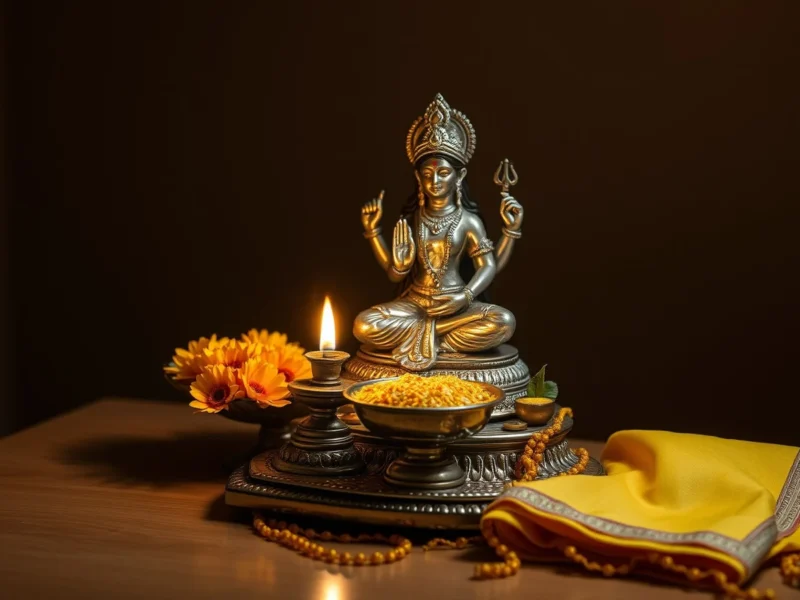
Gauri Puja Before a Wedding: Gauri Har, Gowri Pooje and the Bride’s Prayer
Gauri puja is the bride’s prayer to the goddess Gauri, Parvati, on the morning of or just before a Hindu wedding. She asks for a long, happy married life. In Maharashtrian weddings it is the Gauri Har puja, where the bride worships Gauri with Shiva while the groom’s side prepares. Kannada brides hold a Gowri […]
Read article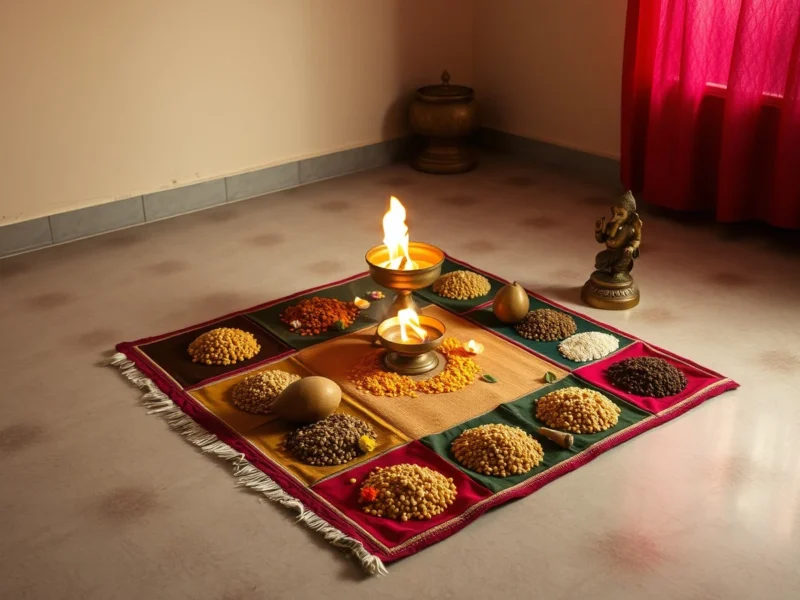
Griha Shanti and Navagraha Puja Before a Wedding: Meaning, Timing and Samagri
Griha shanti is a puja held at each family’s home, usually one or two days before a Hindu wedding. It invokes Ganesha and the nine planets, the navagraha, to remove obstacles and bless the marriage. It is common in Gujarati, Marwari and Maharashtrian weddings, often alongside the mandap mahurat. A priest conducts it, usually with […]
Read article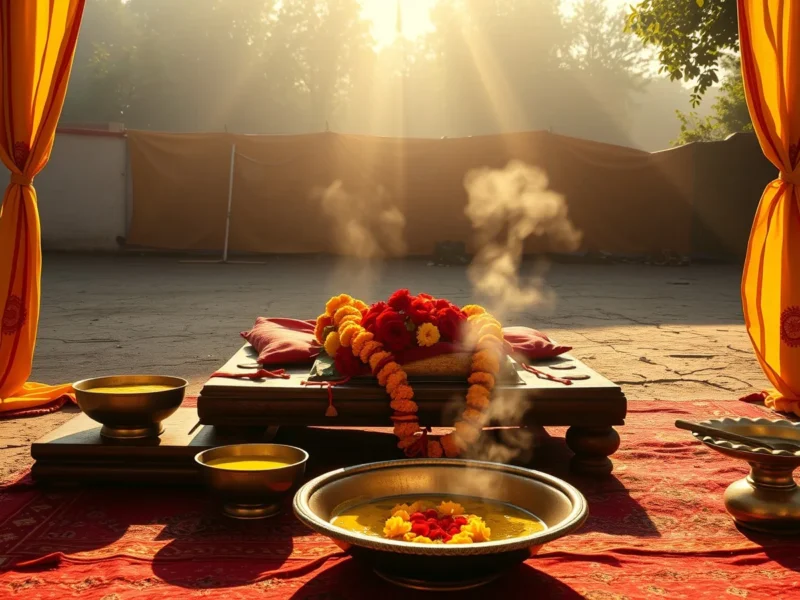
Pithi Ceremony in a Gujarati Wedding: Meaning, Steps, the Paste and What to Wear
Pithi is the Gujarati turmeric ceremony, held separately at the bride’s and the groom’s homes a day or two before the wedding. Women of the family apply a paste of turmeric, gram flour, sandalwood and rose water while singing wedding songs. It blesses and beautifies the couple before the wedding. In many families the bride […]
Read article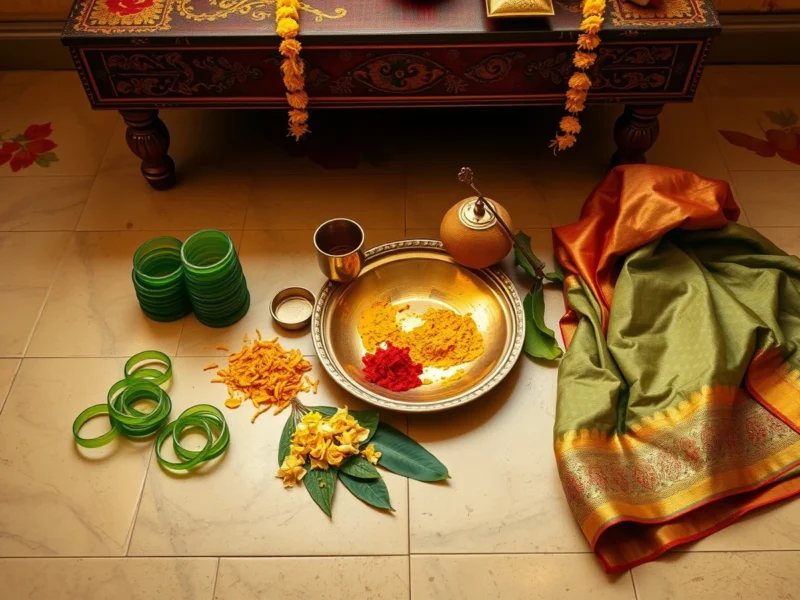
Pellikuthuru and Pellikoduku: The Telugu Bride and Groom Ceremonies, Explained
Pellikuthuru and pellikoduku are Telugu ceremonies held a day or two before the wedding. They formally make the bride a pellikuthuru, a bride, and the groom a pellikoduku, a groom. Each is held at their own home. They are anointed with turmeric and oil, bathed, and dressed in new clothes. The bride receives green glass […]
Read article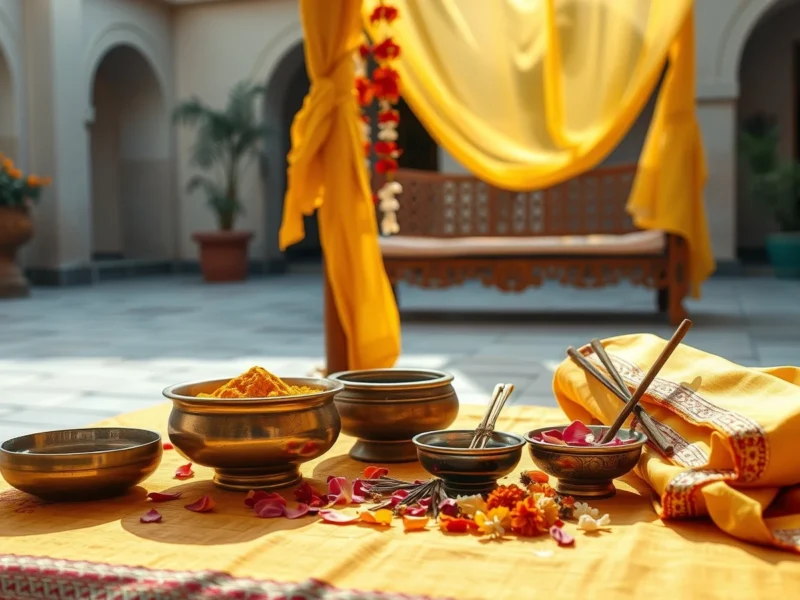
Ubtan and Manjha: The Muslim Pre-Wedding Turmeric Ceremony, Explained
Ubtan is the pre-wedding ceremony in many Indian Muslim families. The bride, and in many families the groom, is anointed with a fragrant paste of gram flour, turmeric, sandalwood and rose water. In Hyderabad it is called manjha and in parts of North India mayun. The bride wears yellow, women of the family apply the […]
Read article
Mehr in a Muslim Marriage: Meaning, Prompt and Deferred Mehr, and How It Is Fixed
Mehr, or mahr, is the gift the groom must give the bride in a Muslim marriage. It is commanded in the Quran (4:4), it belongs to her alone, and it is agreed and written into the nikahnama at the nikah. It can be paid at once (prompt) or owed for later (deferred). It is the […]
Read article
Walima: The Muslim Wedding Feast, Its Meaning, Timing and How to Plan It
The walima is the wedding feast hosted by the groom’s family after the nikah. It is a Sunnah: the Prophet told a newly married companion to give a walima “even with one sheep”. It announces the marriage to the community and thanks God for it. Most families hold it the day after the nikah or […]
Read article