Ladakhi Wedding Traditions: Buddhist Customs, the Nyopa, and Marrying in Ladakh
- Ladakh and its weddings
- The date and the lama
- The nyopa: fetching the bride
- Khatak and chang
- The bride’s dress: the perak and the goncha
- The celebration at the groom’s house
- Weddings in Kargil and among Ladakhi Muslims
- Marrying in Ladakh if you are not from Ladakh
- A sensible Ladakh wedding plan
- Food at a Ladakhi wedding
- What makes a Ladakh wedding expensive
- A small ceremony in a vast landscape
- Briefing guests
- Photography and drones
- Related Himalayan traditions
- Respecting local customs
- Frequently Asked Questions
- Sources and further reading
A traditional Ladakhi Buddhist wedding runs over several days, on dates chosen by a lama astrologer. The groom’s party, the nyopa, travel to the bride’s home to fetch her, met with songs, chang and khatak scarves. The bride wears the turquoise perak headdress and the goncha robe. Couples from outside who want to marry in Ladakh must plan for Leh’s altitude of about 3,500 metres, a short summer season and permit rules.
Ladakh and its weddings
Ladakh, high in the Himalaya between the Karakoram and the Great Himalayan range, has its own language, culture and wedding traditions, shaped by Tibetan Buddhism in Leh and the Indus valley and by Islam in much of Kargil. This guide covers the traditional Buddhist wedding of the Leh region and, separately, what couples from outside Ladakh need to know about holding their own wedding there.
Ladakhi customs differ from village to village and family to family, and many have changed as Leh has grown. Treat what follows as the common pattern, not a fixed order, and ask local families and the lamas for the detail.
The date and the lama
A Ladakhi wedding begins with astrology. The families consult a lama or an onpo, an astrologer, who examines the couple’s birth details and fixes the auspicious dates for the wedding and for its rituals. Traditionally, weddings were held in the winter, after the harvest was in and the agricultural year had ended, when families had both the time and the stored food to host a long celebration. Many village weddings still follow that rhythm.
The nyopa: fetching the bride
The best-known custom of a Ladakhi wedding is the arrival of the nyopa, the groom’s representatives, who travel to the bride’s home to bring her to the groom’s house. The groom himself traditionally stays at home. The nyopa are met at the bride’s house not with open doors but with a test: the bride’s side sings, and the nyopa must answer with songs of their own, sometimes over hours, before they are welcomed in. The exchange of songs is witty, competitive and much loved, and good singers are prized on both sides.
Once inside, the nyopa are hosted with food and chang, and after the rituals at the bride’s home they escort her, with her family’s blessing, to the groom’s house, where the main celebration takes place.
Khatak and chang
Two things appear at every stage of a Ladakhi wedding. The khatak, a white silk scarf, is offered to guests, to the couple and to the lamas as a sign of respect and blessing, and a guest at a Ladakhi wedding should expect to give and receive many. Chang, the barley beer of the Himalaya, is served to guests throughout, often poured from decorated pots with a dab of butter on the rim. Butter tea and food are offered constantly. Refusing a refill is done politely, often more than once.
The bride’s dress: the perak and the goncha
The Ladakhi bride wears the goncha, the traditional woollen or brocade robe, with a cloak over her shoulders, and the perak, a long headdress studded with turquoise that falls from the forehead down the back. The perak is a family heirloom passed from mother to daughter, and the amount of turquoise on it was historically a sign of the family’s standing. Heavy silver and coral jewellery completes the look. The groom wears a goncha and a hat, often in brocade.
The celebration at the groom’s house
The main celebration takes place at the groom’s home once the bride arrives. Lamas perform prayers and rituals for the couple, the families exchange gifts, and the guests eat, drink and dance late into the night. Traditional dances in long lines, music on the daman drum and the surna, and songs that tell the history of the families fill the evening. Guests bring gifts and khataks, and contributions toward the feast are traditional.
Weddings in Kargil and among Ladakhi Muslims
In Kargil and among Ladakh’s Muslim communities, weddings follow Islamic practice, with a nikah and a feast, blended with local customs of dress, food and music. The two traditions share the region’s hospitality, its food and the long winter celebrations, but the ceremonies are distinct. Our Muslim wedding traditions guide covers the nikah side.
Marrying in Ladakh if you are not from Ladakh
Ladakh is increasingly chosen by couples from elsewhere in India and abroad for small, dramatic weddings and elopements. It is spectacular and genuinely different, and it is also one of the hardest places in India to hold a wedding. Four things decide whether it works.
Altitude
Leh is at about 3,500 metres. Almost everyone arriving by air feels the altitude, and guidance from the local administration and doctors is to rest completely for the first 24 to 48 hours, drink plenty of water and avoid alcohol. That means the wedding cannot be on the day guests arrive, or the day after. Elderly guests and anyone with heart or lung conditions should speak to their doctor before travelling, and some should not travel at all. For many families, this one fact rules Ladakh out for a large wedding.
Season
The visitor season runs roughly from May to September. The road links to Leh from Srinagar and from Manali are seasonal, opening around May or June and closing in the autumn when the passes snow over, though exact dates vary every year. Leh airport is open year round, but winter in Ladakh is severe, with temperatures far below freezing, and most hotels and camps close. Couples from outside usually plan for June to early September.
Permits
Visiting some parts of Ladakh, such as the Nubra valley and Pangong, has required permits, with different rules for Indian and foreign nationals, and the rules have changed several times. Foreign guests in particular should expect to need a Protected Area Permit for areas beyond Leh. Check the current rules on the Leh district administration’s site well before inviting guests, and build the permit process into the guest communication.
Scale and venues
Leh has hotels and boutique properties, and there are luxury camps in the valleys, but none is built for a large Indian wedding. Most work comfortably for 30 to 80 guests. Monasteries are religious sites, not wedding venues; respectful visits can be part of a guest itinerary, but they cannot be booked for a ceremony. Food, decor and equipment for a larger wedding have to be flown or trucked in, which adds cost and lead time. Our guide to hill station wedding venues covers lower-altitude alternatives in the Himalaya.
A sensible Ladakh wedding plan
| Day | Plan |
|---|---|
| Day 1 | Arrive in Leh by air; rest completely |
| Day 2 | Rest; short walk in Leh; light dinner |
| Day 3 | Gentle sightseeing; welcome dinner |
| Day 4 | Wedding ceremony, ideally in the late morning or afternoon |
| Day 5 | Optional excursion for guests who are well; depart |
Ceremonies work best in daylight. Summer days in Ladakh are bright and warm, but evenings are cold even in July, so plan for heaters, blankets and an indoor fallback.
Food at a Ladakhi wedding
Ladakhi wedding food is built for cold and altitude: thukpa and skyu, hearty noodle and dough stews, momos, rice with meat or vegetable curries, khambir bread, apricots, and endless butter tea and chang. For couples from outside, a mix works well: a Ladakhi dinner one evening to give guests a taste of the place, and familiar menus on the other days. Fresh produce is limited and much of it is trucked in during the season, so menus should be agreed early with the caterer and kept realistic.
What makes a Ladakh wedding expensive
Ladakh weddings for outside couples cost more per guest than most destinations, for reasons that have nothing to do with luxury. Flights to Leh are expensive in the season and sell out; extra days for acclimatisation add room nights; everything a decorator or a production team needs beyond basic local supply has to be flown or trucked in; and the season is short, so the best properties command premium rates. The honest planning approach is to keep the guest list small and spend on comfort, warmth and health rather than decor. Our wedding cost by guest count guide shows how guest numbers drive the total.
A small ceremony in a vast landscape
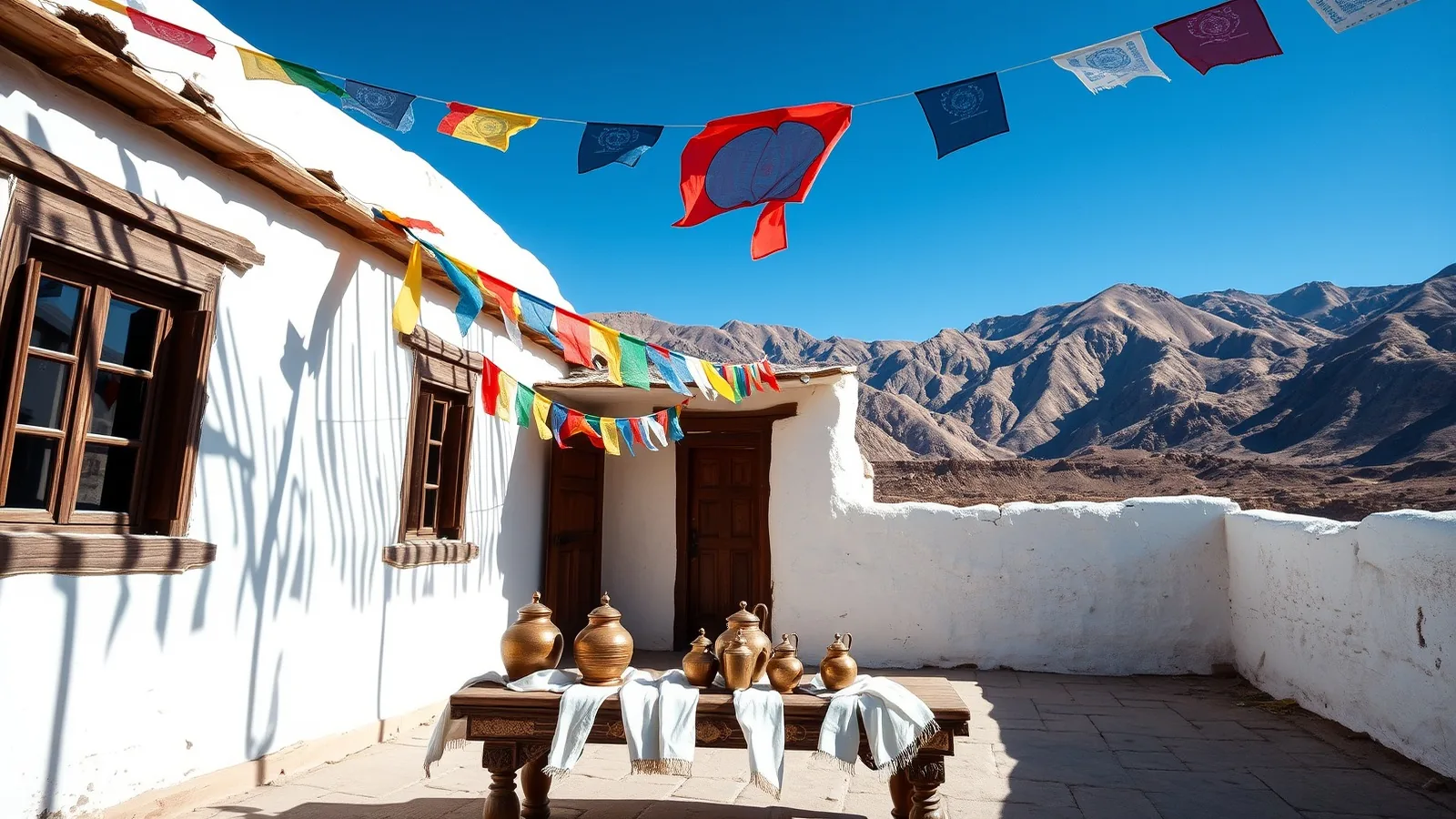
The best Ladakh weddings for outside couples lean into what the place offers rather than importing a city wedding. A short ceremony on a lawn or a terrace with the mountains behind, a few musicians, a long lunch in the sun, and a Ladakhi dinner by a fire in the evening suit both the setting and the altitude. Many couples hold the full family wedding at home and come to Ladakh for a small second ceremony or an elopement with close family, which avoids most of the difficulties described above.
Briefing guests
Guests travelling to Ladakh need more information than for any other Indian destination: the altitude advice and the two rest days, warm clothing for the evenings, sun protection for the days, any permits they need with the documents required, travel insurance that covers high altitude, and a contact for medical help. Send it with the save-the-date, not with the invitation, so that guests can decide early whether the trip is right for them. Our destination wedding guest guide covers the general principles.
Photography and drones
Ladakh is one of the most photogenic places on earth, and the light is extraordinary. It is also a sensitive border region where drone use is restricted in many areas and requires permissions. Do not assume a drone can be flown; check the current rules with the administration and make sure the photographer has done so too. Ask before photographing local people, and follow the rules at monasteries, some of which do not allow photography inside.
Related Himalayan traditions
Ladakhi customs share much with other Himalayan wedding traditions, from the songs exchanged between the two sides to the importance of the maternal family. Our guides to Nepali wedding traditions and Himachali wedding traditions cover two neighbouring cultures.
Respecting local customs
Couples who marry in Ladakh are guests in a living culture. A khatak offered to hosts, permission before photographing people or monasteries, modest dress at religious sites and respect for local rules on plastic, noise and drones go a long way. Using local musicians, caterers and craftspeople, and giving guests a taste of Ladakhi food and music, makes the wedding better and returns something to the place.
Frequently Asked Questions
What happens at a traditional Ladakhi wedding?
A lama fixes the dates, the groom’s representatives, the nyopa, fetch the bride from her home after an exchange of songs, and the celebration at the groom’s house includes prayers, khatak scarves, chang, food, music and dance.
What is the nyopa in a Ladakhi wedding?
The nyopa are the groom’s representatives who travel to the bride’s home to bring her to the groom’s house. They must answer the bride’s side in song before being welcomed.
What does a Ladakhi bride wear?
The goncha robe and the perak, a turquoise-studded headdress passed down from mother to daughter, with silver and coral jewellery.
Can you have a destination wedding in Ladakh?
Yes, for a small group in summer, with two days of rest after arrival for the altitude. Large weddings are very difficult.
When is the best time for a wedding in Ladakh?
For couples from outside, June to early September. Traditional Ladakhi weddings are often held in winter.
Do guests need permits for Ladakh?
Some areas beyond Leh have required permits, and foreign nationals generally need a Protected Area Permit for them. Check the current rules with the Leh administration.
How many guests can a Ladakh wedding take?
Most hotels and luxury camps work comfortably for 30 to 80 guests. Larger weddings are possible but costly and hard on elderly guests.
Sources and further reading
Thinking about a small wedding in the mountains? Tell us your dates and guest count and we will tell you honestly whether Ladakh or a lower-altitude alternative suits your guests.
Begin Your Engagement
Want a real number for your wedding?
Tell us your city, guest count and dates. Team Velvet Knot will come back within 24 hours with an itemised budget.