Himachali Wedding Traditions: Dham, Devta, Pahari Rituals and the Many Forms of Marriage
- One state, many wedding cultures
- The sequence of a Himachali Hindu wedding
- The devta: the village deity at the wedding
- The Dham: Himachal’s wedding feast
- The many forms of marriage in Himachal
- Gaddi weddings
- Kinnauri weddings
- Dress and jewellery
- Music and the nati
- Songs sung by the women
- For guests at a Himachali wedding
- Planning a Himachali wedding today
- Himachali and other mountain weddings
- Frequently Asked Questions
- Sources and further reading
A Himachali wedding follows the broad Hindu pattern of North India, from engagement and turmeric to pheras and the doli, but it is shaped by three things found nowhere else: the village devta, the local deity whose blessing is sought; the Dham, a satvik wedding feast cooked only by hereditary boti cooks and served on leaf plates; and an unusual range of customary marriages among the Gaddi, Kinnauri, Pangwal and Hatti communities. Dress, music and ritual change from valley to valley.
One state, many wedding cultures
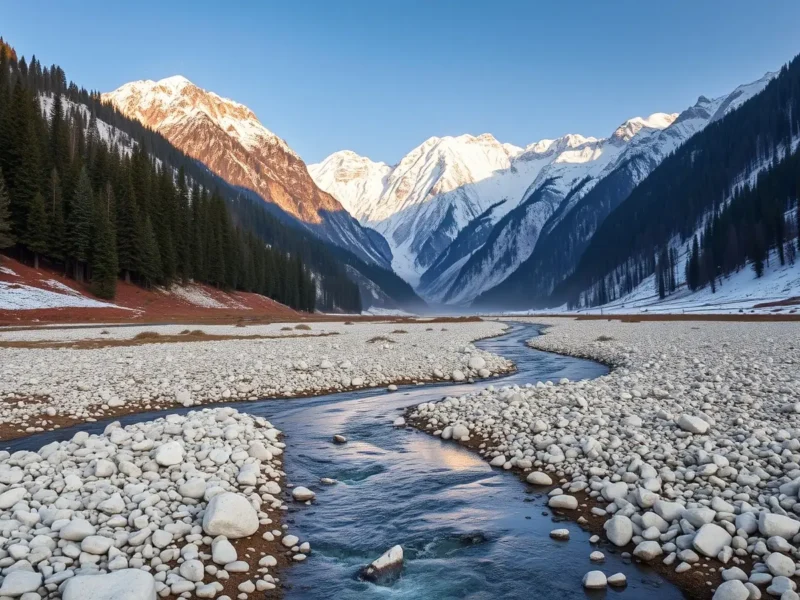
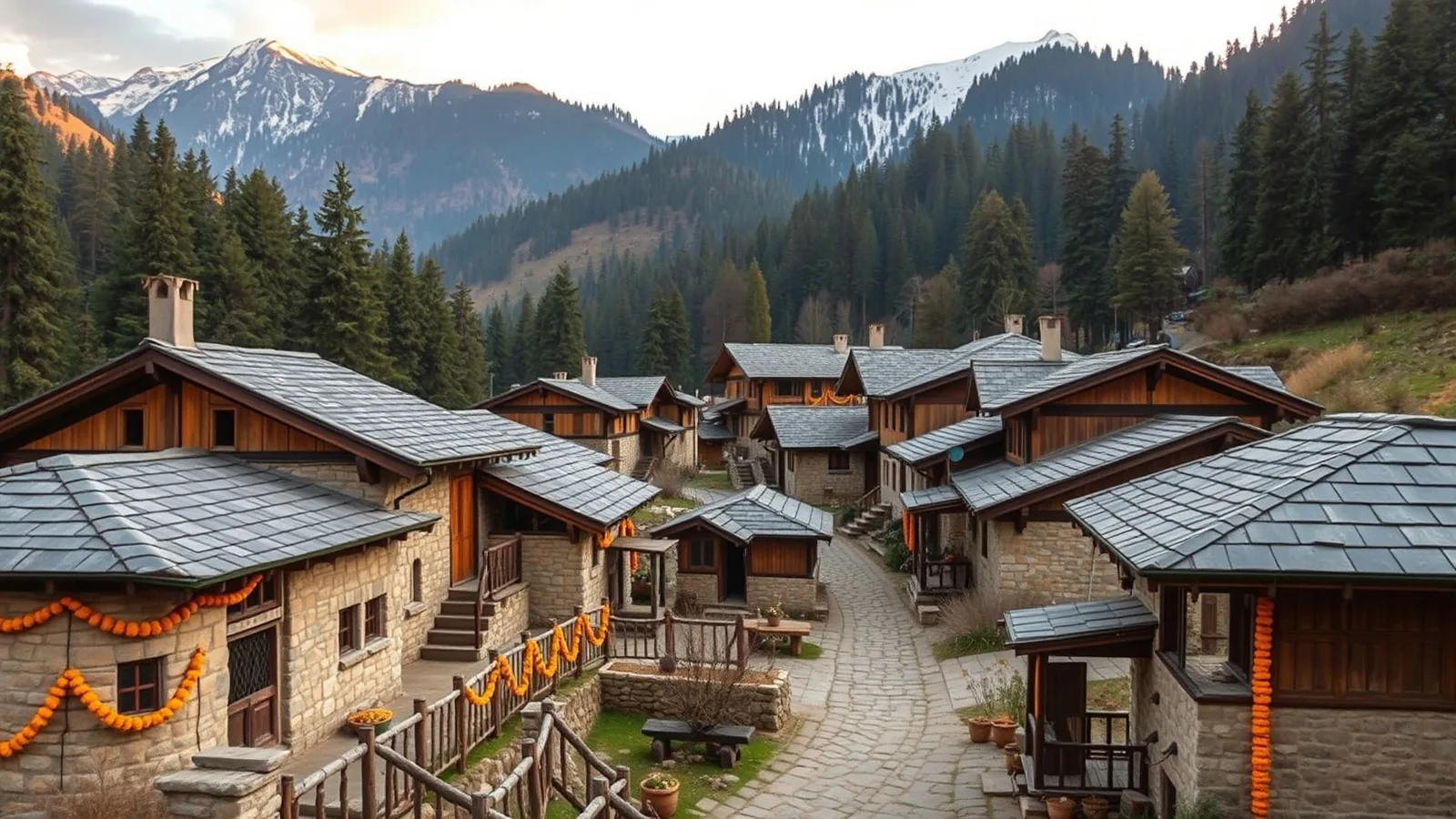
Himachal Pradesh is small on the map but divided by mountains into valleys that developed largely on their own. A wedding in Kangra, in the lower hills, looks quite close to a Punjabi or Dogra Hindu wedding. One in Kullu or Mandi revolves around the village deity. In Chamba the Gaddi shepherds keep customs of their own, and in Kinnaur and Lahaul, close to Tibet, Buddhist and Hindu practice mix and marriage forms have been very different from the plains. Any description of “the” Himachali wedding is a summary of many local traditions, and families in each valley will tell you that theirs is the proper one.
The sequence of a Himachali Hindu wedding
In most of the Hindu districts, Kangra, Hamirpur, Una, Bilaspur, Mandi, Kullu, Shimla and Solan, a wedding broadly follows this order:
| Stage | What happens |
|---|---|
| Matchmaking and horoscopes | The families meet, and the family priest compares horoscopes |
| Engagement | A formal family commitment, often with a tilak and gifts for the groom |
| Fixing the date | The priest sets the auspicious date and time; in many villages the devta is consulted too |
| Turmeric and oil | Turmeric paste is applied to the bride and groom at their homes, with songs by the women |
| Mehndi | The bride’s hands and feet are decorated the day before |
| Baraat | The groom’s procession sets out with musicians playing traditional instruments |
| Welcome and pheras | The bride’s family receives the baraat; the couple take their vows around the sacred fire |
| Doli | The bride’s departure for her new home |
| Return visit | The bride returns to her parents’ home for a short visit soon after the wedding |
The core rituals are those of any Hindu wedding: the kanyadaan, the pheras and the farewell. What makes the day Himachali is everything around them.
The devta: the village deity at the wedding
In Kullu, Mandi, Shimla and the upper valleys, every village has its devta, a deity with its own temple, palanquin, priests and oracle. The devta is not a distant god but a member of the community, consulted on harvests, disputes and journeys, and on marriages. Families seek the devta’s permission for the match and the date, and the bride and groom offer prayers at the village temple before the wedding. In some villages the devta’s palanquin is carried out to bless the couple. This devta culture, best known from the Kullu Dussehra, where hundreds of deities gather, is the deepest difference between a Himachali wedding and one in the plains.
The Dham: Himachal’s wedding feast
If there is one thing every Himachali wedding shares, it is the Dham. It is a festive meal served at weddings and other important occasions, and three rules set it apart:
- Only botis cook it. The botis are a community of Brahmin cooks whose craft is hereditary. Cooking begins the night before, in large brass and copper vessels over wood fires.
- It is satvik. No onion, no garlic and no meat. The flavour comes from yoghurt, ghee, whole spices and slow cooking.
- It is served on leaf plates, in rows. Guests sit on the floor in lines, and the courses are served one after another on plates made of leaves, called pattals.
Each district has its own Dham. Kangri Dham is famous for madra, chickpeas cooked in yoghurt, and a sweet-and-sour khatta. Mandyali Dham is known for sepu vadi, lentil dumplings in a spinach gravy. Chambyali Dham has its own madra, made with kidney beans or chickpeas. Almost every Dham includes rice, a dal, a kadhi and a sweet rice called mittha, cooked with jaggery or sugar, dry fruits and saffron. For a couple bringing guests from outside the state, the Dham is often the most memorable part of the wedding, and our guide to wedding catering costs explains how to budget for it alongside other meals.
The many forms of marriage in Himachal
Beyond the standard Hindu wedding, Himachal’s communities have kept customary forms of marriage that anthropologists have documented for over a century. Some are now rare, but they explain a great deal about how the hills think about marriage.
| Form | Where | What it is |
|---|---|---|
| Byah or Biah | Across the state | The full, arranged Hindu wedding with all the rites |
| Jhanjrara | Gaddis, Pangwals, the Hatti community | A simple consensual marriage without the elaborate fire ceremony, often for a second marriage |
| Jhindphook | Gaddis and other pastoral communities of Kangra and Chamba | The couple circle a burning bush or brushwood instead of a full sacred fire |
| Marriage by capture or elopement | Kinnaur | A ritualised capture or elopement, later accepted by the families |
| Fraternal polyandry | Historically in Kinnaur and parts of Lahaul | Brothers sharing a wife, to keep scarce farmland from being divided; now rare |
None of these are museum pieces: they show that in the hills, a marriage was always defined more by community acceptance than by one fixed ritual, a principle Indian law still respects through customary rites. Our guide to the types of Hindu marriage explains how the law treats custom.
Gaddi weddings
The Gaddis are a semi-pastoral community of the Dhauladhar range in Kangra and Chamba, traditionally shepherds who move their flocks between the high pastures and the valleys. Their weddings are known for their dress: the men in the chola, a long woollen coat, tied at the waist with the dora, a long black woollen cord, and the women in the luanchari, a long flowing dress, with heavy silver jewellery. Gaddi weddings are accompanied by their own songs, many of them about Shiva, whom the Gaddis regard as their own deity, and the Bharmour region at the heart of Gaddi country is home to the ancient Chaurasi temple complex.
Kinnauri weddings
Kinnaur, on the border with Tibet, has a wedding culture of its own. Kinnauri brides wear the dohru, a woollen shawl draped and pinned in a particular style, with heavy silver jewellery, and both men and women wear the thepang, the grey woollen cap with a green velvet band. Weddings are long, with dancing, local drinks and feasts, and in the past marriages were often arranged with much less formality than in the lower hills. Buddhist and Hindu practice coexist here, and a lama and a Hindu priest may both have a role.
Dress and jewellery
- The Himachali topi. The round cap with a coloured velvet band, worn by men and increasingly by women, appears at almost every wedding. The colour of the band varies by region, and the Kullu and Bushahri styles are the best known.
- Shawls. Kullu shawls, woven with geometric borders, are given and worn at weddings and are a common wedding gift.
- The bride’s nath. In Kangra and nearby districts brides wear a large nose ring, often gold and set with stones, sometimes supported by a chain to the hair.
- Silver jewellery. Heavy silver necklaces, the chandanhaar among them, anklets and head ornaments are typical of the hills, especially among Gaddi and Kinnauri brides.
- The groom. Many Himachali grooms now wear a sherwani with a topi rather than a turban, which makes the cap one of the most recognisable signs of a Himachali wedding.
Music and the nati
A Himachali baraat moves to traditional instruments: the dhol and nagara drums, the long curved brass karnal and ransingha horns, and the shehnai. The same musicians often play for the village devta, which links the wedding music to the temple. The nati, the circle dance of Kullu and the upper hills, in which dancers link arms and move slowly in a long line, is danced at every wedding, often for hours, and guests from outside the state are always pulled in.
Songs sung by the women
As in much of North India, the women of both families sing at every stage: songs teasing the groom’s family, songs at the turmeric ceremony, songs that describe the bride leaving her parents. Pahari wedding songs are sung in the local dialects, Kangri, Mandyali, Kullvi or Chambyali, and are often passed down within families. Many families now record them, because fewer younger women know them by heart.
For guests at a Himachali wedding
- Dress warmly. Even in spring and autumn, evenings in the hills are cold. A shawl over festive clothes is normal and expected.
- Eat the Dham the traditional way. Sit in the row, eat with your hand from the leaf plate, and let the servers bring each course. Refusing a dish is fine; wasting food is not.
- Join the nati. Nobody expects you to know the steps. Link arms and follow the line.
- Gifts. Cash in an envelope is the norm, as elsewhere in North India. A Kullu shawl or topi is a thoughtful gift for an elder. Our guest etiquette guide covers the rest.
Planning a Himachali wedding today
Many Himachali families now marry in the cities, in Chandigarh, Delhi or abroad, and bring the hills with them: a Dham cooked by botis brought down for the day, a nati at the sangeet, topis for the guests. Others are bringing weddings back to the mountains, at resorts around Shimla and Manali. Our guides to Shimla wedding costs and Manali wedding costs set out the venue options, and for something grander, the Wildflower Hall and Taj Theog pages cover two of the best hill resorts.
A few practical notes for a wedding in the hills:
- Season. October to early December and March to June are the most reliable. Snow can close roads in winter, and the monsoon brings landslide risk from July to September.
- Guest travel. Most guests arrive through Chandigarh or by small airports at Shimla, Kullu and Kangra, with limited flights. Plan transfers carefully.
- Local customs. If the wedding is in a village, ask the family elders about the devta’s role early. It may affect the date and the venue.
- Registration. Marriages in the state are registered under the Himachal Pradesh Registration of Marriages Act, 1996. Our guide to marriage registration in Himachal Pradesh has the steps.
Himachali and other mountain weddings
Himachal’s traditions share a great deal with those of its neighbours. The Kumaoni and Garhwali weddings of Uttarakhand have the same Pahari roots, similar wedding songs and their own drums and horns; our guide to Kumaoni and Garhwali wedding traditions covers them. The Kashmiri Pandit tradition to the north has its own distinct rites, described in our Kashmiri Pandit wedding guide.
Frequently Asked Questions
What are the main Himachali wedding rituals?
Matchmaking and horoscopes, an engagement, fixing the date with the priest and often the village devta, turmeric and mehndi ceremonies, the baraat with traditional music, the pheras around the sacred fire, the doli and the bride’s return visit to her parents.
What is a Himachali Dham?
The traditional wedding feast of Himachal Pradesh: a satvik meal without onion or garlic, cooked overnight by hereditary boti cooks and served in courses on leaf plates to guests sitting in rows.
What food is served at a Himachali wedding?
The Dham: rice, dal, kadhi, rajmah or chickpeas in yoghurt (madra), a sweet-and-sour khatta, sepu vadi in Mandi, and mittha, a sweet rice with dry fruits.
What does a Himachali bride wear?
It varies by region: in Kangra a lehenga or saree with a large nath (nose ring), among the Gaddis the luanchari with heavy silver jewellery, and in Kinnaur the dohru shawl with the thepang cap.
What is Jhanjrara marriage?
A simple consensual customary marriage, without the elaborate sacred fire ceremony, traditionally found among the Gaddis, Pangwals and the Hatti community, often for a second marriage.
What is the role of the devta in a Himachali wedding?
In many villages the local deity’s permission is sought for the match and the date, and the couple pray at the devta’s temple before the wedding.
Sources and further reading
- Himachal Pradesh Tourism: culture and festivals
- District Kangra, Government of Himachal Pradesh
- Wikipedia: Dham, the Himachali feast
Planning a wedding in the hills? Tell us about it and we will help you plan around the season and the roads.
Begin Your Engagement
Want a real number for your wedding?
Tell us your city, guest count and dates. Team Velvet Knot will come back within 24 hours with an itemised budget.