The Velvet Knot Journal
Wedding planning,
demystified.
Honest guides on cost, timelines, traditions, and what really happens behind a well-planned Indian wedding.
Hyderabadi Muslim Wedding Traditions: Sanchaq, Jalwa, the Khada Dupatta and the Feast
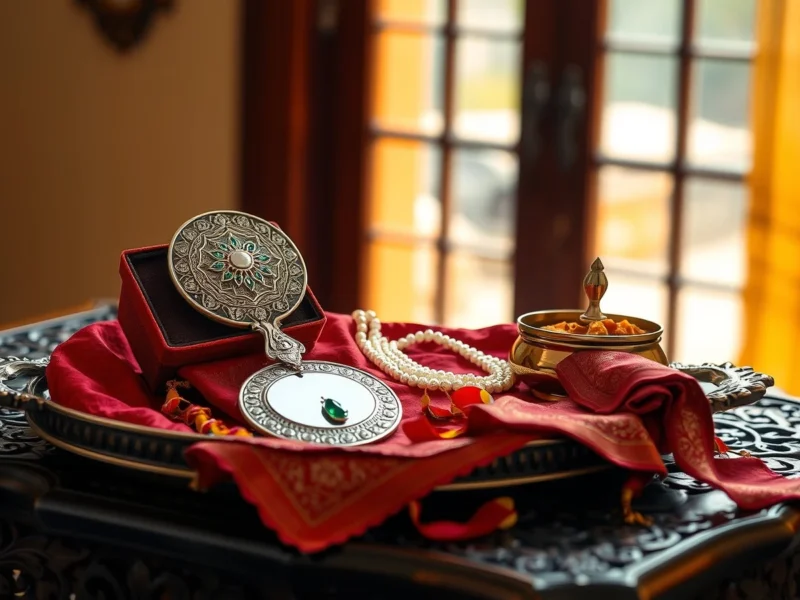
A Hyderabadi Muslim wedding runs as a sequence of family events: the manjha, then the sanchaq, when the groom’s family sends the bride’s wedding clothes, then the mehendi and the nikah. Then comes the jalwa, when the couple first see each other in a mirror beside the Quran, followed by the rukhsati and the walima. […]
Read article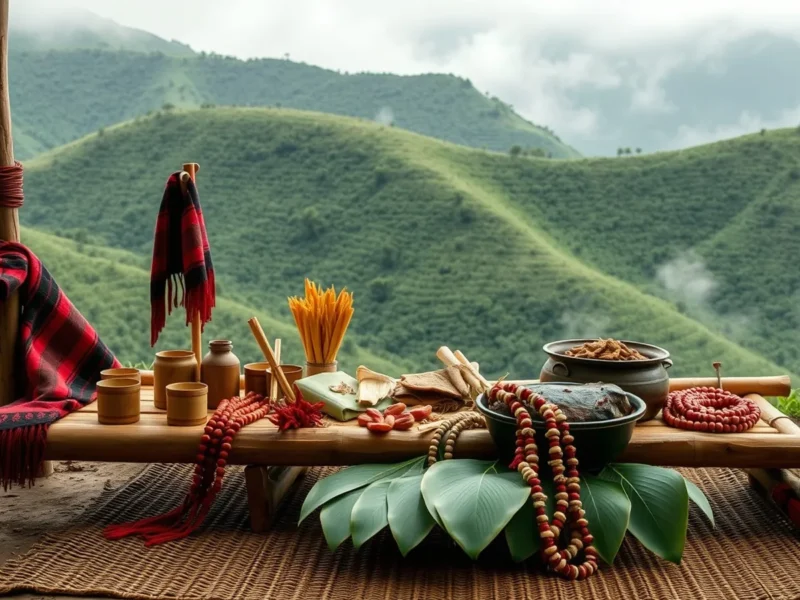
Naga Wedding Traditions: Church Weddings, Tribal Shawls, Feasts and Planning in Nagaland
Nagaland is home to many Naga tribes, each with its own language, shawls and customs, and most Nagas are Christian, largely Baptist. A Naga wedding is therefore usually a church wedding wrapped in tribal custom. The families negotiate the marriage, the bride and groom wear their tribe’s woven shawls and ornaments, and a large community […]
Read article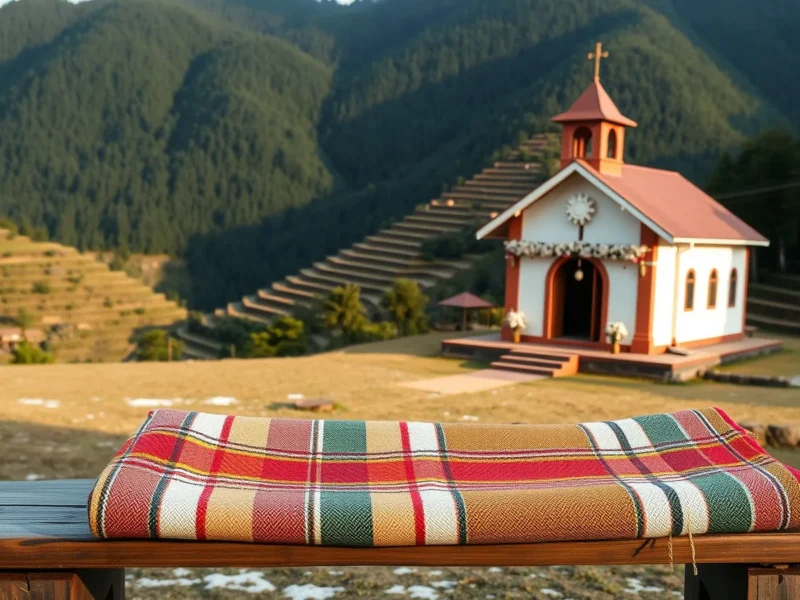
Mizo Wedding Traditions: Church Weddings, the Puanchei and Customs of Mizoram
Most Mizo weddings in Mizoram are church weddings, since the Mizo are overwhelmingly Christian. They are wrapped in Mizo custom: the customary bride price, or man, agreed between the families, the bride in a puanchei, Mizoram’s most colourful hand-woven puan, and a feast prepared with help from relatives and the community. Visitors from outside the […]
Read article
Mappila Wedding Traditions: Mylanchi, Oppana and the Malabar Muslim Wedding
A Mappila wedding, among the Muslims of Malabar in north Kerala, centres on the mylanchi night. The bride’s hands are decorated with henna while women sing mappilappattu, the community’s own songs, and perform oppana, a clapping dance around her. The nikah follows, with the mahr often in gold, and a feast of Thalassery biryani. In […]
Read article
Ezhava Wedding Traditions: Sree Narayana Guru’s Simple Wedding and Kerala Rituals
Ezhava weddings follow the short, elegant Kerala Hindu ceremony. The groom ties the thali, presents the pudava, a set of new clothes, and the couple exchange garlands and circle the lamp, all within a muhurtham of minutes. A sadya feast on banana leaves follows. They also carry the legacy of Sree Narayana Guru, whose reform […]
Read article
Kutchi Wedding Traditions: Communities, Rituals, Dress and Marrying in Kutch
Kutch, Gujarat’s largest district, is home to many communities, including Lohana, Bhanushali, Kutchi Visa Oswal Jain, Ahir and Rabari. Each marries in its own way on a shared Gujarati base of the mandap mahurat, the mameru, the pithi and the hast melap. What makes a Kutchi wedding look like Kutch is its craft: bandhani, ajrakh […]
Read article
Kashmiri Muslim Wedding Traditions: Maenz Raat, Wanwun and the Wazwan Feast
A Kashmiri Muslim wedding builds to two great moments. The first is the maenz raat, the henna night, when the women sing wanwun, Kashmir’s traditional wedding songs. The second is the wazwan, a feast of many meat courses cooked by specialist chefs called wazas and served in a large copper plate, the trami, shared by […]
Read article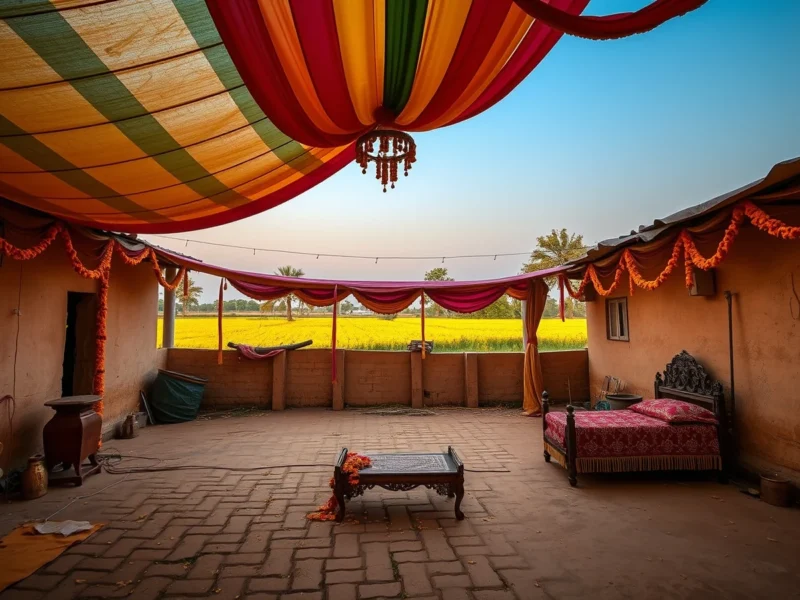
Haryanvi Wedding Traditions: Bhaat, Ghudchadi and the Rituals in Order
A Haryanvi wedding runs from the rokna and sagai to the lagan, which fixes the date, and the ban, the turmeric days. Then comes the bhaat, when the bride’s mother’s brothers arrive with gifts, and the ghudchadi, when the groom rides out on a mare with his sister holding the reins. The pheras, the kangna […]
Read article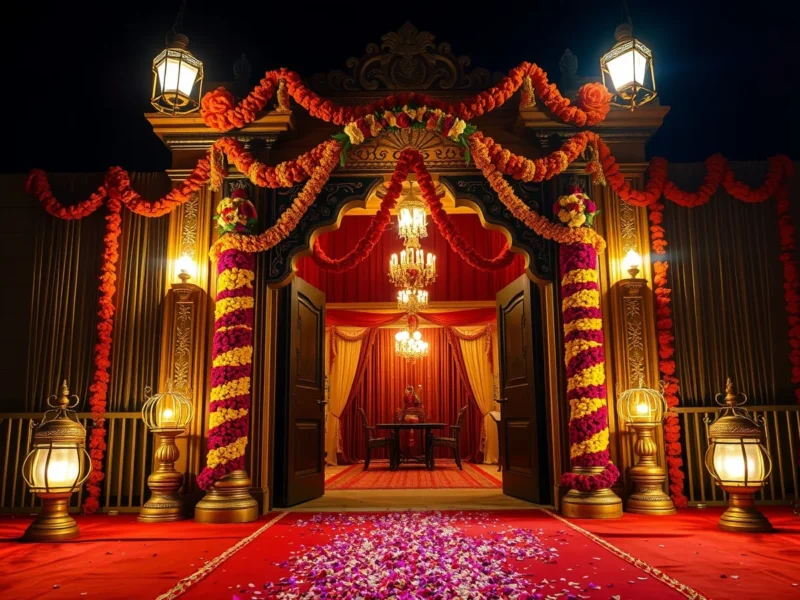
Agarwal Wedding Rituals: The Full Sequence from Sagai to Vidai, Explained
Agarwal weddings follow the North Indian Hindu sequence with a strong Vaishya and Marwari flavour. They run from the sagai and tilak to the lagan, the ban, and the bhaat brought by the bride’s mother’s brothers. Then come the groom’s nikasi on a mare, the toran at the door, the varmala and the pheras, and […]
Read article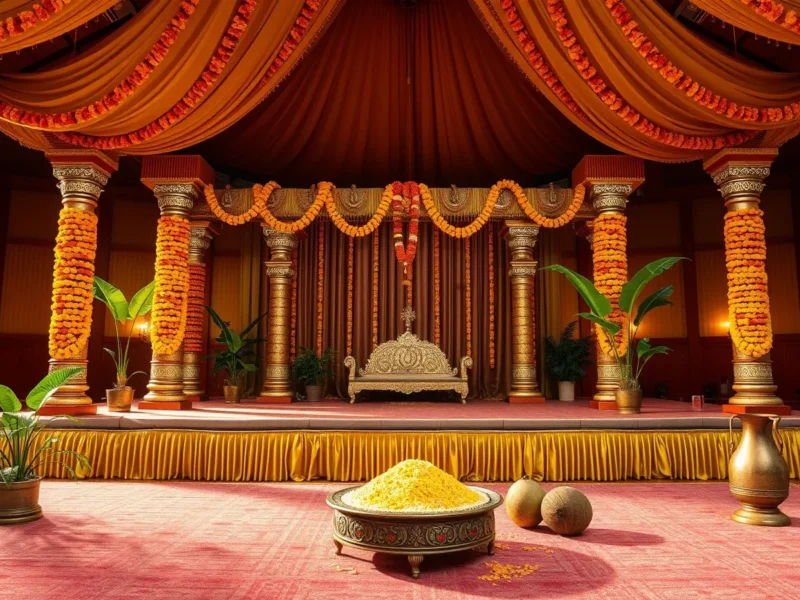
Reddy and Kamma Wedding Rituals: The Telugu Sequence, Step by Step, and What Differs
Reddy and Kamma weddings follow the shared Telugu Hindu sequence: the pradhanam engagement, the pellikuthuru and pellikoduku ceremonies, then jeelakarra bellam at the muhurtham. The mangalsutram is tied, followed by talambralu, the saptapadi and the appagintalu farewell. What sets them apart is not a separate liturgy but scale, region and family custom, with a Brahmin […]
Read article