Kashmiri Muslim Wedding Traditions: Maenz Raat, Wanwun and the Wazwan Feast
- Kashmiri Muslim weddings
- The wedding in order
- The maenz raat: the henna night
- Wanwun: the women’s songs
- The nikah
- The wazwan
- The trami and the etiquette
- The waza’s night
- Kahwa and noon chai
- A sample wedding day
- Guests from outside Kashmir
- Rukhsati and the walima
- What the bride and groom wear
- Weddings in Srinagar
- Gifts and the families’ roles
- Mixed weddings
- Bringing wazwan to a wedding outside Kashmir
- What to settle beforehand
- Frequently Asked Questions
- Sources and further reading
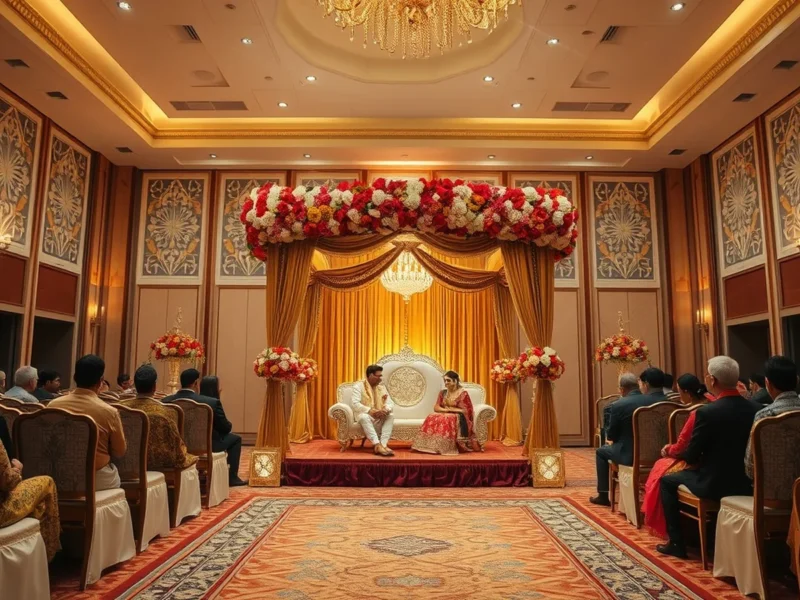
A Kashmiri Muslim wedding builds to two great moments. The first is the maenz raat, the henna night, when the women sing wanwun, Kashmir’s traditional wedding songs. The second is the wazwan, a feast of many meat courses cooked by specialist chefs called wazas and served in a large copper plate, the trami, shared by four guests. The nikah, the rukhsati and the walima complete the wedding.
Kashmiri Muslim weddings
Weddings in the Kashmir valley are among the most distinctive in India. They follow Islamic practice for the marriage itself, the nikah, and wrap it in Kashmiri customs of song, dress and above all food. The wazwan, the multi-course meat feast of Kashmir, is famous across India, and for many families the quality of the wazwan is how the wedding is remembered. Customs vary between families, towns and villages, so treat what follows as the common pattern.
Kashmiri Pandit weddings, which share the valley’s food and much of its music but follow Hindu rites, are covered in our Kashmiri Pandit wedding guide. The nikah itself is covered in our nikah guide.
The wedding in order
| Stage | Event | What happens |
|---|---|---|
| Agreement | The proposal and engagement | The families agree the match and exchange gifts; a date is fixed. |
| Weeks before | Preparations and wanwun evenings | Women of the family gather to sing in the evenings at the bride’s home. |
| Night before | Maenz raat | The henna night, with wanwun singing late into the night. |
| Wedding day | Nikah | The marriage contract, with the mehr and witnesses. |
| Wedding day | Wazwan | The feast for the guests. |
| Wedding night | Rukhsati | The bride leaves for the groom’s home. |
| After | Walima and visits | The groom’s family’s feast and the couple’s visits to relatives. |
The maenz raat: the henna night
Maenz raat, the night of henna, is held at the bride’s home, and a similar night is held for the groom at his. The bride’s hands and feet are decorated with henna, the house is lit and full of women, and the evening is carried by wanwun, the traditional Kashmiri wedding songs. For many Kashmiri women, the maenz raat is the most memorable night of the wedding, more than the feast.
Wanwun: the women’s songs
Wanwun is a form of Kashmiri folk singing performed by women at weddings, in a call and response between two groups, often without instruments. The songs bless the couple, praise the families, describe the rituals as they happen and tease the in-laws. Older women lead and younger ones follow, and the songs are passed down through families. In many homes, women gather to sing wanwun on several evenings before the wedding, not just the maenz raat. If the family wants it photographed or recorded, ask the women first.
The nikah
The nikah is conducted by a qazi or an imam, at the bride’s home or a mosque, in the presence of the families and witnesses. The mehr, the groom’s gift to the bride, is agreed and recorded, and the offer and acceptance are made. Our guide to mehr explains how it is fixed. Prayers and blessings follow, and the guests are then served the wazwan.
The wazwan
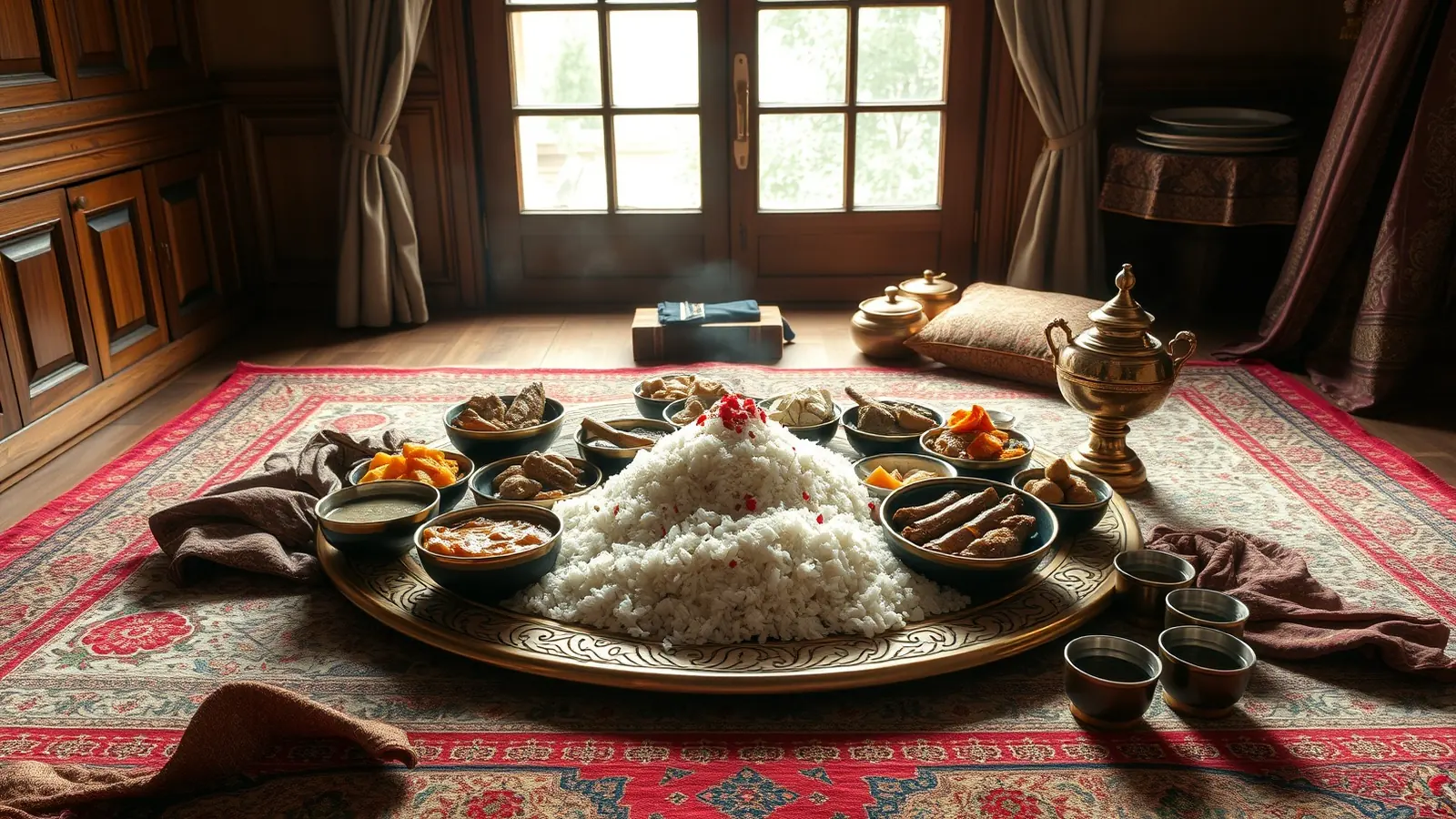
The wazwan is a feast of many courses, mostly of meat, traditionally lamb or mutton, prepared by specialist cooks called wazas under a master chef, the vasta waza. It is cooked overnight in large copper pots over wood fires, often in the open at the host’s home, and the preparation is itself a spectacle that guests come to watch. A full traditional wazwan is often described as having up to 36 courses; most weddings serve fewer.
The dishes vary between wazas and families, but some appear at almost every wedding: rista, meatballs in a red gravy; rogan josh; tabak maaz, fried lamb ribs; yakhni, lamb in a yoghurt gravy; and goshtaba, large meatballs in a white yoghurt gravy, traditionally the last dish, after which nothing more is served. Rice, chutneys and salads accompany them.
The trami and the etiquette
The wazwan is served in a particular way. Guests sit on the floor in groups of four, around a large copper plate called the trami, piled with rice and the first dishes. Before the meal, a jug and basin, the tash-t-nari, are brought round so that each guest can wash their hands. The wazas then serve the courses one after another onto the shared trami. Guests eat with their right hand, and it is polite to taste every course. Leftovers are often packed for guests to take home.
For guests from outside Kashmir, the experience is part of the wedding: sitting in fours, sharing a trami, and pacing yourself through course after course. Hosts who expect many such guests sometimes serve a smaller trami or brief their guests in advance.
The waza’s night
The wazwan is cooked through the night before it is served. The wazas arrive with their copper pots, set up wood fires in the courtyard or a corner of the lawn, and begin by pounding the meat for the rista and goshtaba by hand on stone, a rhythmic sound that tells the neighbourhood a wedding is near. The cooking continues until the morning, with the vasta waza tasting and adjusting each dish. Hosts need to provide space, firewood or gas, water, light, shelter from rain, and food and tea for the cooks. On the day, the wazas also serve, so their team needs to be sized to the number of guests.
Kahwa and noon chai
Tea runs through a Kashmiri wedding. Kahwa, green tea with saffron, cardamom, cinnamon and almonds, is served after the wazwan to help digestion, and noon chai, the salted pink tea of Kashmir, is served to guests and to the women singing at the wanwun evenings, often with Kashmiri breads. Plan for a samovar and someone to keep it going, especially at a winter wedding.
A sample wedding day
| Time | What happens |
|---|---|
| Night before | Maenz raat at the bride’s home; the wazas begin cooking |
| Morning | The wazas finish the dishes; the shamiana is readied |
| Midday | The groom’s party arrives; nikah |
| Early afternoon | Tash-t-nari, then the wazwan served to the guests in groups |
| Late afternoon | Kahwa; guests take leave |
| Evening | Rukhsati, with songs of farewell |
Timings vary a great deal: many weddings serve the wazwan in the evening, and large weddings serve guests in several sittings over hours.
Guests from outside Kashmir
Guests who have not been to a Kashmiri wedding should know a few things: they will sit on the floor in fours around a trami; they will be offered course after course and should taste each; they will wash their hands before eating at the tash-t-nari; and the meal can take an hour or more. Dress modestly, and for a winter wedding warmly. Women guests may be seated separately in some homes. A short note with the invitation helps.
Rukhsati and the walima
The rukhsati, the bride’s departure from her parents’ home, follows the nikah and the feast, often late in the evening, with the women singing songs of farewell. The groom’s family then hosts the walima, another feast, at their home. Our walima guide covers it.
What the bride and groom wear
Kashmiri brides traditionally wear a pheran, the long Kashmiri tunic, richly embroidered with tilla, the gold and silver thread work of Kashmir, often in red, with a headscarf and heavy gold jewellery, often including the long Kashmiri jhumka earrings. Many brides now wear a lehenga or a long anarkali with tilla work. The groom wears a sherwani or a pheran with a turban or a karakul cap.
Weddings in Srinagar
Most Kashmiri Muslim weddings are held at the families’ homes, with a shamiana, a decorated tent, put up in the courtyard or lawn for the wazwan, and the wazas cooking on site. Hotels and banquet halls in Srinagar host weddings too, and some families from outside the valley hold weddings at hotels on the Dal Lake shore or in Gulmarg and Pahalgam. Spring and autumn are popular wedding seasons, and winter weddings are held too, when the warmth of the wazwan is welcome.
For families or guests travelling from outside, check current travel conditions and local advisories before fixing dates, and plan for winter road and flight disruption if the wedding is in December or January.
Gifts and the families’ roles
Gifts pass between the families at the engagement and before the wedding, and guests usually give cash in envelopes or gold to the bride. The bride’s family hosts the maenz raat at her home and the nikah and wazwan, and the groom’s family hosts his maenz raat and the walima. In many families, relatives and neighbours help with the hosting, serving tea, managing the guests and helping the wazas, so the wedding is genuinely a community event.
Mixed weddings
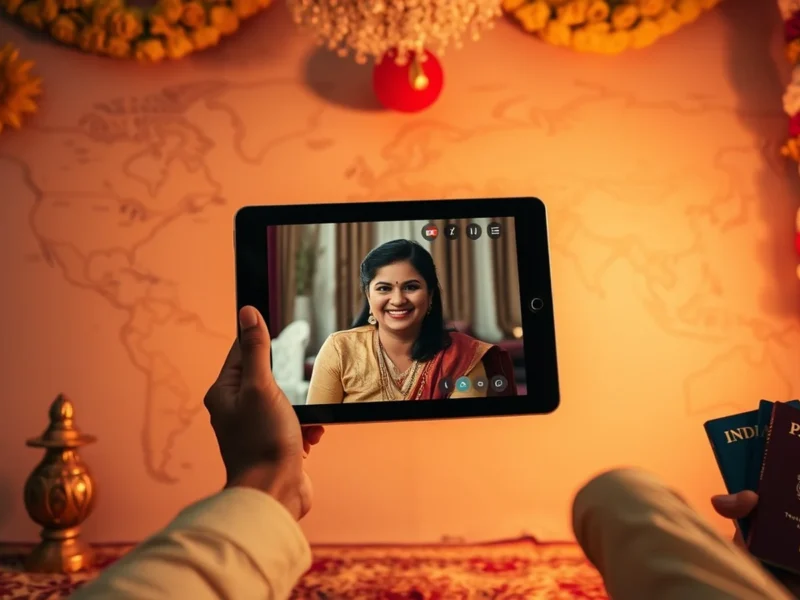
When a Kashmiri Muslim family marries into a family from elsewhere in India, the wazwan is almost always kept, because it is the part of the wedding everyone wants to experience, and the maenz raat with wanwun is a highlight for guests from outside. The other family’s customs are often added at a separate event, such as a mehendi or reception in their own city. Brief the other family on the trami and the pace of the feast before the day.
Bringing wazwan to a wedding outside Kashmir
Many Kashmiri families living in Delhi, Mumbai, Bengaluru and abroad want an authentic wazwan at their wedding. Wazas do travel, and some operate from cities outside Kashmir, but the meat, the spices, the copper pots and the overnight cooking all have to be arranged. Book the waza early, agree the menu and the number of courses, and check that the venue will allow on-site cooking with wood or a substitute. Hotels with their own kitchens may not allow an outside waza, so ask before booking. Our wedding catering cost guide covers how outside caterers are usually priced.
What to settle beforehand
- The vasta waza and the number of wazwan courses.
- Home or venue, and permission for on-site cooking.
- The qazi or imam for the nikah, and the mehr.
- The maenz raat and the women who will lead the wanwun.
- Seating for the trami, and briefing for guests from outside.
- Travel conditions for guests coming from elsewhere.
Frequently Asked Questions
What is maenz raat?
The henna night before a Kashmiri wedding, held at the bride’s home and the groom’s, with women singing wanwun late into the night while the bride’s hands and feet are decorated.
What is wanwun?
Traditional Kashmiri wedding songs sung by women in a call and response, blessing the couple and describing the rituals.
What is wazwan?
The multi-course Kashmiri meat feast cooked by wazas under a vasta waza and served at weddings, traditionally up to 36 courses.
What is a trami?
The large copper plate on which wazwan is served, shared by four guests sitting on the floor.
Which dish is served last at a wazwan?
Goshtaba, large meatballs in a yoghurt gravy, traditionally ends the meal.
Who cooks the wazwan?
Wazas, the hereditary specialist cooks of Kashmir, led by a master chef called the vasta waza. They cook through the night before the feast, usually on site, and also serve the guests.
What does a Kashmiri bride wear?
Traditionally a pheran with tilla embroidery, a headscarf and gold jewellery; many brides now wear a lehenga or anarkali with tilla work.
Can wazwan be served at a wedding outside Kashmir?
Yes. Some wazas travel or work from other cities. Book early and check that the venue allows an outside cook and on-site cooking.
What tea is served at a Kashmiri wedding?
Kahwa, a saffron and spice green tea, after the wazwan, and noon chai, the salted pink tea, through the wedding days.
Sources and further reading
- Jammu and Kashmir Tourism Development Corporation
- Srinagar District Administration
- Britannica: Kashmir
Planning a Kashmiri wedding in Srinagar, or bringing wazwan to your wedding elsewhere? Tell us your dates and guest count and we will send a tailored plan and quote.
Begin Your Engagement
Want a real number for your wedding?
Tell us your city, guest count and dates. Team Velvet Knot will come back within 24 hours with an itemised budget.