Haryanvi Wedding Traditions: Bhaat, Ghudchadi and the Rituals in Order
- A Haryanvi wedding
- The rituals in order
- Rokna and sagai
- The lagan
- Ban baithna: the turmeric days
- The bhaat
- Ghudchadi: the groom on the mare
- Barat and the welcome
- The pheras
- Bidai and kangna
- Gotra customs
- Food: desi ghee and plenty of it
- Songs, music and dance
- What the bride and groom wear
- Mixed weddings
- Village weddings and city weddings
- A sample wedding
- Guests, rooms and the barat
- Photography
- What to settle beforehand
- Frequently Asked Questions
- Sources and further reading
A Haryanvi wedding runs from the rokna and sagai to the lagan, which fixes the date, and the ban, the turmeric days. Then comes the bhaat, when the bride’s mother’s brothers arrive with gifts, and the ghudchadi, when the groom rides out on a mare with his sister holding the reins. The pheras, the kangna games and the bidai follow. The feast is built on desi ghee, and the women’s folk songs carry the whole wedding.
Planning a Hindu wedding? Free download: the ritual-by-ritual planning timeline
Every ritual of a Hindu wedding in order, with when it happens, what the family arranges and when to book it, on one printable page. Share a few details about your wedding in the form at the end of this page and the download link appears as soon as you send it.
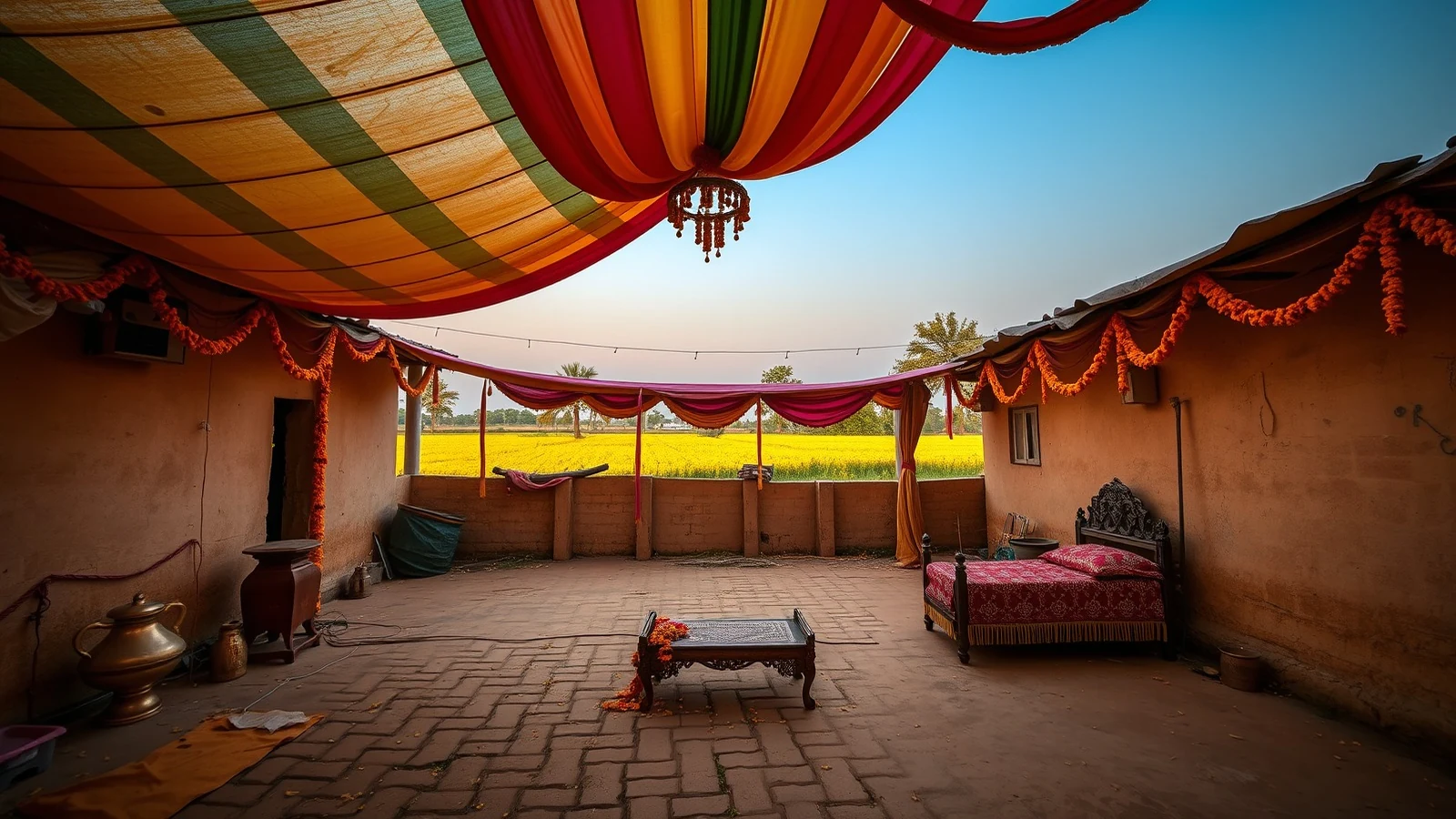
A Haryanvi wedding
Haryana’s weddings are shared across many communities, Jat, Ahir, Gujjar, Brahmin, Agarwal, Saini, Rajput and others, and across villages and cities. They share a recognisable core: a strong role for the maternal family, a big moment for the groom’s sister, plenty of desi ghee, and women’s folk songs at every step. They also differ from family to family and village to village, so treat what follows as the common pattern, and ask the elders for theirs.
Haryanvi weddings sit between the Punjabi and the Rajasthani traditions, and families from all three will recognise much of each other’s wedding. Our Agarwal wedding guide covers one Haryana-rooted community in more detail.
The rituals in order
| Stage | Ritual | What happens |
|---|---|---|
| Agreement | Rokna | The match is agreed and the groom is “stopped” for the bride with a token gift. |
| Engagement | Sagai | Gifts and sweets; in many families the bride’s side visits the groom’s home. |
| Weeks before | Lagan | The letter fixing the wedding date is sent to the groom’s family. |
| Days before | Ban baithna and haldi | Turmeric and oil; the bride and groom stay at home from now on. |
| Days before | Bhaat nyotna and bhaat | The mother invites her brothers, who arrive with clothes and gifts. |
| Wedding day | Ghudchadi | The groom rides out on a mare; his sister holds the reins. |
| Arrival | Barat and milni | The groom’s party is welcomed and the families meet. |
| Ceremony | Varmala and pheras | Garlands, then the circling of the fire with the priest. |
| Farewell | Bidai | The bride leaves her parents’ home. |
| After | Kangna and the welcome | Games at the groom’s home and the bride’s introduction to the family. |
Rokna and sagai
Once the families agree the match, the bride’s side performs the rokna, literally the “stopping” of the groom: they give him a token gift, often a coin or cash and sweets, which marks him as spoken for. The sagai, the formal engagement, follows, with the bride’s family visiting the groom’s home with gifts, clothes, sweets and a tilak. Rings are now commonly exchanged at the sagai too.
The lagan
The lagan is the formal communication of the wedding date. The family priest calculates the date and time, writes the lagan, and it is carried to the groom’s family, traditionally by the village barber or a relative, with gifts. The groom’s family receives it at a small gathering, and from then on the preparations begin in earnest.
Ban baithna: the turmeric days
A few days before the wedding, the bride and groom “sit in ban”: they are anointed with turmeric, oil and gram flour by the women of the family, and from then until the wedding they stay at home, wear old clothes and are fed rich food. The ban is repeated over several days in some families. It is the Haryanvi counterpart of the haldi, and the women’s songs that accompany it are some of the oldest in the wedding.
The bhaat
The bhaat is the heart of a Haryanvi wedding for the maternal family. A few days before the wedding, the mother of the bride, or of the groom, goes to her brothers’ home to invite them, the bhaat nyotna, carrying jaggery and sweets, with the women of her family singing songs that ask her brothers to stand by her. On the day of the bhaat, her brothers, their wives and their family arrive with clothes for the whole family, jewellery, household goods and cash, received at the door with singing and an aarti.
The bhaat is a matter of pride and sometimes of competition, and its size is the maternal family’s decision. It is also deeply emotional: it is the brothers publicly affirming their sister’s place, years after her own marriage. Plan it as a proper event, with time, space for the gifts and a meal.
Ghudchadi: the groom on the mare
On the wedding day, the groom is dressed in his wedding clothes and sehra and rides out of his home on a decorated mare, the ghudchadi. His sister, or sisters, play the central role: she leads the mare and holds its reins, feeds it soaked gram, and receives a gift from her brother before he sets off. In many villages the groom also visits the village shrine to bow to the deities before the barat leaves. Our sehrabandi guide covers the sehra.
Barat and the welcome
The barat, the groom’s procession with a band and dancing relatives, travels to the bride’s home or venue. In village weddings it once arrived the evening before and stayed the night, hosted by the bride’s village; in city weddings it arrives the same evening. The bride’s family welcomes them, the elders meet in the milni, and the varmala and dinner follow.
The pheras
The pheras are conducted by the priest at the muhurat, often late at night: the kanyadaan, the tying of the couple’s garments, the circling of the fire, the saptapadi, and the sindoor. The bride’s family hosts the ceremony, and the closest relatives stay through it while the wider guests leave after dinner. Our Hindu wedding rituals guide explains the ceremony.
Bidai and kangna
The bidai, the bride’s farewell from her parents’ home, is one of the most emotional moments of the wedding, accompanied by songs of parting. At the groom’s home, the couple are welcomed with an aarti, and play kangna: untying the threads tied on their wrists during the ban, and finding a ring in a bowl of water or milk. Whoever wins is said to lead the marriage.
Gotra customs
Haryanvi families, like many Hindu families, avoid marriage within the same gotra, and many also avoid the mother’s and grandmother’s gotras and sometimes matches within the same village. These are social customs that vary between communities and families. They are not law: the Hindu Marriage Disabilities Removal Act, 1946 removed any legal bar on marriage within the same gotra, and the Hindu Marriage Act does not prohibit it. A planner’s role is simply to know that the families will have checked this before anything else.
Food: desi ghee and plenty of it
Haryanvi wedding food is rich and generous, built on milk and desi ghee: kachori and puri, aloo sabzi, kadhi, bajra or wheat dishes, churma, halwa, kheer, jalebi, and laddoos made by the family’s own cooks. Many village weddings still have the food cooked on site by halwais, the traditional cooks, rather than a catering company. In the city, menus blend Haryanvi dishes with North Indian and Punjabi ones. Many families serve vegetarian food only.
Songs, music and dance
The women’s songs, sung at the ban, the bhaat, the ghudchadi and the bidai, are the sound of a Haryanvi wedding, and every ritual has its own. Many families also hire folk singers for ragini, the Haryanvi folk song form, and dancers for the evening, alongside a DJ for the younger guests. A dhol and a brass band lead the barat. Outdoor amplified music in most cities must stop by 10 pm, which matters for a barat timed for a late muhurat.
What the bride and groom wear
Haryanvi brides traditionally wear a ghagra and a heavily embroidered odhni, often in red, with silver and gold jewellery, though many now wear a lehenga. The groom wears a sherwani or a kurta with a safa and the sehra. The bhaat often provides the clothes the bride and her mother wear for parts of the wedding.
Mixed weddings
When a Haryanvi family marries into another community, the bhaat and the ghudchadi are the customs most often kept, because they belong to the family rather than the ceremony and are easy for the other side to enjoy. Punjabi families will recognise both, under the names of their own maternal gifts and the ghodi. Families from further away usually need the bhaat explained: it is not a dowry and not a gift to the other family, but the maternal uncles’ gift to their own sister’s household.
Village weddings and city weddings
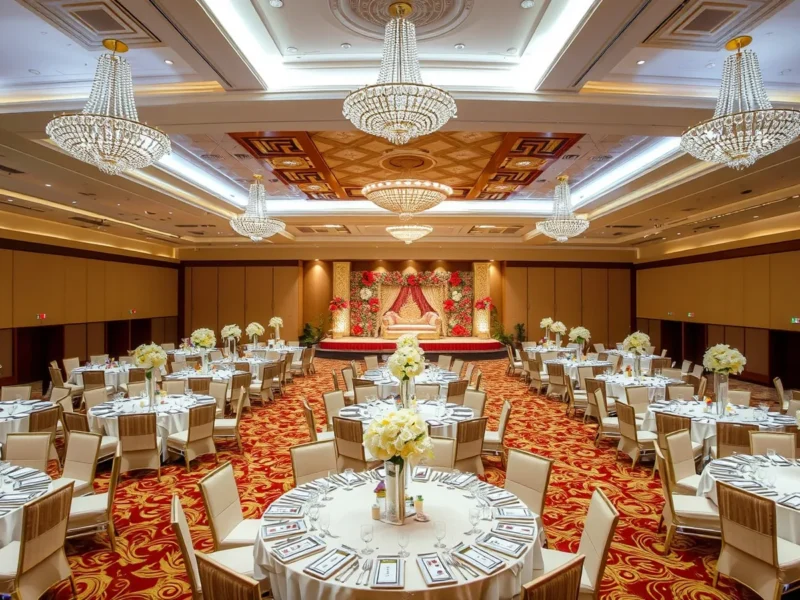
Many Haryanvi families still hold the wedding in their village, with the bride’s home, a tent on the village ground and the whole village involved in hosting. Others hold it at farmhouses or banquet halls in Gurugram, Faridabad, Rohtak, Hisar or Delhi. The village wedding has more ritual and more people; the city wedding has more vendors and less time. Many families combine them: rituals at home in the village, and a reception in the city. Our Gurgaon wedding planning page covers the city side.
A sample wedding
| Day | Bride’s side | Groom’s side |
|---|---|---|
| Five to three days before | Ban baithna; women’s songs each evening | Ban baithna |
| Two days before | Bhaat from the mother’s brothers | Bhaat |
| Day before | Mehndi and a sangeet or ragini evening | Mehndi |
| Wedding day afternoon | Preparations; the bride dresses | Ghudchadi; the barat sets off |
| Wedding evening | Welcome, milni, varmala, dinner | Barat arrives |
| Wedding night | Pheras at the muhurat | Pheras |
| Next morning | Bidai | Welcome, kangna and the introductions |
Guests, rooms and the barat
A Haryanvi barat can be large, and in village weddings it may need to be hosted overnight, with beds, food and breakfast for the groom’s party. In city weddings the barat usually returns the same night, but guests coming from other towns need rooms. Plan transport for the elders, who will want to see the ghudchadi and the pheras but should not be in a crowd for hours. Our outstation guest planning guide covers the logistics.
Photography
The moments families want are the bhaat arriving at the door, the groom’s sister with the mare at the ghudchadi, the barat dancing, the pheras and the bidai. Village weddings are full of colour and people, and they reward a photographer who arrives early and stays late. Brief them on the bhaat in particular: it often happens in the late morning at the house, separately from the main events, and it is easy to miss.
What to settle beforehand
- The muhurat, fixed by the priest, and the lagan.
- The bhaat: date, place and who receives it.
- The ghudchadi: the mare, the route and the sister’s gift.
- Village or city, and where each event happens.
- Halwais or caterers, and the menu.
- Folk singers and the music finishing time.
Frequently Asked Questions
What is the bhaat ceremony in a Haryanvi wedding?
The ritual in which the bride’s or groom’s mother invites her brothers, who arrive a few days before the wedding with clothes, jewellery and gifts for the family.
What is ghudchadi?
The groom’s ride out of his home on a decorated mare on the wedding day, with his sister leading the mare and holding the reins.
What is ban baithna?
The turmeric days before the wedding, when the bride and groom are anointed and stay at home until the wedding.
What is the lagan in a Haryanvi wedding?
The formal letter fixing the wedding date, written by the priest and sent to the groom’s family with gifts.
Can Haryanvi couples marry within the same gotra?
Families avoid it by custom. Indian law does not prohibit it; the Hindu Marriage Disabilities Removal Act, 1946 removed any such bar.
What food is served at a Haryanvi wedding?
Rich vegetarian food made with desi ghee: kachori, puri, kadhi, churma, halwa, kheer, jalebi and laddoos.
What does the groom’s sister do at the ghudchadi?
She leads the mare and holds its reins, feeds it soaked gram, and receives a gift from her brother before the barat sets off.
Sources and further reading
Planning a Haryanvi wedding in the village, in Gurugram or at a destination? Tell us your dates and guest count and we will send a tailored plan and quote.
Begin Your Engagement
Want a real number for your wedding?
Tell us your city, guest count and dates. Team Velvet Knot will come back within 24 hours with an itemised budget.