Reddy and Kamma Wedding Rituals: The Telugu Sequence, Step by Step, and What Differs
- Who the Reddys and Kammas are
- The rituals in order
- Pradhanam: the engagement
- The muhurtham and the purohit
- The mangalsutram
- Talambralu: the rice shower
- Appagintalu: the farewell
- Vadi biyyam and after the wedding
- What differs between Reddy and Kamma weddings
- Food at a Reddy or Kamma wedding
- Venues and scale
- Managing a very large guest list
- Photography and video
- What the bride and groom wear
- A sample muhurtham day
- For families in the United States and abroad
- Mixed weddings
- Music
- What to settle beforehand
- Frequently Asked Questions
- Sources and further reading
Reddy and Kamma weddings follow the shared Telugu Hindu sequence: the pradhanam engagement, the pellikuthuru and pellikoduku ceremonies, then jeelakarra bellam at the muhurtham. The mangalsutram is tied, followed by talambralu, the saptapadi and the appagintalu farewell. What sets them apart is not a separate liturgy but scale, region and family custom, with a Brahmin purohit usually conducting the muhurtham.
Planning a Telugu wedding? Free download: the ritual-by-ritual planning timeline
Every ritual of a Telugu wedding in order, with when it happens, what the family arranges and when to book it, on one printable page. Share a few details about your wedding in the form at the end of this page and the download link appears as soon as you send it.
Who the Reddys and Kammas are
The Reddys and the Kammas are two of the largest landowning communities of the Telugu states. Reddy families are spread across Telangana, Rayalaseema and Nellore, and Kamma families are concentrated in the Krishna and Guntur region of coastal Andhra, with large communities in Hyderabad, Bengaluru, Chennai and the United States. Both communities are known for large weddings that bring together extended families, villages and business and political networks.
People search for “Reddy wedding rituals” and “Kamma wedding rituals” as if each had its own ceremony. In practice, both follow the Telugu Hindu wedding sequence described in our Telugu wedding rituals guide, conducted by a Brahmin purohit at the muhurtham. The differences between a Reddy wedding and a Kamma wedding, or between two Reddy weddings, come from region, family custom and scale. This guide covers the sequence, then what tends to differ.
The rituals in order
| Stage | Ritual | What happens |
|---|---|---|
| Agreement | Pelli choopulu | The families meet and the match is agreed. |
| Engagement | Pradhanam or nischitartham | Clothes, gifts and rings are exchanged; the date is fixed with the purohit. |
| Before the wedding | Pellikuthuru and pellikoduku | Turmeric, bath and new clothes make the couple bride and groom. |
| Wedding morning | Snathakam and Kasi Yatra (in some families) | The groom’s rite of passage and the mock pilgrimage. |
| Muhurtham | Jeelakarra bellam | A paste of cumin and jaggery placed on each other’s heads at the auspicious moment. |
| Ceremony | Kanyadanam and mangalya dharana | The bride is given away and the mangalsutram is tied. |
| Ceremony | Talambralu | The couple shower each other with rice mixed with turmeric. |
| Ceremony | Saptapadi and arundhati darshanam | The seven steps, and being shown the Arundhati star. |
| Farewell | Appagintalu | The bride’s parents formally entrust her to the groom’s family. |
| After | Gruhapravesam and the reception | The bride enters her new home; the families host a reception. |
Pradhanam: the engagement
Many Reddy and Kamma families call the engagement the pradhanam, where other Telugu families say nischitartham. The two families meet, usually at the bride’s home or a hall, exchange clothes, fruit, sweets and gifts, and the purohit reads out the agreement, including the date and muhurtham of the wedding. Rings are now commonly exchanged too. In large families the pradhanam can be a sizeable event in its own right, with a meal for a few hundred guests.
The muhurtham and the purohit
Although Reddys and Kammas are non-Brahmin communities, most weddings in both are conducted by a Brahmin purohit, who fixes the muhurtham from the couple’s horoscopes and leads the ceremony in Sanskrit and Telugu. The muhurtham is often in the early morning or late at night, and everything else on the day is planned around it. Our muhurtham guide explains how the time is chosen.
The mangalsutram
The Telugu mangalsutram traditionally carries two round gold discs, one from each family, strung on a yellow thread. The groom ties it around the bride’s neck at the moment fixed by the purohit, with three knots, while the nadaswaram and the drums play loudly, and the guests shower akshintalu, rice mixed with turmeric, on the couple. In many families the discs are later moved to a gold chain.
Talambralu: the rice shower
Talambralu is the playful high point of a Telugu wedding. The couple take turns pouring rice mixed with turmeric, and sometimes pearls, over each other’s heads, and the families cheer each side on. It is meant to bless the marriage with plenty, and in many weddings it turns into a contest that goes on longer than the purohit would like. Photographers love it.
Appagintalu: the farewell
Appagintalu is the formal handing over of the bride to the groom’s family, usually at the end of the ceremony or the next morning. The bride’s parents place her hands in the hands of her in-laws, often with a song, and ask them to look after her. It is one of the most emotional moments of a Telugu wedding, and families often ask for it to be photographed closely.
Vadi biyyam and after the wedding
In many coastal Andhra families, including many Kamma families, the bride receives vadi biyyam, rice, turmeric, coconut and gifts placed in the fold of her saree by the married women of her family, as a blessing for the new household. The gruhapravesam follows at the groom’s home, and the reception, often the largest event of the wedding, is usually hosted by the groom’s family.
What differs between Reddy and Kamma weddings
Ask ten families and you will hear ten answers. The honest summary is that the differences come from region and family, not from community alone.
- Region. A Kamma wedding in Vijayawada and a Reddy wedding in Kadapa differ more because of coastal Andhra and Rayalaseema custom than because of community.
- Which optional rites are kept. Snathakam, Kasi Yatra, vadi biyyam, the oonjal and other rites are kept by some families and not others.
- The purohit’s tradition. The order and length of the ceremony follow the purohit’s own practice.
- Scale. Both communities are known for very large weddings and receptions, with guest lists in the thousands in some families.
- Food. Non-vegetarian feasts at the reception are common in both communities; the muhurtham meal is often vegetarian. Regional dishes differ: Rayalaseema and Telangana kitchens on one side, Krishna and Guntur on the other.
The only reliable source for a particular wedding is the family’s elders and their purohit. A planner’s job is to ask them early and plan around their version.
Food at a Reddy or Kamma wedding
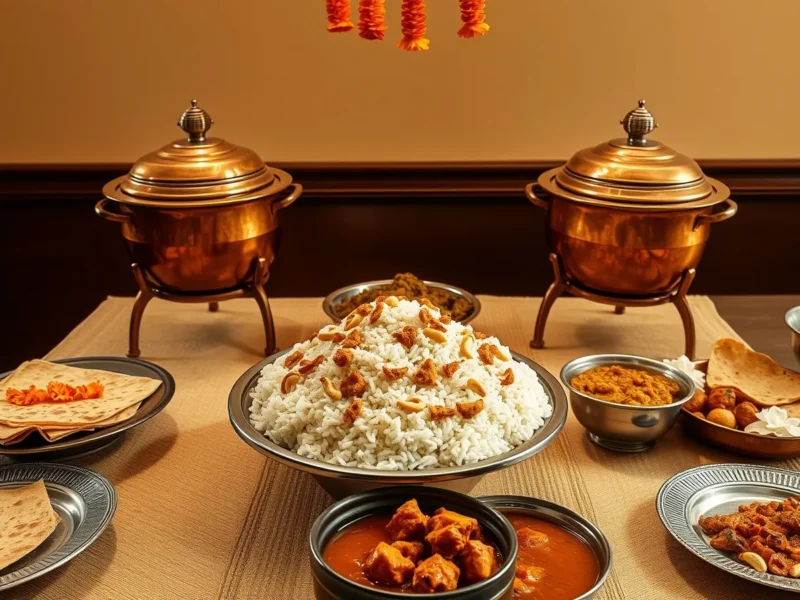
The wedding meal after the muhurtham is often a traditional Telugu vegetarian meal on banana leaves: pulihora, pappu, several curries and vepudus, pickles, podis, payasam, and curd rice. The reception, especially in Telangana and Rayalaseema, is often a non-vegetarian feast with biryani, mutton and chicken curries, and fish in coastal families. Many families set two menus to cover both. Our wedding catering cost guide covers how caterers price per plate.
Venues and scale
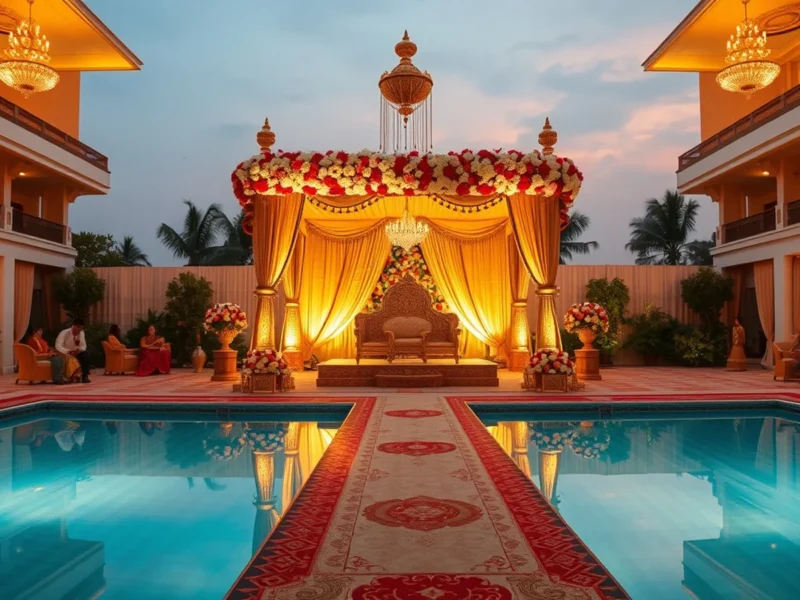
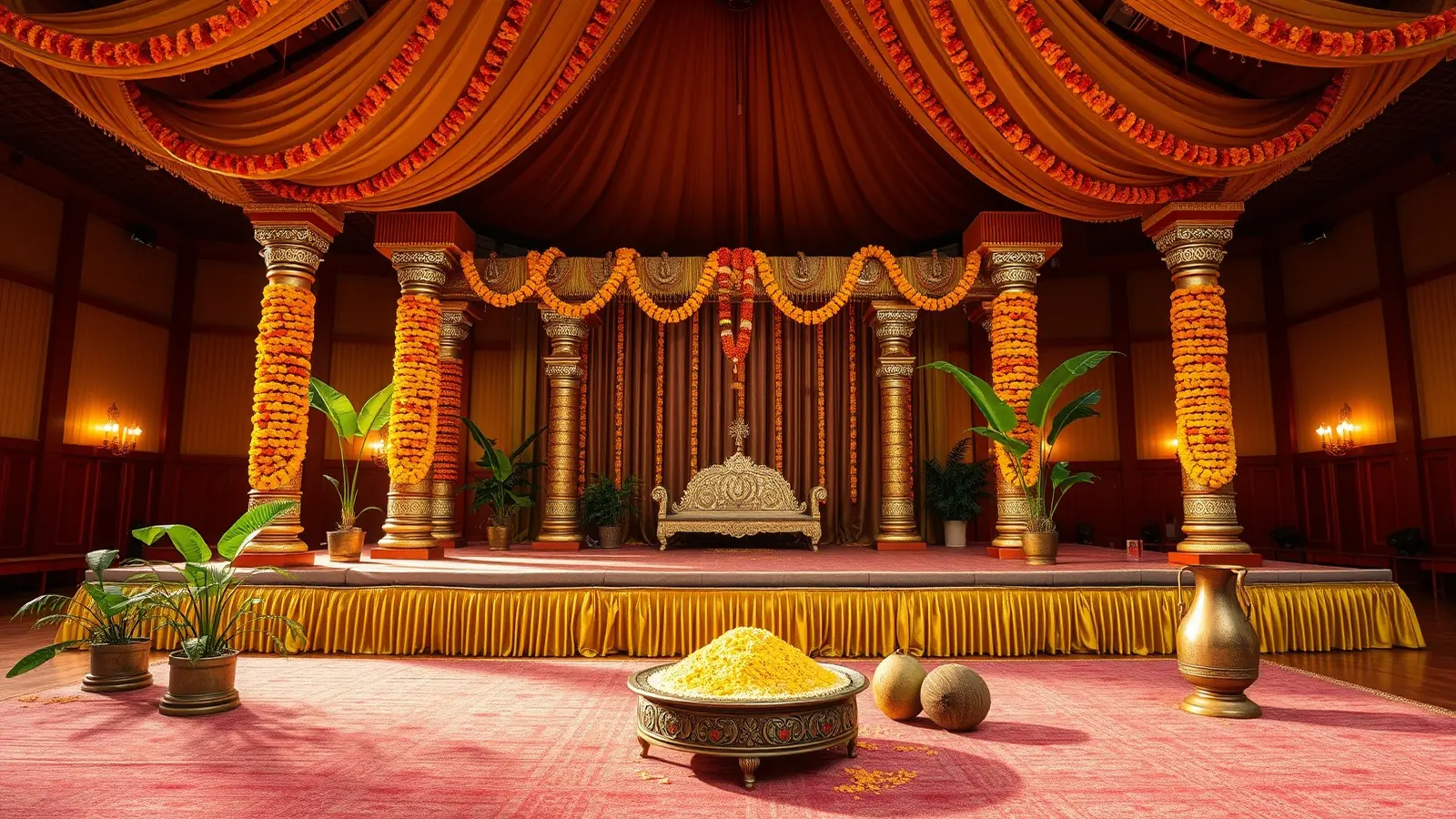
Large Reddy and Kamma weddings in Hyderabad are often held at convention centres and large function halls that can seat thousands, with the muhurtham on a stage under a decorated mandapam. Smaller and destination weddings move to hotels and resorts. Because the guest lists are large, parking, traffic management and food service are usually the hardest parts of the day, harder than the ceremony. Our Hyderabad wedding cost guide and the Hyderabad wedding planning page cover the city’s venues.
Managing a very large guest list
When the guest list runs to several thousand, three things decide whether the day works. First, food service: a large Telugu wedding needs multiple serving lines or rounds of banana-leaf seating, planned with the caterer for the expected peak, not the average. Second, the stage: a reception queue of thousands takes hours, so the couple need a plan for greeting guests in groups and for eating. Third, parking and traffic: venues on main roads need traffic marshals and a drop-off plan agreed with the venue and, for very large weddings, with the local police.
Photography and video
The moments families want most are the jeelakarra bellam, the tying of the mangalsutram, the talambralu, the arundhati darshanam and the appagintalu. The tying of the mangalsutram is the most crowded moment of the ceremony, with the whole family pressing in, so give the photographer a fixed position on the stage and keep it clear. Drone coverage of the arrival and the venue is common at large weddings; check the venue’s rules.
What the bride and groom wear
The bride usually wears a silk saree for the muhurtham, a Kanjeevaram, Dharmavaram or Uppada silk in red, maroon, gold or a bright traditional colour, with heavy gold temple jewellery, a vaddanam waist belt and a maang tikka. Many brides wear a second silk saree or a lehenga for the reception. The groom traditionally wears a white or cream silk pancha, a dhoti, with a kanduva over the shoulder, and a sherwani or suit for the reception. The bride’s family often gives the groom his muhurtham clothes, and the groom’s family gives the bride hers.
A sample muhurtham day
| Time (example muhurtham 10.30 am) | What happens |
|---|---|
| 6.30 am | Mangala snanam for the bride and groom at their rooms |
| 8.00 am | Ganapati puja; the groom’s rites; the bride’s Gauri puja |
| 9.30 am | The bride is brought to the mandapam |
| 10.30 am | Jeelakarra bellam; the curtain between the couple is removed |
| 10.45 am | Kanyadanam, mangalsutram, talambralu, saptapadi |
| 12.30 pm | Wedding lunch on banana leaves |
| Evening | Reception |
A night muhurtham shifts the whole table: the lunch becomes a dinner served before the ceremony, and the reception moves to the following evening.
For families in the United States and abroad
Large numbers of Reddy and Kamma families live in the United States, and many weddings are now planned from there. The usual pattern is a wedding in Hyderabad, Vijayawada or a destination in India in the December and January season, with a reception later where the couple live. The key planning points are booking the muhurtham date early, because the most auspicious dates in the season book out the best halls and caterers a year ahead, and allowing a few days in India before the pellikuthuru for jet lag and shopping.
Mixed weddings
When a Reddy or Kamma family marries into another community, Telugu or not, the muhurtham ceremony is usually conducted in the Telugu way if the bride is Telugu, and the other family’s rituals are added before or after. Inter-community weddings between Reddy, Kamma and other Telugu families are now common, and the shared Telugu sequence makes them straightforward: the purohits agree the order, and the families agree which optional rites to keep.
Music
The nadaswaram and the thavil, the double-reed horn and the drum of South Indian temple music, are traditional at the muhurtham, and the players are cued to play loudly at the moment the mangalsutram is tied. Many families add a band or a DJ for the reception and a sangeet the night before, which has become common in Hyderabad weddings of every community. Book the nadaswaram group with the purohit’s timings, not the decorator’s.
What to settle beforehand
- The purohit, the muhurtham and the order of rites.
- Which optional rites the families keep.
- Two menus or one, and the service plan for the guest count.
- The venue’s capacity for parking and traffic.
- Who hosts the reception.
Frequently Asked Questions
What are the rituals in a Reddy wedding?
The Telugu Hindu sequence: pradhanam or engagement, pellikuthuru and pellikoduku, jeelakarra bellam at the muhurtham, kanyadanam, the mangalsutram, talambralu, saptapadi, arundhati darshanam and appagintalu.
What are the rituals in a Kamma wedding?
The same Telugu sequence, with regional customs of coastal Andhra such as vadi biyyam kept by many families.
Is a Reddy wedding different from a Kamma wedding?
Mostly in region, family custom and scale, not in the core ceremony, which both conduct with a Brahmin purohit.
What is pradhanam?
The engagement in many Reddy and Kamma families, when the families exchange gifts, rings and the formal agreement, and the wedding date is fixed.
How many discs does a Telugu mangalsutram have?
Traditionally two gold discs, one from each family, on a yellow thread.
What food is served at a Reddy wedding?
Often a vegetarian banana-leaf meal after the muhurtham and a non-vegetarian feast at the reception, with biryani and regional curries.
Do Reddy and Kamma weddings have Kasi Yatra?
Some families keep it and many do not. Ask the family’s purohit and elders.
What does the bride wear at a Reddy or Kamma wedding?
Usually a silk saree such as Kanjeevaram or Dharmavaram for the muhurtham, with gold temple jewellery, and a second outfit for the reception.
Sources and further reading
Planning a large Telugu wedding in Hyderabad, Vijayawada or at a destination? Tell us your dates and guest count and we will send a tailored plan and quote.
Begin Your Engagement
Want a real number for your wedding?
Tell us your city, guest count and dates. Team Velvet Knot will come back within 24 hours with an itemised budget.