Gauri Puja Before a Wedding: Gauri Har, Gowri Pooje and the Bride’s Prayer
- What gauri puja is
- Gauri Har puja in a Maharashtrian wedding
- Gowri pooje in a Kannada wedding
- Gauri puja in a Telugu wedding
- Where it sits in the wedding day
- What the bride does
- The samagri
- Why the idol goes with the bride
- Mangalagaur: Gauri after the wedding
- The bride’s fast and food
- Timing it with makeup and the photographer
- The maternal uncle’s role
- Questions to ask the priest
- Gauri puja at a venue
- For NRI brides
- Photography
- In a mixed wedding
- What to settle beforehand
- Frequently Asked Questions
- Sources and further reading
Gauri puja is the bride’s prayer to the goddess Gauri, Parvati, on the morning of or just before a Hindu wedding. She asks for a long, happy married life. In Maharashtrian weddings it is the Gauri Har puja, where the bride worships Gauri with Shiva while the groom’s side prepares. Kannada brides hold a Gowri pooje and Telugu brides a Gauri puja. The bride performs it herself, guided by the priest or her mother.
Planning a Maharashtrian wedding? Free download: the ritual-by-ritual planning timeline
Every ritual of a Maharashtrian wedding in order, with when it happens, what the family arranges and when to book it, on one printable page. Share a few details about your wedding in the form at the end of this page and the download link appears as soon as you send it.
What gauri puja is
Gauri is one of the names of the goddess Parvati, the consort of Shiva. In Hindu tradition she is the model of a devoted and happy marriage: she is said to have won Shiva through years of devotion and austerity, and married women and brides pray to her for a long and happy married life and for the wellbeing of their husbands.
Before the wedding ceremony, the bride performs a puja to Gauri. It is one of the few rituals of the wedding that the bride performs herself, usually alone or with her mother, while the rest of the family is busy with the groom’s arrival. It is quiet, personal and often emotional, the bride’s last prayer as an unmarried daughter of the house.
Gauri Har puja in a Maharashtrian wedding
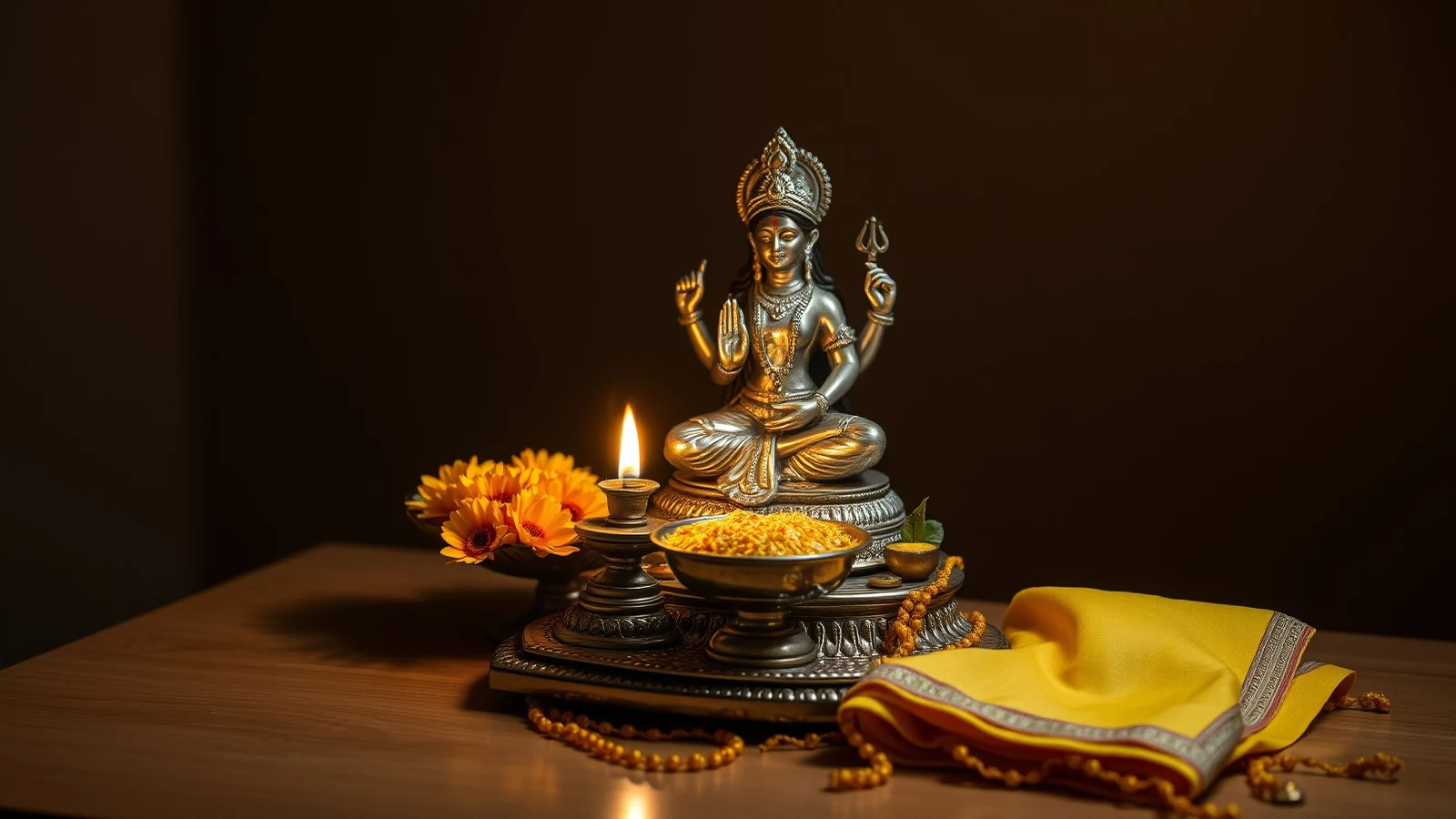
In Maharashtrian weddings the ritual is the Gauri Har puja, Gauri with Har, a name of Shiva. On the wedding day, the bride sits before a small idol or image of Gauri and Shiva, often of silver, and worships them, offering rice, flowers and turmeric and praying for a blessed marriage. In many families she is dressed for it in a yellow saree, often given by her maternal uncle, and her mama then brings her to the mandap for the ceremony.
The Gauri Har puja is performed while the groom’s side is being received and the priests are preparing for the antarpat, the cloth held between the couple until the auspicious moment. It is usually performed in a separate room, away from the bustle. Our Maharashtrian wedding traditions guide covers the full sequence.
Gowri pooje in a Kannada wedding
Kannada brides perform a Gowri pooje before the wedding, worshipping Gowri with the help of married women of the family and the priest. In many families the bride is given gifts of bangles, a saree and turmeric and kumkum as part of it. The details vary between Brahmin, Lingayat, Vokkaliga and other communities, and within them between families. Our Kannada wedding traditions guide covers the wider ceremony.
Gauri puja in a Telugu wedding
In Telugu weddings, the bride performs a Gauri puja on the wedding morning, often while the groom performs his snathakam and Kasi Yatra. She is dressed in her wedding saree, sits before the Gauri idol, and worships until she is called to the mandap. In many families she is carried to the mandap in a bamboo basket by her maternal uncles after the puja. Our Telugu wedding rituals guide covers the full sequence.
Where it sits in the wedding day
| Community | Name | When | What follows |
|---|---|---|---|
| Maharashtrian | Gauri Har puja | Wedding day, before the ceremony | The mama brings the bride to the antarpat |
| Kannada | Gowri pooje | Day before or wedding morning | The bride is brought to the mandap |
| Telugu | Gauri puja | Wedding morning, during the groom’s Kasi Yatra | The bride is brought to the mandap for jeelakarra bellam |
| Gujarati and others | Gauri or Ambaji puja | Varies by family | Varies |
The timings in the table are the common pattern. Ask the family priest and the elders, who will know the family’s own custom.
What the bride does
- Preparation. She bathes and dresses, often in the saree from her maternal family.
- The setting. She sits before the idol of Gauri, or Gauri with Shiva, on a low seat, with a lamp lit.
- Offerings. She offers turmeric, kumkum, rice, flowers, and in many families sesame or grains, often pouring rice over the idol while praying.
- The prayer. She prays for a long and happy married life, and for the wellbeing of her husband and both families.
- Aarti. She performs or receives the aarti, and the elders bless her.
The priest may guide her through the mantras, or her mother or an elder woman may lead her through the family’s version. The puja itself is short, often 20 to 40 minutes, but the bride should not be rushed.
The samagri
- An idol or image of Gauri, or Gauri and Shiva; many families keep the idol afterwards in the bride’s new home.
- A lamp and oil or ghee.
- Turmeric, kumkum and sandalwood paste.
- Rice, often mixed with turmeric, and in some families sesame.
- Flowers and a small garland.
- Betel leaves and nuts, fruit and a coconut.
- Bangles and a blouse piece, in families that offer them to the goddess.
- Sweets for the offering.
Why the idol goes with the bride
In many families, the Gauri idol that the bride worships before her wedding goes with her to her new home and is kept in her puja room. It becomes the image she worships in the years after, including at the Mangalagaur in Maharashtrian families. It is one of the most personal items of the trousseau, and it should be packed with the bride’s things, not with the venue’s decor.
Mangalagaur: Gauri after the wedding
In Maharashtrian families, the worship of Gauri continues after the wedding. Newly married women keep the Mangalagaur on the Tuesdays of the month of Shravan for the first years of marriage, worshipping Gauri with the women of the family and their friends, often staying up for an evening of traditional games and songs. Many families hold the first Mangalagaur as a celebration in its own right, a few months after the wedding.
The bride’s fast and food
Many brides fast on the wedding day until the ceremony is over, and the Gauri puja is performed during that fast. In some families the fast is strict, with no food or water; in others it allows fruit, milk or water. A long fast, heavy clothes, jewellery and a warm venue are a hard combination, so the bride’s mother or a close friend should keep water and something light within reach for the moment the family’s rule allows it, and the planner should know what that rule is. Fainting at the mandap is more common than anyone admits.
Timing it with makeup and the photographer
The Gauri puja falls at the busiest moment of the wedding day. The makeup artist wants the bride ready, the photographer wants portraits, the groom’s party is arriving and the priest is waiting. Put the puja in the written schedule with its own time, at least 45 minutes, after makeup is finished and before the bride is called to the mandap. If the schedule slips, protect the puja and shorten the portraits. Our wedding planning timeline shows how to build the day around the muhurat.
The maternal uncle’s role
In several of these traditions, the bride’s maternal uncle has a part around the Gauri puja: in Maharashtrian weddings he is often the one who gives the bride the saree she wears for it and who brings her to the mandap afterwards, and in Telugu weddings the maternal uncles carry her in. It echoes the role of the maternal family across Indian weddings, from the Gujarati mameru to the Punjabi chooda. Tell the mama his role and his timing in advance.
Questions to ask the priest
- What form of Gauri puja does the family follow, and does the priest lead it?
- How long does it take, and when must it start relative to the muhurat?
- Which idol or image is used, and who provides it?
- What offerings are needed, and does the bride need to recite anything?
- Who escorts the bride to the mandap afterwards?
Gauri puja at a venue
At a hotel or a hall, the Gauri puja needs a quiet room close to the mandap, so the bride can be brought in without a long walk in her full outfit. It needs permission for a lamp, a low seat, and enough space for the bride, her mother, the priest and a few women of the family. Ask the venue for a room when booking, not on the day. It also needs protecting from interruption: the photographer, the decorator and the cousins all want the bride’s attention at that moment, and the puja should come first.
For NRI brides
Brides who grew up abroad sometimes worry that they will not know what to do at the Gauri puja. They do not need to: the priest or the mother leads, and the bride follows. What helps is a short conversation with the priest or an elder a few days before, to understand what the puja means, which offerings she will make and whether she will repeat any words. Many brides say afterwards that knowing the meaning in advance made it the most personal moment of the day. If the family has a Gauri idol from the bride’s grandmother or mother, using it carries that meaning further.
Photography
The Gauri puja produces some of the most moving photographs of the wedding: the bride in prayer, the lamp light on her face, the mother beside her. The light is usually low, so the photographer should bring a fast lens rather than a flash, which is intrusive during a prayer. Brief them to work quietly and from a distance.
In a mixed wedding
When the bride is from a community with a Gauri puja and the groom is not, the puja is simply part of her side’s rituals, held while the groom’s family prepares. When the bride is from a community without it, some brides choose to perform a Gauri puja anyway, especially in Hindu weddings across communities, because it is so personal and so easy to include. It needs nothing from the groom’s family.
What to settle beforehand
- The family’s name and form for the puja, and whether a priest leads it.
- The time, relative to the groom’s arrival and the muhurat.
- The room at the venue, and permission for a lamp.
- The idol, and whether it goes with the bride afterwards.
- Who brings the bride to the mandap afterwards.
Frequently Asked Questions
What is gauri puja in a wedding?
The bride’s prayer to the goddess Gauri, Parvati, before the wedding ceremony, asking for a long and happy married life.
What is Gauri Har puja?
The Maharashtrian form, in which the bride worships Gauri with Har, Shiva, on the wedding day before the ceremony.
When is gauri puja done before a wedding?
Usually on the wedding day, before the bride is brought to the mandap. In some Kannada families it is done the day before.
Who performs the gauri puja?
The bride herself, guided by the priest or by her mother or an elder woman of the family.
What happens to the Gauri idol after the wedding?
In many families it goes with the bride to her new home and is kept in her puja room, where she continues to worship it after the wedding, including at Mangalagaur in Maharashtrian families.
What is Mangalagaur?
A Maharashtrian puja to Gauri kept by newly married women on the Tuesdays of Shravan for the first years of marriage.
Does the bride fast for gauri puja?
Many brides fast on the wedding day until the ceremony, and the Gauri puja is performed during that fast. Families differ.
Can the groom attend the gauri puja?
Usually not. It is the bride’s own prayer, held while the groom performs his own rituals or is being received by her family.
How long does the gauri puja take?
The puja itself often takes 20 to 40 minutes. Allow 45 minutes in the day’s schedule so the bride is not rushed.
Sources and further reading
- Maharashtra Tourism, Government of Maharashtra
- Britannica: Parvati
- Karnataka Tourism, Government of Karnataka
Planning a Maharashtrian, Kannada or Telugu wedding? Tell us your dates and guest count and we will send a tailored plan and quote.
Begin Your Engagement
Want a real number for your wedding?
Tell us your city, guest count and dates. Team Velvet Knot will come back within 24 hours with an itemised budget.